Deep Subcutaneous Tick Embedding Following Prolonged Attachment: A Case Report and Mini-Review of Tick Fixation Mechanisms
Baogui Wang, Norbert Papdi

TL;DR
A case report shows that deeply embedded ticks may require surgical removal due to their strong attachment mechanisms.
Contribution
The paper highlights the need for surgical intervention in cases of deep tick embedding due to unique fixation mechanisms.
Findings
Prolonged tick attachment can lead to deep subcutaneous embedding in humans.
Standard tick removal tools may fail to fully extract deeply embedded ticks.
Surgical exploration may be necessary to remove residual tick parts safely.
Abstract
Prolonged tick attachment with deep subcutaneous embedding is uncommon in humans but may complicate tick removal in primary care. Firm fixation is mediated by the tick’s barbed hypostome and the secretion of glycine-rich salivary cement, which together anchor the mouthparts within the dermis. Awareness of these mechanisms is important when standard extraction techniques fail. A patient presented with a live, engorged tick deeply embedded in the skin after several days of attachment. The tick’s anterior body and mouthparts were firmly fixed within the dermis, and surrounding erythema migrans was observed. Initial removal using a tick tweezer was incomplete due to persistent fixation, necessitating minor surgical exploration to extract residual fragments. This case highlights that prolonged and unusually firm tick attachment can occur and may require surgical removal when conventional…
Genes, proteins, chemicals, diseases, species, mutations and cell lines named across the full text — each resolved to its canonical identifier and authoritative record.
Click any figure to enlarge with its caption.
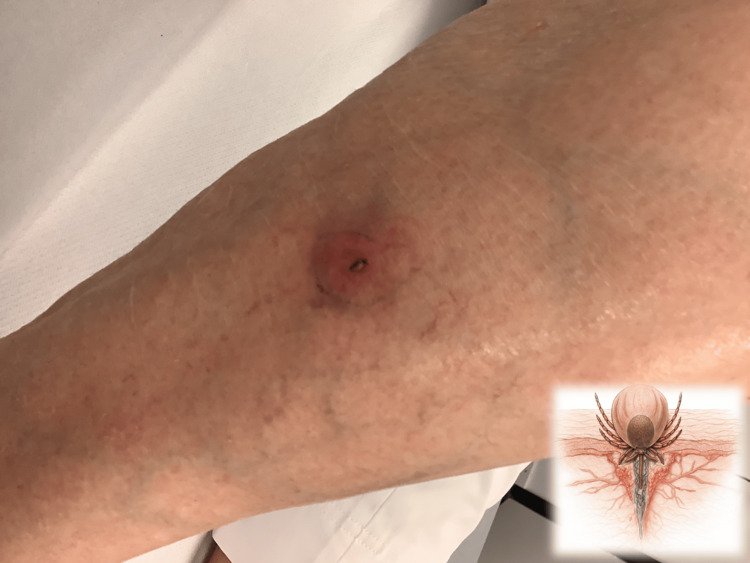 Figure 1
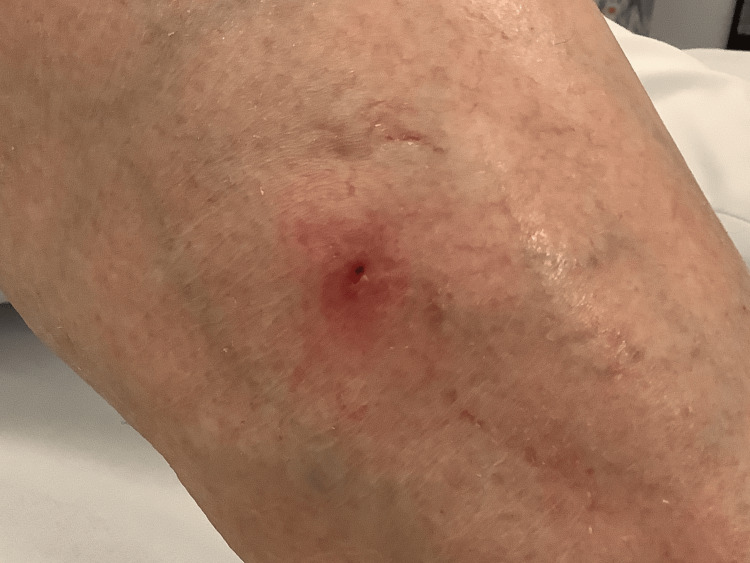 Figure 2
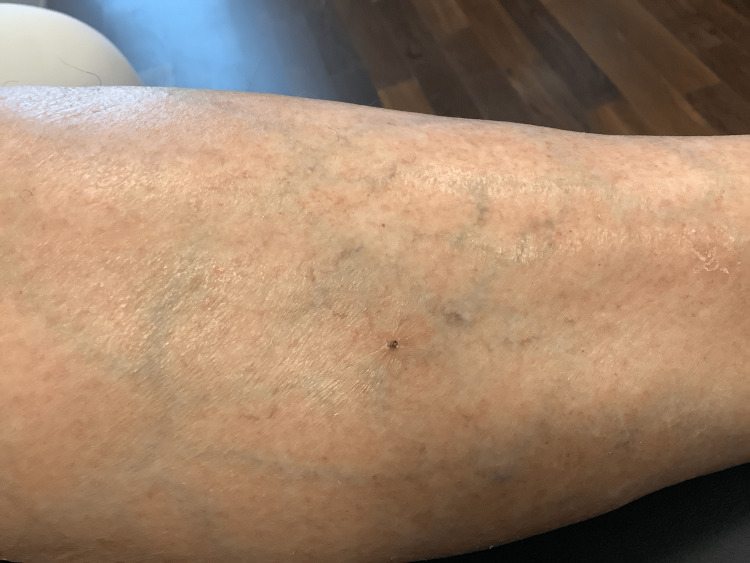 Figure 3
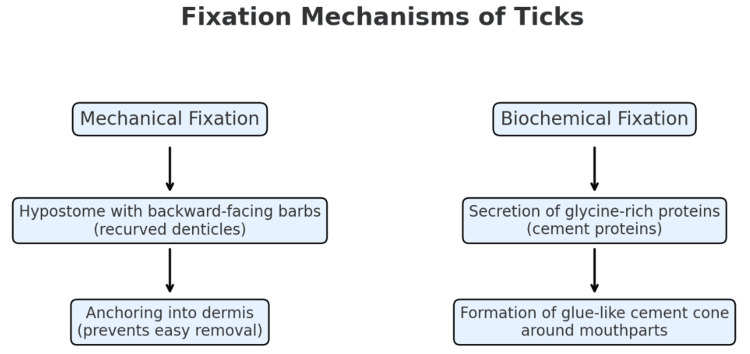 Figure 4
Peer Reviews
No public reviews on file for this paper yet. If you reviewed it on a platform where reviews are public (OpenReview, ICLR, NeurIPS, ICML), you can paste yours below so the community can read it here.
Videos
No videos yet. Explain this paper in a talk, walkthrough, or lecture? Add one.
Taxonomy
TopicsBurn Injury Management and Outcomes · Vector-borne infectious diseases · Nail Diseases and Treatments