Isolated Paramedian Pontine Reticular Formation (PPRF) syndrome in AQP4 antibody–positive neuromyelitis optica spectrum disorder: a case report
Manami Terahara, Takahiro Hobara, Yujiro Higuchi, Shota Hirakata, Yutaka Noguchi, Satoshi Nozuma, Hiroshi Takashima

TL;DR
A rare case of PPRF syndrome in a patient with AQP4 antibody-positive NMOSD is reported, showing how this condition can present with isolated gaze and facial nerve issues.
Contribution
This is the first documented case of isolated PPRF syndrome in AQP4 antibody-positive neuromyelitis optica spectrum disorder (NMOSD).
Findings
The patient exhibited isolated PPRF syndrome with no involvement of the medial longitudinal fasciculus (MLF).
MRI confirmed a lesion in the right dorsal pons affecting the PPRF, abducens nucleus, and facial nerve.
The patient showed significant clinical and radiological improvement following immunotherapy.
Abstract
Paramedian pontine reticular formation (PPRF) syndrome is characterized by horizontal gaze palsy due to lesions in the PPRF or the abducens nucleus. It is relatively rare and is typically associated with medial longitudinal fasciculus (MLF) syndrome. A 53-year-old Japanese woman presented with right lateral gaze palsy and facial nerve palsy, with preserved convergence and left lateral gaze. Neurological evaluation confirmed PPRF syndrome and facial nerve palsy, with no involvement of the MLF. Brain MRI showed a lesion in the right dorsal pons, affecting the PPRF, abducens nucleus, and facial nerve. Serum testing revealed positive antinuclear and anti-AQP4 antibodies. The patient responded well to immunotherapy, with substantial clinical and radiological improvements. She was ultimately diagnosed with AQP4 antibody-positive NMOSD. This is the first documented case of isolated PPRF…
Genes, proteins, chemicals, diseases, species, mutations and cell lines named across the full text — each resolved to its canonical identifier and authoritative record.
Click any figure to enlarge with its caption.
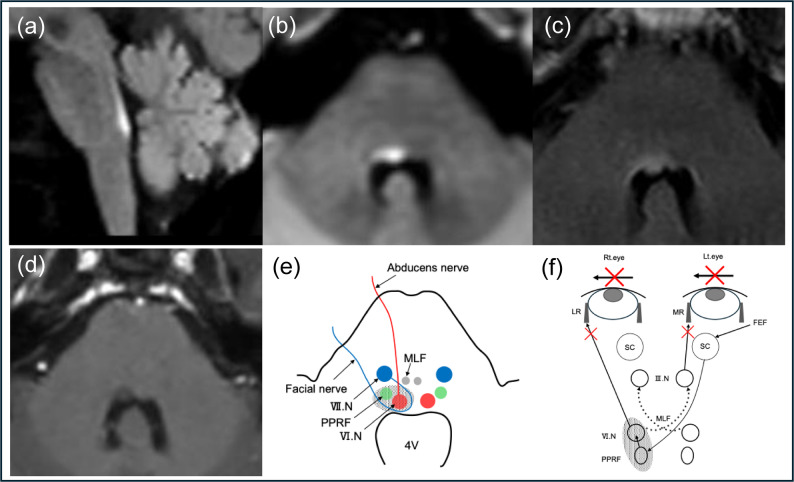 Figure 1
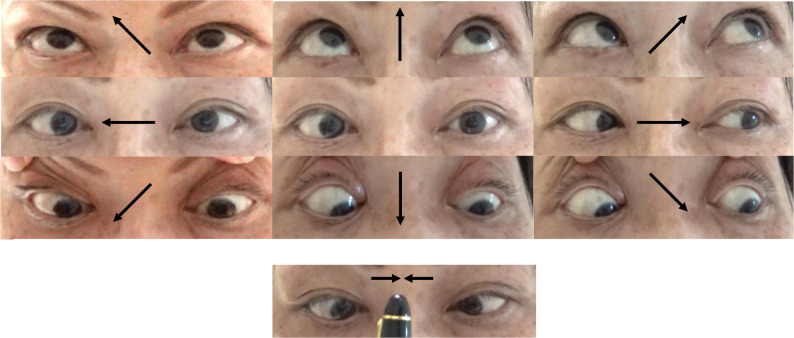 Figure 2
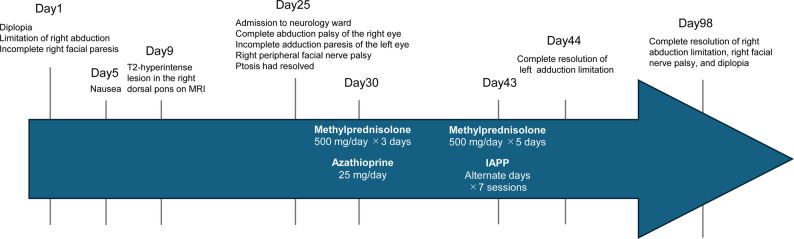 Figure 3
Peer Reviews
No public reviews on file for this paper yet. If you reviewed it on a platform where reviews are public (OpenReview, ICLR, NeurIPS, ICML), you can paste yours below so the community can read it here.
Videos
No videos yet. Explain this paper in a talk, walkthrough, or lecture? Add one.
Taxonomy
TopicsOphthalmology and Eye Disorders · Vestibular and auditory disorders · Multiple Sclerosis Research Studies