Proteomic analysis of ovarian carcinoma reveals diagnostic and prognostic biomarkers with histotype- and stage-specificity
Lucas Werner, Ella Ittner, Hugo Swenson, Elisabeth Werner Rönnerman, Claudia Mateoiu, Anikó Kovács, Pernilla Dahm-Kähler, Per Karlsson, Toshima Z. Parris, Khalil Helou

TL;DR
This study identifies proteins specific to different types and stages of ovarian cancer, which could improve diagnosis and treatment.
Contribution
The study identifies histotype- and stage-specific diagnostic and prognostic biomarkers in epithelial ovarian cancer.
Findings
DAPs like S100A1, AGR2, and CTH are identified without stage-specificity across histotypes.
Proteins such as TSPYL, VWA2, and GPC6 show stage-specificity for each histotype.
Proteins like EXO3CL2 and PPIL6 are linked to survival outcomes in specific histotypes and stages.
Abstract
Epithelial ovarian cancer (EOC) is the deadliest gynecologic cancer, due to asymptomatic early stages, vague symptoms in later stages, and limited clinical tools. Despite distinct clinicopathologic features, all EOC histotypes typically receive identical primary treatment, and are often studied as a single entity. We analyzed the proteome of 244 patients and identified differentially abundant proteins (DAPs) with and without stage specificity across histotypes and constructed panels of DAPs to distinguish histotypes in both early and late stages. Survival analysis was performed to find proteins associated with clinical outcomes, and enrichment analysis was conducted to reveal biological processes connected to prognosis and the proteins involved. Here we find DAPs without (e.g. S100A1, AGR2, CTH) and with (TSPYL, VWA2, GPC6, S100P) stage-specificity for each histotype. Survival…
Genes, proteins, chemicals, diseases, species, mutations and cell lines named across the full text — each resolved to its canonical identifier and authoritative record.
Click any figure to enlarge with its caption.
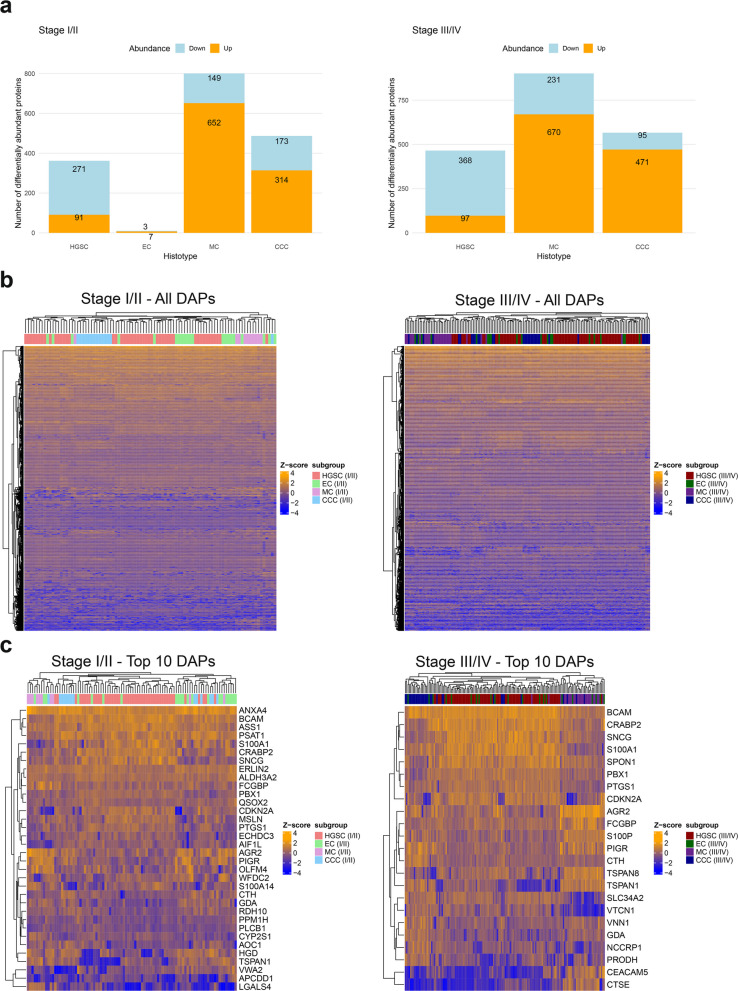 Figure 1
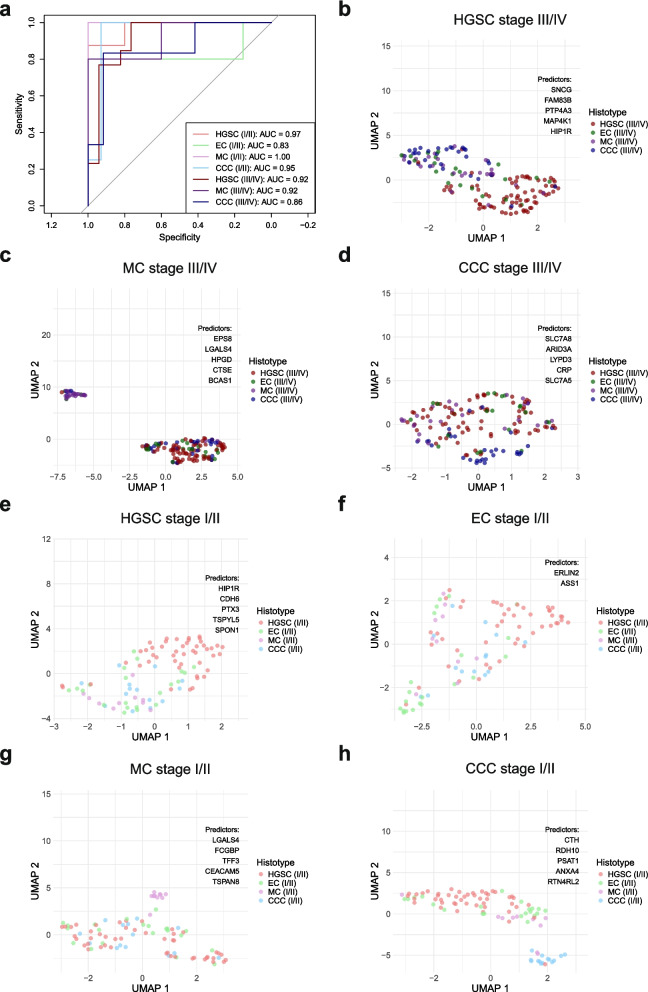 Figure 2
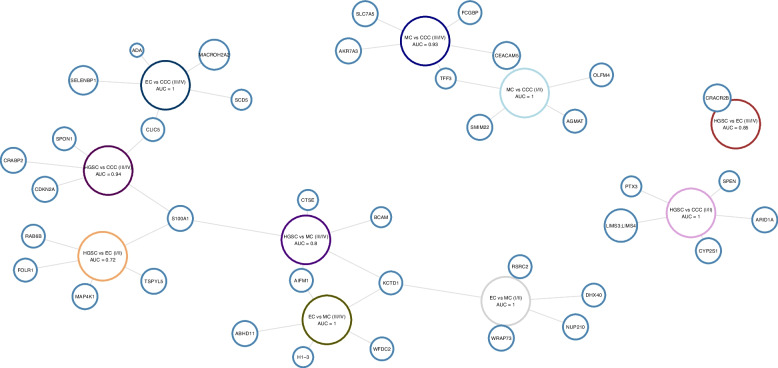 Figure 3
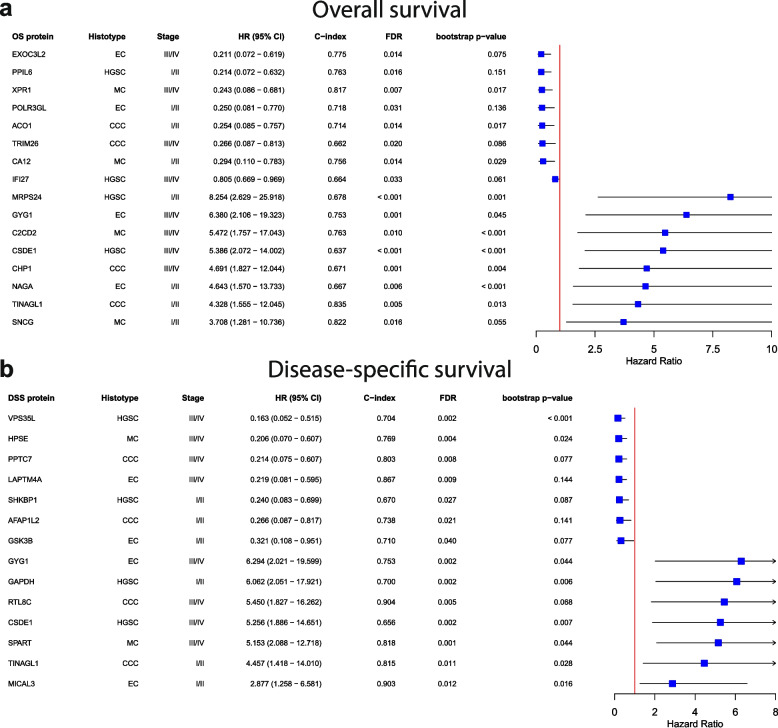 Figure 4
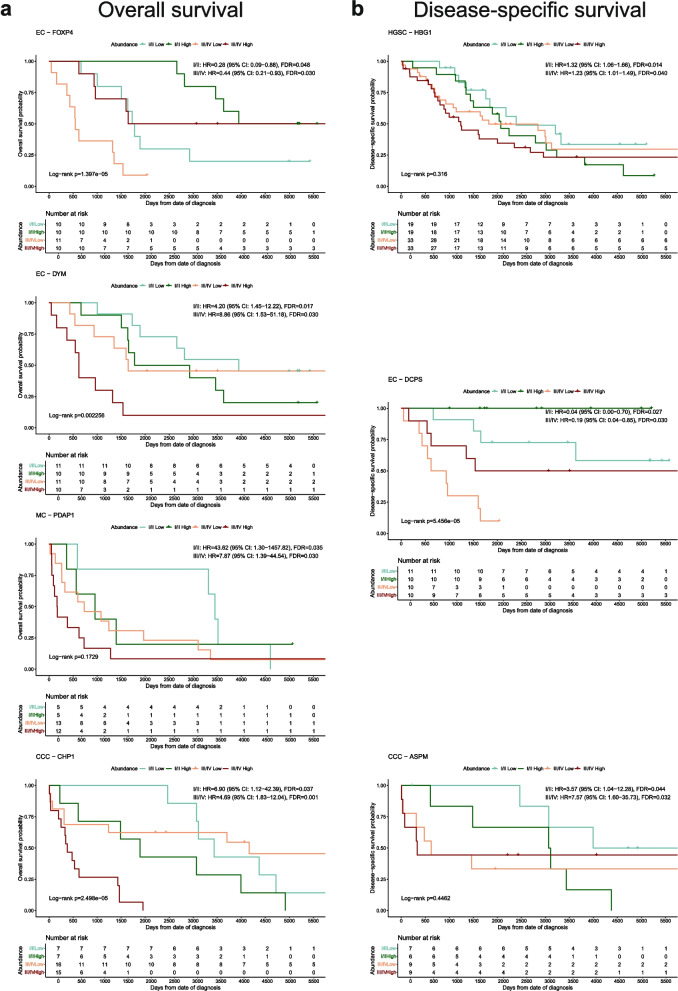 Figure 5
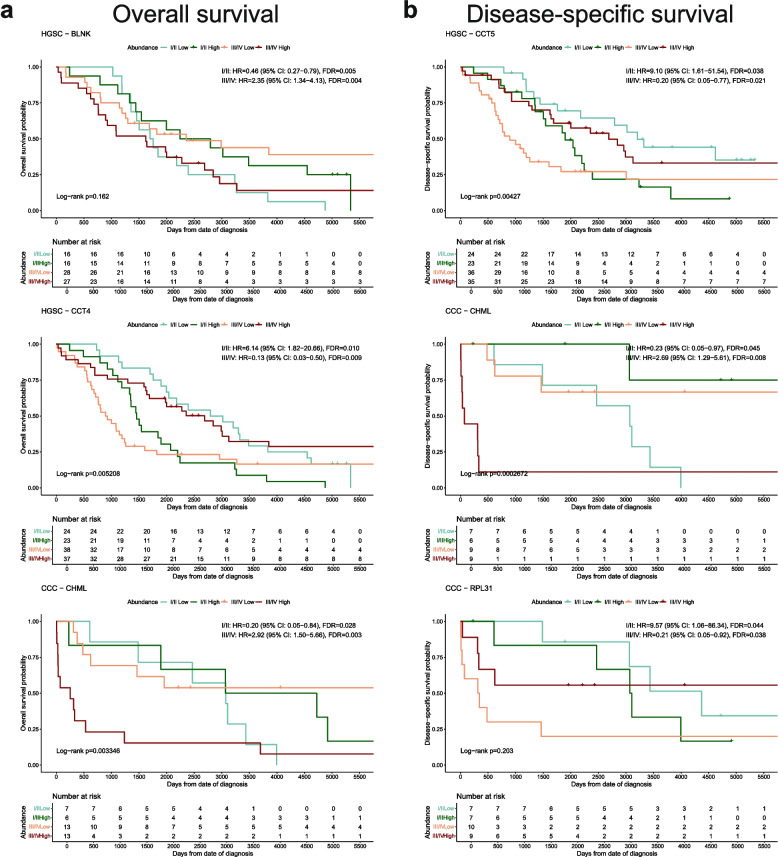 Figure 6
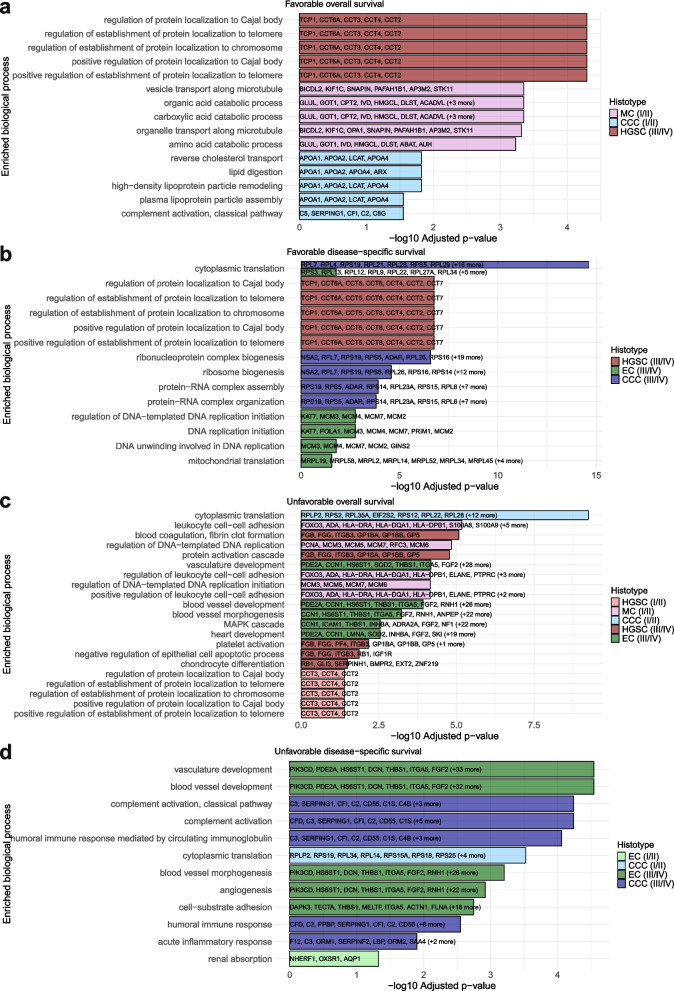 Figure 7
Peer Reviews
No public reviews on file for this paper yet. If you reviewed it on a platform where reviews are public (OpenReview, ICLR, NeurIPS, ICML), you can paste yours below so the community can read it here.
Videos
No videos yet. Explain this paper in a talk, walkthrough, or lecture? Add one.
Taxonomy
TopicsS100 Proteins and Annexins · Advanced Proteomics Techniques and Applications · Clusterin in disease pathology