Automated abstraction of clinical parameters of multiple myeloma from real-world clinical notes using large language models
Alana O’Brien Del Campo, Dmytro Lituiev, Gowtham Varma, Mithun Manoharan, Sunil Kumar Ravi, Avinash Aman, Ankit Kansagra, Joel Greshock, AJ Venkatakrishnan, Ashita S. Batavia

TL;DR
This paper shows how large language models can automatically extract clinical data from patient records for multiple myeloma, improving real-world evidence generation.
Contribution
The study introduces new NLP workflows using LLMs to extract MM-specific clinical data from EHRs, demonstrating performance improvements and resource efficiency.
Findings
Llama-based models outperformed BERT with an average F1 score of 0.82 for MM data abstraction.
Model size, inter-rater reliability, and prompt design significantly influenced workflow performance.
Strategic use of LLMs can accelerate real-world evidence generation for multiple myeloma research.
Abstract
Real-world evidence (RWE) is increasingly recognized as a valuable type of oncology research but extracting fit-for-purpose real-world data (RWD) from electronic health records (EHRs) remains challenging. Manual abstraction from free-text clinical documents, although the gold standard for information extraction, is resource-intensive. RWD generation using natural language processing (NLP) has been limited by performance ceilings and annotation requirements, which recent LLMs improve on. Multiple myeloma (MM) is the second most common hematological malignancy, with many opportunities for RWE to expand knowledge of disease and treatment. We evaluate new NLP workflows in abstracting MM-related clinical data fields from de-identified EHRs. NLP workflows (BERT and Llama-based, using various prompt types) were developed for 12 MM-specific data fields and evaluated with manually curated data…
Genes, proteins, chemicals, diseases, species, mutations and cell lines named across the full text — each resolved to its canonical identifier and authoritative record.
Click any figure to enlarge with its caption.
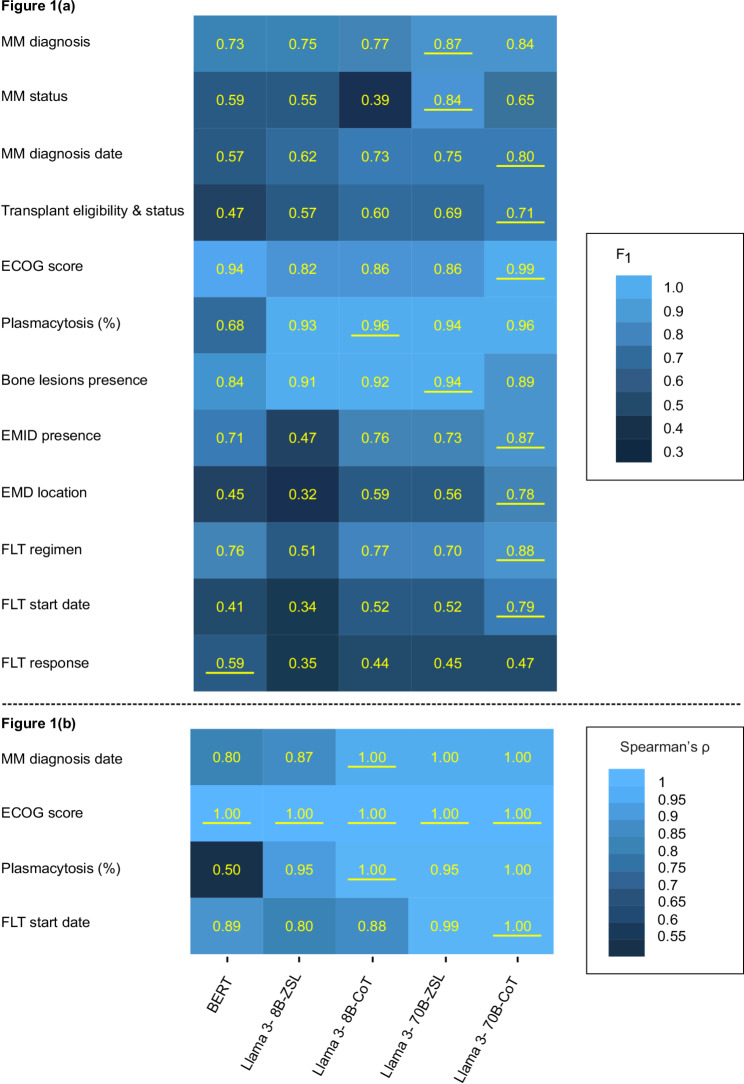 Figure 1
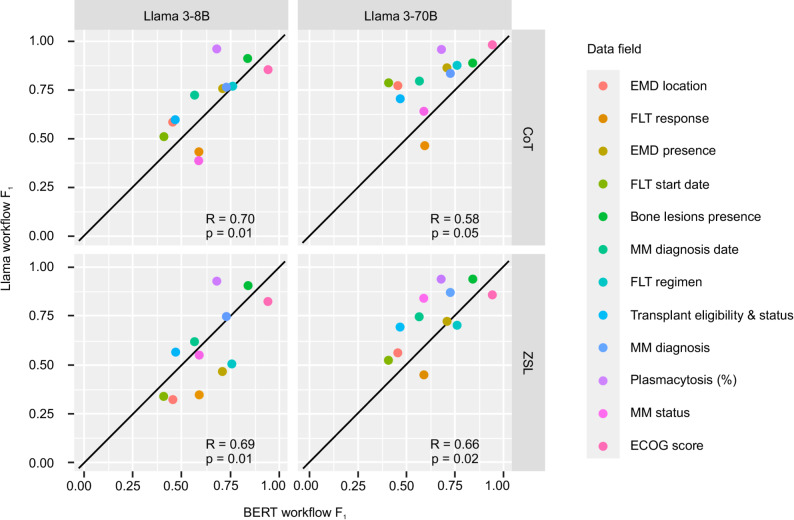 Figure 2
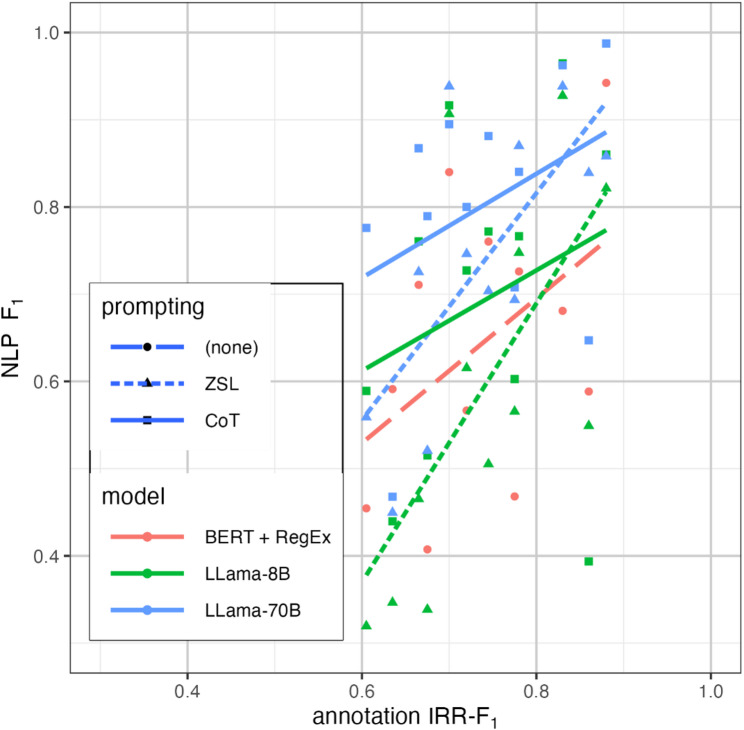 Figure 3
 Figure 4
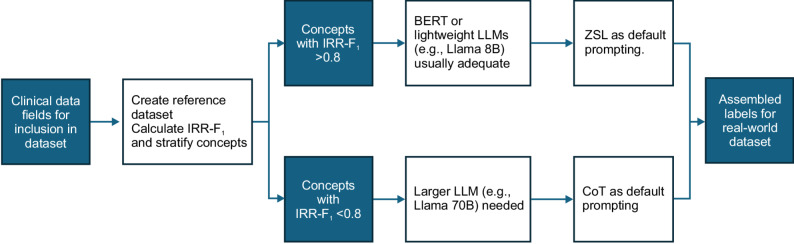 Figure 5
Peer Reviews
No public reviews on file for this paper yet. If you reviewed it on a platform where reviews are public (OpenReview, ICLR, NeurIPS, ICML), you can paste yours below so the community can read it here.
Videos
No videos yet. Explain this paper in a talk, walkthrough, or lecture? Add one.
Taxonomy
TopicsTopic Modeling · Machine Learning in Healthcare · Artificial Intelligence in Healthcare and Education