Harmonic patterns embedded in ictal EEG signals in focal epilepsy: new insight into the epileptogenic zone
Lingli Hu, Lingqi Ye, Hongyi Ye, Xiaochen Liu, Kai Xiong, Yuanming Zhang, Zhe Zheng, Hongjie Jiang, Cong Chen, Chunhong Shen, Zhongjin Wang, Jiping Zhou, Yingcai Wu, Kejie Huang, Junming Zhu, Zhong Chen, Meiping Ding, Shennan Weiss, Dongping Yang, Shuang Wang

TL;DR
This study identifies a unique EEG pattern during seizures that could improve localization of the brain area causing epilepsy.
Contribution
The study introduces the 'harmonic pattern' as a novel biomarker for identifying the epileptogenic zone in focal epilepsy.
Findings
The harmonic pattern appears in most focal epilepsy seizures and is associated with inter-regional synchronization.
The dominant harmonic pattern shows increased nonlinearity and waveform asymmetry compared to non-dominant patterns.
Surgical removal of areas with the dominant harmonic pattern correlates with seizure freedom after surgery.
Abstract
Localization of the epileptogenic zone (EZ) requires further refinement. We identified a unique ictal spectral structure, the “harmonic pattern” (H pattern), which potentially serves as a novel biomarker for localizing the EZ. This study aimed to analyze the clinical significance of the H pattern and to explore its underlying waveform features. Seventy patients with drug-resistant focal epilepsy, undergoing stereo-EEG (SEEG) evaluation and surgery, were included. Time–frequency maps (TFM) were generated using Morlet wavelet transform analysis. The H pattern was defined as multiple equidistant, high-density bands with varying frequencies on TFM. The upper quartile was employed to confirm contacts expressing dominant H pattern (dH pattern). Bispectral analysis and transfer function modeling were employed to assess nonlinear properties and signal propagation, respectively. The performance…
Genes, proteins, chemicals, diseases, species, mutations and cell lines named across the full text — each resolved to its canonical identifier and authoritative record.
Click any figure to enlarge with its caption.
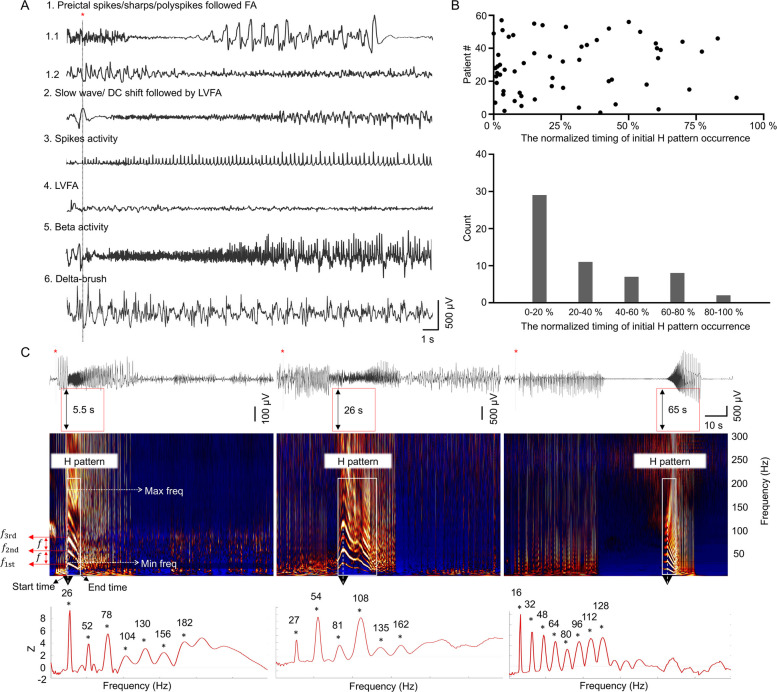 Figure 1
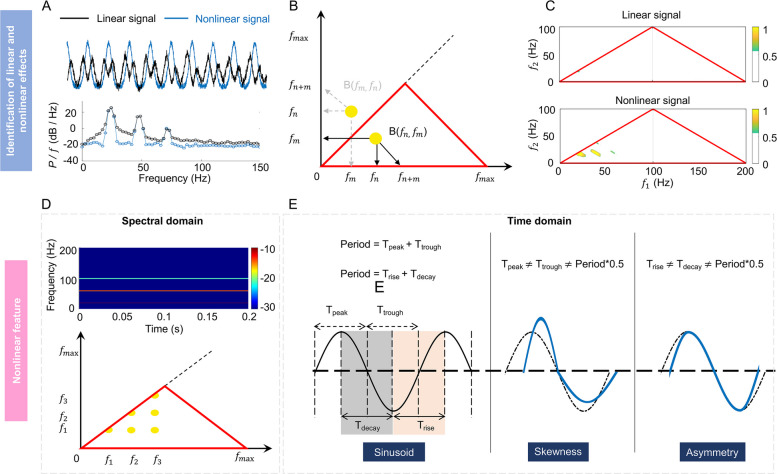 Figure 2
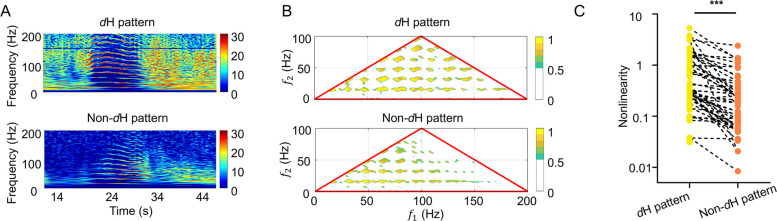 Figure 3
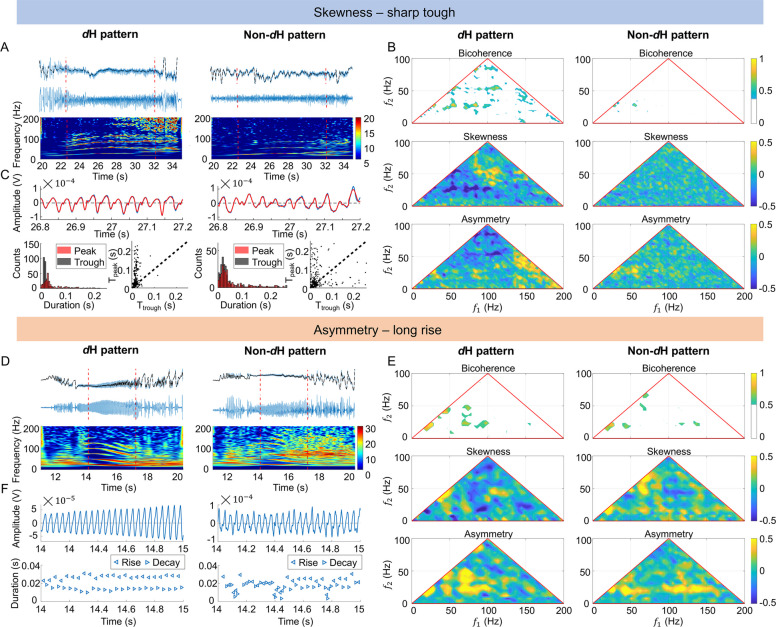 Figure 4
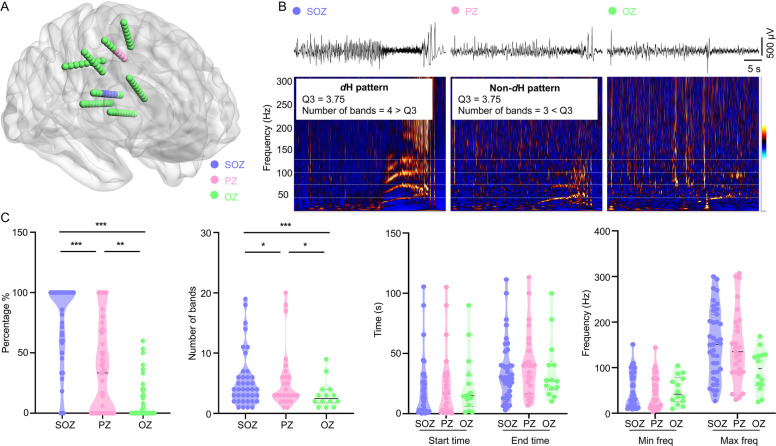 Figure 5
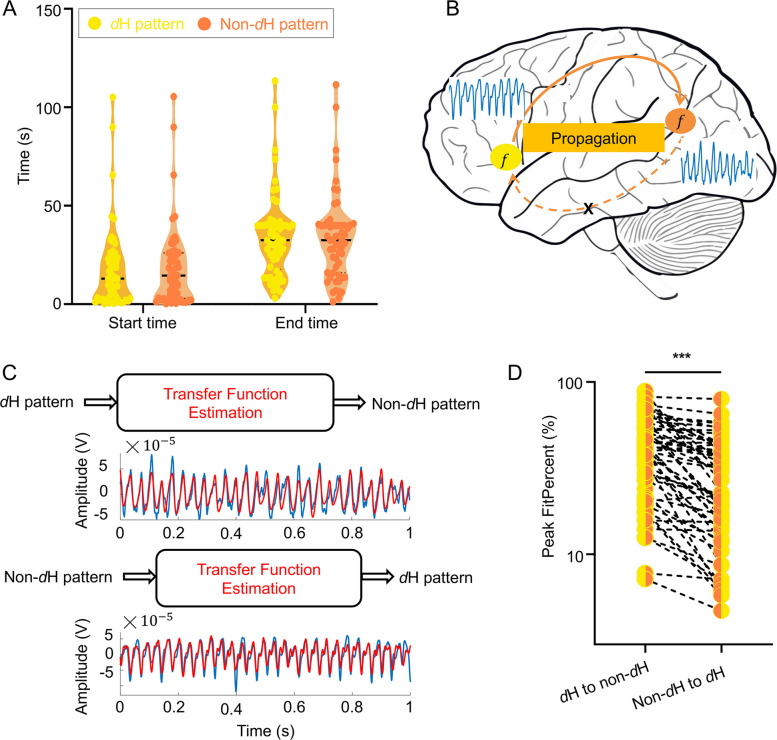 Figure 6
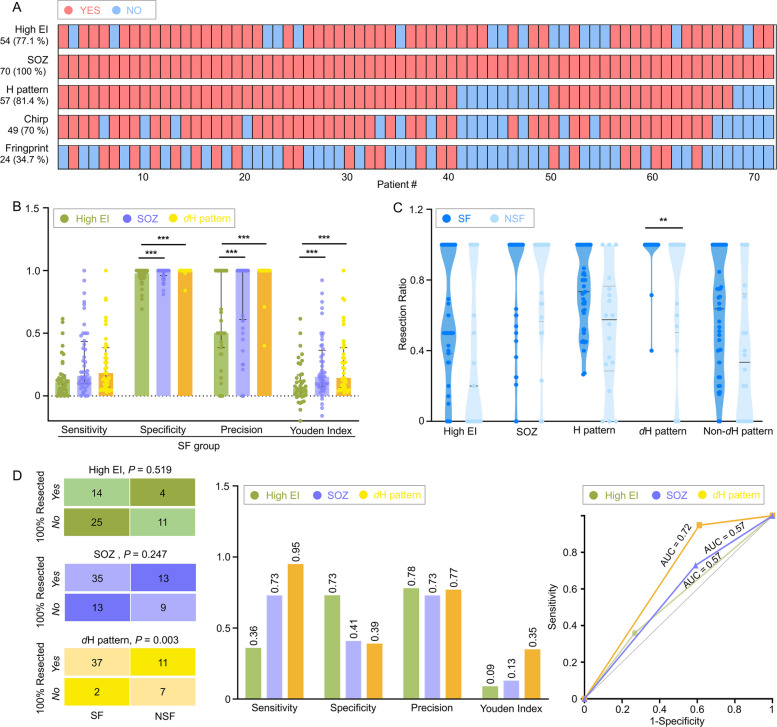 Figure 7
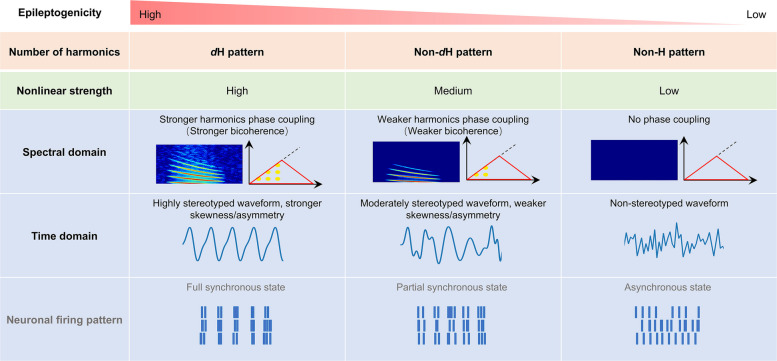 Figure 8
Peer Reviews
No public reviews on file for this paper yet. If you reviewed it on a platform where reviews are public (OpenReview, ICLR, NeurIPS, ICML), you can paste yours below so the community can read it here.
Videos
No videos yet. Explain this paper in a talk, walkthrough, or lecture? Add one.
Taxonomy
TopicsEEG and Brain-Computer Interfaces · Epilepsy research and treatment · Functional Brain Connectivity Studies