Comprehensive profiling of CRISPR/dCas9 epigenome editors indicates a complex link between on and off target effects
Majid Pahlevan Kakhki, Fatemeh Rangani, Ewoud Ewing, Chiara Starvaggi Cucuzza, Galina Zheleznyakova, Maria Kalomoiri, Lea Kenny, Anika Raghavan, Chandana Rao Prakash, Gabe van den Hoeven, Tejaswi Venkata S. Badam, Ruxandra Covacu, Ioanna Andreou, Maria Needhamsen, Lara Kular

TL;DR
This study compares different CRISPR/dCas9 tools for DNA methylation editing and finds that while some are more effective, they also cause unintended changes in gene activity.
Contribution
The study reveals that multimerization of DNA methyltransferase 3A increases editing potency but introduces widespread methylation and transcriptional changes.
Findings
Multimerization of DNA methyltransferase 3A enhances editing potency but causes early methylation at promoter regions.
Non-targeting gRNAs induce long-lasting methylation-independent transcriptional changes in RNA and energy metabolism genes.
CRISPRoff shows fewer and less stable off-target effects but still causes transcriptome alterations.
Abstract
CRISPR/dCas9-based epigenome editing systems, including DNA methylation epimodifiers, have greatly advanced molecular functional studies, revolutionizing their precision and applicability. Despite their promise, challenges such as the magnitude and stability of the on-target editing and unwanted off-target effects underscore the need for improved tool characterization and design. We systematically compare specific targeting and genome-wide off-target effects of available and novel dCas9-based DNA methylation editing tools over time. We demonstrate that multimerization of the catalytic domain of DNA methyltransferase 3A enhances editing potency but also induces widespread, early methylation deposition at low-to-medium methylated promoter-related regions with specific gRNAs and also with non-targeting gRNAs. A small fraction of the methylation changes associated with transcriptional…
Genes, proteins, chemicals, diseases, species, mutations and cell lines named across the full text — each resolved to its canonical identifier and authoritative record.
Click any figure to enlarge with its caption.
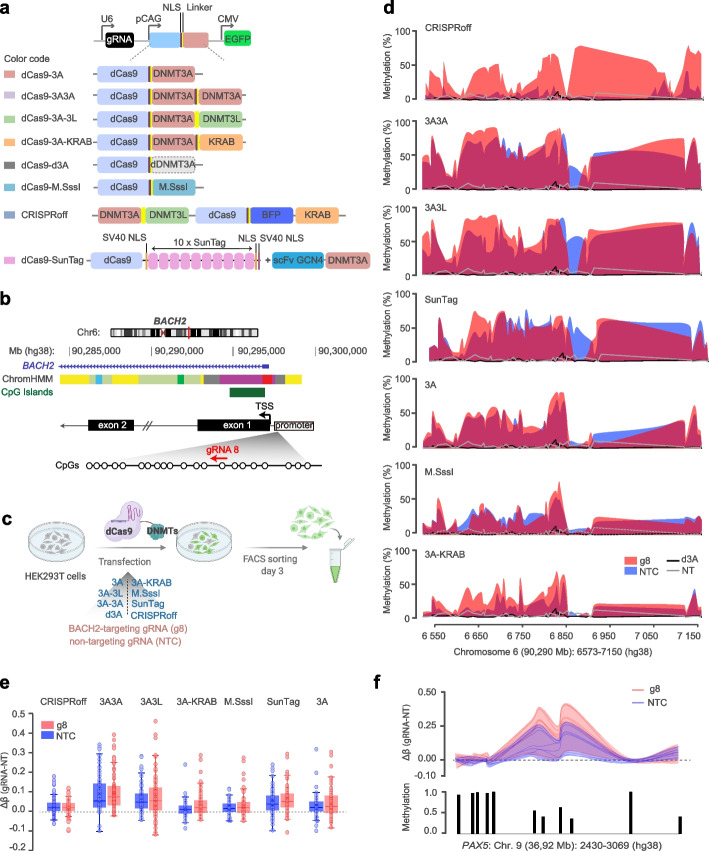 Figure 1
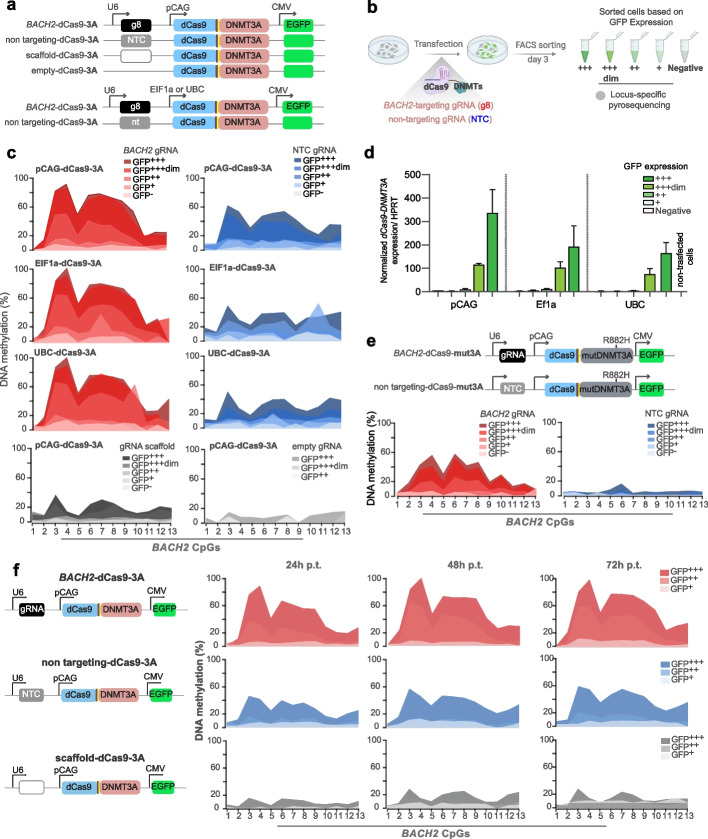 Figure 2
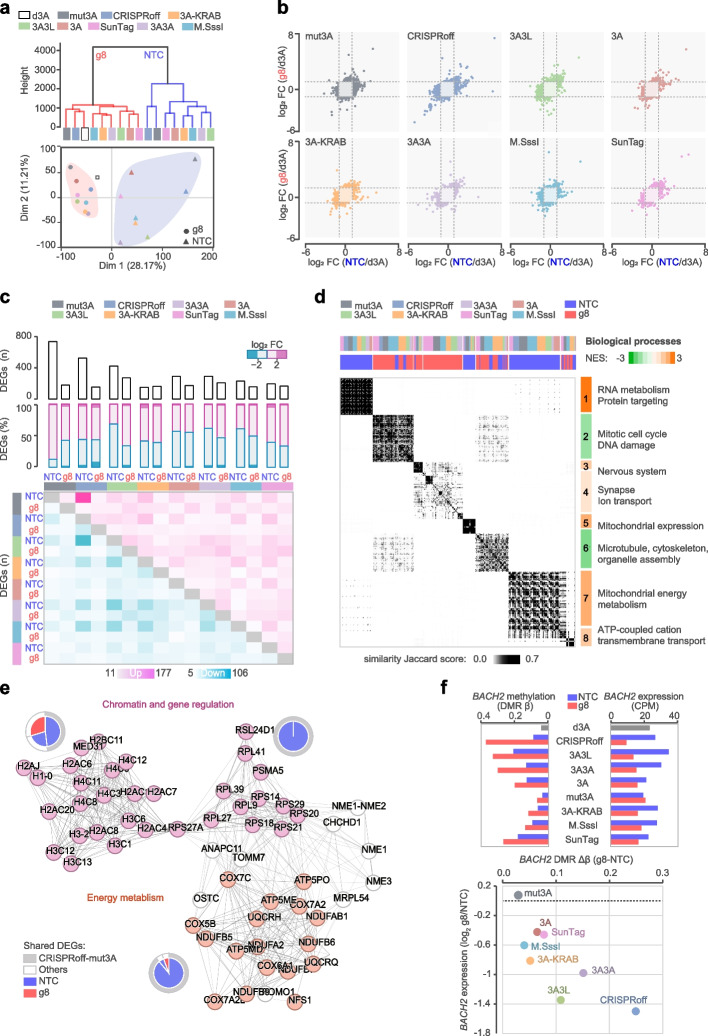 Figure 3
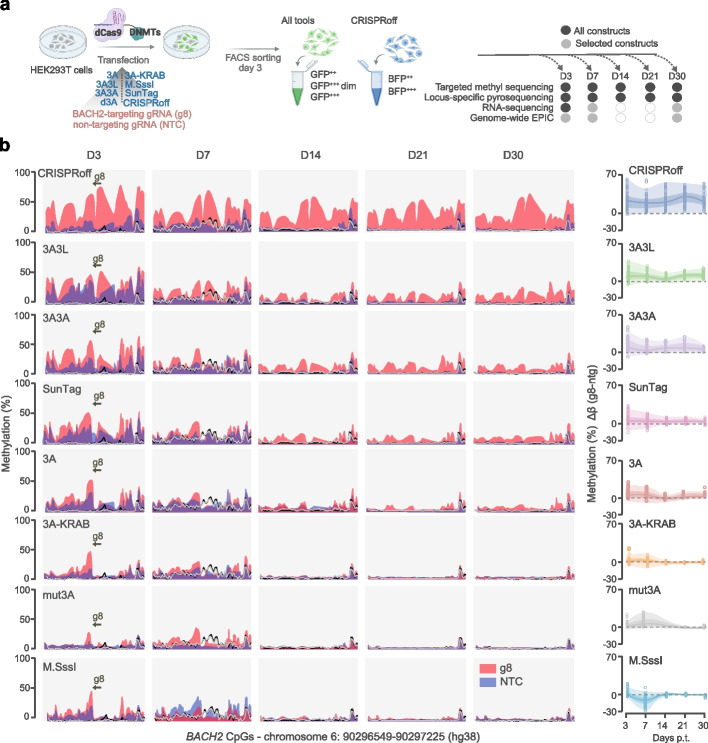 Figure 4
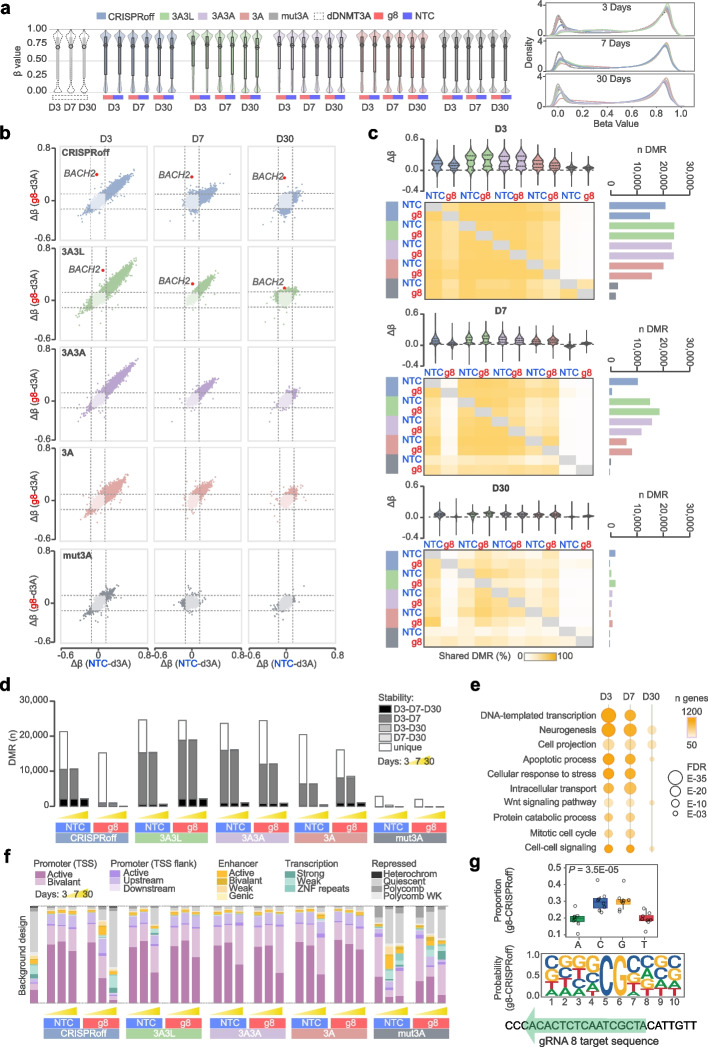 Figure 5
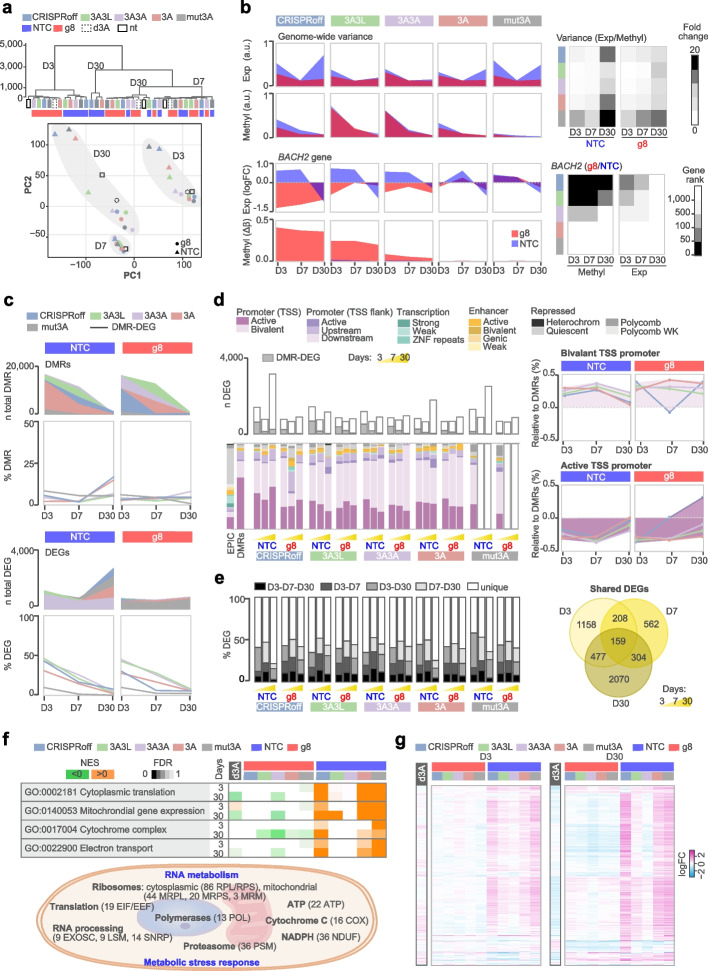 Figure 6
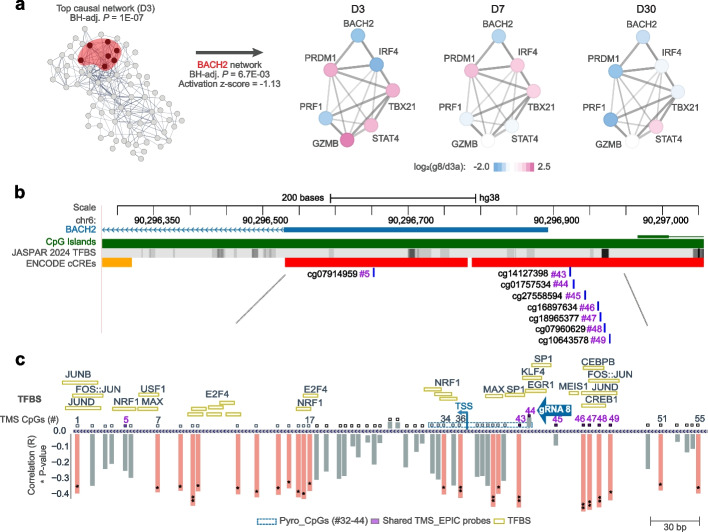 Figure 7
Peer Reviews
No public reviews on file for this paper yet. If you reviewed it on a platform where reviews are public (OpenReview, ICLR, NeurIPS, ICML), you can paste yours below so the community can read it here.
Videos
No videos yet. Explain this paper in a talk, walkthrough, or lecture? Add one.
Taxonomy
TopicsCRISPR and Genetic Engineering · RNA regulation and disease · Neurogenetic and Muscular Disorders Research