ECMO decannulation is associated with dynamic changes in coagulation profiles: an exploratory, nested cohort study
Matthias Noitz, Dennis Jenner, Roxane Brooks, Johannes Szasz, Romana Erblich, Bernhard Eichler, Marius Knöll, Niklas Krenner, Tina Tomić-Mahečić, Martin W. Dünser, Andreas Zierer, Jens Meier

TL;DR
This study shows that coagulation profiles rapidly change in the 72 hours after ECMO decannulation, indicating a quick recovery of blood clotting and a possible shift toward increased clotting tendency.
Contribution
The study provides new insights into dynamic coagulation changes following ECMO decannulation, which could inform post-ECMO care strategies.
Findings
Platelet counts, Factor VIII, and Factor XIII activity significantly increased within 72 hours after ECMO decannulation.
D-Dimer levels significantly declined, suggesting reduced clot breakdown activity.
ROTEM® analyses showed improved clot formation and firmness, indicating a prothrombotic shift.
Abstract
ECMO-associated coagulopathy is a common phenomenon in patients undergoing ECMO therapy. However, data on coagulation trajectories in the post ECMO decannulation period are limited. This study aimed to explore changes in coagulatory function within 72 h after weaning of ECMO therapy. Exploratory, nested cohort study of a prospective, observational, single-centre cohort study investigating haemostatic changes in adult patients undergoing ECMO therapy at a tertiary academic centre and ECMO referral facility in Linz/Austria. Coagulation tests as well as ROTEM® analyses were performed at the time of ECMO decannulation (d0) and three days later (d3). Intra-individual changes in coagulation parameters and viscoelastic test results after weaning of ECMO therapy were determined using paired comparisons (Student’s t-tests or Wilcoxon signed-rank tests) between the two timepoints. 30 adult…
Genes, proteins, chemicals, diseases, species, mutations and cell lines named across the full text — each resolved to its canonical identifier and authoritative record.
Click any figure to enlarge with its caption.
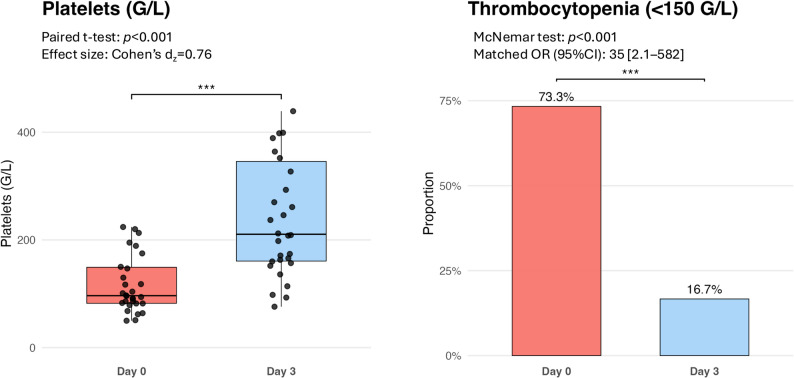 Figure 1
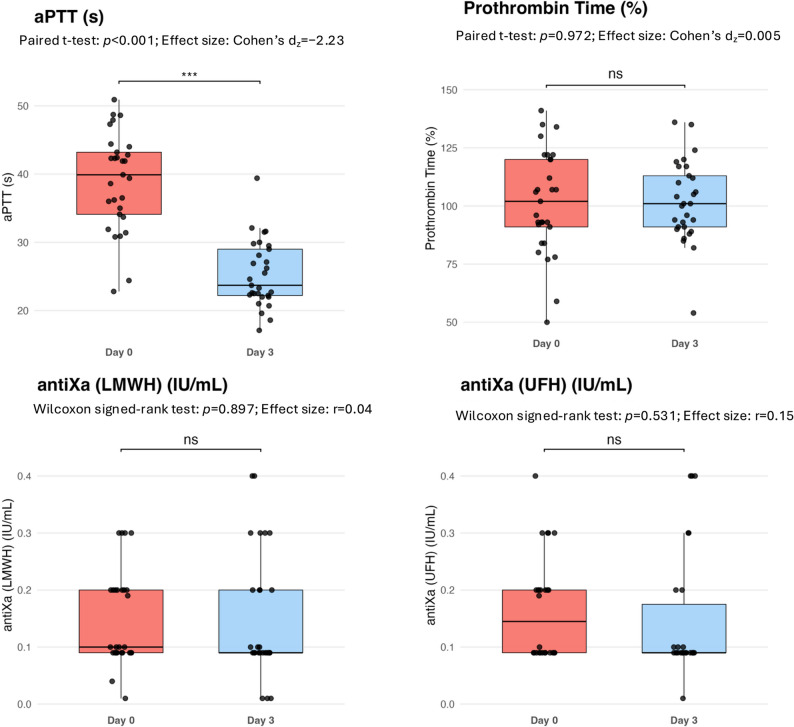 Figure 2
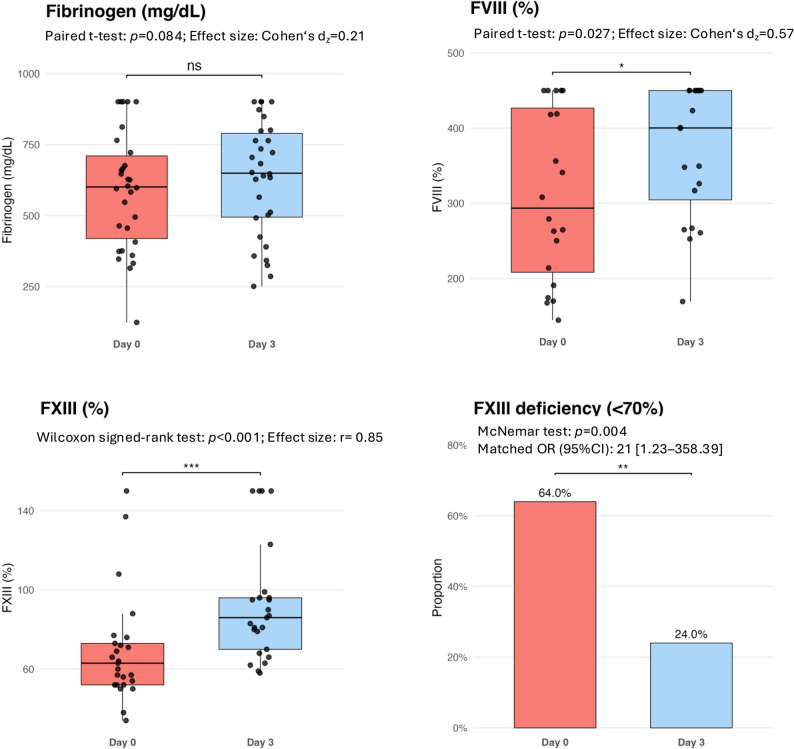 Figure 3
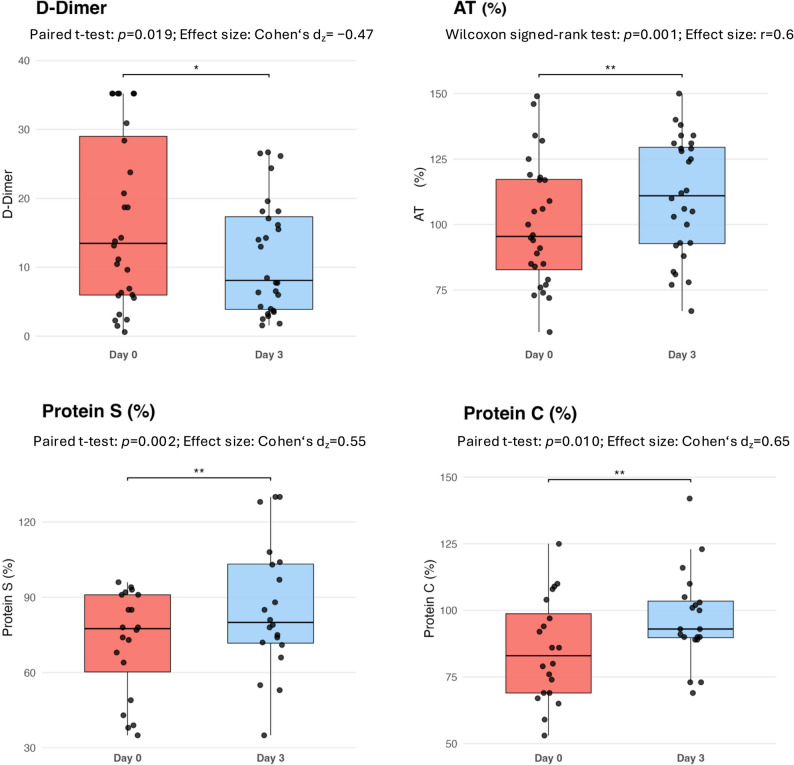 Figure 4
Peer Reviews
No public reviews on file for this paper yet. If you reviewed it on a platform where reviews are public (OpenReview, ICLR, NeurIPS, ICML), you can paste yours below so the community can read it here.
Videos
No videos yet. Explain this paper in a talk, walkthrough, or lecture? Add one.
Taxonomy
TopicsMechanical Circulatory Support Devices · Complement system in diseases · Hemophilia Treatment and Research