Asynchronous seasonal dynamics of nycteribiid bat flies and Bartonella spp. in Australian flying foxes (Pteropus spp.)
Brent D. Jones, Caylee A. Falvo, Chris Burwell, Tamika J. Lunn, Devin N. Jones-Slobodian, Evelyn Benson, Clifton D. McKee, Agnieszka Rynda-Apple, Raina K. Plowright, Daniel J. Becker, Kerry L. Clark, Hamish McCallum, Nicholas J. Clark, Alison J. Peel

TL;DR
This study examines the seasonal patterns of bat flies and bacteria in Australian flying foxes, revealing how climate and host age influence their prevalence.
Contribution
The study provides new insights into the seasonal dynamics of nycteribiid bat flies and Bartonella spp. in Australian flying foxes.
Findings
Nycteribiid bat fly prevalence follows a consistent annual cycle influenced by temperature and humidity.
Bartonella spp. prevalence peaks in winter, with juvenile bats less likely to be infected.
Borrelia spp. are rare and show no clear seasonal pattern.
Abstract
Bat flies are ubiquitous ectoparasites of bats, recognised as potential vectors for viral and bacterial transmission between individual bats within a roost. Despite this, little is known about the seasonal dynamics of bat flies. Here, we present the results of a longitudinal study that compares seasonal prevalence and host risk factors for bat fly (Diptera: Nycteribiidae) parasitism with that of Bartonella and Borrelia spp. detected in Pteropus alecto and P. poliocephalus in eastern Australia. Flying foxes were sampled at nine different roosts in south-east Queensland and northern New South Wales between February 2018 and September 2022 using mist nets. Host and ectoparasite data were recorded, and bat fly specimens were collected for identification. Blood samples collected from the flying foxes were screened for the presence of Bartonella and Borrelia DNA using polymerase chain…
Genes, proteins, chemicals, diseases, species, mutations and cell lines named across the full text — each resolved to its canonical identifier and authoritative record.
Click any figure to enlarge with its caption.
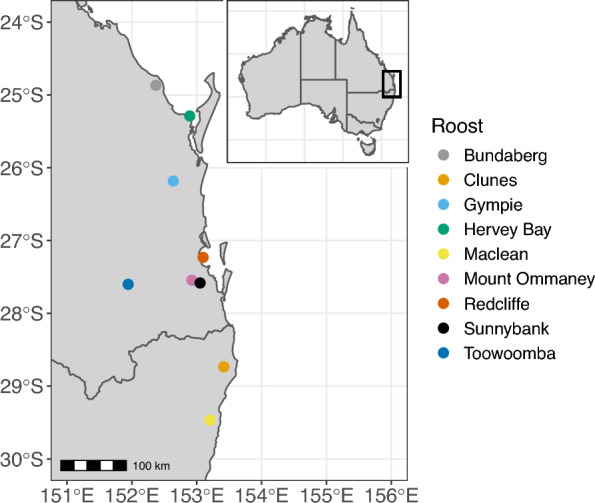 Figure 1
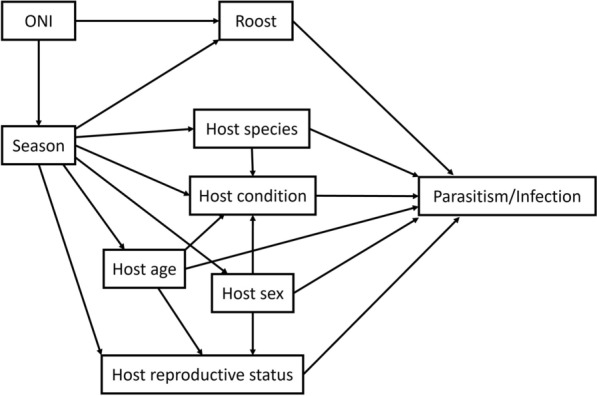 Figure 2
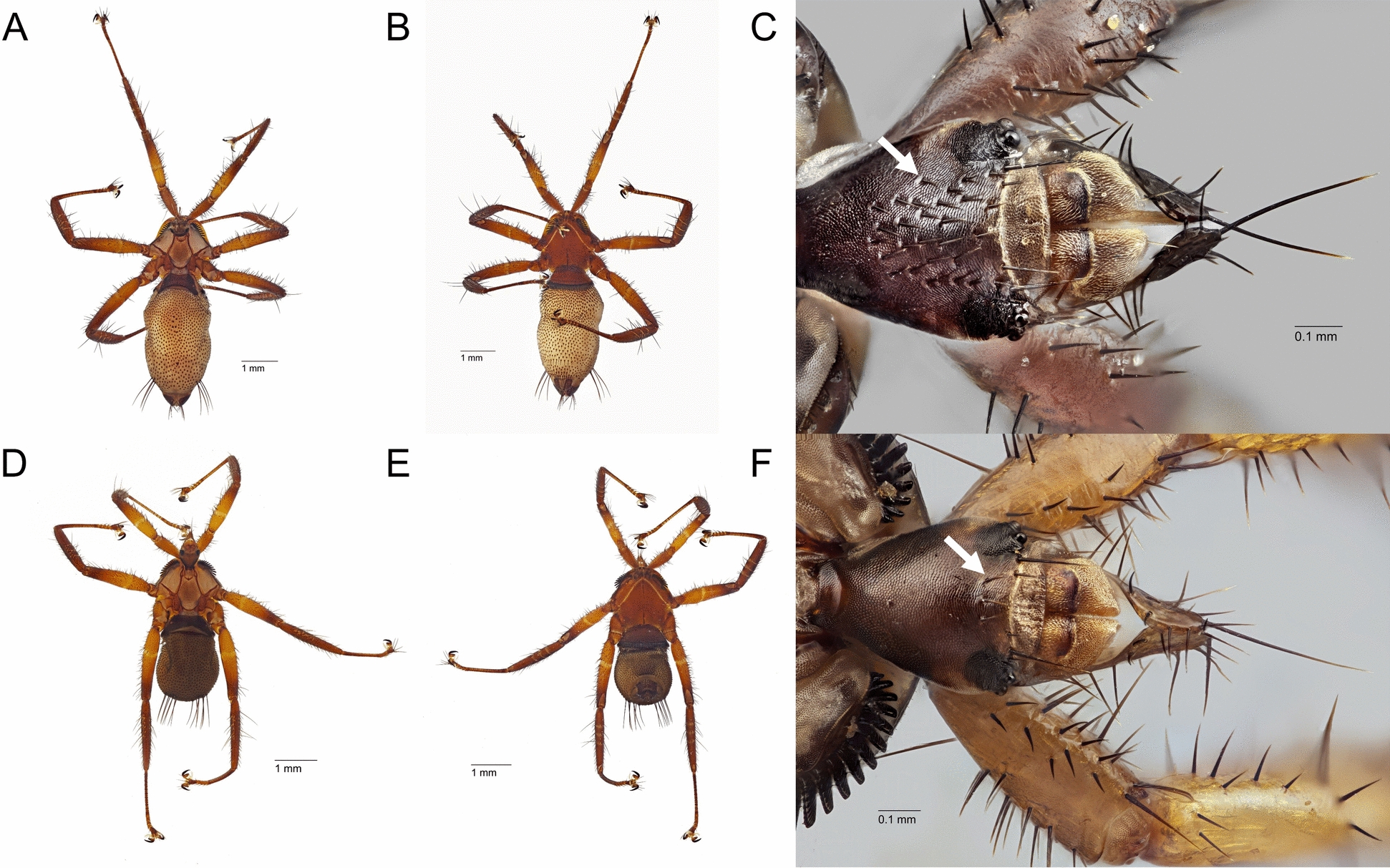 Figure 3
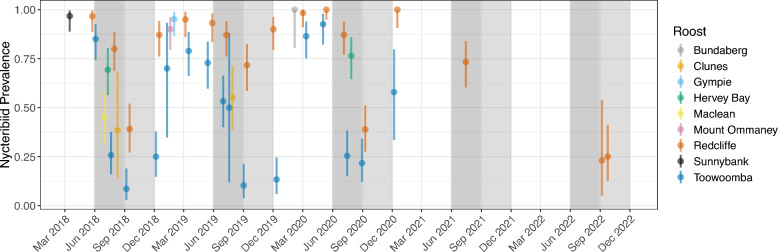 Figure 4
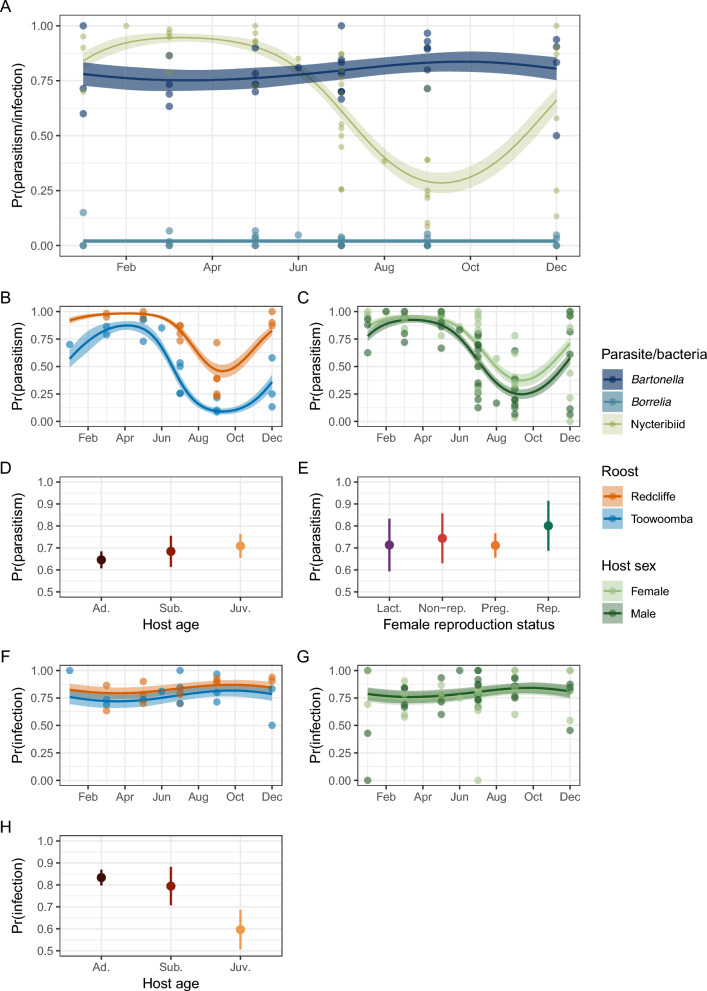 Figure 5
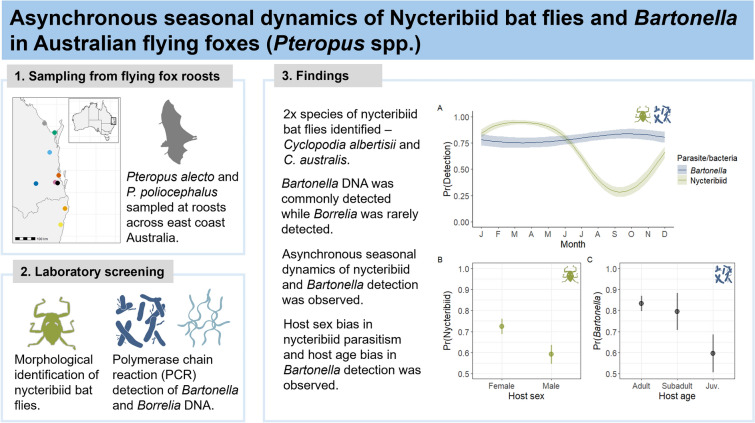 Figure 6
Peer Reviews
No public reviews on file for this paper yet. If you reviewed it on a platform where reviews are public (OpenReview, ICLR, NeurIPS, ICML), you can paste yours below so the community can read it here.
Videos
No videos yet. Explain this paper in a talk, walkthrough, or lecture? Add one.
Taxonomy
TopicsBartonella species infections research · Rabies epidemiology and control · Yersinia bacterium, plague, ectoparasites research