Generative AI in simulation debriefings: an exploratory study using the Team-FIRST framework and qualitative feedback from simulation experts and learners
David W. Tscholl, Max Ebensperger, Arend RahrischRahrisch, Helius Wang, Hubert Heckel, Max Thomasius, Alexander Kaserer, Bastian Grande, Julia C. Seelandt, Michaela Kolbe

TL;DR
This study explores how generative AI can help in medical simulation debriefings by analyzing team communication and providing feedback, though it highlights the need for human oversight.
Contribution
The study introduces AI-generated teamwork reports using the Team-FIRST framework in medical simulations, capturing observations that might otherwise be missed.
Findings
Experts found AI reports useful for structured feedback and capturing overlooked observations.
Learners were optimistic about AI's potential but concerned about transparency and interpretation errors.
Limitations included inaccuracies in speaker attribution and lack of contextual/nonverbal data.
Abstract
Effective debriefings in simulation-based education require accurate observation of team interactions, yet facilitators face challenges due to cognitive load, observer bias, and the complexity of team dynamics. Generative artificial intelligence (AI) tools offer a potential means to support this process by analyzing verbal communication and providing structured feedback. This study explored how AI tools can contribute to teamwork observation and debriefing in immersive medical simulations. We conducted a qualitative, exploratory study using thematic analysis of simulation participants’ and debriefers’ experiences with AI-generated teamwork reports. Forty-one participants (anesthesia nurses, residents, and attendings) participated in immersive scenarios at the University Hospital Zurich simulation center. Verbal interactions were transcribed with AI-assisted speech recognition and…
Genes, proteins, chemicals, diseases, species, mutations and cell lines named across the full text — each resolved to its canonical identifier and authoritative record.
Click any figure to enlarge with its caption.
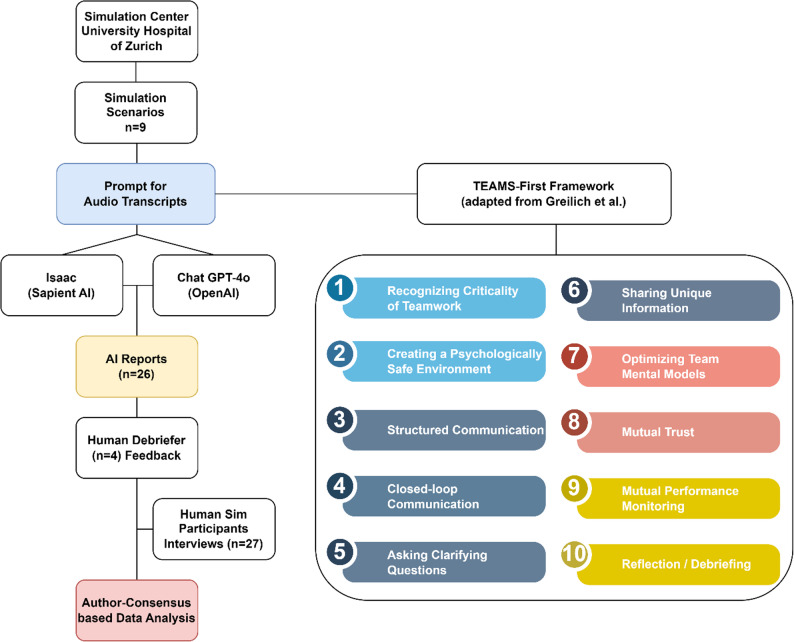 Figure 1
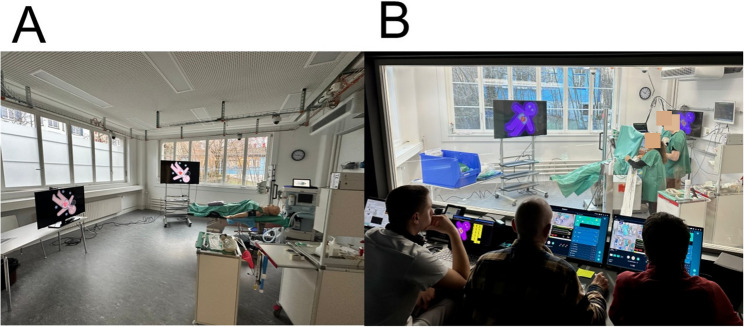 Figure 2
Peer Reviews
No public reviews on file for this paper yet. If you reviewed it on a platform where reviews are public (OpenReview, ICLR, NeurIPS, ICML), you can paste yours below so the community can read it here.
Videos
No videos yet. Explain this paper in a talk, walkthrough, or lecture? Add one.
Taxonomy
TopicsSimulation-Based Education in Healthcare · Surgical Simulation and Training · Artificial Intelligence in Healthcare and Education