The role of TRPV4 in ischemic stroke
Juan Guo, Xiaotong Yu, Yuewen Ma

TL;DR
This paper reviews how the TRPV4 ion channel influences ischemic stroke outcomes, suggesting it could be a target for new therapies.
Contribution
The paper highlights TRPV4's phase-dependent roles in stroke pathophysiology and its potential as a mechanotherapeutic target.
Findings
TRPV4 activation during acute stroke is linked to neuronal injury and cerebral edema.
TRPV4 supports recovery by aiding arterial dilation and collateral vessel formation.
Targeting TRPV4 with physical therapies may improve stroke outcomes.
Abstract
Recent advances in mechanotransduction research have highlighted the important role of mechanosensitive ion channels, particularly the transient receptor potential vanilloid 4 (TRPV4) channel. TRPV4, a non-selective cation channel predominantly located on the plasma membrane, is widely expressed in the mammalian and human brain and exhibits sensitivity to mechanical stimuli due to its unique structural features. Emerging evidence suggests that TRPV4 may function as a modulator in the pathophysiology of ischemic stroke. During the acute phase of stroke, TRPV4 activation has been linked to neuronal injury and cerebral edema. In contrast, during the recovery phase following ischemia-reperfusion, TRPV4 appears to contribute to neurovascular remodeling by facilitating intracranial arterial dilation and collateral vessel formation. These phase-dependent roles indicate that targeted modulation…
Genes, proteins, chemicals, diseases, species, mutations and cell lines named across the full text — each resolved to its canonical identifier and authoritative record.
Click any figure to enlarge with its caption.
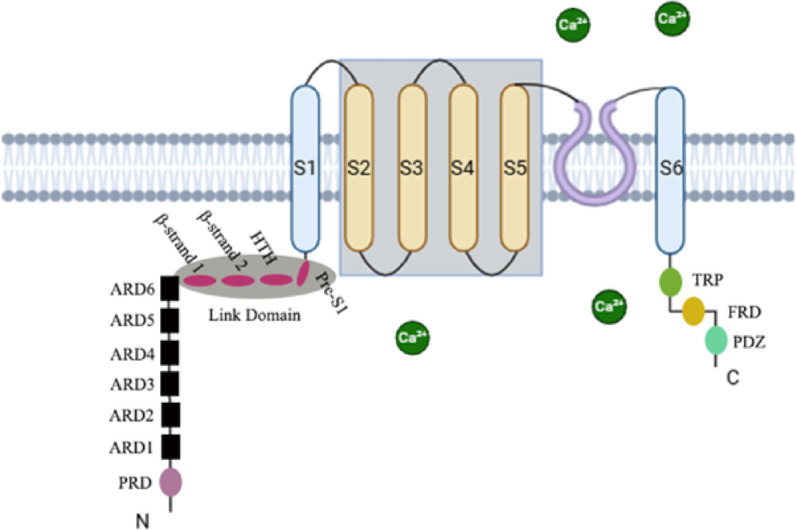 Figure 1
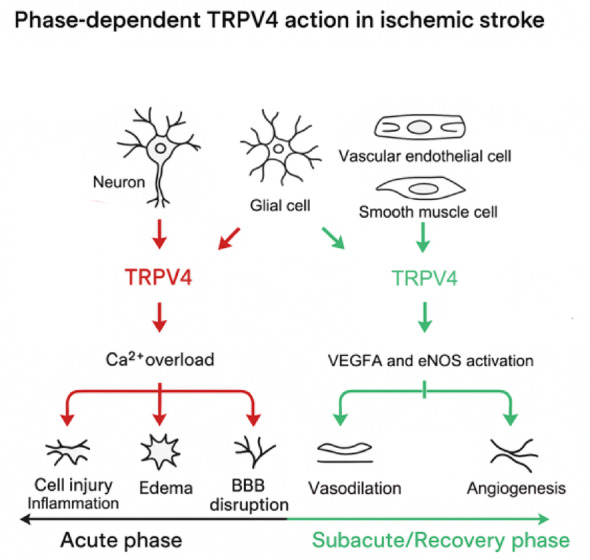 Figure 2
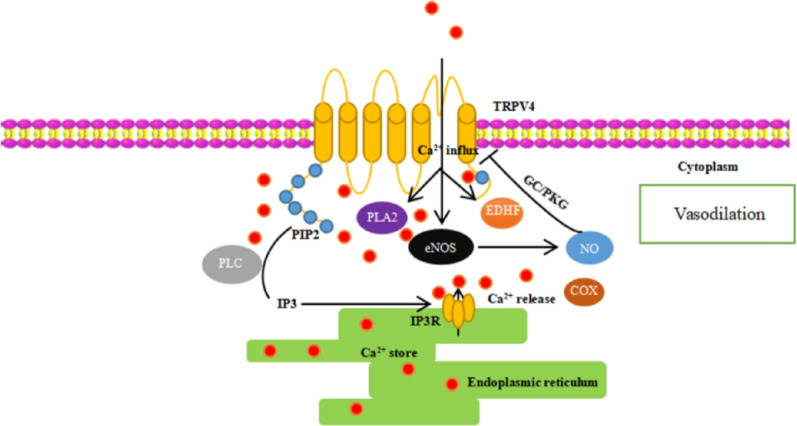 Figure 3
Peer Reviews
No public reviews on file for this paper yet. If you reviewed it on a platform where reviews are public (OpenReview, ICLR, NeurIPS, ICML), you can paste yours below so the community can read it here.
Videos
No videos yet. Explain this paper in a talk, walkthrough, or lecture? Add one.
Taxonomy
TopicsIon Channels and Receptors · Barrier Structure and Function Studies · Magnesium in Health and Disease