Children as Alibi Corroborators for Adults
Heather L. Price, Angela D. Evans, Emily A. Nevokshonoff, Andre Kehn, Jennica Wlodarczyk

TL;DR
This study shows that children are generally good at confirming an adult was present but often fail to notice when an adult leaves the room.
Contribution
The study provides new insights into children's reliability as alibi corroborators in real-world scenarios.
Findings
Most children accurately reported when an adult stayed in the room.
Many children failed to notice when an adult left the room, especially when asked direct yes/no questions.
Errors were more common in the main study when the adult's absence was more noticeable.
Abstract
Despite how frequently adults are alone with children, we know little about children's ability to corroborate alibis. In two studies, we investigated children's ability to act as alibi corroborators. In both studies, two visitors (one male, one female) attended children's summer camps to present science activities to the children. In the pilot study (N = 83; M age = 7.1 years), for half of the children, the female researcher left the room for one of the activities. Children were then interviewed about the adults’ whereabouts either immediately or 1 day later. In the main study (N = 147; M age = 9.40), the female researcher left the room for one activity in a more salient manner, and all children were interviewed 3 days later. Across both studies, though there was substantial variability, many children did not report that the female researcher left (pilot study, 82%; main study, 32%),…
Genes, proteins, chemicals, diseases, species, mutations and cell lines named across the full text — each resolved to its canonical identifier and authoritative record.
Click any figure to enlarge with its caption.
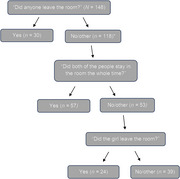 Figure 1
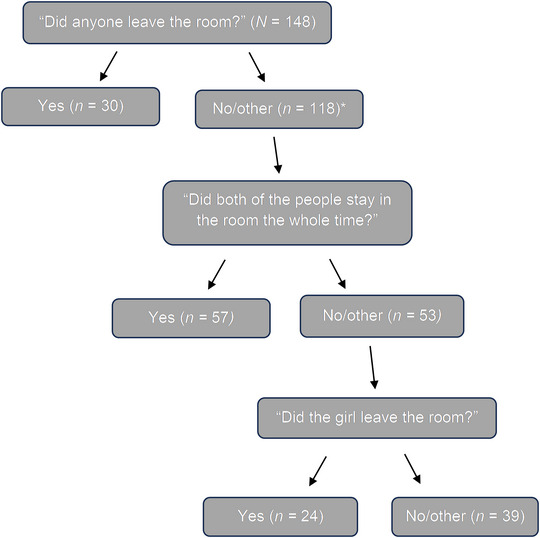 Figure 2
Peer Reviews
No public reviews on file for this paper yet. If you reviewed it on a platform where reviews are public (OpenReview, ICLR, NeurIPS, ICML), you can paste yours below so the community can read it here.
Videos
No videos yet. Explain this paper in a talk, walkthrough, or lecture? Add one.
Taxonomy
TopicsSpatial Cognition and Navigation · Identity, Memory, and Therapy · Attachment and Relationship Dynamics