Deep neural networks trained for estimating reflectance and illumination achieve lightness constancy differently than human observers
Alban Flachot, Jaykishan Patel, Thomas S. A. Wallis, Marcus A. Brubaker, David H. Brainard, Richard F. Murray

TL;DR
This paper compares how humans and deep neural networks estimate surface reflectance under varying lighting conditions, finding that the networks perform better and use different cues.
Contribution
The study reveals that deep neural networks achieve lightness constancy differently than humans, relying on shading and shadows rather than local contrast.
Findings
Convolutional neural networks outperformed humans in lightness constancy tasks.
Networks relied on shading and shadows, while humans were most affected by loss of local contrast.
Networks could learn to exploit noise artifacts in ray-traced images.
Abstract
Lightness constancy, the ability to create perceptual representations that are strongly correlated with surface reflectance despite variations in lighting and context, is a challenging computational problem. Indeed, it has proven difficult to develop image-computable models of how human vision achieves a substantial degree of lightness constancy in complex scenes. Recently, convolutional neural networks have been developed that are proficient at estimating reflectance, but little is known about how they achieve this, or whether they are good models of human vision. We examined this question by training a convolutional neural network to estimate reflectance and illumination in a computer-rendered virtual world, and evaluating both the convolutional neural network and human observers in a lightness matching task. In several conditions, we eliminated cues potentially supporting lightness…
Genes, proteins, chemicals, diseases, species, mutations and cell lines named across the full text — each resolved to its canonical identifier and authoritative record.
Click any figure to enlarge with its caption.
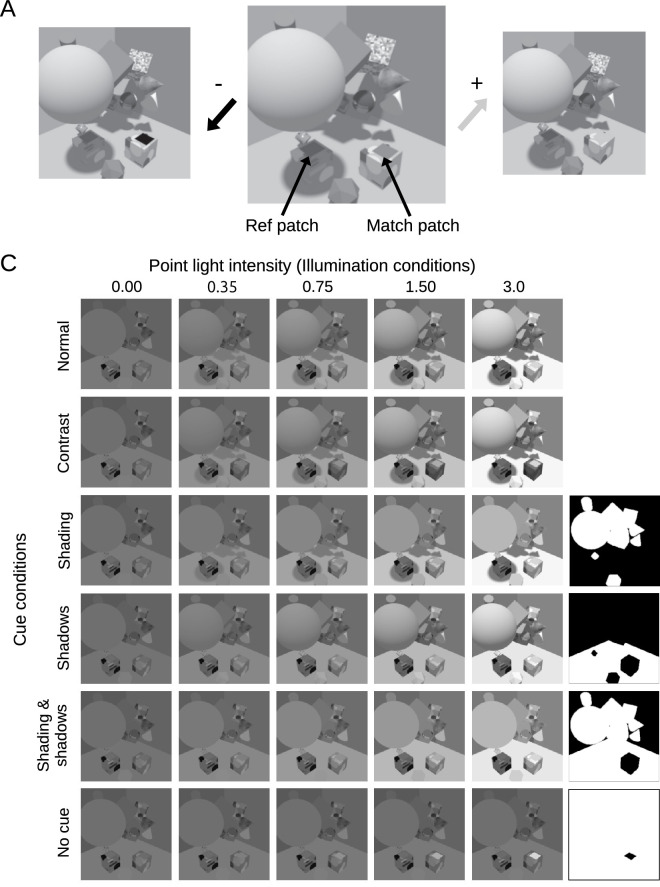 Figure 1
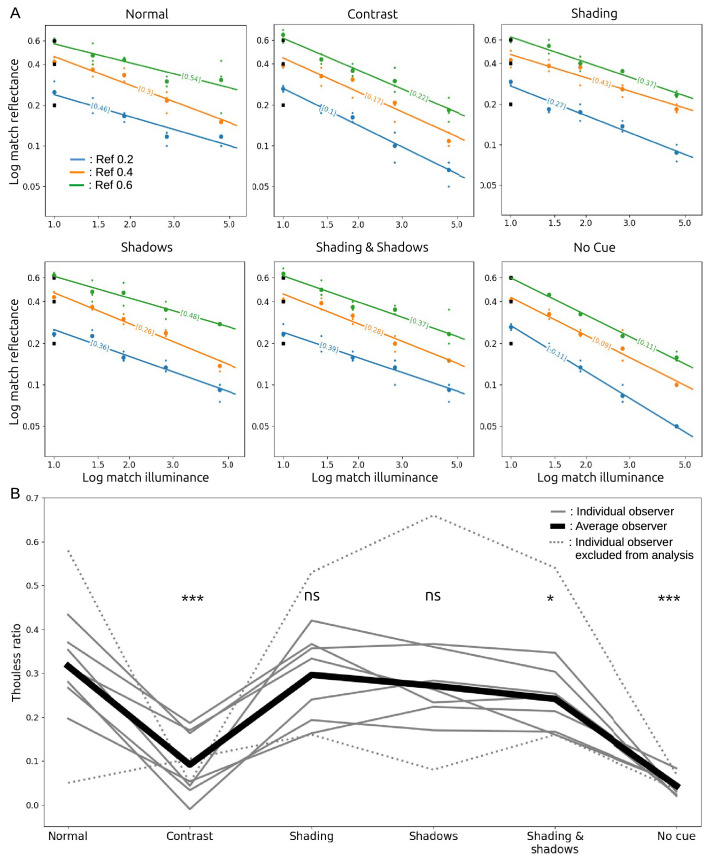 Figure 2
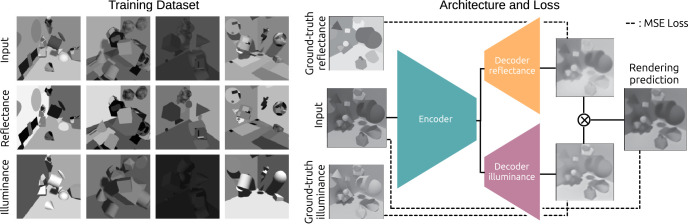 Figure 3
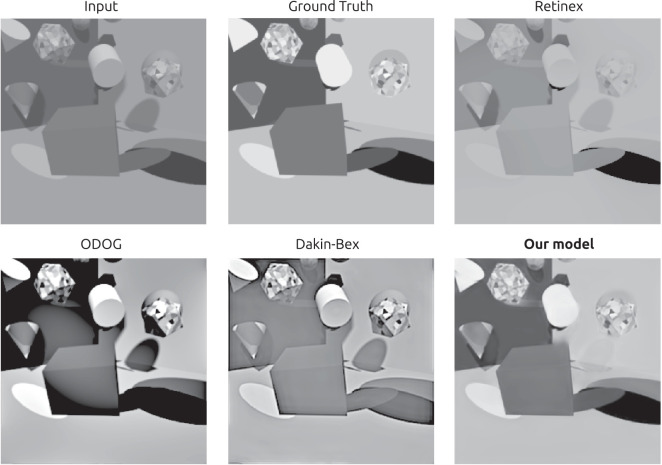 Figure 4
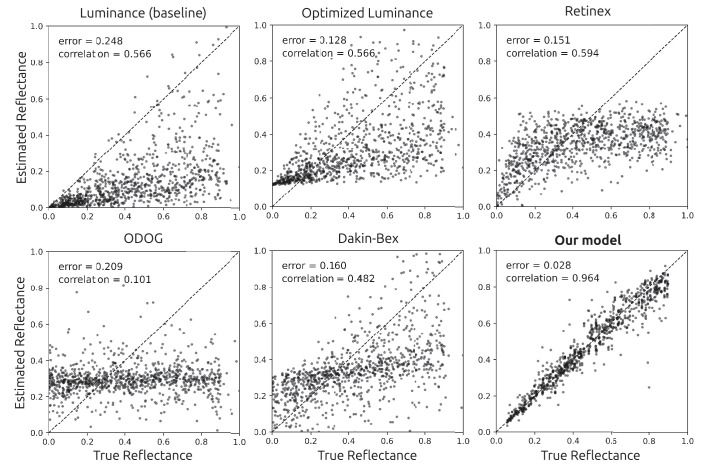 Figure 5
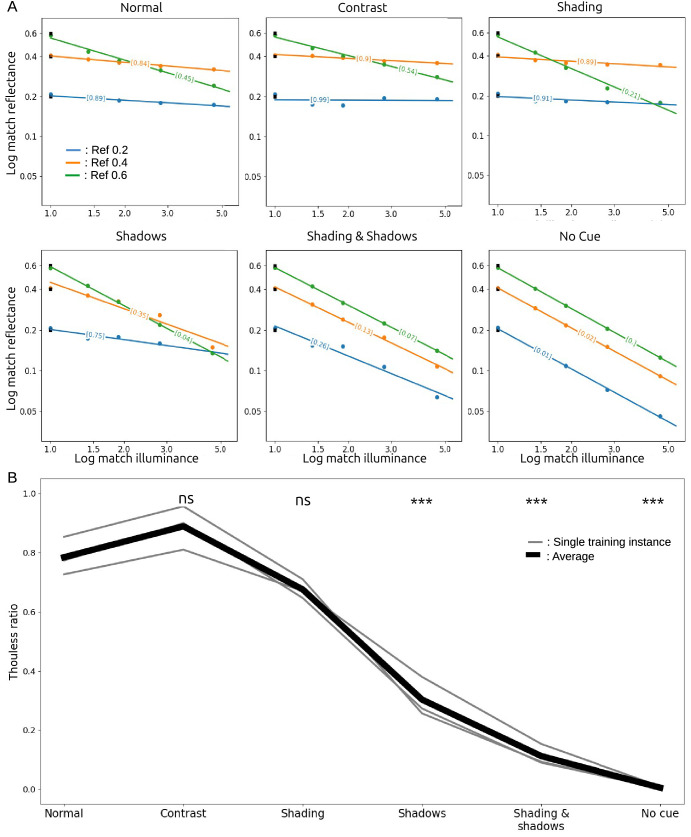 Figure 6
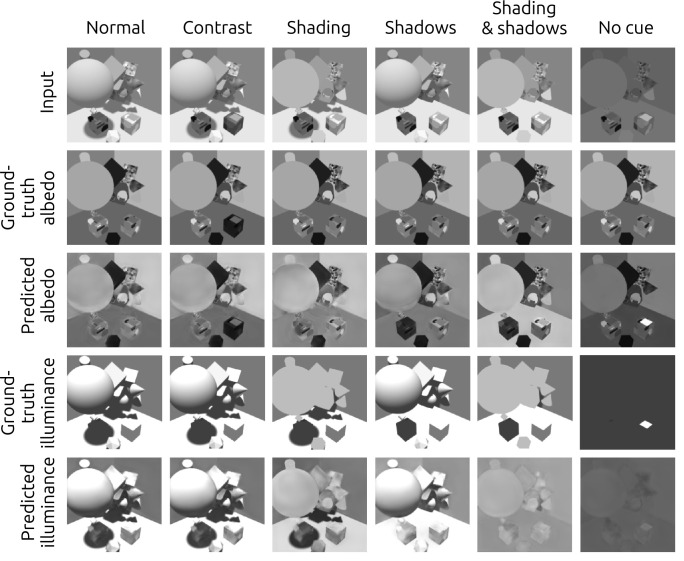 Figure 7
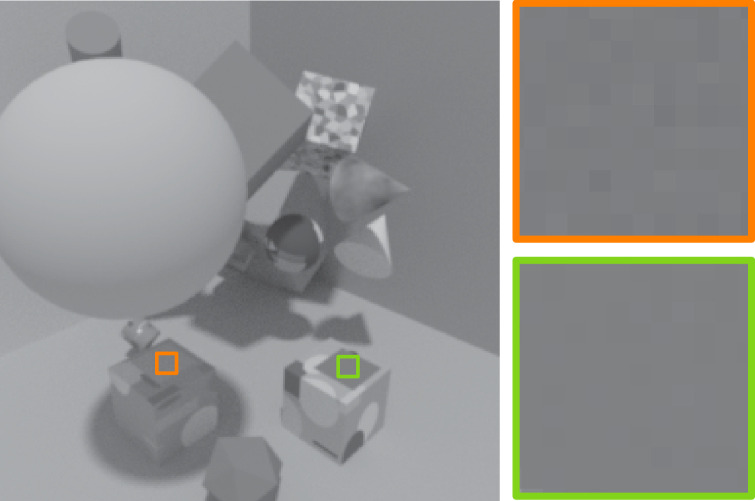 Figure 8
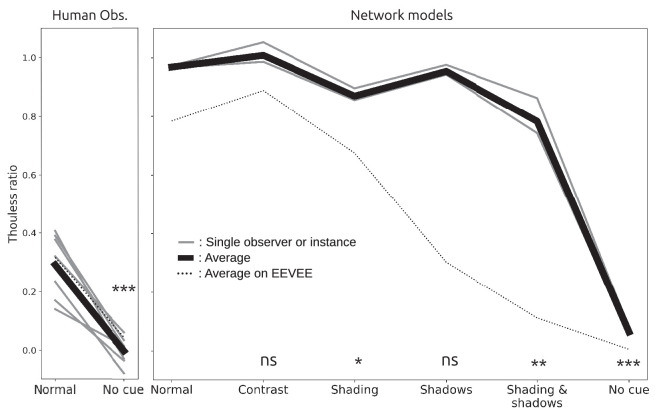 Figure 9
Peer Reviews
No public reviews on file for this paper yet. If you reviewed it on a platform where reviews are public (OpenReview, ICLR, NeurIPS, ICML), you can paste yours below so the community can read it here.
Videos
No videos yet. Explain this paper in a talk, walkthrough, or lecture? Add one.
Taxonomy
TopicsComputer Graphics and Visualization Techniques · Visual perception and processing mechanisms · Color Science and Applications