Neoadjuvant Chemotherapy With Gemcitabine/Cisplatin/S‐1 for Resectable Biliary Tract Cancer With FDG‐PET‐Positive Lymph Node Metastasis (KHBO1201): A Multicenter Phase II Trial
Satoshi Ogiso, Etsuro Hatano, Satoru Seo, Masashi Kanai, Shogo Kobayashi, Hiroshi Wada, Hidetoshi Eguchi, Tatsuya Higashi, Hiroaki Nagano, Tatsuya Ioka

TL;DR
This study tested a chemotherapy regimen for biliary tract cancer with positive lymph nodes and found it safe and potentially effective, with a 60% curative resection rate.
Contribution
The study introduces a new neoadjuvant chemotherapy regimen (GCS) for resectable biliary tract cancer with FDG-PET-positive lymph nodes.
Findings
Neoadjuvant GCS chemotherapy achieved a 60% curative resection rate with acceptable toxicity.
Radiological and pathological complete response rates for FDG-PET-positive lymph nodes were 24% and 28%, respectively.
The 1-year survival rate was 75% among the 25 enrolled patients.
Abstract
To evaluate the safety and efficacy of neoadjuvant gemcitabine, cisplatin, and S‐1 (GCS) chemotherapy for resectable biliary tract cancer (BTC) and FDG‐PET‐positive lymph nodes in a multicenter phase II study (KHBO1201). Patients with resectable BTC (intrahepatic/extrahepatic bile duct, gallbladder, or ampullary cancers) and FDG‐PET‐positive lymph nodes received GCS chemotherapy: gemcitabine/cisplatin on Day 1 and oral S‐1 for 7 days, repeated every 2 weeks for 3–6 cycles. Surgery was planned 4–8 weeks later if the tumor was deemed resectable. The primary endpoint was the curative resection rate. Secondary endpoints were the completion rate, radiological response, radiological/pathological complete response (CR) of FDG‐PET‐positive lymph nodes, and 1‐year survival (UMIN000009831). Twenty‐five patients were enrolled. Twenty‐three (92%) completed GCS without treatment‐related deaths;…
Genes, proteins, chemicals, diseases, species, mutations and cell lines named across the full text — each resolved to its canonical identifier and authoritative record.
Click any figure to enlarge with its caption.
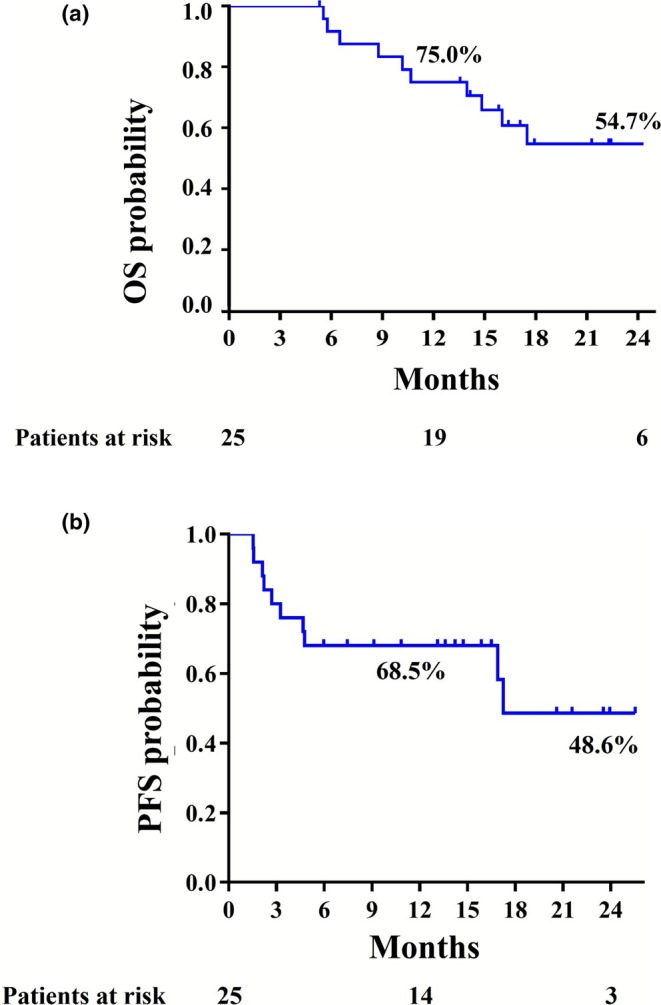 Figure 1
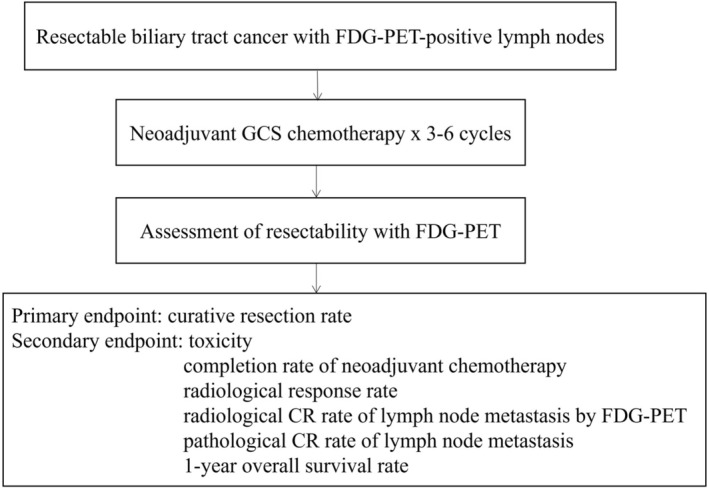 Figure 2
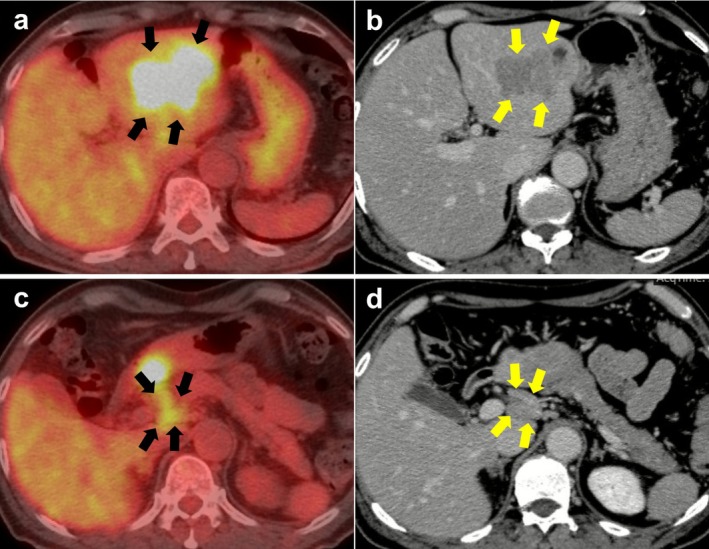 Figure 3
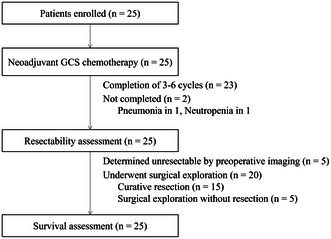 Figure 4
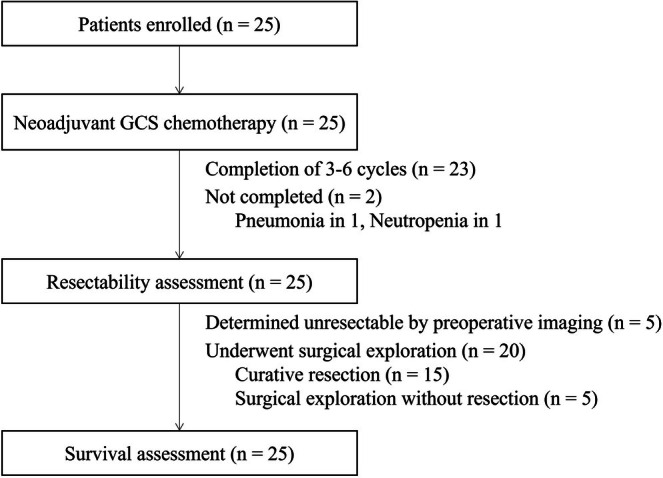 Figure 5
Peer Reviews
No public reviews on file for this paper yet. If you reviewed it on a platform where reviews are public (OpenReview, ICLR, NeurIPS, ICML), you can paste yours below so the community can read it here.
Videos
No videos yet. Explain this paper in a talk, walkthrough, or lecture? Add one.
Taxonomy
TopicsCholangiocarcinoma and Gallbladder Cancer Studies · Pancreatic and Hepatic Oncology Research · Gallbladder and Bile Duct Disorders