Biogeography and Climate Drive Population Divergence and Genomic Vulnerability in High Altitude Endemic Bird
Nan Wang, Prashant Ghimire, Pritam Chhetri, Nishma Dahal, Cheng Yi, Tong Zhang, Suonan Zhuoga, Zhaxi Jiangyong, Sangeet Lamichhaney

TL;DR
This study explores how geography and climate shape the genetic diversity and vulnerability of a high-altitude bird species in the Himalayas.
Contribution
The study integrates genomic, ecological, and climatic data to show how biogeography and climate jointly influence population divergence and vulnerability in a high-altitude bird.
Findings
Biogeographic barriers and climatic gradients drive rapid population divergence in Perdix hodgsoniae, reflected in distinct morphological and genetic traits.
Populations in arid western regions adapt to temperature, while those in humid northeastern regions adapt to precipitation, leading to differing levels of vulnerability.
Arid landscapes limit gene flow and diversity, increasing sensitivity to climate change, whereas humid regions maintain higher genetic diversity and connectivity.
Abstract
High‐elevation systems support species adapted to extreme conditions, and their rugged terrain and variable microclimates strongly shape evolution and persistence. Yet few studies have evaluated how geography and climate jointly shape genetic diversity, local adaptation and vulnerability to environmental change. Here, we investigate these processes in the Tibetan Partridge ( Perdix hodgsoniae ), a high‐altitude endemic distributed across arid western and humid northeastern regions of the Sino‐Himalayan landscape. This region's complex topography and contrasting climatic conditions provide a natural setting for examining population divergence, climate‐associated adaptation and future resilience. We integrated whole‐genome sequencing, ecological, climatic, landscape and morphological data to examine current patterns of local adaptation and forecast climate‐induced risks. Our findings show…
Genes, proteins, chemicals, diseases, species, mutations and cell lines named across the full text — each resolved to its canonical identifier and authoritative record.
Click any figure to enlarge with its caption.
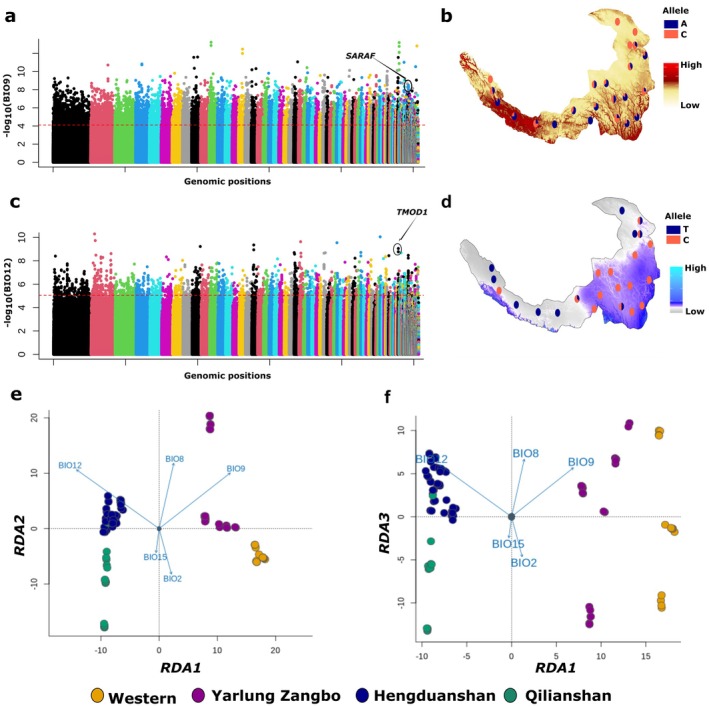 Figure 1
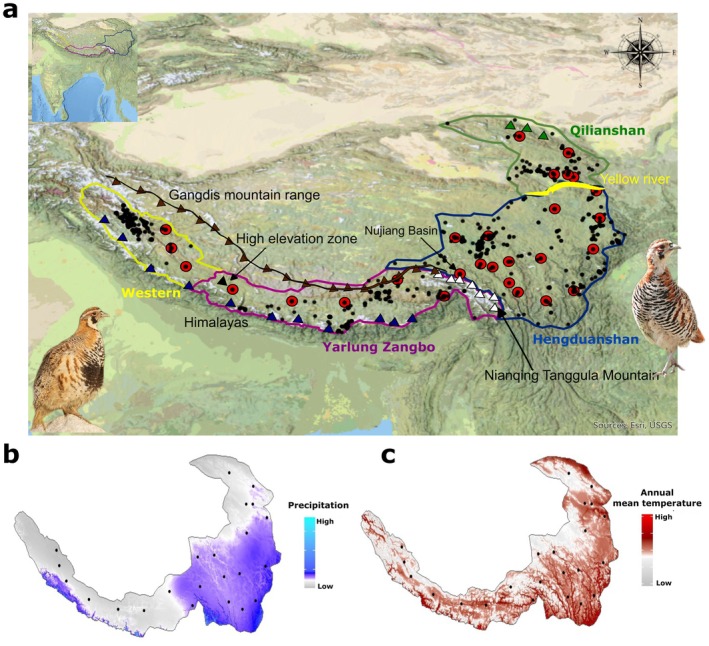 Figure 2
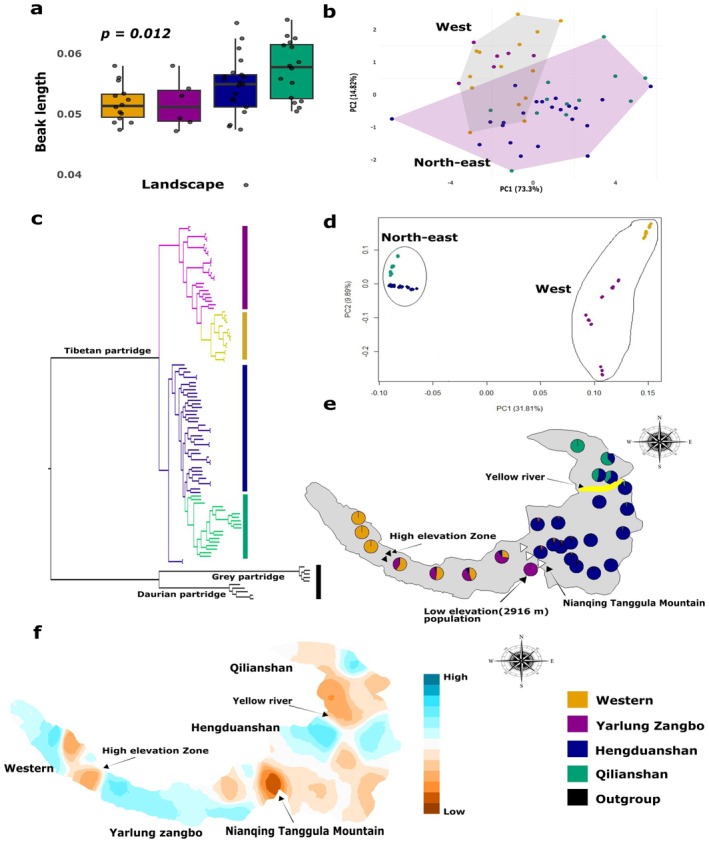 Figure 3
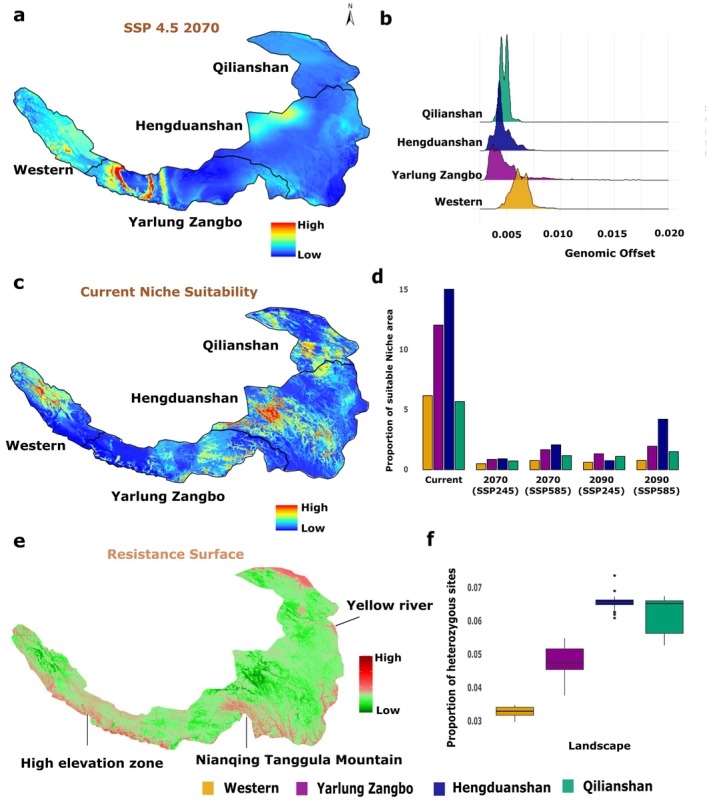 Figure 4
Peer Reviews
No public reviews on file for this paper yet. If you reviewed it on a platform where reviews are public (OpenReview, ICLR, NeurIPS, ICML), you can paste yours below so the community can read it here.
Videos
No videos yet. Explain this paper in a talk, walkthrough, or lecture? Add one.
Taxonomy
TopicsGenetic diversity and population structure · Species Distribution and Climate Change · Animal Behavior and Reproduction