Long-term behavioral tracking of Paramecium bursaria
Azusa Kage, Hiroyuki J. Kanaya

TL;DR
The paper introduces a method to track the long-term behavior of Paramecium bursaria, which responds differently to changes in light and dark cycles.
Contribution
A new experimental method for long-term behavioral observation of Paramecium bursaria under light-dark cycles is introduced.
Findings
P. bursaria responds differently to dark-to-light and light-to-dark transitions in 12-hour cycles.
The method allows for evaluating long-term behavioral changes in Paramecium and other protists.
Abstract
The ciliate protozoan Paramecium exhibits complex behaviors in response to environmental cues. Here we report a method that enables long-term observation (over 24 hours) of Paramecium with a simple experimental procedure. We observed the behavior of Paramecium bursaria , a species of Paramecium harboring symbiotic green algae, in gas-permeable chambers, where they exhibited light-dependent changes in behavior. We found that, in the 12-hour light-dark (LD) cycles, P. bursaria responds to both the dark-to-light and the light-to-dark transitions in different manners. This method provides a way to evaluate the long-term changes in the behaviors of Paramecium and other protists.
Genes, proteins, chemicals, diseases, species, mutations and cell lines named across the full text — each resolved to its canonical identifier and authoritative record.
Click any figure to enlarge with its caption.
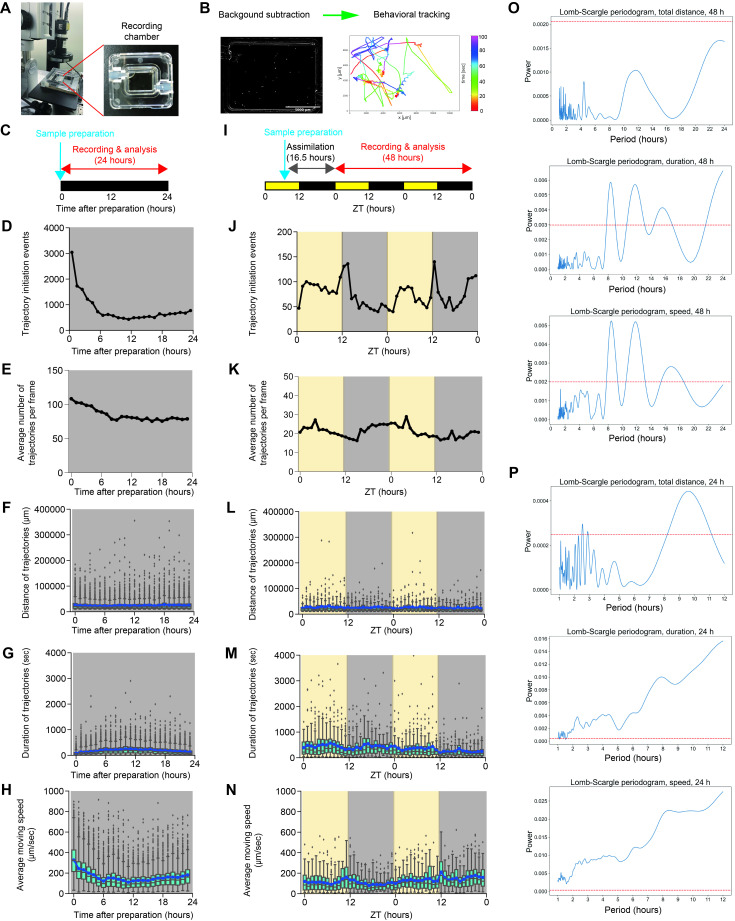 Figure 1
Peer Reviews
No public reviews on file for this paper yet. If you reviewed it on a platform where reviews are public (OpenReview, ICLR, NeurIPS, ICML), you can paste yours below so the community can read it here.
Videos
No videos yet. Explain this paper in a talk, walkthrough, or lecture? Add one.
Taxonomy
TopicsProtist diversity and phylogeny · Legionella and Acanthamoeba research · Photoreceptor and optogenetics research