Reinforcement Learning–Based Digital Therapeutic Intervention for Postprostatectomy Incontinence: Development and Pilot Feasibility Study
Fan Fan, Hao Huang, Jingwen Yan, Chao-Yue Xu, Xiuhua Wu, Chunmei Zhou, Dandan Wen, Hai Huang, Ho Cheung Li, Yihong Qiu

TL;DR
A new digital therapeutic system using reinforcement learning was developed to help patients with postprostatectomy incontinence through personalized rehabilitation.
Contribution
The first reinforcement learning-powered digital therapeutic system for postprostatectomy incontinence is introduced.
Findings
The system showed high engagement with patients using it an average of 5.2 times per day.
Preliminary results showed reductions in urinary frequency, incontinence episodes, and symptom burden.
Objective urine leakage and patient-reported outcomes improved, though effect magnitudes varied across individuals.
Abstract
Postprostatectomy incontinence (PPI) is a common complication after robot-assisted radical prostatectomy and significantly impairs patients’ quality of life. Although behavioral interventions such as pelvic floor muscle training and bladder diaries are evidence-based, their effectiveness is often limited by poor adherence and lack of personalization. This study aimed to develop and evaluate a reinforcement learning (RL)–driven clinical behavioral intervention-supporting system (CBISs) for adaptive, personalized rehabilitation in patients with PPI. The study comprised 2 sequential stages. First, the CBISs was developed through (1) construction of a medical record database from a prospective cohort of PPI patients using standardized 3-day bladder diaries, (2) design of functional modules and user interfaces based on clinical rehabilitation needs, and (3) development of an RL model using…
Genes, proteins, chemicals, diseases, species, mutations and cell lines named across the full text — each resolved to its canonical identifier and authoritative record.
Click any figure to enlarge with its caption.
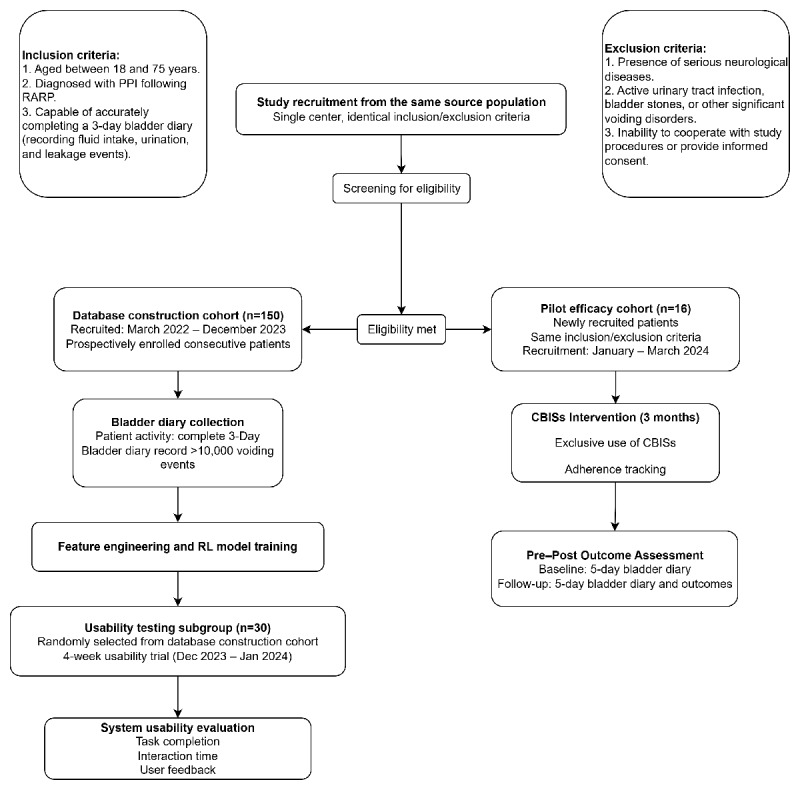 Figure 1
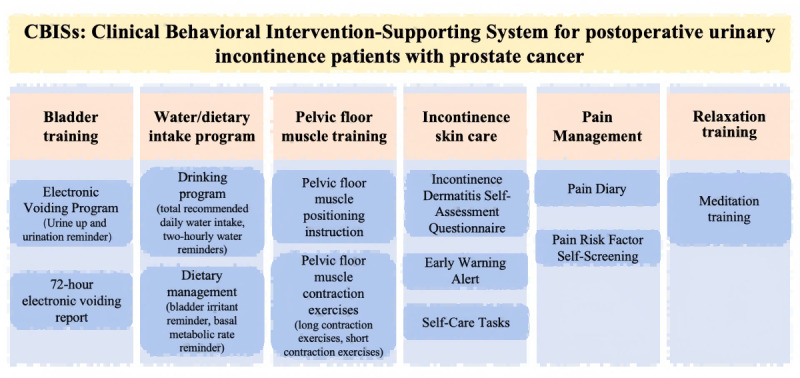 Figure 2
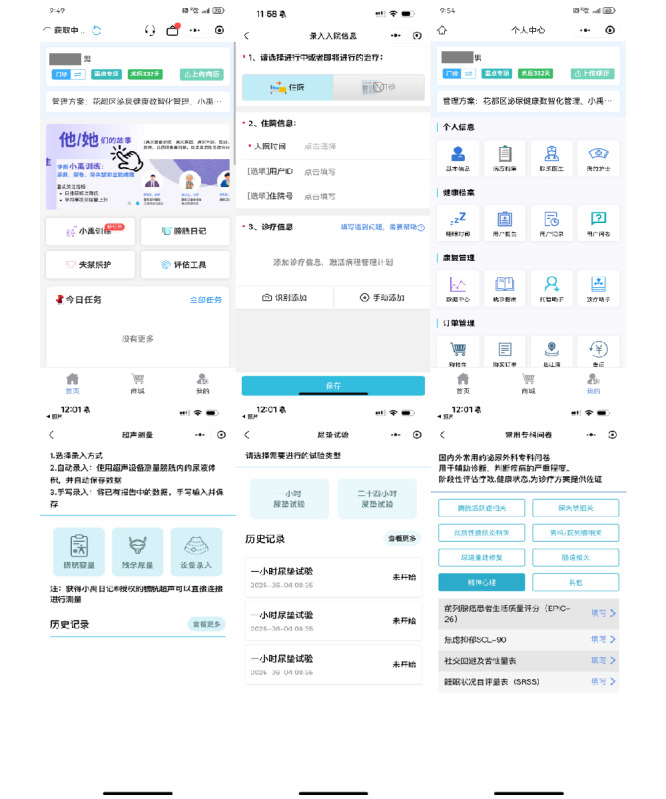 Figure 3
 Figure 4
 Figure 5
Peer Reviews
No public reviews on file for this paper yet. If you reviewed it on a platform where reviews are public (OpenReview, ICLR, NeurIPS, ICML), you can paste yours below so the community can read it here.
Videos
No videos yet. Explain this paper in a talk, walkthrough, or lecture? Add one.
Taxonomy
TopicsUrinary Bladder and Prostate Research · Pelvic floor disorders treatments · Prostate Cancer Diagnosis and Treatment