Large-scale evaluation of HIV-1 DNA drug resistance testing as a robust tool for clinical decision-making: A nationwide study in China
Caihong Wu, Limin Zhang, Zhong Chen, Wencui Ma, Yanhua Fu, Ke Yang, Mei Liu, Yanjun Li, Xiaohong Chen, Mingjie Hou, Min Liu, Aihua Deng, Qingxia Zhao, Lukun Zhang, Quan Wang, Jun Peng, Yongli Li, Keji Deng, Jingsong Bai, Hai Long, Yaokai Chen, Hui Wang, Yun He, Jin Li

TL;DR
This study shows that HIV-1 DNA drug resistance testing is reliable and effective, even in patients with low virus levels, supporting its use in clinical decisions.
Contribution
Demonstrates the clinical utility of HIV-1 DNA drug resistance testing through a large-scale study and introduces a dominant sequence threshold for reliable results.
Findings
EP-HIV co-isolation significantly improves RNA amplification success in low-level viremia cases.
HIV-1 DNA DRT shows high reproducibility and agreement with RNA DRT across various viral load states.
A dominant sequence threshold of 24.6% for HIV-1 DNA Sanger sequencing is experimentally defined.
Abstract
Human immunodeficiency virus type 1 (HIV-1) drug resistance remains a major challenge in HIV/AIDS management, particularly in individuals with low-level viremia (LLV) where RNA-based drug resistance testing (DRT) often fails. Although HIV-1 DNA DRT represents a promising alternative, its clinical utility has been constrained by insufficient evidence. This nationwide study in China enrolled 9,428 people living with HIV (PLWH), analyzing 10,903 samples spanning a wide viral load (VL) spectrum. To improve RNA detection, an optimized primer design combined with an extracellular particle (EP)-HIV co-isolation technique was developed. We then evaluated the reproducibility of drug resistance mutation (DRM) profiles between paired RNA and DNA DRTs using Sanger sequencing (SS), with single-molecule sequencing employed to establish a dominant sequence threshold. Our findings demonstrated that…
Genes, proteins, chemicals, diseases, species, mutations and cell lines named across the full text — each resolved to its canonical identifier and authoritative record.
Click any figure to enlarge with its caption.
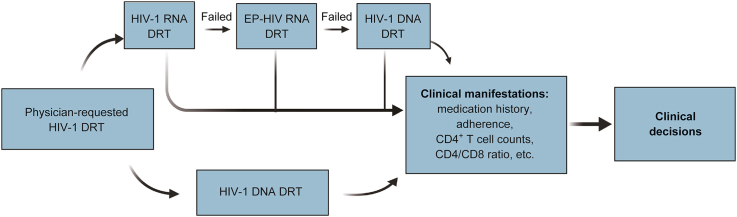 Figure 1
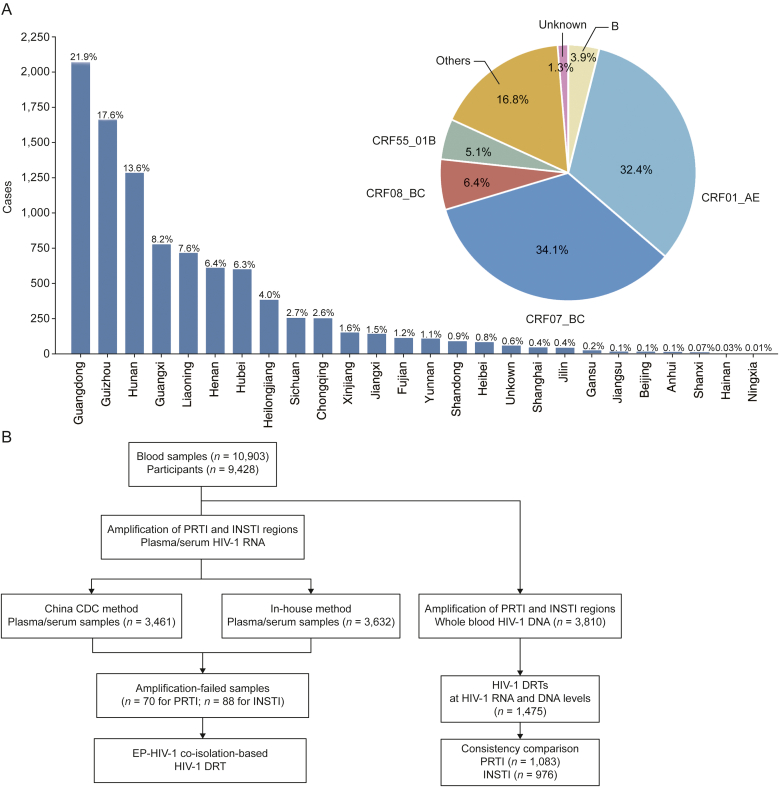 Figure 2
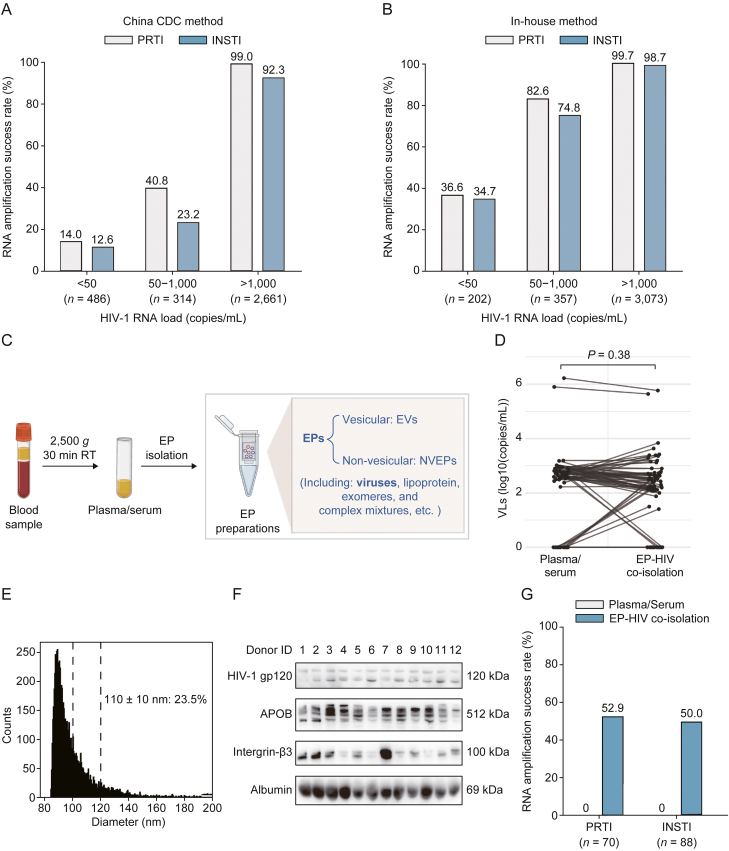 Figure 3
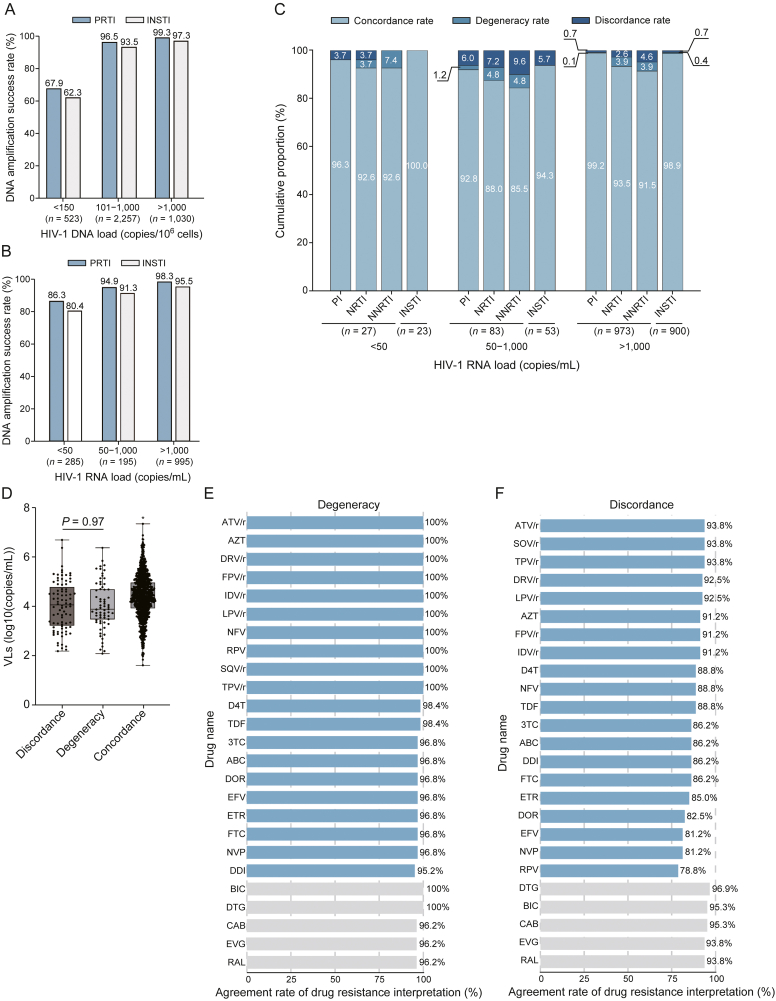 Figure 4
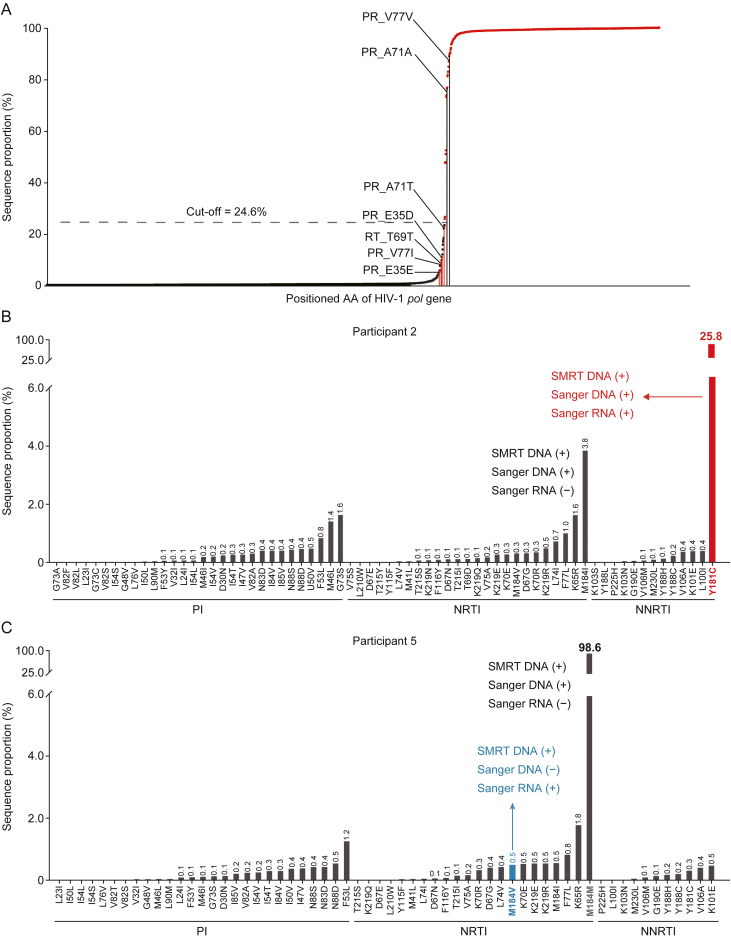 Figure 5
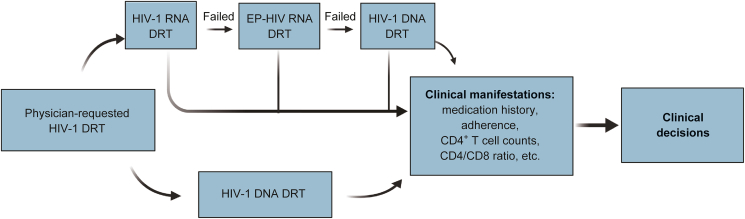 Figure 6
Peer Reviews
No public reviews on file for this paper yet. If you reviewed it on a platform where reviews are public (OpenReview, ICLR, NeurIPS, ICML), you can paste yours below so the community can read it here.
Videos
No videos yet. Explain this paper in a talk, walkthrough, or lecture? Add one.
Taxonomy
TopicsHIV/AIDS drug development and treatment · HIV Research and Treatment · Molecular Biology Techniques and Applications