Antibody escape drives emergence of diverse spike haplotypes resembling variants of concern in persistent SARS-CoV-2 infections
Luke B. Snell, Suzanne Pickering, Adela Alcolea-Medina, Helena Winstone, Jeffrey Seow, Carl Graham, Lorcan O’Connell, Rahul Batra, Michael H. Malim, Katie J. Doores, Gaia Nebbia, Jonathan D. Edgeworth, Stuart J.D. Neil, Rui P. Galão

TL;DR
Long-term SARS-CoV-2 infections in immunocompromised individuals lead to rapid evolution of spike proteins that evade antibodies, resembling future variants like Omicron.
Contribution
New sequencing and analysis methods reveal full-length spike haplotypes in persistent infections, showing accelerated evolution and antibody escape.
Findings
Persistent infections show accelerated spike evolution with mutations at VOC-associated sites.
A 506-day infection acquired mutations resembling Omicron three months before BA.1 emergence.
Mutations confer escape from both autologous and heterologous neutralizing antibodies.
Abstract
Evolution of SARS-CoV-2 in long-term persistent infections is hypothesized to be a major source of variants of concern (VOCs). However, linking intra-host variants into haplotypes that reflect viral subpopulations is limited by commonly used genomic sequencing techniques. We develop sequencing and analysis methods for identifying full-length spike haplotypes and analyze their diversification during persistent infections in individuals with inherited or acquired immunodeficiencies. This reveals accelerated evolutionary rates, with mutations frequently emerging at VOC-associated sites that confer escape from neutralizing antibodies, often undergoing strong positive selection. In a single infection lasting over 500 days from the first wave of the pandemic, we detail the evolution of spike as it acquires mechanisms to evade both autologous and heterologous neutralizing antibodies, redolent…
Genes, proteins, chemicals, diseases, species, mutations and cell lines named across the full text — each resolved to its canonical identifier and authoritative record.
Click any figure to enlarge with its caption.
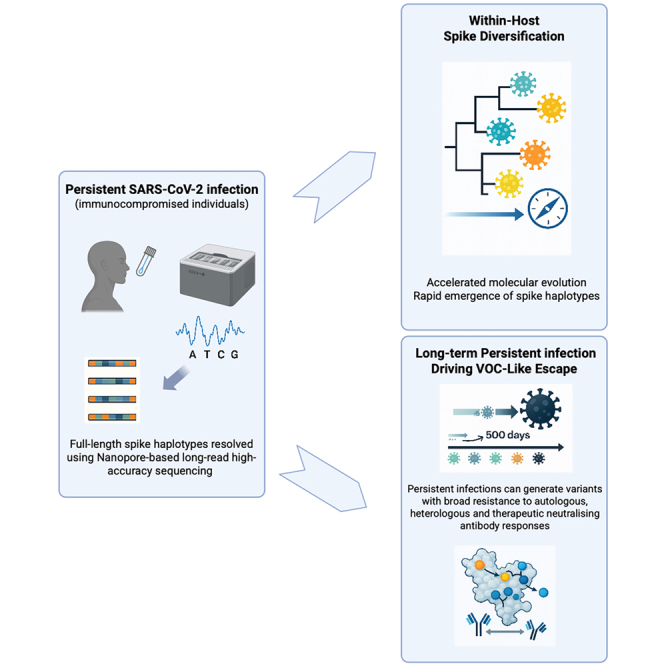 Figure 1
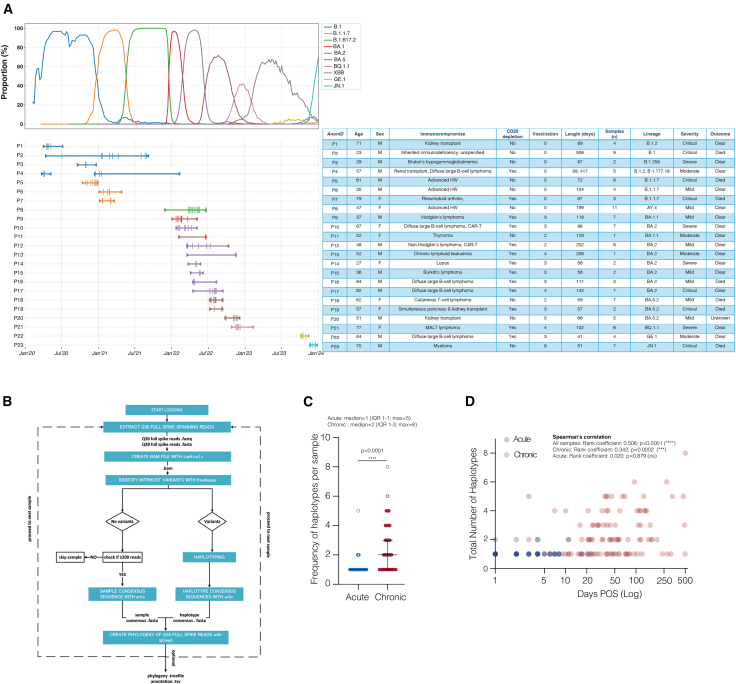 Figure 2
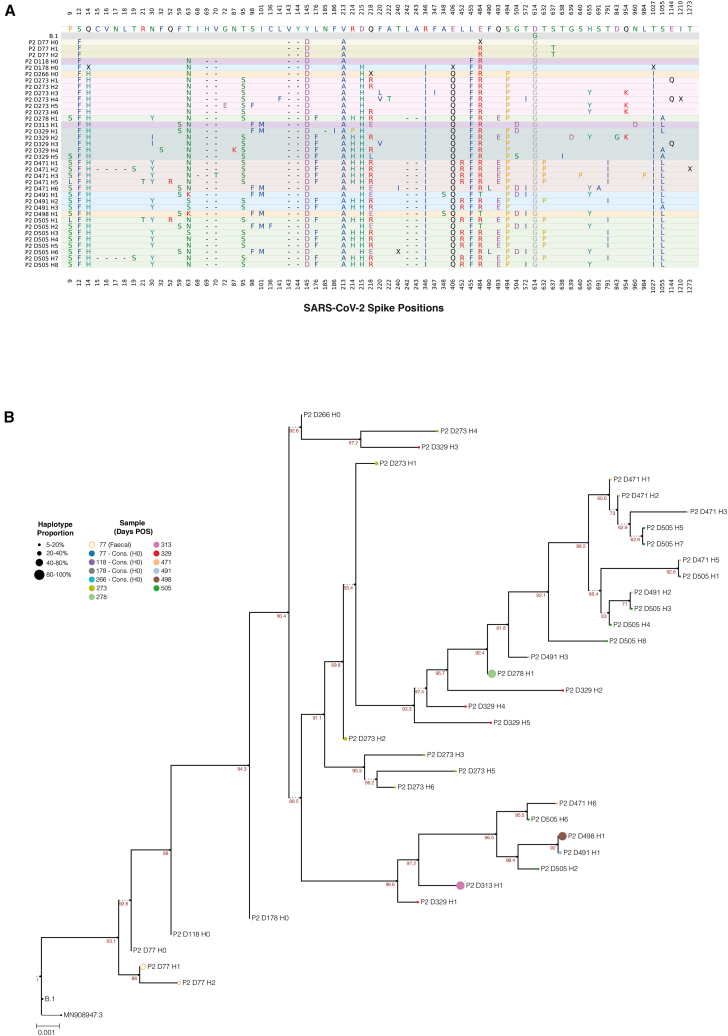 Figure 3
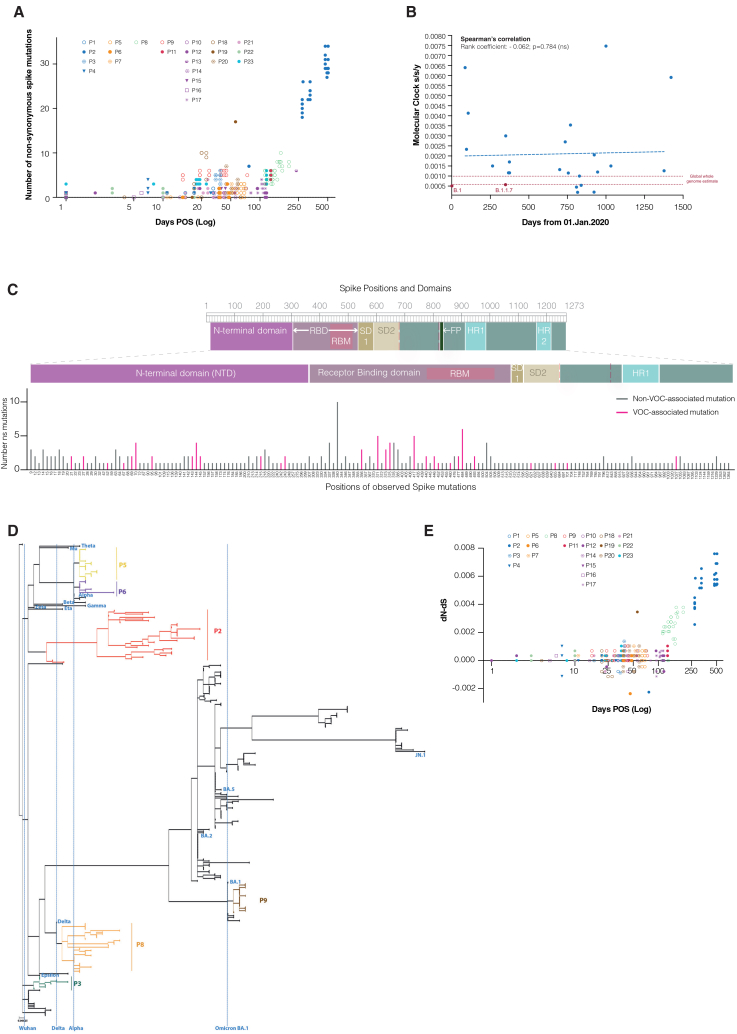 Figure 4
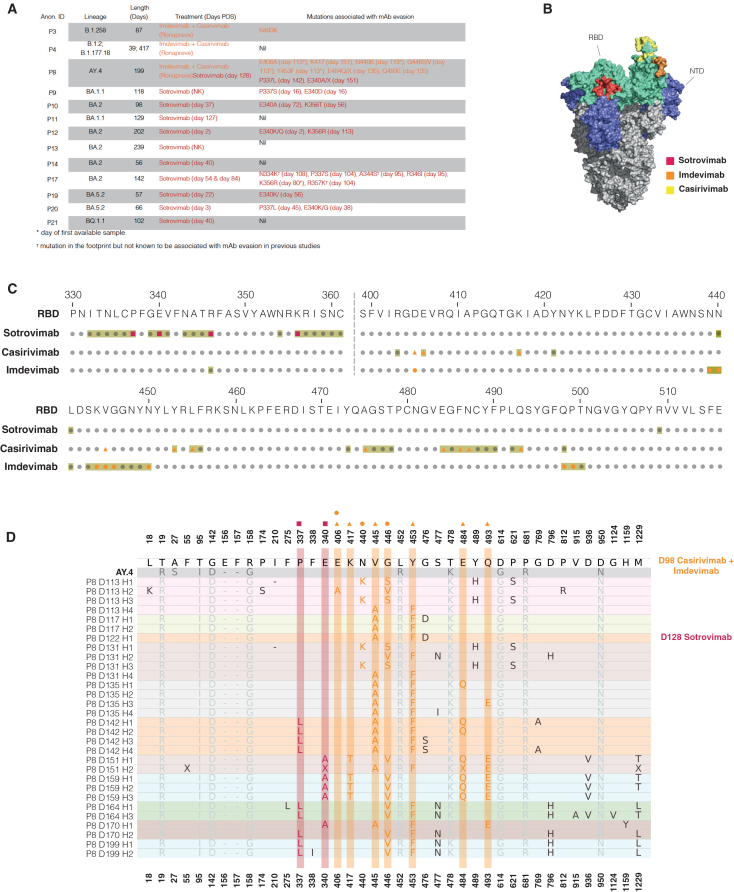 Figure 5
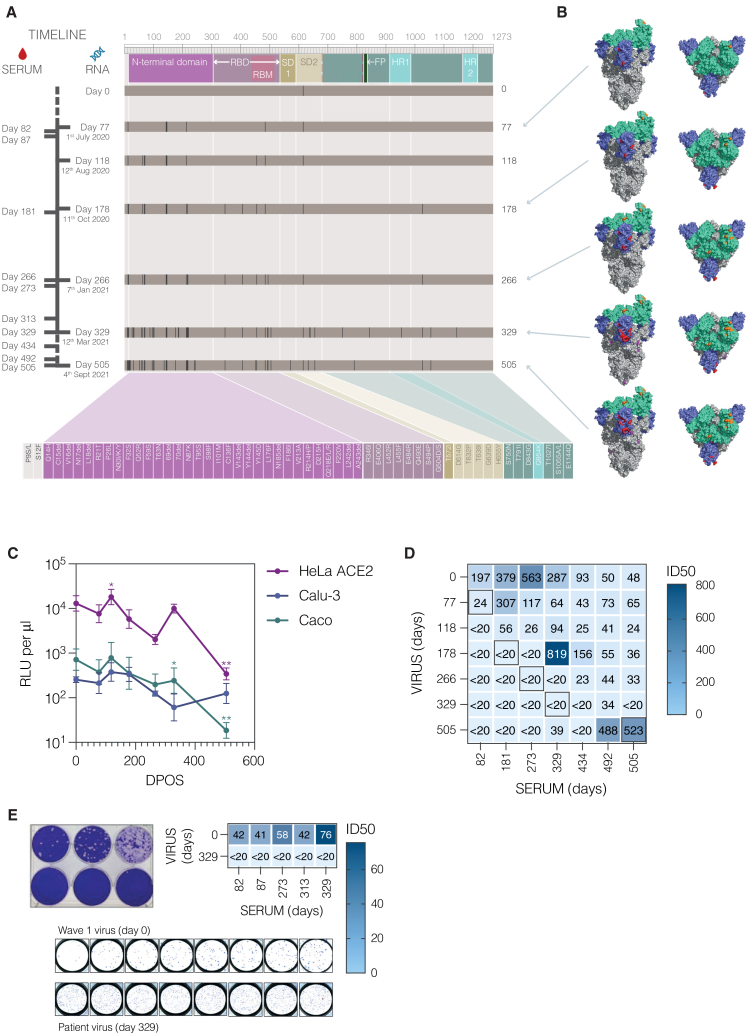 Figure 6
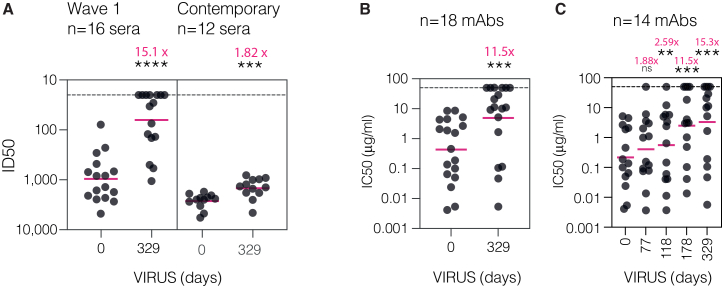 Figure 7
Peer Reviews
No public reviews on file for this paper yet. If you reviewed it on a platform where reviews are public (OpenReview, ICLR, NeurIPS, ICML), you can paste yours below so the community can read it here.
Videos
No videos yet. Explain this paper in a talk, walkthrough, or lecture? Add one.
Taxonomy
TopicsSARS-CoV-2 and COVID-19 Research · vaccines and immunoinformatics approaches · Immunodeficiency and Autoimmune Disorders