Directing coral larval settlement in coral aquaculture for reef restoration
Nico D. Briggs, Andrew P. Negri, Elsa Antunes, Matthew Drane, Andrea Severati, Florita Flores

TL;DR
This study presents a scalable method to direct coral larval settlement using chemical and physical cues, improving coral aquaculture for reef restoration.
Contribution
A novel approach using immobilized chemical cues and microtopography to precisely control larval settlement on unconditioned substrates.
Findings
The neuropeptide Hym-248 induced settlement in seven acroporid coral species.
Embedding chemical inducers in agar hydrogels within ceramic cubes successfully directed larval settlement.
CCA-conditioned protrusions with microtopographic pores achieved over 99% settlement on or near features.
Abstract
Optimising coral early life stages, particularly larval settlement, remains a challenge for coral aquaculture. Settlement typically relies on biologically conditioned substrates, such as crustose coralline algae (CCA) or microbial films, which are difficult to scale for mass-production. To overcome this bottleneck, we evaluated chemical and physical alternatives that enable spatial control of directing larval settlement. Larval responses from 14 coral species were tested against known and potential chemical inducers, including neurotransmitters and neuropeptides. Next, we investigated the efficacy of a set of known chemical inducers and microtopography to direct larval settlement. The neuropeptide Hym-248 was the most effective, inducing settlement in seven acroporid species. Embedding soluble inducers (CCA extract and Hym-248) in agar hydrogels within ceramic cubes successfully induced…
Genes, proteins, chemicals, diseases, species, mutations and cell lines named across the full text — each resolved to its canonical identifier and authoritative record.
Click any figure to enlarge with its caption.
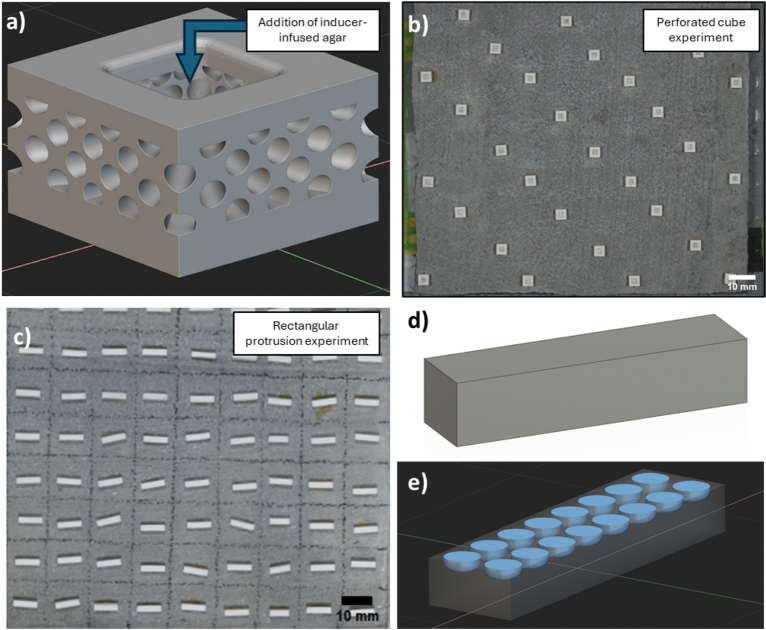 Figure 1
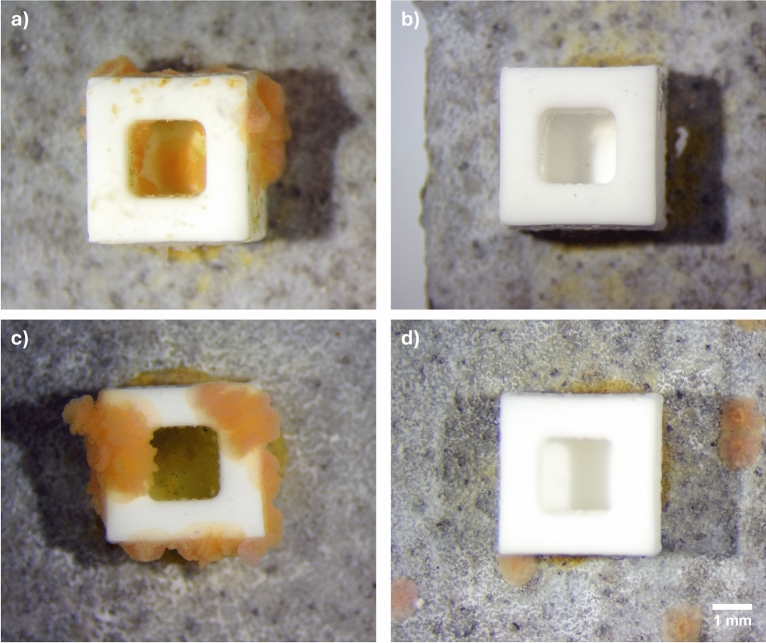 Figure 2
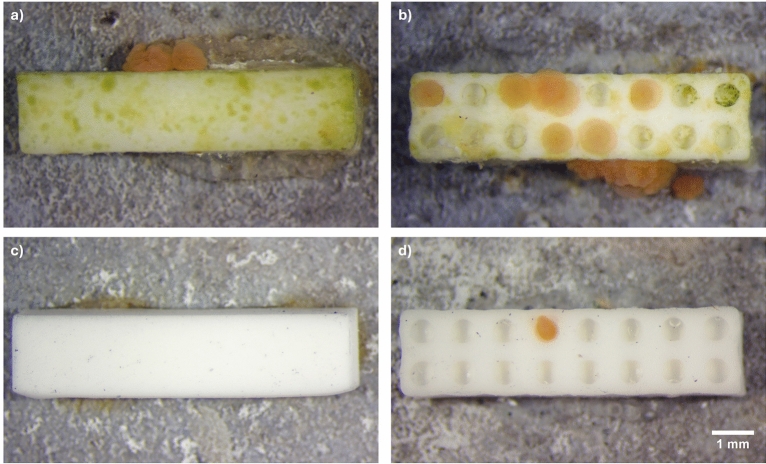 Figure 3
Peer Reviews
No public reviews on file for this paper yet. If you reviewed it on a platform where reviews are public (OpenReview, ICLR, NeurIPS, ICML), you can paste yours below so the community can read it here.
Videos
No videos yet. Explain this paper in a talk, walkthrough, or lecture? Add one.
Taxonomy
TopicsCoral and Marine Ecosystems Studies · Marine Sponges and Natural Products · Cephalopods and Marine Biology