Evolution of the tuberculin skin test reveals generalisable Mtb-reactive T cell metaclones
Carolin T. Turner, Andreas Tiffeau-Mayer, Joshua Rosenheim, Aneesh Chandran, Rishika Saxena, Ping Zhang, Jana Jiang, Michelle Berkeley, Flora Pang, Imran Uddin, Gayathri Nageswaran, Suzanne Byrne, Akshay Karthikeyan, Werner Smidt, Paul Ogongo, Rachel Byng-Maddick

TL;DR
This study uses T cell receptor sequencing at the site of the tuberculin skin test to identify common T cell responses to tuberculosis, which could help in vaccine development and patient stratification.
Contribution
The study introduces a computational pipeline, Metaclonotypist, to identify public Mtb-reactive T cell metaclones across individuals.
Findings
Initial T cell recruitment is non-selective, followed by enrichment of Mtb-reactive clones.
Ten metaclones were sufficient to identify Mtb reactivity across a large study population.
Public TCR-peptide interactions show population-level immunodominance in tuberculosis.
Abstract
T cells contribute to immune protection and pathogenesis in tuberculosis, but measurements of polyclonal responses have failed to resolve correlates of outcome. We report the temporal evaluation of the human in vivo clonal repertoire of Mycobacterium tuberculosis (Mtb)-reactive T cell responses, by T cell receptor (TCR) sequencing at the site of the tuberculin skin test, as a model for a standardised antigenic challenge. Initial non-selective recruitment of T cells is followed by enrichment of Mtb-reactive clones arising from oligoclonal T cell proliferation. We introduce a modular computational pipeline, Metaclonotypist, to sensitively cluster distinct TCRs with shared epitope specificity, which we apply here to establish a catalogue of public Mtb-reactive HLA-restricted T cell metaclones. Although most in vivo Mtb-reactive T cells are private, 10 metaclones were sufficient to identify…
Genes, proteins, chemicals, diseases, species, mutations and cell lines named across the full text — each resolved to its canonical identifier and authoritative record.
Click any figure to enlarge with its caption.
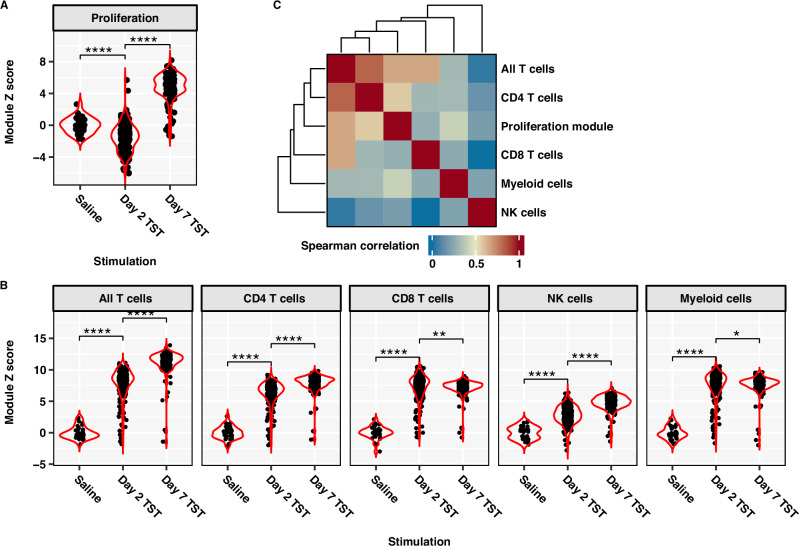 Figure 1
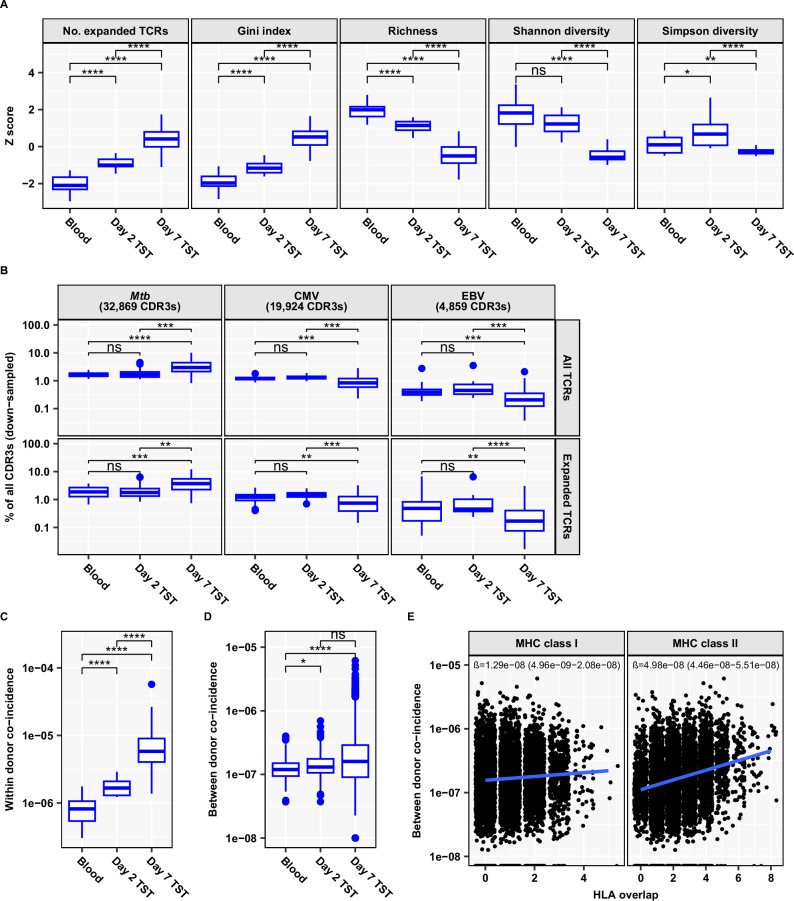 Figure 2
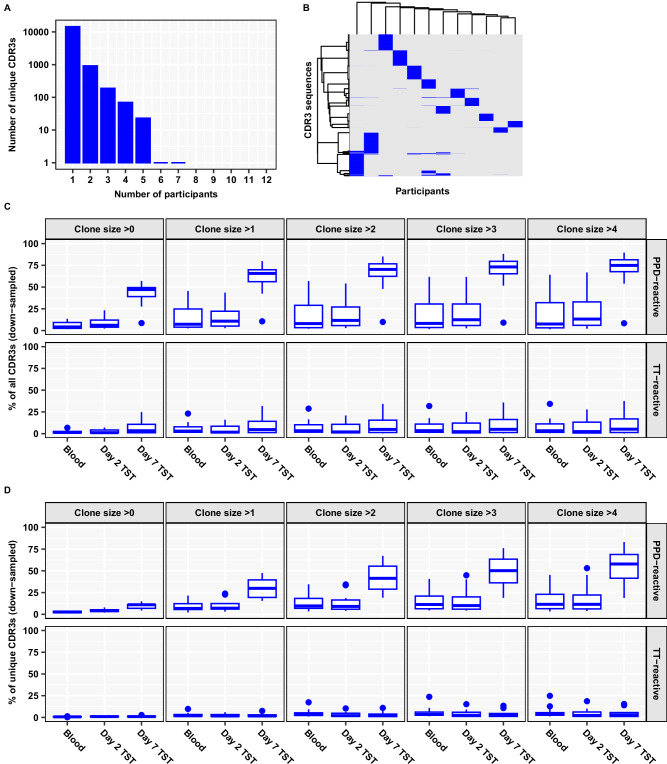 Figure 3
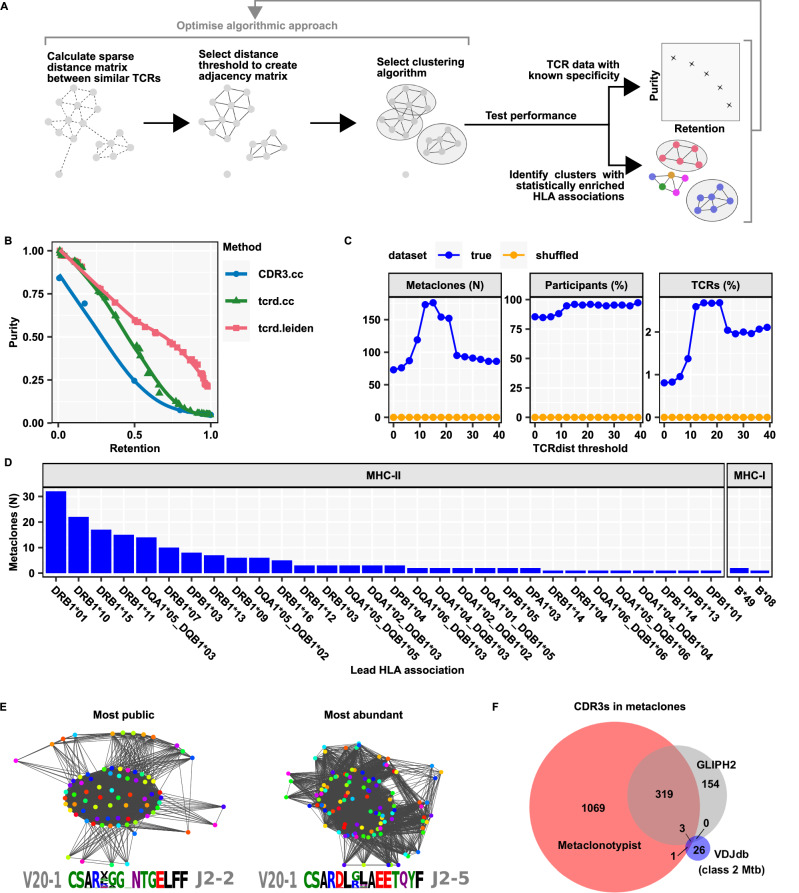 Figure 4
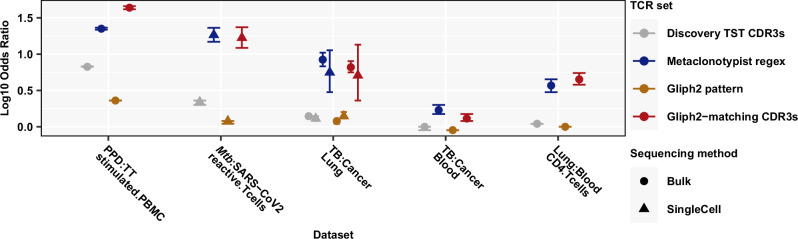 Figure 5
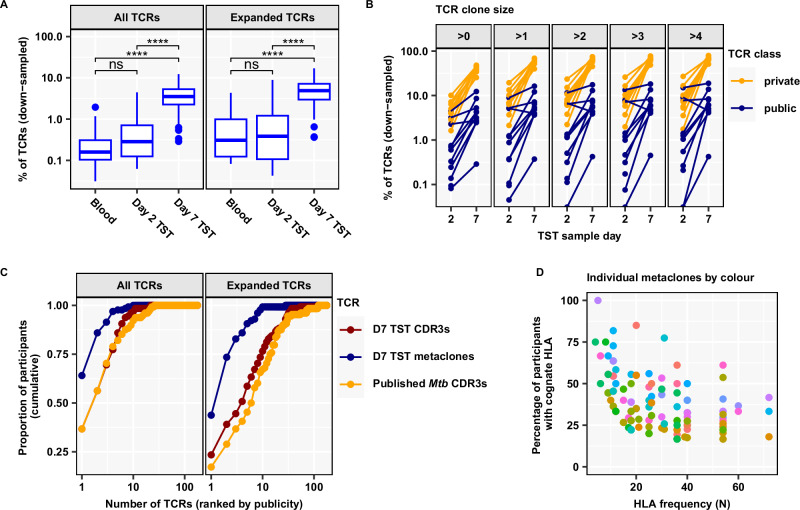 Figure 6
Peer Reviews
No public reviews on file for this paper yet. If you reviewed it on a platform where reviews are public (OpenReview, ICLR, NeurIPS, ICML), you can paste yours below so the community can read it here.
Videos
No videos yet. Explain this paper in a talk, walkthrough, or lecture? Add one.
Taxonomy
Topicsvaccines and immunoinformatics approaches · Tuberculosis Research and Epidemiology · Monoclonal and Polyclonal Antibodies Research