Iso-orientation bias of layer 2/3 connections unifies spontaneous, visually and optogenetically driven V1 dynamics
Tibor Rózsa, Rémy Cagnol, Ján Antolík

TL;DR
The paper shows how a moderate bias in visual cortex connections explains various brain activity patterns, including spontaneous waves and responses to light stimulation.
Contribution
The study introduces a unified model showing how iso-orientation biased connectivity explains multiple V1 activity regimes.
Findings
A moderate iso-orientation bias in layer 2/3 connections explains diverse V1 activity patterns.
The model predicts slower and isotropic spontaneous waves in layer 4.
Optogenetic responses show non-monotonicity with larger illumination disks.
Abstract
Functionally specific long-range lateral connectivity in layer 2/3 of the adult primary visual cortex (V1) supports the integration of visual information across visual space and shapes spontaneous, visual and optogenetically driven V1 activity. However, a comprehensive understanding of how these diverse cortical regimes emerge from this underlying cortical circuitry remains elusive. Here we address this gap by showing how the same model assuming moderately iso-orientation biased long-range cortical connectivity architecture explains diverse phenomena, including (i) range of visually driven phenomena, (ii) modular spontaneous activity, (iii) the propagation of spontaneous cortical waves, and (iv) neural responses to patterned optogenetic stimulation. The model offers testable predictions, including presence of slower and iso-tropic spontaneous wave propagation in layer 4 and…
Genes, proteins, chemicals, diseases, species, mutations and cell lines named across the full text — each resolved to its canonical identifier and authoritative record.
Click any figure to enlarge with its caption.
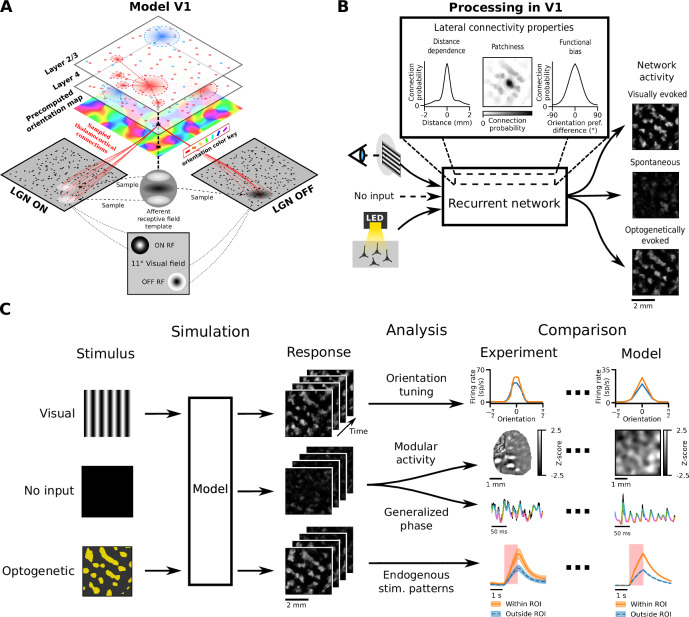 Figure 1
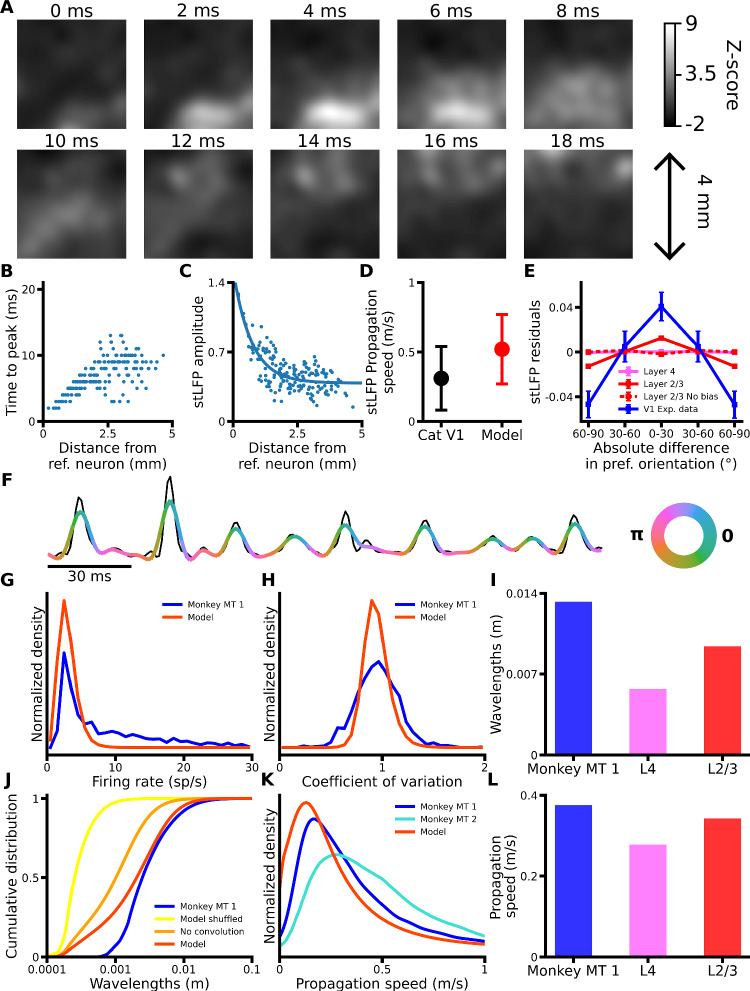 Figure 2
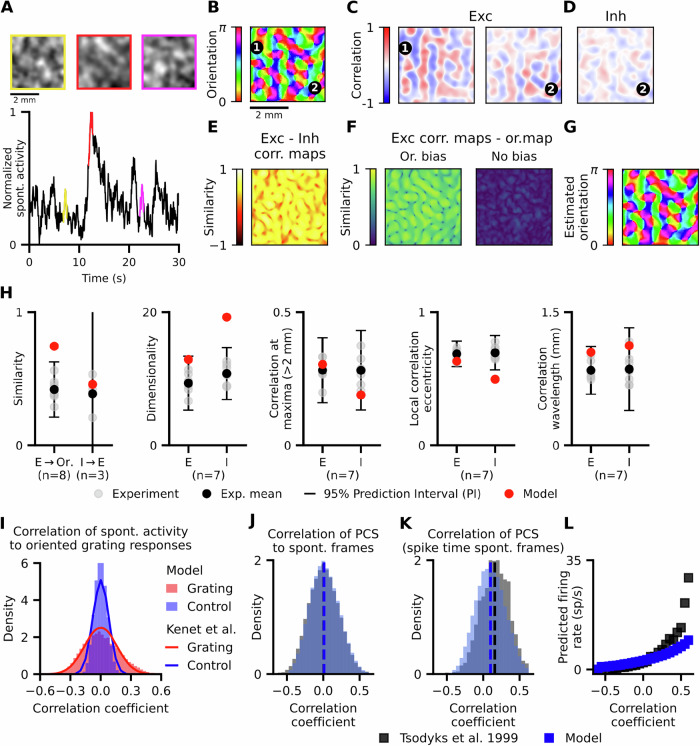 Figure 3
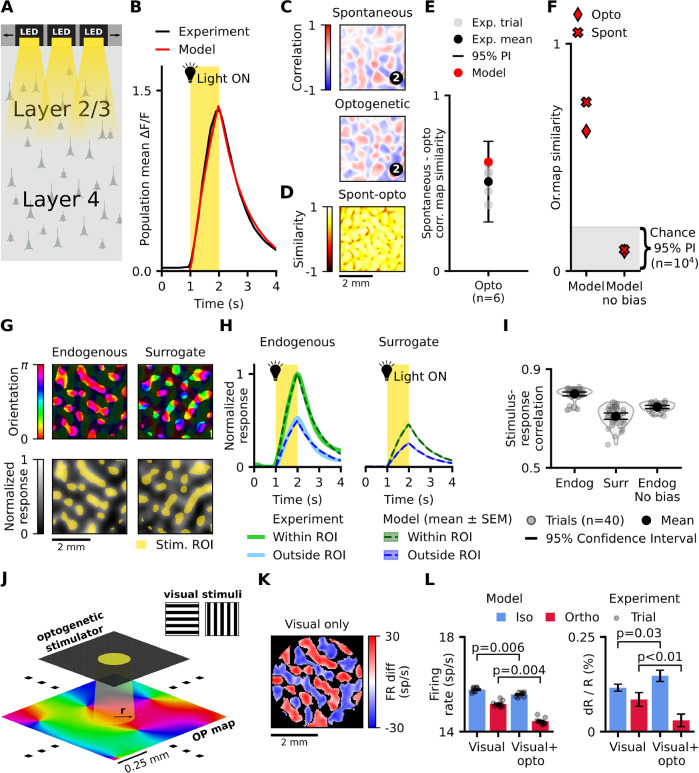 Figure 4
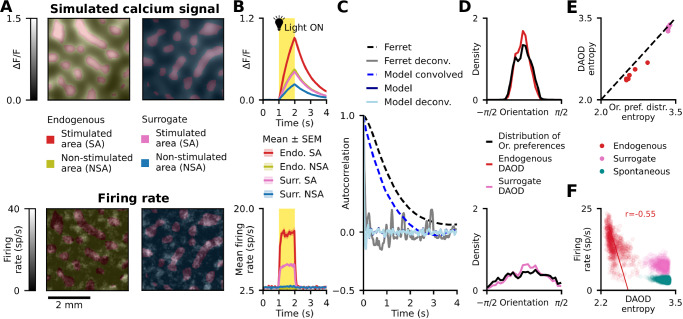 Figure 5
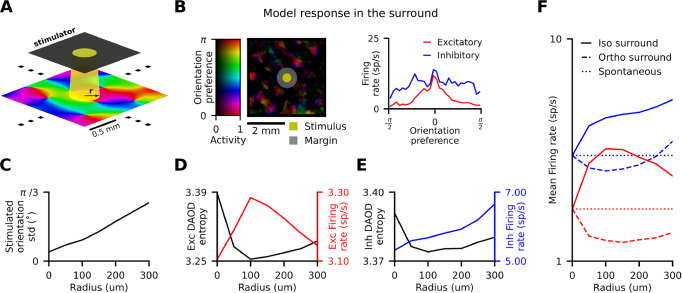 Figure 6
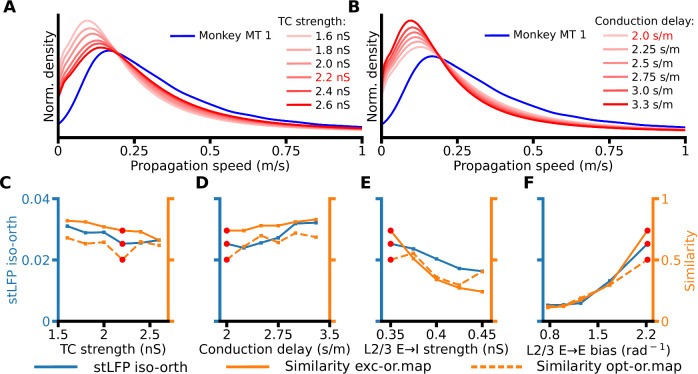 Figure 7
Peer Reviews
No public reviews on file for this paper yet. If you reviewed it on a platform where reviews are public (OpenReview, ICLR, NeurIPS, ICML), you can paste yours below so the community can read it here.
Videos
No videos yet. Explain this paper in a talk, walkthrough, or lecture? Add one.
Taxonomy
TopicsVisual perception and processing mechanisms · Neural dynamics and brain function · Functional Brain Connectivity Studies