Preclinical and clinical obesity: prevalence, associations to cardiometabolic risk and response to lifestyle intervention in NHANES and the EPIC-Potsdam and TULIP studies
Catarina Schiborn, Frank B. Hu, Norbert Stefan, Matthias B. Schulze

TL;DR
This study shows that most people with BMI-based obesity are classified as clinical obesity, which increases their risk of heart disease and diabetes, but lifestyle changes can reduce this risk.
Contribution
The study provides the first large-scale validation of new clinical obesity criteria and their association with disease risks and lifestyle intervention outcomes.
Findings
80% of individuals with BMI-defined obesity meet clinical obesity criteria and have higher risks for cardiovascular disease and diabetes.
A 9-month lifestyle intervention reduced the proportion of clinical obesity from 71% to 57%.
Preclinical obesity is associated with increased type 2 diabetes risk but not cardiovascular disease risk.
Abstract
An expert commission (The Lancet Diabetes & Endocrinology Commission on Clinical Obesity) proposed novel diagnostic criteria distinguishing between preclinical and clinical obesity and suggesting treatment indications for the latter. However, the proportional assignment to preclinical and clinical obesity in adults with BMI-defined obesity, the associated disease risks, as well as the response to lifestyle interventions are not well known. Here we show that among those with BMI-based obesity, 100% are confirmed to have obesity by at least one other anthropometric measure in NHANES 2017-2018 and the prospective EPIC-Potsdam cohort. More than 80% of adults with confirmed obesity meet the criteria for clinical obesity and have 2.8-fold increased risk of incident cardiovascular disease and 7.9-fold increased risk for type 2 diabetes compared to adults without obesity and not fulfilling…
Genes, proteins, chemicals, diseases, species, mutations and cell lines named across the full text — each resolved to its canonical identifier and authoritative record.
Click any figure to enlarge with its caption.
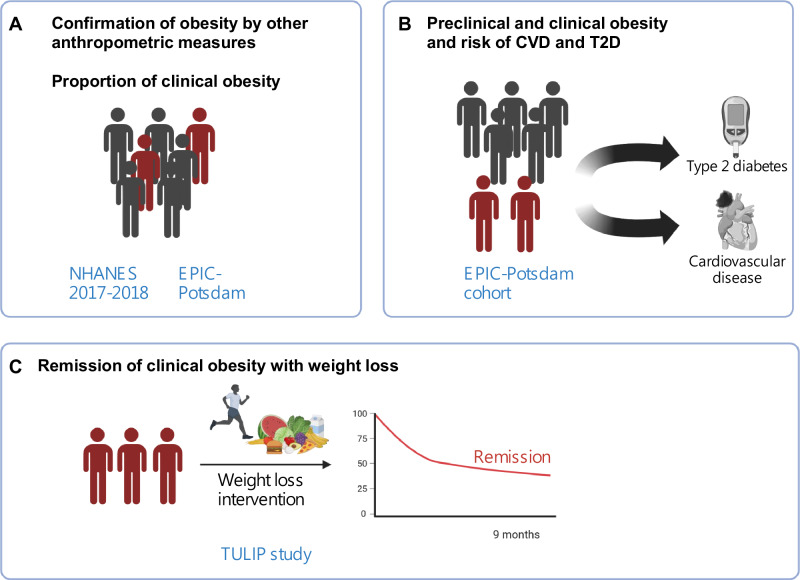 Figure 1
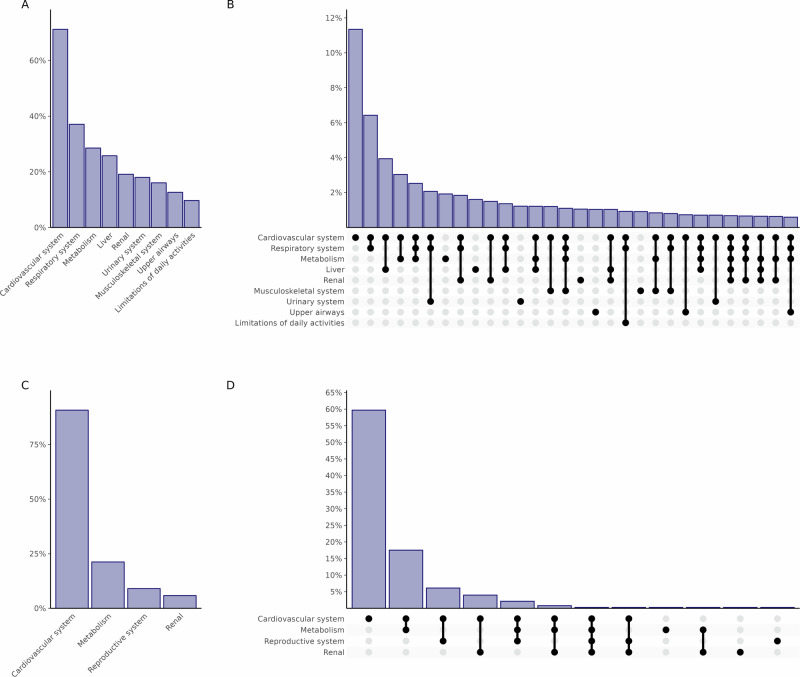 Figure 2
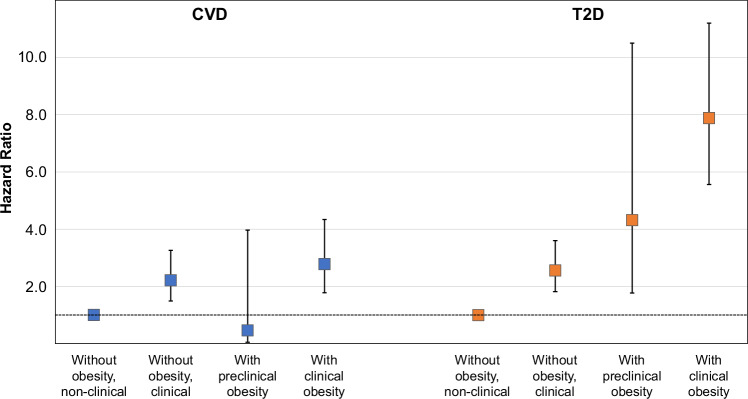 Figure 3
Peer Reviews
No public reviews on file for this paper yet. If you reviewed it on a platform where reviews are public (OpenReview, ICLR, NeurIPS, ICML), you can paste yours below so the community can read it here.
Videos
No videos yet. Explain this paper in a talk, walkthrough, or lecture? Add one.
Taxonomy
TopicsBariatric Surgery and Outcomes · Cardiovascular Disease and Adiposity · Adipokines, Inflammation, and Metabolic Diseases