Task-related differences in network connectivity and dynamics in people with severe opioid use disorder compared with healthy controls
Danielle L. Kurtin, Katherine Herlinger, Alexandra Hayes, Lexi Hand, Leon Fonville, Raymond G. Hill, David J. Nutt, Anne R. Lingford-Hughes, Louise M. Paterson

TL;DR
This study compares brain network connectivity and dynamics in people with severe opioid use disorder and healthy controls during reward and cue-related tasks.
Contribution
The study reveals distinct neural network interactions in severe opioid use disorder linked to receptor availability and altered brain dynamics.
Findings
MD participants showed weaker functional connectivity compared to healthy controls in most conditions except during reward or drug cue anticipation.
Reward and anti-reward networks showed stronger connections to cognitive control and default mode networks in MD participants during cue tasks.
PLS analysis found spatial correlations between receptor availability and connectivity changes during the MID task in MD participants.
Abstract
One approach to addressing the immense unmet need for treatments of severe opioid use disorder (sOUD) is to understand more about associated changes in the brain’s reward circuitry. It has been shown that during reward anticipation in the Monetary Incentive Delay (MID) task, people with severe substance use disorder (SUD) show blunted responses in reward neural circuitry compared with healthy controls (HC). Conversely, drug-related cues result in heightened responses in the same neural reward circuitry in those with SUD compared with HC. However, it is unclear how such dysfunctional reward processing is related to neural correlates of other processes commonly dysregulated in addiction, such as attention and cognition. The aim of this work was to evaluate whether people with sOUD show different relationships between reward networks to networks that regulate cognition, attention, sensory…
Genes, proteins, chemicals, diseases, species, mutations and cell lines named across the full text — each resolved to its canonical identifier and authoritative record.
Click any figure to enlarge with its caption.
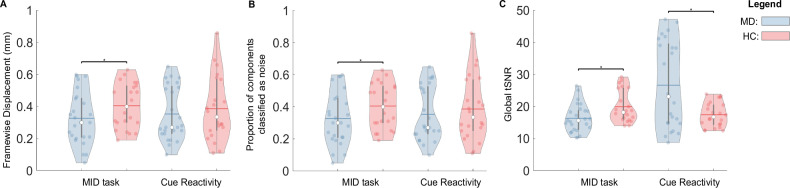 Figure 1
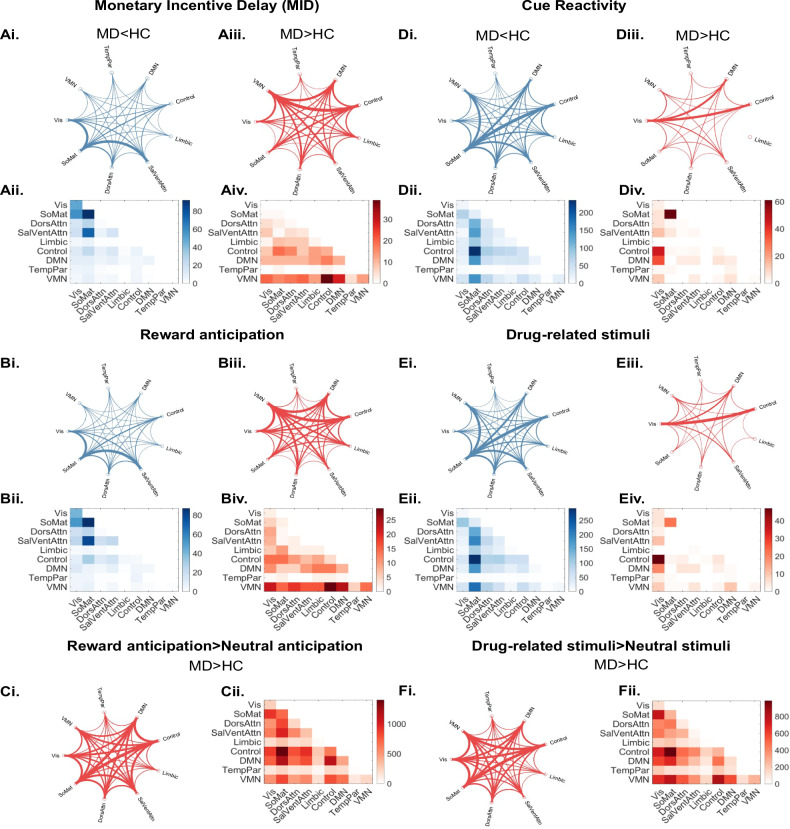 Figure 2
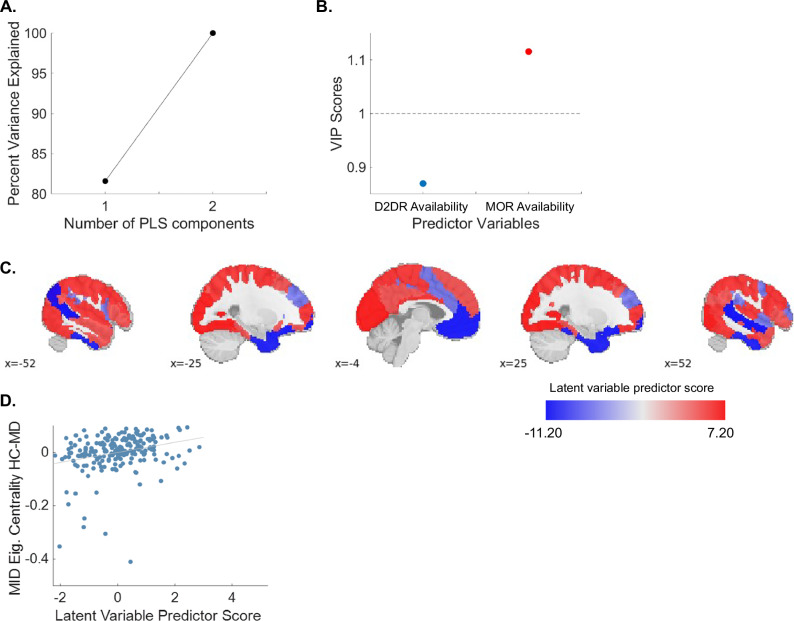 Figure 3
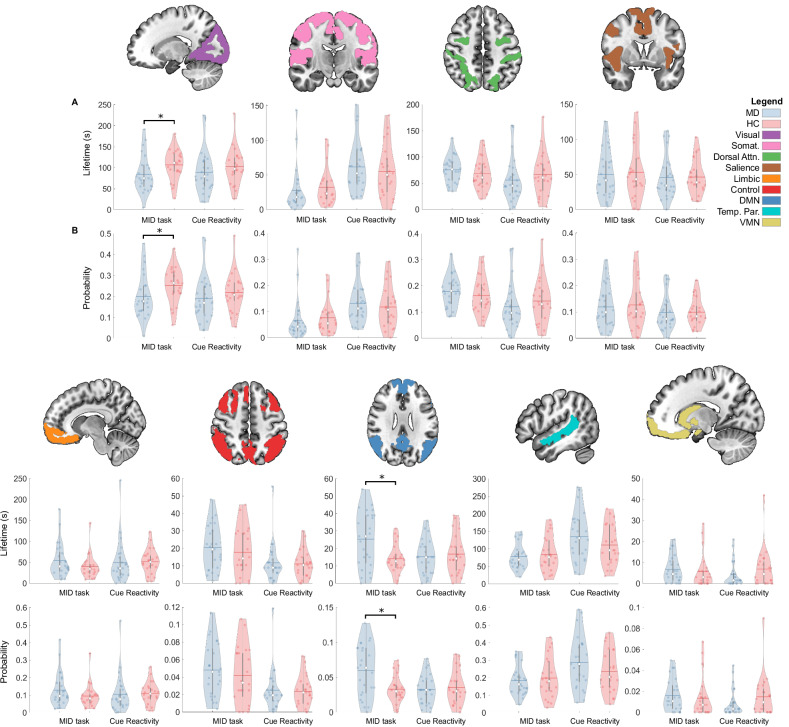 Figure 4
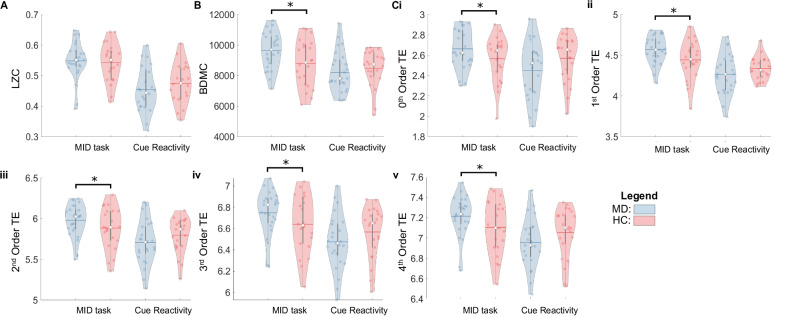 Figure 5
Peer Reviews
No public reviews on file for this paper yet. If you reviewed it on a platform where reviews are public (OpenReview, ICLR, NeurIPS, ICML), you can paste yours below so the community can read it here.
Videos
No videos yet. Explain this paper in a talk, walkthrough, or lecture? Add one.
Taxonomy
TopicsFunctional Brain Connectivity Studies · Neural and Behavioral Psychology Studies · Neurotransmitter Receptor Influence on Behavior