COMPASS subunit Bre2 regulates chromatin remodeler Arp9 to control Aspergillus flavus aflatoxin synthesis and virulence
Zhenhong Zhuang, Minghui Sun, Dandan Wu, Dongmei Ma, Lin Chen, Xiaohua Pan, Hong Lin, Yu Li, Xuezhen Ma, Shihua Wang

TL;DR
This study reveals how a key protein in a histone methyltransferase complex regulates aflatoxin production and fungal virulence in Aspergillus flavus.
Contribution
The novel finding is that Bre2 regulates the chromatin remodeler Arp9, linking H3K4 methylation to aflatoxin biosynthesis and pathogenicity.
Findings
Bre2 modulates H3K4 methylation to regulate aflatoxin biosynthesis and fungal virulence.
Arp9 interacts with other chromatin remodeling factors to influence fungal pathogenicity.
Arp9 modulates chromatin conformation of genes involved in secondary metabolism and virulence.
Abstract
Aspergillus flavus, along with its notorious secondary metabolite aflatoxin B1 (AFB1), seriously endangers human health. Histone methyltransferase complex COMPASS (complex of proteins associated with Set1) plays a crucial role in regulating aflatoxin biosynthesis and virulence of A. flavus, but the underlying mechanism is unclear. Here, we find that Bre2, the key subunit of COMPASS, regulates AFB1 biosynthesis, fungal morphogenesis, and virulence through modulation of H3K4 methylation. ChIP-seq and biochemical analyses reveal that chromatin remodeling factor (CRF) Arp9 is directly targeted by Bre2, and Arp9 exerts bio-functions through interacting with the other CRFs such as RSC8, Arp7, and Sth1. ATAC-seq results indicate that Arp9 contributes to fungal pathogenicity by modulating chromatin conformation of genes that are involved in secondary metabolism, morphogenesis, and virulence.…
Genes, proteins, chemicals, diseases, species, mutations and cell lines named across the full text — each resolved to its canonical identifier and authoritative record.
Click any figure to enlarge with its caption.
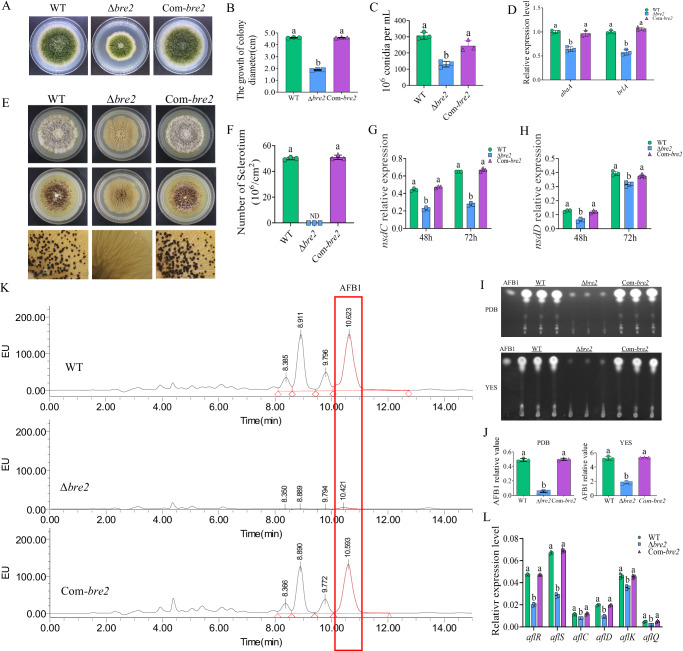 Figure 1
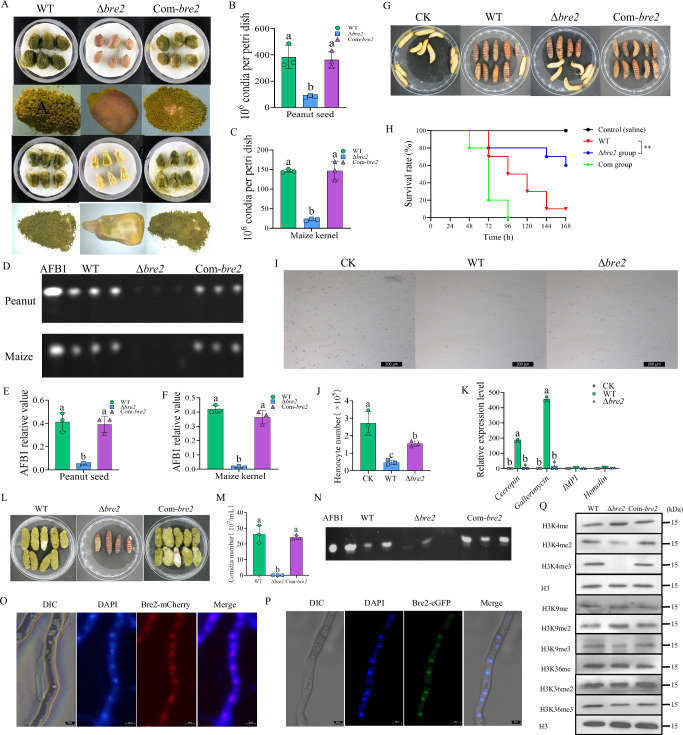 Figure 2
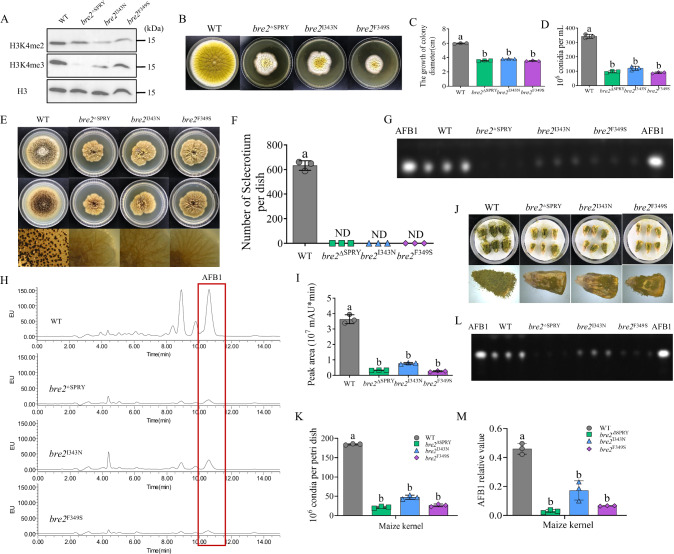 Figure 3
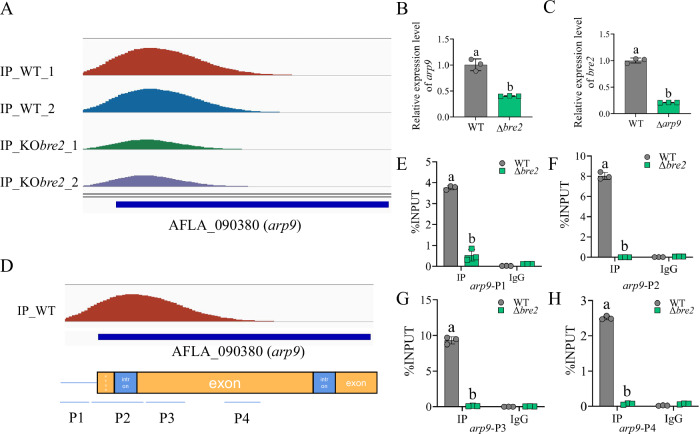 Figure 4
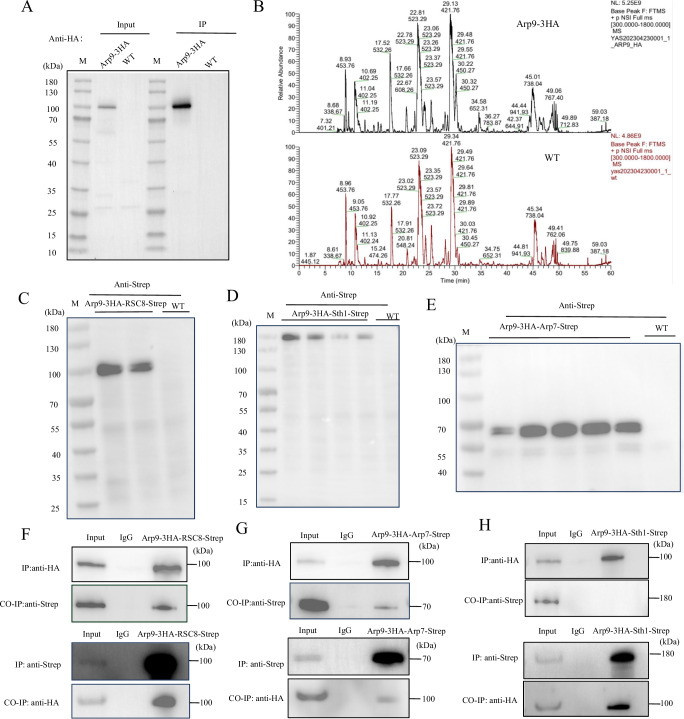 Figure 5
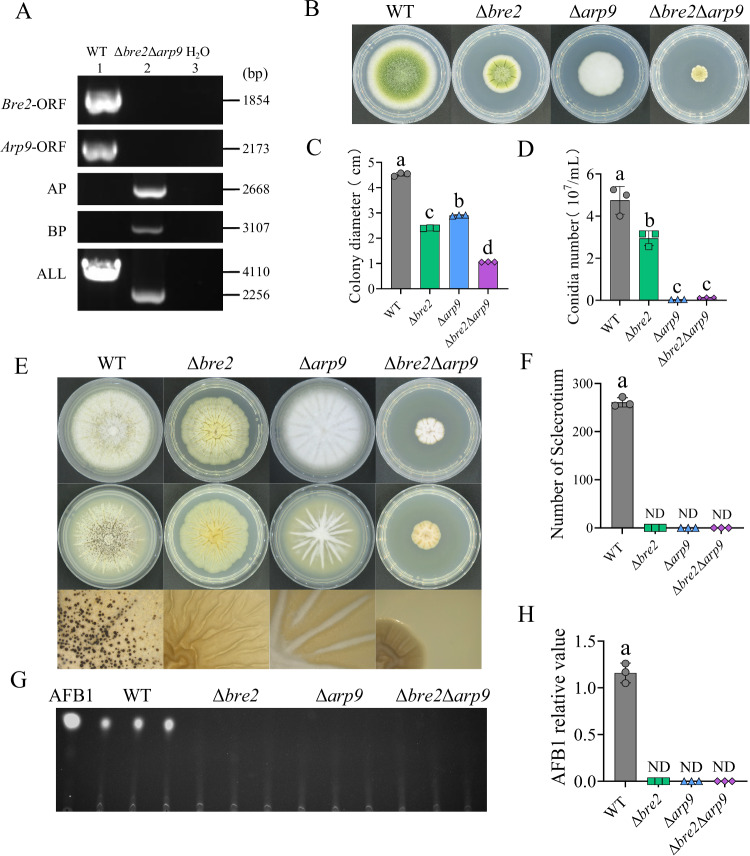 Figure 6
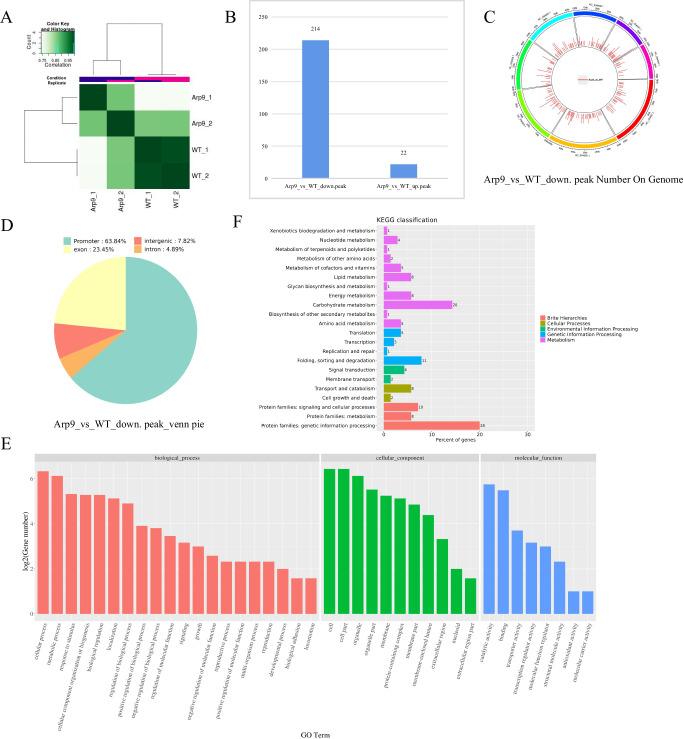 Figure 7
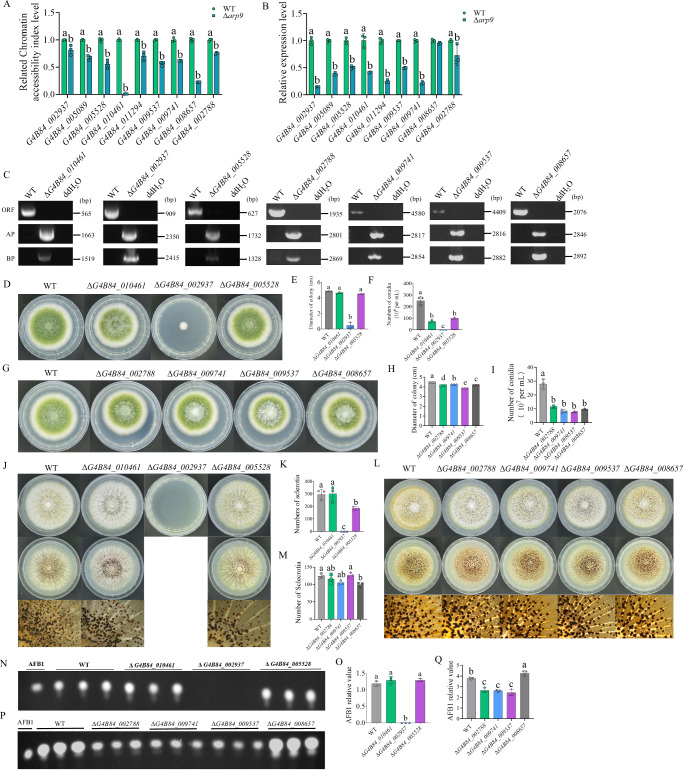 Figure 8
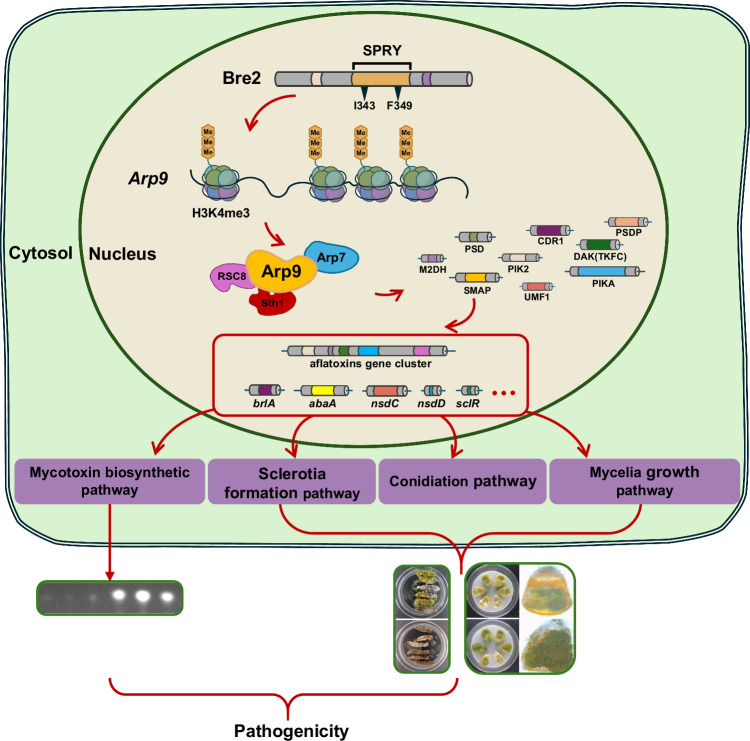 Figure 9
Peer Reviews
No public reviews on file for this paper yet. If you reviewed it on a platform where reviews are public (OpenReview, ICLR, NeurIPS, ICML), you can paste yours below so the community can read it here.
Videos
No videos yet. Explain this paper in a talk, walkthrough, or lecture? Add one.
Taxonomy
TopicsFungal and yeast genetics research · Mycotoxins in Agriculture and Food · Antifungal resistance and susceptibility