KIT Mutation-NTRK fusion oncogenic driver switch: a novel mechanism of acquired imatinib resistance in GIST
Simona Gloazzo, Marta Sbaraglia, Elena Bellan, Daniela Gasparotto, Elena Belli, Davide Baldazzi, Gabriella Rossi, Elena Magnani, Maria Pia Rosito, Andrea Carnevali, Sara Piccinin, Angelo Paolo Dei Tos, Roberta Maestro

TL;DR
This paper reports a new mechanism of imatinib resistance in GIST where a KIT mutation switches to an NTRK3 fusion, suggesting NTRK inhibitors as a potential treatment.
Contribution
The study identifies the first case of an NTRK fusion as a secondary event causing imatinib resistance in GIST.
Findings
The relapsed tumor lost KIT expression and showed a dedifferentiated phenotype with an EML4::NTRK3 fusion.
EML4::NTRK3 confers imatinib resistance but makes GIST cells sensitive to NTRK inhibitors.
This case highlights the need to test for NTRK alterations in resistant tumors to explore new therapies.
Abstract
Imatinib is the first-line treatment for advanced gastrointestinal stromal tumors (GISTs) harboring KIT or PDGFRA mutations. Unfortunately, resistance invariably develops, typically through secondary KIT/PDGFRA mutations. Here, we describe an unprecedented case of acquired imatinib resistance associated with an oncogenic driver switch, from a KIT mutation to an NTRK3 fusion. The index case was a KIT exon 11-mutated gastric GIST that progressed on imatinib. Despite retaining the original KIT mutation and DOG1 expression, the relapsed tumor lost KIT expression and exhibited a dedifferentiated phenotype. Transcriptomic profiling revealed a de novo EML4::NTRK3 gene fusion. In vitro modeling demonstrated that EML4::NTRK3 confers imatinib resistance, while sensitizing GIST cells to NTRK inhibitors. This first reported instance of an NTRK fusion as a secondary event in GIST progression…
Genes, proteins, chemicals, diseases, species, mutations and cell lines named across the full text — each resolved to its canonical identifier and authoritative record.
Click any figure to enlarge with its caption.
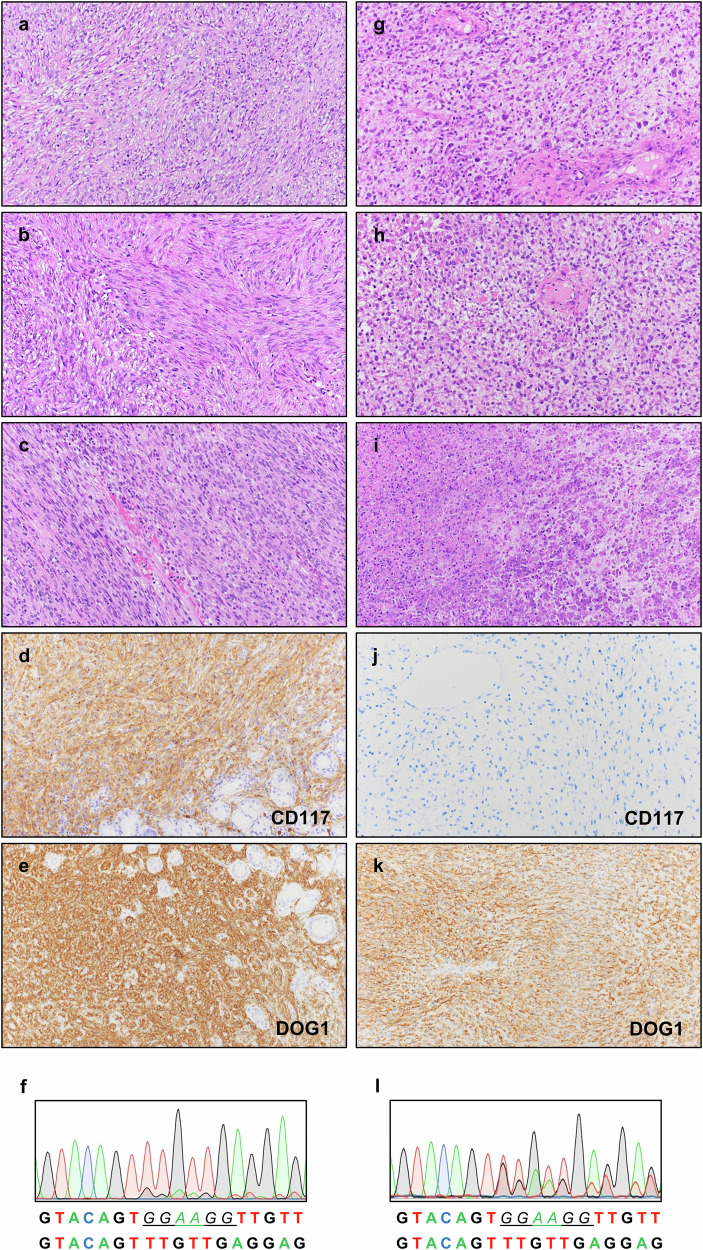 Figure 1
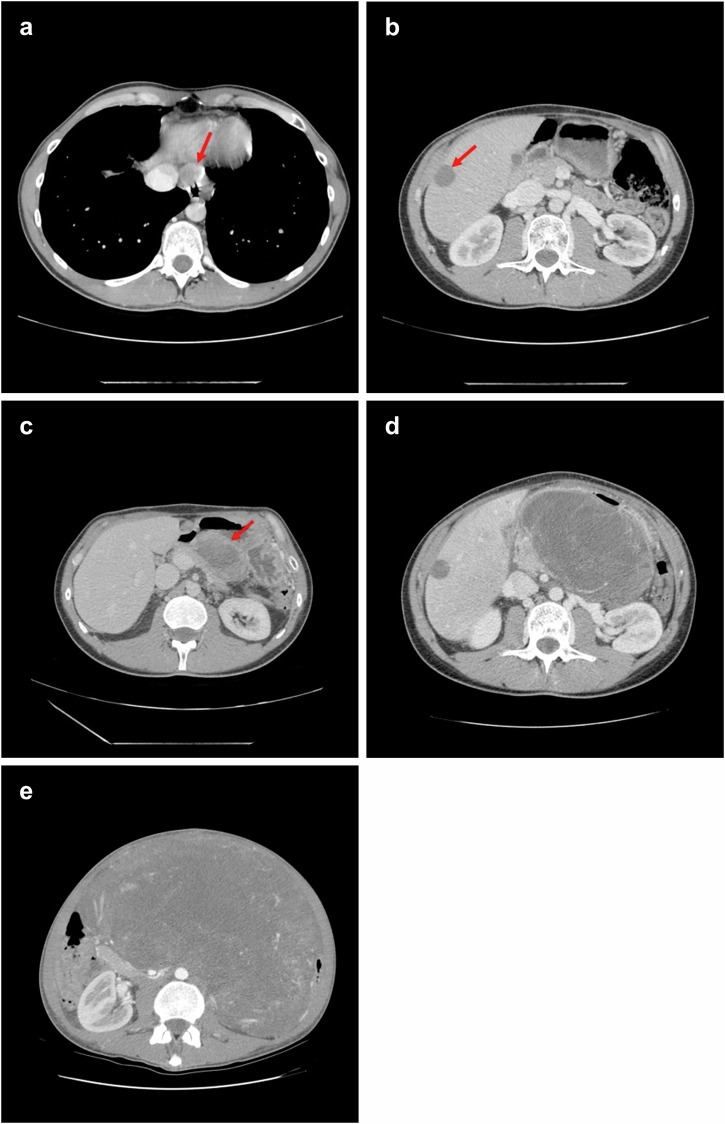 Figure 2
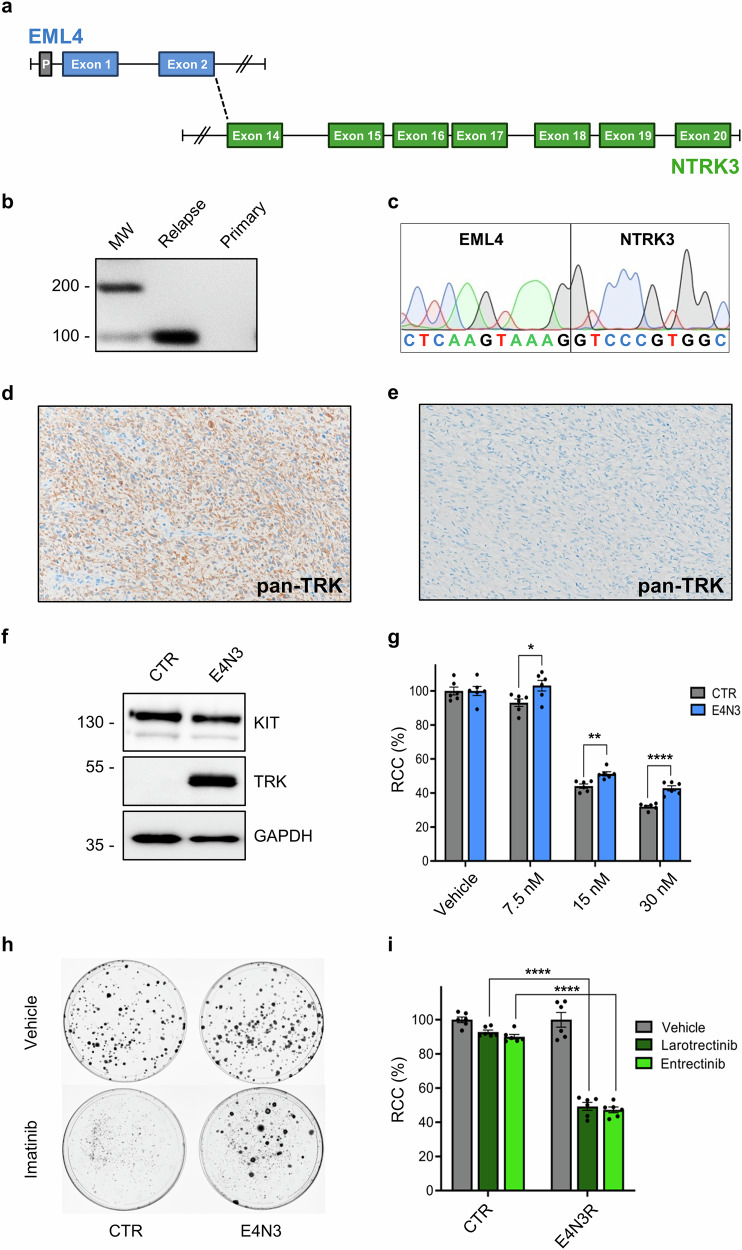 Figure 3
Peer Reviews
No public reviews on file for this paper yet. If you reviewed it on a platform where reviews are public (OpenReview, ICLR, NeurIPS, ICML), you can paste yours below so the community can read it here.
Videos
No videos yet. Explain this paper in a talk, walkthrough, or lecture? Add one.
Taxonomy
TopicsGastrointestinal Tumor Research and Treatment · Soft tissue tumors and treatment · Mast cells and histamine