Thinking flexibly: A cognitive remediation therapy–informed intervention for autistic youth
Jasmin Dipre, Lauren Burton, Kate Tchanturia, Matthew J Hollocks

TL;DR
A new therapy called 'Thinking Flexibly' helps autistic youth improve cognitive flexibility and mental health.
Contribution
A co-designed cognitive remediation therapy targeting cognitive inflexibility in autistic youth.
Findings
High acceptability with 19/20 participants completing the intervention.
Significant improvements in cognitive flexibility and reductions in anxiety and depression symptoms.
Abstract
Autistic people are known to demonstrate greater difficulties with cognitive flexibility. These difficulties are associated with a range of poor outcomes, including elevated rates of anxiety and depression. Current intervention approaches fail to account for these specific mechanisms. In this study, we address this by piloting a new intervention which aims to specifically target cognitive inflexibility. The ‘Thinking Flexibly’ intervention has been co-designed with autistic youth based on previous work, including cognitive remediation therapy. Twenty autistic adolescents were recruited from clinical services and offered the eight-session intervention. Acceptability was assessed through participant drop-out and session completion. Participants (and their parents) also completed questionnaire measures of cognitive inflexibility, anxiety, depression and functional outcomes before and after…
Genes, proteins, chemicals, diseases, species, mutations and cell lines named across the full text — each resolved to its canonical identifier and authoritative record.
Click any figure to enlarge with its caption.
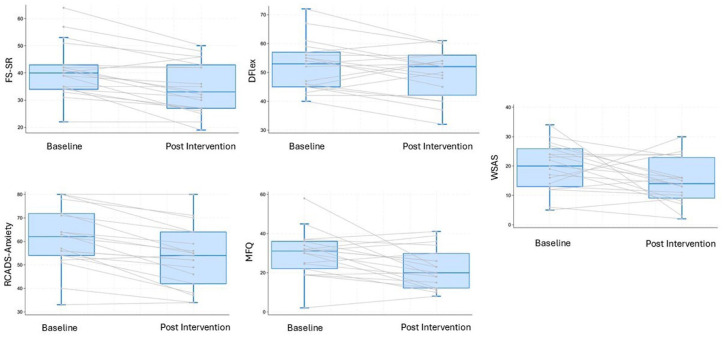 Figure 1
 Figure 2
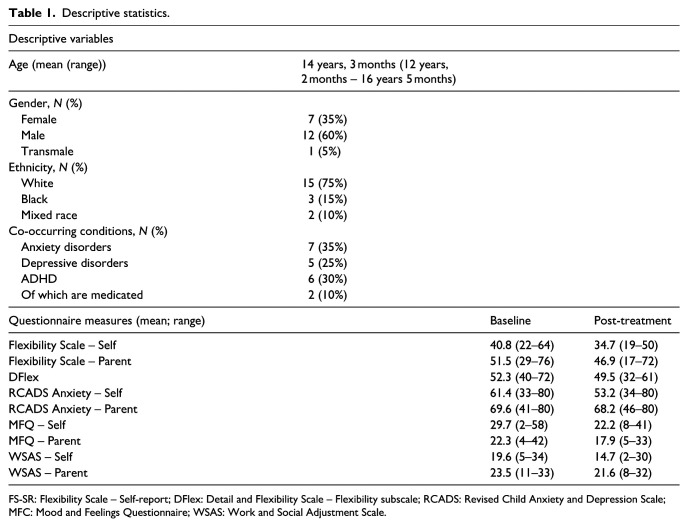 Figure 3
Peer Reviews
No public reviews on file for this paper yet. If you reviewed it on a platform where reviews are public (OpenReview, ICLR, NeurIPS, ICML), you can paste yours below so the community can read it here.
Videos
No videos yet. Explain this paper in a talk, walkthrough, or lecture? Add one.
Taxonomy
TopicsAutism Spectrum Disorder Research · Behavioral and Psychological Studies · Family and Disability Support Research