Partner-dependent communication without dynamic adaptation in autism
Saskia BJ Koch, Jordy van Langen, Jana Bašnáková, Arjen Stolk

TL;DR
Autistic individuals can adjust communication based on initial assumptions but are less likely to revise these adjustments during interactions, unlike non-autistic individuals.
Contribution
The study identifies a core interactional capacity in non-autistic individuals shaped by early social exposure, which is less evident in autistic individuals.
Findings
Autistic participants adjusted communication based on initial assumptions but did not revise these adjustments during interactions.
Non-autistic participants dynamically adapted their communication based on interaction evidence, influenced by early social exposure.
Autistic participants maintained stereotype-driven communication throughout the interaction despite evidence of equal partner competence.
Abstract
Autism is a neurodevelopmental condition characterized by persistent communication challenges, often compounded by social anxiety. Although differences in perspective-taking, cognitive flexibility, and social motivation have been implicated in these challenges, their influence on live interpersonal interactions remains unclear. In this study, we quantitatively examined how autistic and non-autistic individuals with varying levels of social anxiety adapted their communication during experimentally controlled interactions with two ostensibly distinct partners—a child and an adult—both portrayed by the same role-blind confederate. Autistic participants were equally motivated and capable as non-autistic participants in adjusting their communication to stereotypical assumptions about a partner’s abilities, spontaneously using greater emphasis when addressing the presumed less capable child.…
Genes, proteins, chemicals, diseases, species, mutations and cell lines named across the full text — each resolved to its canonical identifier and authoritative record.
Click any figure to enlarge with its caption.
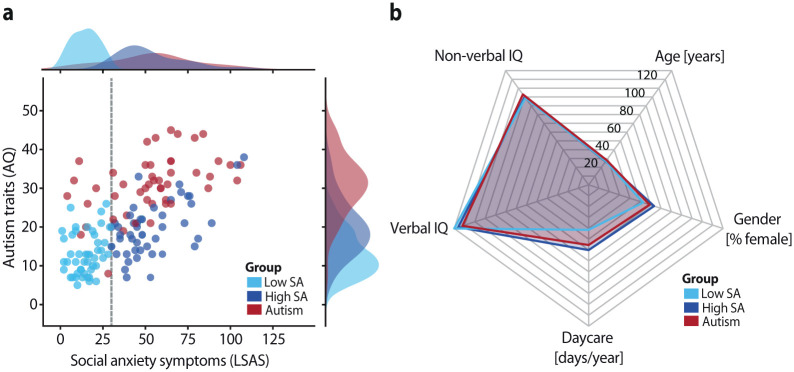 Figure 1
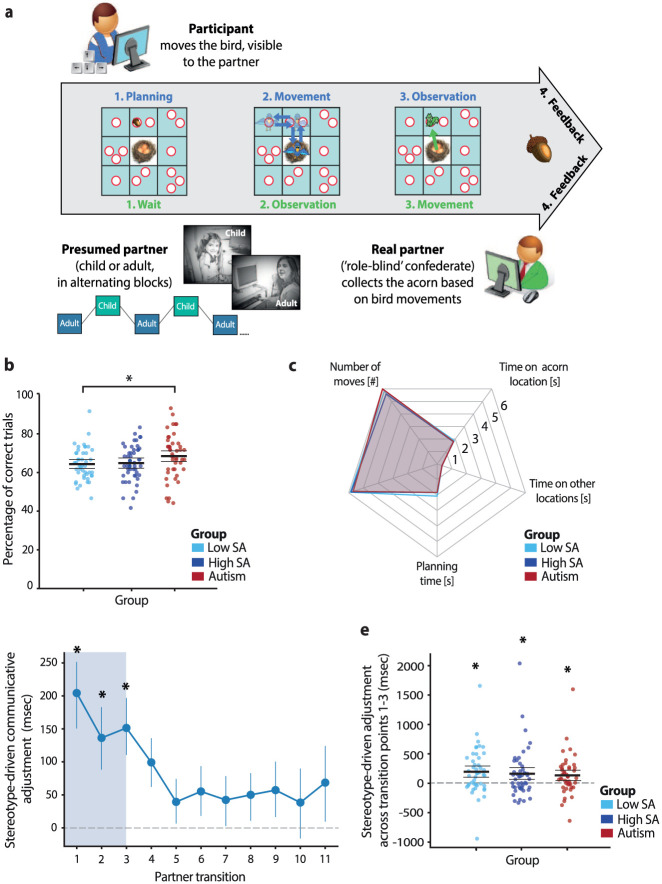 Figure 2
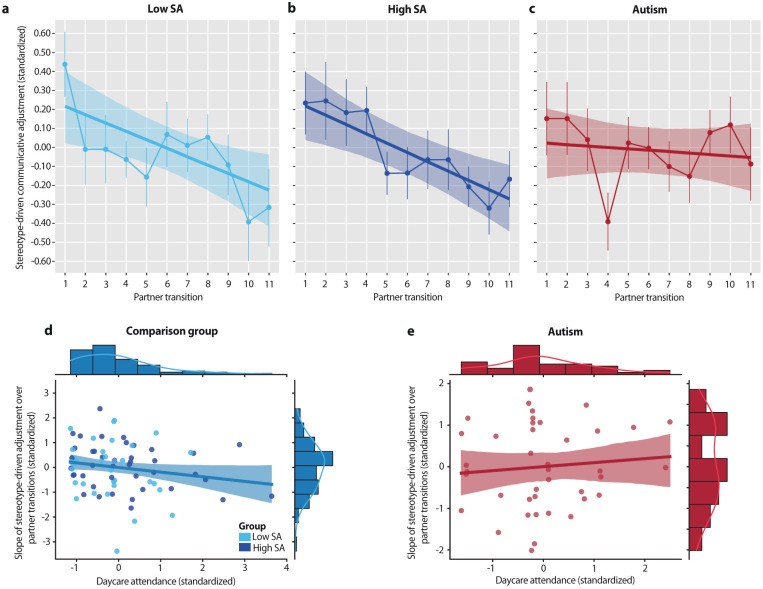 Figure 3
 Figure 4
Peer Reviews
No public reviews on file for this paper yet. If you reviewed it on a platform where reviews are public (OpenReview, ICLR, NeurIPS, ICML), you can paste yours below so the community can read it here.
Videos
No videos yet. Explain this paper in a talk, walkthrough, or lecture? Add one.
Taxonomy
TopicsAutism Spectrum Disorder Research · Behavioral and Psychological Studies · Child and Animal Learning Development