Single-dose DMT reverses anhedonia and cognitive deficits via restoration of neurogenesis in a stress-induced depression model
Rafael V. Lima da Cruz, Rêmullo B. G. de Miranda Costa, Gabriel M. de Queiroz, Tijana Stojanovic, Thiago C. Moulin, Richardson N. Leão

TL;DR
A single dose of DMT rapidly reverses depression-like symptoms and cognitive issues in stressed mice by boosting brain cell growth.
Contribution
This study demonstrates that DMT can rapidly reverse depression-like behaviors and cognitive deficits in mice through enhanced neurogenesis.
Findings
DMT reversed depressive-like behavior and restored cognitive performance better than fluoxetine in stressed mice.
DMT increased adult-born granule cell integration and reduced abnormal integration in the hippocampus.
DMT's effects persisted under isoflurane anesthesia, though the role of the psychedelic experience is unclear.
Abstract
Major depressive disorder (MDD) remains a leading cause of disability worldwide, with current treatments limited by delayed onset and low efficacy. The serotonergic psychedelic N,N-dimethyltryptamine (DMT) has shown rapid antidepressant effects in early clinical studies, yet its mechanisms and efficacy remain poorly characterized in established models of depression. Here, we evaluated the effects of a single dose of DMT (30 mg/kg, i.p.) in male mice exposed to the Chronic Unpredictable Mild Stress (UCMS) paradigm, a robust mouse model recapitulating key features of MDD, including anhedonia and cognitive impairment. DMT administered after UCMS reversed depressive-like behavior and restored cognitive performance, outperforming chronic fluoxetine across most domains. When administered during the stress period, DMT mitigated anhedonic responses but did not rescue cognitive deficits,…
Genes, proteins, chemicals, diseases, species, mutations and cell lines named across the full text — each resolved to its canonical identifier and authoritative record.
Click any figure to enlarge with its caption.
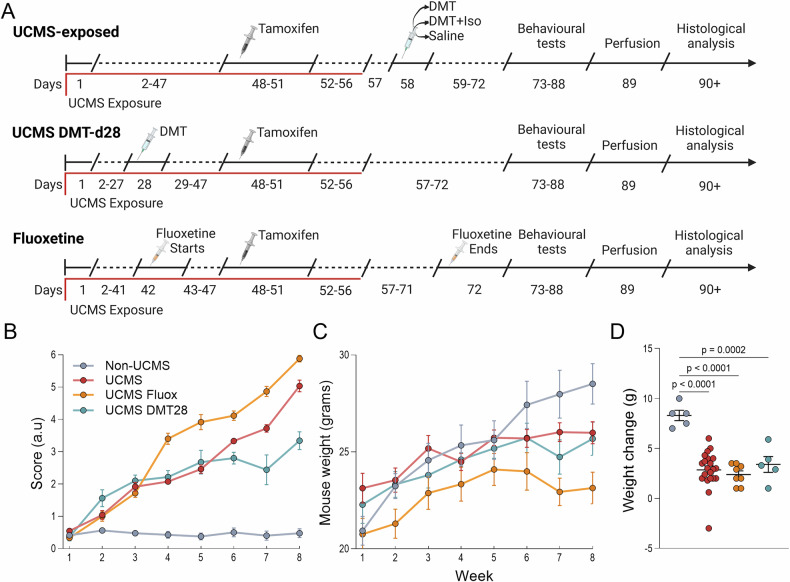 Figure 1
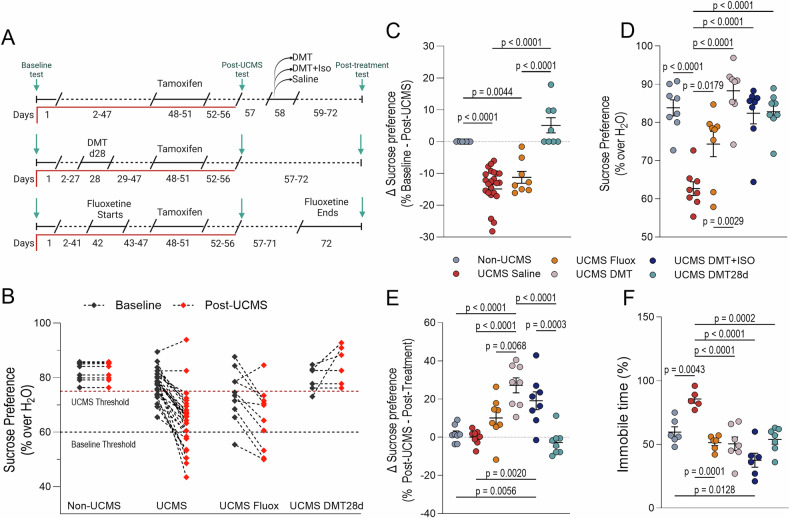 Figure 2
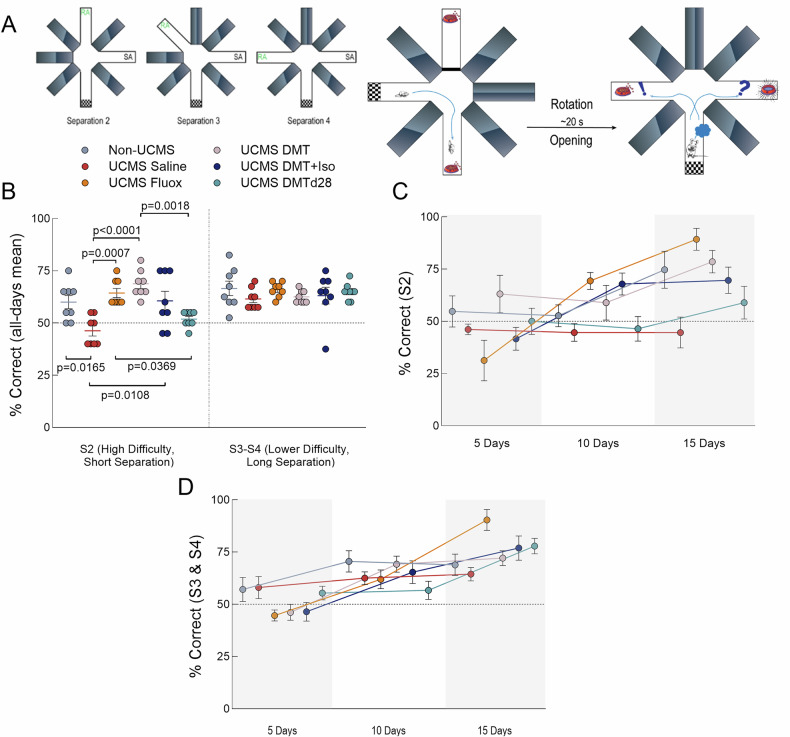 Figure 3
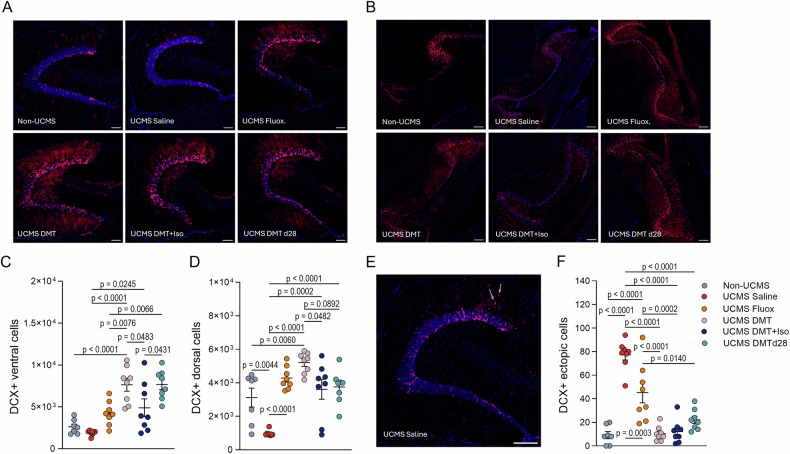 Figure 4
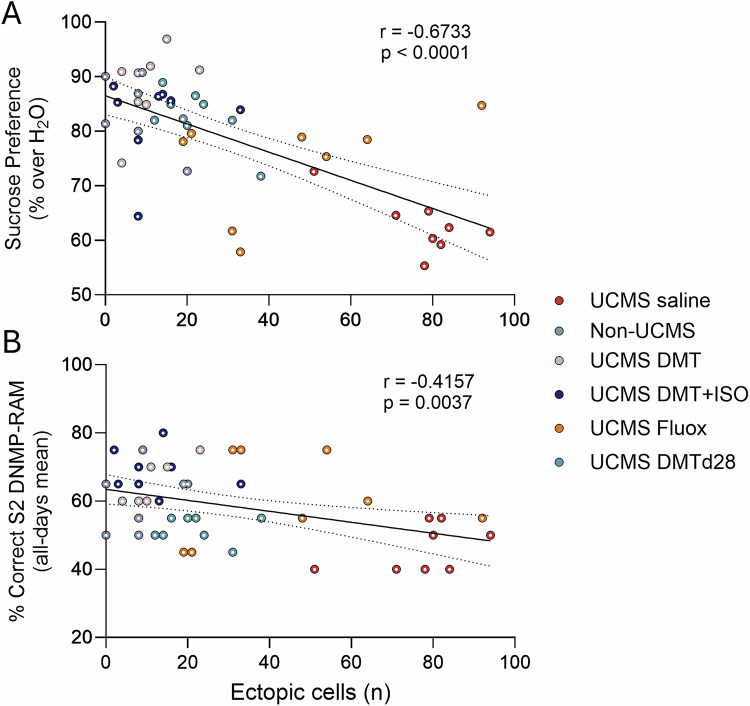 Figure 5
Peer Reviews
No public reviews on file for this paper yet. If you reviewed it on a platform where reviews are public (OpenReview, ICLR, NeurIPS, ICML), you can paste yours below so the community can read it here.
Videos
No videos yet. Explain this paper in a talk, walkthrough, or lecture? Add one.
Taxonomy
TopicsPsychedelics and Drug Studies · Nicotinic Acetylcholine Receptors Study · Neurotransmitter Receptor Influence on Behavior