MHC1-TIP enables single-tube multimodal immunopeptidome profiling and uncovers intratumoral heterogeneity in antigen presentation
Mayukha Bathini, Diana Bocaniciu, Fraser D. Johnson, Rick C. P. de Jong, Fengchao Yu, Vincenzo Davide Aloi, Marije C. Kuiken, Janniek R. Mors, Lisanne Giebel, Julien Champagne, Onno Bleijerveld, Reuven Agami, Krijn K. Dijkstra, Daniela S. Thommen, Alexey I. Nesvizhskii

TL;DR
A new method called MHC1-TIP allows detailed analysis of immune-related proteins from small tumor samples, revealing hidden differences in antigen presentation.
Contribution
MHC1-TIP is a scalable, low-input, single-tube workflow for robust immunopeptidome profiling with multimodal compatibility.
Findings
MHC1-TIP enables immunopeptidome profiling from sub-milligram tumor fragments and patient-derived organoids.
Intratumoral heterogeneity in antigen presentation was found to be poorly correlated with proteomic expression in renal cell carcinoma.
The method supports integrated analysis of proteome and immunopeptidome from the same sample.
Abstract
Profiling antigens presented on MHC class I molecules on the cell surface is essential to identify candidate antigens for targeted and personalized immunotherapies. However, mass spectrometry-based immunopeptidomics has traditionally been limited by high input requirements, extensive sample manipulation, and expensive reagents. To overcome these challenges, we developed MHC1-TIP: a scalable, single-tube and cost-effective workflow to enable robust MHC-I ligandome recovery from cell lines, patient-derived organoids, and sub-milligram amounts of ex-vivo tumour fragments. Moreover, MHC1-TIP also preserves compatibility with additional omics profiling technologies and we demonstrate its capacity for quantitative and multimodal profiling of the proteome and immunopeptidome from the same sample to enable integrated analyses of protein expression and antigen presentation. Application of…
Genes, proteins, chemicals, diseases, species, mutations and cell lines named across the full text — each resolved to its canonical identifier and authoritative record.
Click any figure to enlarge with its caption.
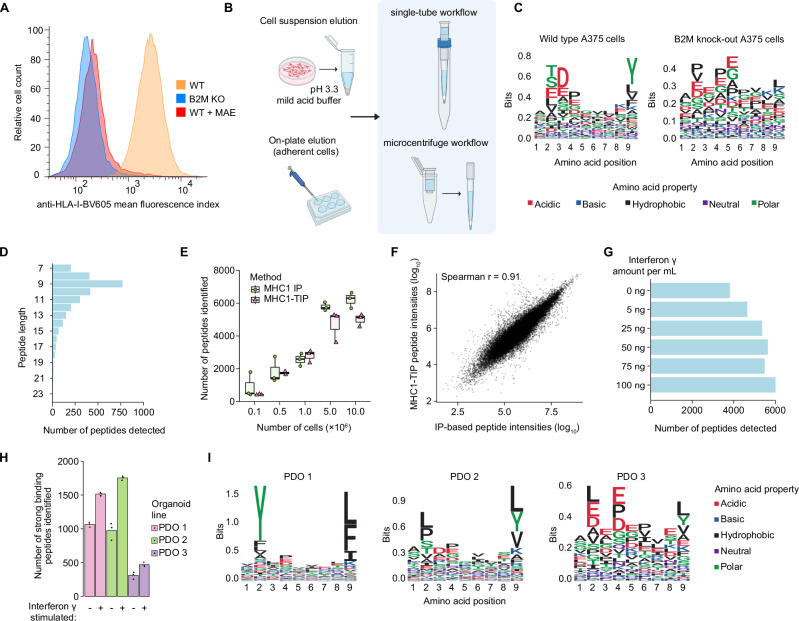 Figure 1
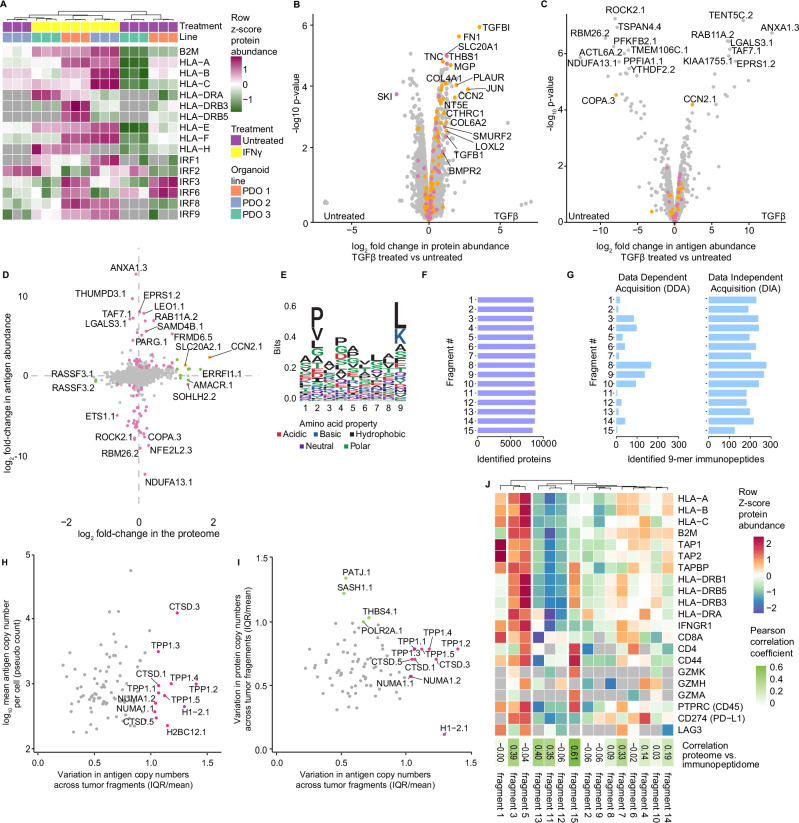 Figure 2
Peer Reviews
No public reviews on file for this paper yet. If you reviewed it on a platform where reviews are public (OpenReview, ICLR, NeurIPS, ICML), you can paste yours below so the community can read it here.
Videos
No videos yet. Explain this paper in a talk, walkthrough, or lecture? Add one.
Taxonomy
Topicsvaccines and immunoinformatics approaches · Advanced Proteomics Techniques and Applications · Monoclonal and Polyclonal Antibodies Research