Relationship between adjustability of grasping force and upper limb/hand function in individuals with cerebrovascular disorders
Tatsuya Kaneno, Katsutoshi Kawahara, Tatsuya Yabe, Takashi Tasaka, Tomoyuki Sakurai, Akihiro Sato, Kazunori Akizuki, Yoshifumi Morita

TL;DR
This study explores how the ability to adjust grasping force relates to hand and upper limb function in people with cerebrovascular disorders.
Contribution
The study introduces a new perspective on the role of the less-affected limb's grasping force adjustability in post-stroke motor performance.
Findings
AGF on the less-affected side was negatively correlated with ARAT scores on the same side.
AGF on the less-affected side was positively correlated with MAL (Quality of Movement) on the more-affected side.
These correlations suggest the less-affected side's AGF influences both sides' motor performance and perceived movement quality.
Abstract
Activities of daily living, including grasping, holding, and pinching, are essential for independence but often become difficult for individuals with cerebrovascular disease owing to upper limb paralysis. We investigated the relationship between adjustability of grasping force (AGF), defined as the ability to adjust grasping force, and upper limb/hand functional performance. Twelve individuals with mild cerebrovascular disorders participated in this preliminary cross-sectional study. Assessments included the AGF task using iWakka, the Fugl-Meyer Assessment, Simple Test for Evaluating Hand Function, Action Research Arm Test (ARAT), and Motor Activity Log (MAL). AGF was quantified using the AGF score, calculated as the absolute error between target and actual grasping force; lower AGF scores indicate better AGF. Partial Spearman’s rank correlations, adjusted for age, revealed that AGF…
Genes, proteins, chemicals, diseases, species, mutations and cell lines named across the full text — each resolved to its canonical identifier and authoritative record.
Click any figure to enlarge with its caption.
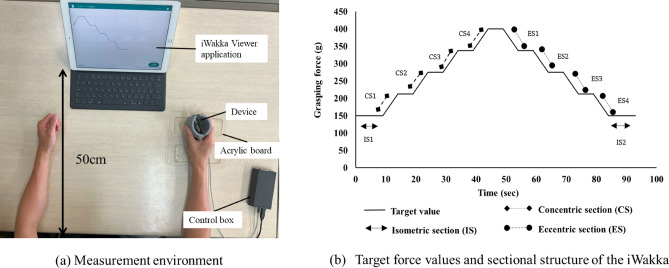 Figure 1
Peer Reviews
No public reviews on file for this paper yet. If you reviewed it on a platform where reviews are public (OpenReview, ICLR, NeurIPS, ICML), you can paste yours below so the community can read it here.
Videos
No videos yet. Explain this paper in a talk, walkthrough, or lecture? Add one.
Taxonomy
TopicsMotor Control and Adaptation · Stroke Rehabilitation and Recovery · Action Observation and Synchronization