Association of reduced REM sleep with mortality in adults with coronary artery disease and obstructive sleep apnea in the RICCADSA cohort
Baran Balcan, Yeliz Celik, Erik Thunström, Helena Glantz, Patrick J. Strollo, Susan Redline, Yüksel Peker

TL;DR
Reduced REM sleep is linked to higher mortality in heart patients with sleep apnea, suggesting it could help identify high-risk individuals.
Contribution
This study shows that reduced REM sleep independently predicts mortality in CAD patients with OSA, beyond traditional risk factors.
Findings
Participants with reduced REM sleep had a 12.8% mortality rate versus 4.4% in others.
Reduced REM sleep predicted mortality (hazard ratio 2.39) after adjusting for age, sex, BMI, and CPAP use.
Adjusting for additional factors like TST and AHI did not change the association.
Abstract
Reduced rapid-eye movement (REM) sleep has been linked to increased mortality in the general population. We investigated whether diminished REM sleep is associated with higher mortality in adults with coronary artery disease (CAD) and obstructive sleep apnea (OSA). This secondary analysis of the RICCADSA trial included 356 revascularized CAD patients with OSA (apnea–hypopnea index [AHI] ≥ 15 events/h) and total sleep time (TST) ≥ 240 min on baseline polysomnography. Reduced REM sleep was defined as the lowest quartile of REM percentage. Cox proportional hazards models assessed the association between reduced REM sleep and mortality over a median 4.7-year follow-up. The lowest REM quartile corresponded to 8.7% of TST. Participants with reduced REM sleep (n = 86) were older (66.0 ± 8.1 vs. 63.0 ± 8.0 years; p = 0.035), had higher BMI (29.8 ± 4.6 vs. 28.7 ± 3.8 kg/m²; p = 0.010), shorter…
Genes, proteins, chemicals, diseases, species, mutations and cell lines named across the full text — each resolved to its canonical identifier and authoritative record.
Click any figure to enlarge with its caption.
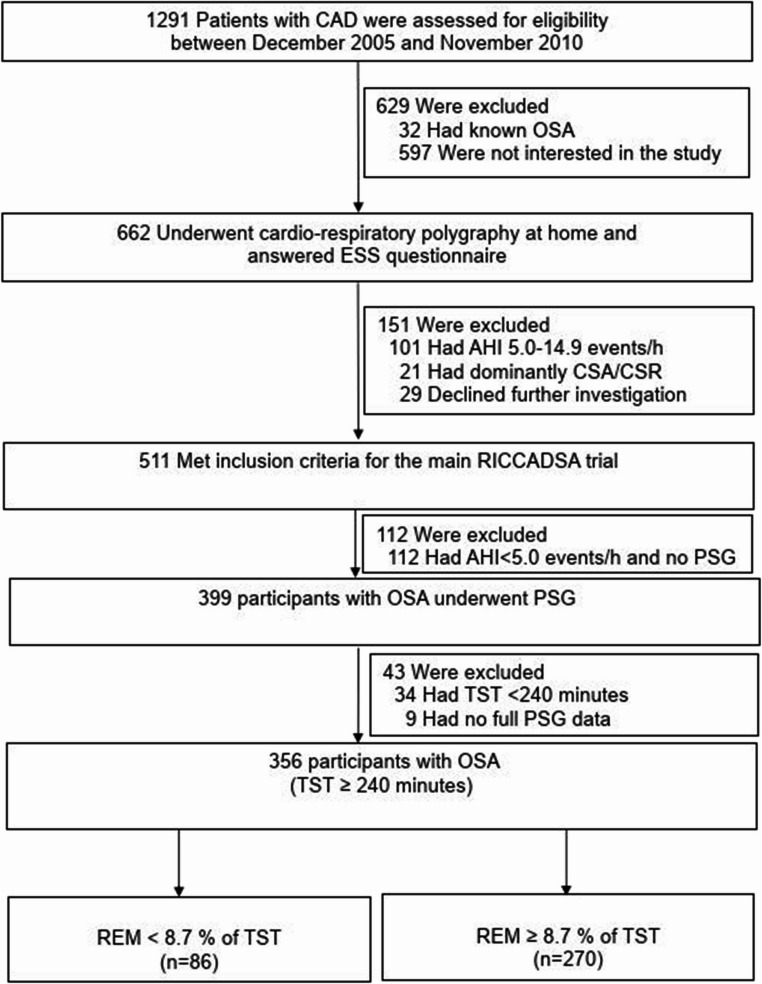 Figure 1
 Figure 2
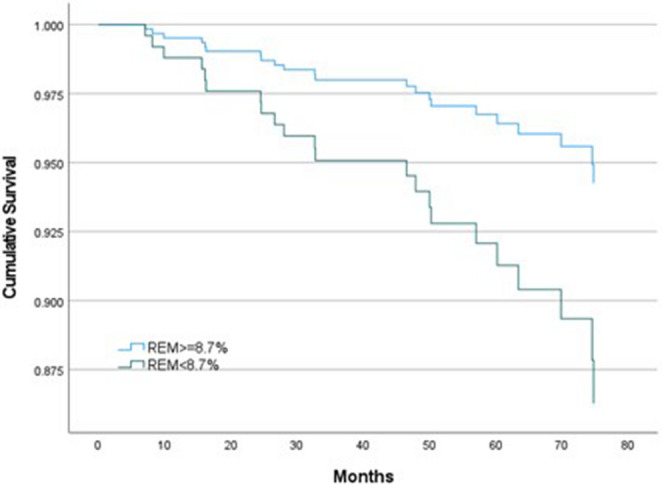 Figure 3
Peer Reviews
No public reviews on file for this paper yet. If you reviewed it on a platform where reviews are public (OpenReview, ICLR, NeurIPS, ICML), you can paste yours below so the community can read it here.
Videos
No videos yet. Explain this paper in a talk, walkthrough, or lecture? Add one.
Taxonomy
TopicsObstructive Sleep Apnea Research · Sleep and related disorders · Restless Legs Syndrome Research