Trans-Chalcone alleviates overt pain-like behavior by targeting the activation of nociceptive neuron TRPV1 and TRPA1 channels
Maiara Piva, Kelly M. Yaekashi, Thais G. O. Pereira, Mariana M. Bertozzi, Felipe A. Pinho-Ribeiro, Cássia Calixto-Campos, Doumit Camilios-Neto, Sergio M. Borghi, Ana C. Zarpelon-Schutz, Victor Fattori, Rubia Casagrande, Waldiceu A. Verri

TL;DR
Trans-Chalcone reduces pain-like behaviors by inhibiting the activation of TRPV1 and TRPA1 channels in nociceptive neurons.
Contribution
This study is the first to show that Trans-Chalcone directly modulates nociceptive neuron TRPV1 and TRPA1 channels.
Findings
TC inhibited acetic acid and PBQ-induced abdominal contortions by 58.8% and 54.6%, respectively.
TC reduced capsaicin and AITC-induced paw flinching and licking by up to 52%.
TC decreased calcium influx in dorsal root ganglia neurons stimulated by capsaicin and AITC.
Abstract
Trans-Chalcone (TC) is an anti-inflammatory flavonoid that reduces hyperalgesia by targeting nuclear factor κB and inflammasome in gout arthritis model. However, a direct modulation of nociceptors by TC has never been investigated, which was the aim of the present study. Experimental models of overt pain-like behaviors were applied as the stimuli-induced behavior depends, at least in part, on nociceptive neuron activation by the stimuli themselves making them suitable to investigate if a drug candidate can inhibit nociceptive neuron activation. The selected models involve transient receptor potential (TRP) vanilloid 1 (V1)+ and TRP ankyrin 1 (A1)+ nociceptive neuron activation. TC (10 mg/kg, per oral, 30 min pretreatment) inhibited abdominal contortions induced by acetic acid (58.8%) and phenyl-p-benzoquinone (PBQ—54.6%), and paw flinching (44 and 48%) and licking (38 and 46%)…
Genes, proteins, chemicals, diseases, species, mutations and cell lines named across the full text — each resolved to its canonical identifier and authoritative record.
Click any figure to enlarge with its caption.
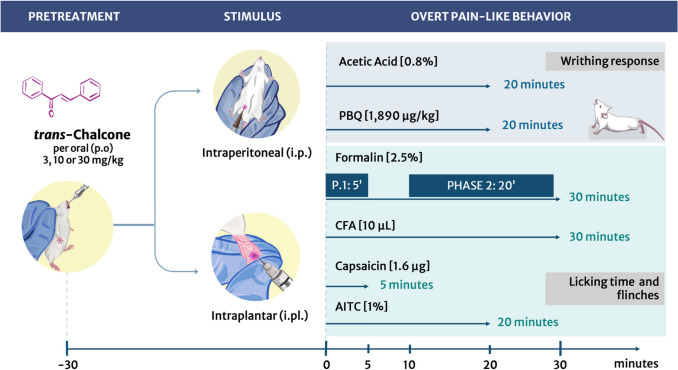 Figure 1
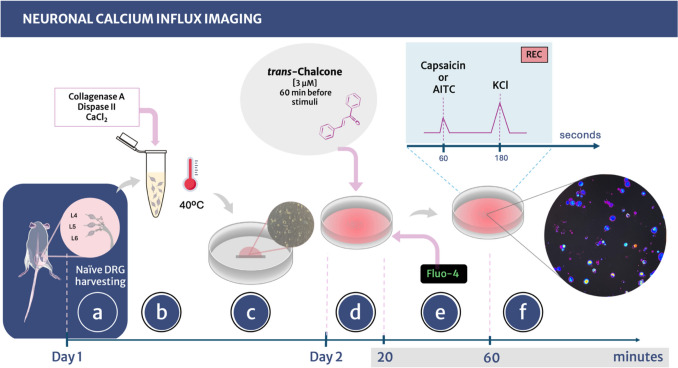 Figure 2
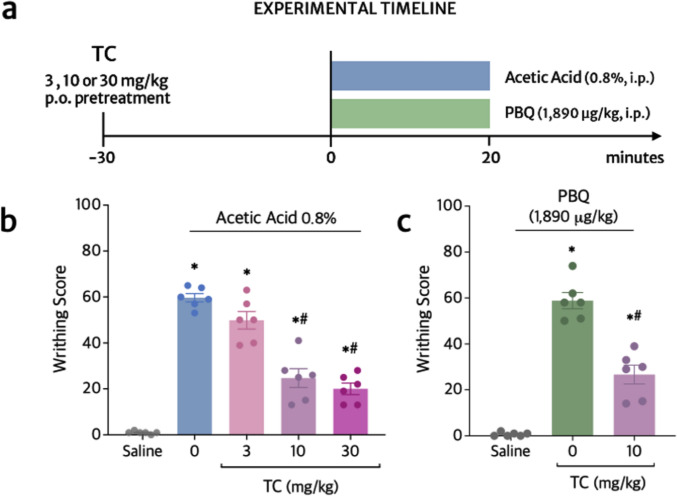 Figure 3
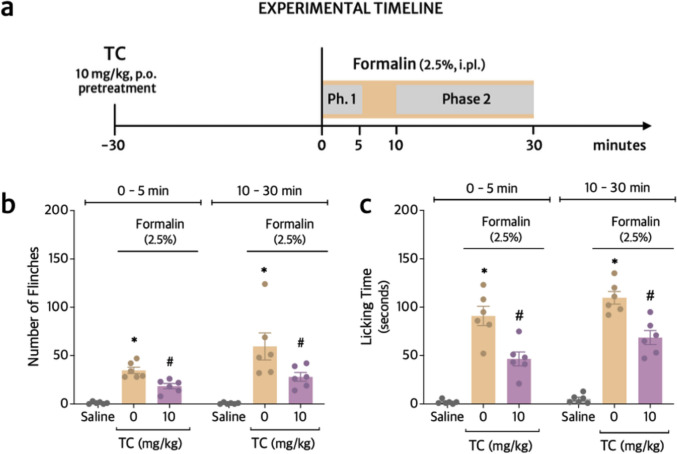 Figure 4
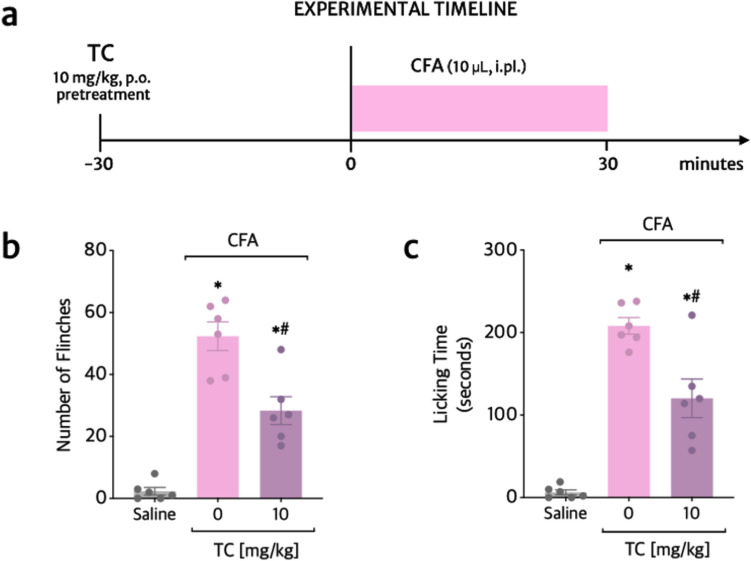 Figure 5
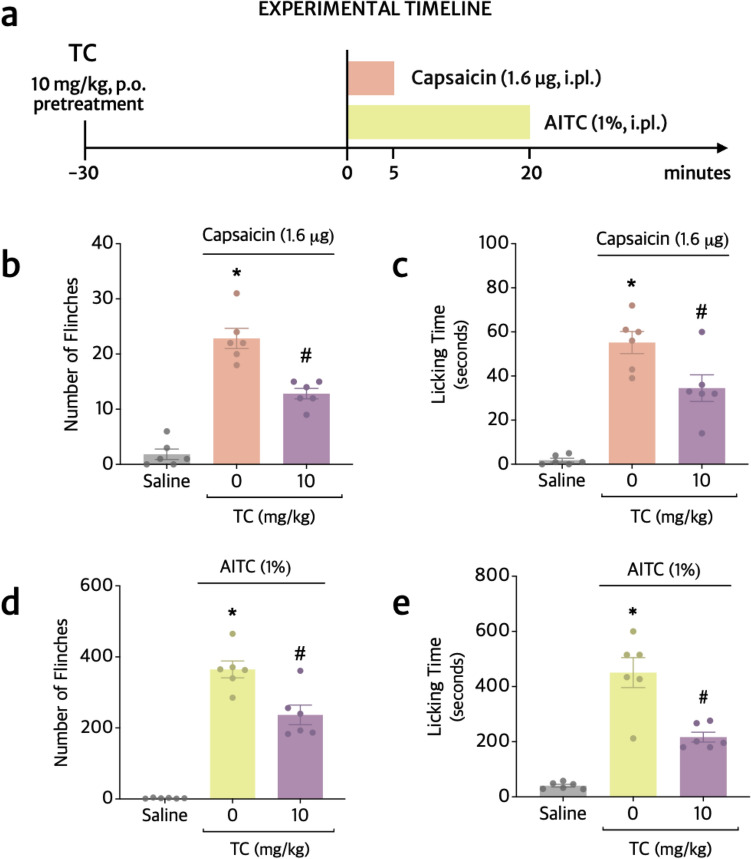 Figure 6
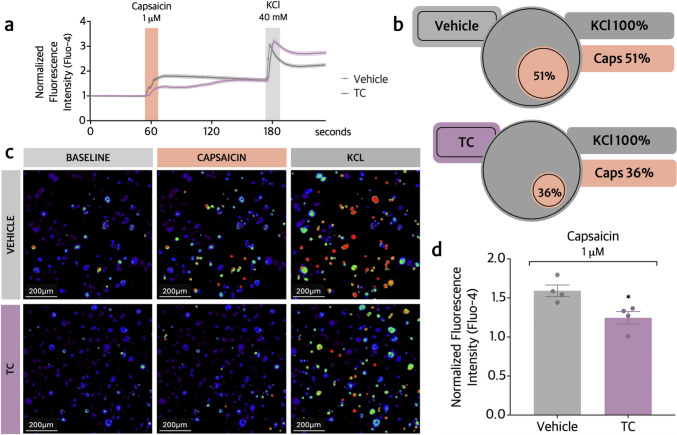 Figure 7
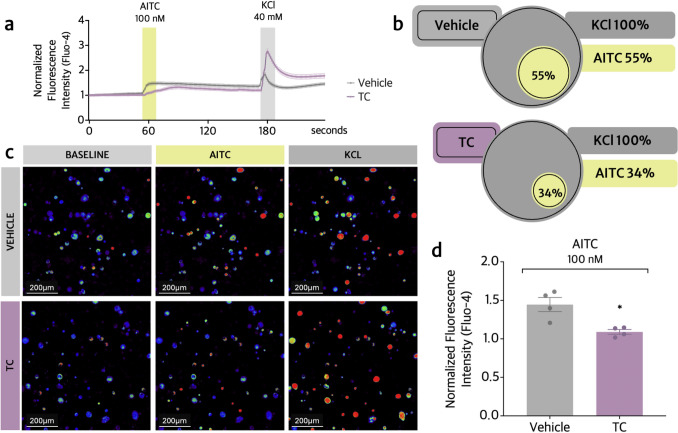 Figure 8
Peer Reviews
No public reviews on file for this paper yet. If you reviewed it on a platform where reviews are public (OpenReview, ICLR, NeurIPS, ICML), you can paste yours below so the community can read it here.
Videos
No videos yet. Explain this paper in a talk, walkthrough, or lecture? Add one.
Taxonomy
TopicsIon Channels and Receptors · Pain Mechanisms and Treatments · Gastrointestinal motility and disorders