Long-term outcomes of paediatric craniopharyngiomas: a comparison of two large international series
Vitor Nagai Yamaki, Jai Sidpra, Bruno Santanna Peres, Valentina Lind, Catuto Domingos Alexandre Quianga, Guilherme Jose da Costa Borsatto, Joao Paulo Mota Telles, Inês Nobrega Silva, Juan Pedro Martinez-Barbera, Sniya Sudhakar, Asthik Biswas, Kshitij Mankad, Hoong-Wei Gan

TL;DR
This study compares long-term outcomes of children with a rare brain tumor, showing how different surgical approaches affect recovery and recurrence.
Contribution
The study provides a comparative analysis of two large international pediatric craniopharyngioma series to evaluate the impact of surgical strategies on long-term outcomes.
Findings
GOSH patients had better post-treatment hypothalamic scores but earlier tumor recurrence compared to USP patients.
Cystic tumors were more common at GOSH, while solid tumors were more prevalent at USP.
Gross total resection and older age at diagnosis were associated with longer progression-free survival.
Abstract
Adamantinomatous craniopharyngioma (ACP) is an uncommon and anatomically variable tumor in children. The balance between critical treatment objectives, including the pursuit of gross total surgical resection and the reduction of hypothalamic injury and tumor recurrence, remains difficult and controversial. In this retrospective observational study, we compare the management and outcome of ACP in two large paediatric neurosurgical centres to determine how variations in tumor characteristics and management influence long-term outcomes. In this retrospective observational study, consecutive children (aged ≤ 18 years) diagnosed with primary ACP between 1997 and 2023 at two tertiary paediatric neurosurgical centres (Great Ormond Street Hospital (GOSH), United Kingdom, and Universidade de São Paulo (USP), Brazil) were evaluated. Functional outcomes related to pituitary function, hypothalamic…
Genes, proteins, chemicals, diseases, species, mutations and cell lines named across the full text — each resolved to its canonical identifier and authoritative record.
Click any figure to enlarge with its caption.
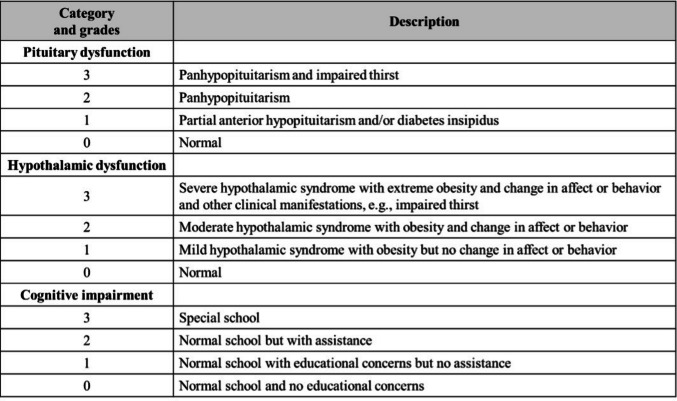 Figure 1
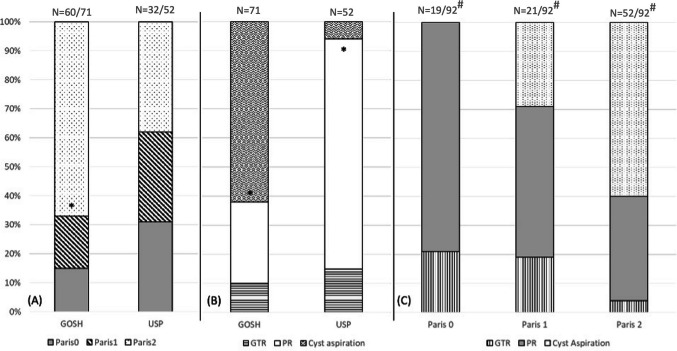 Figure 2
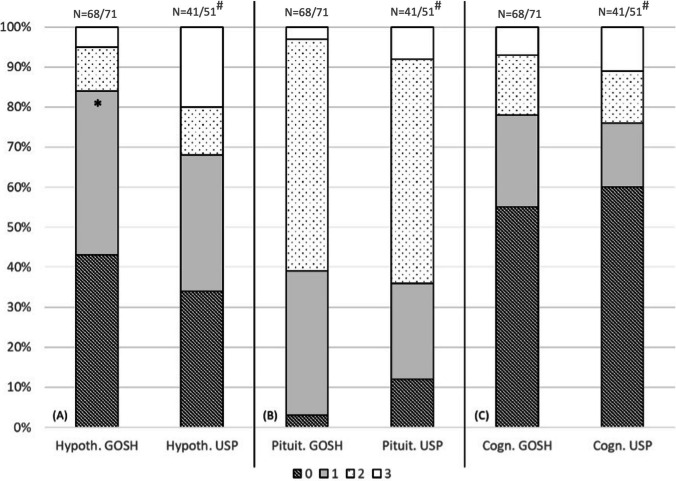 Figure 3
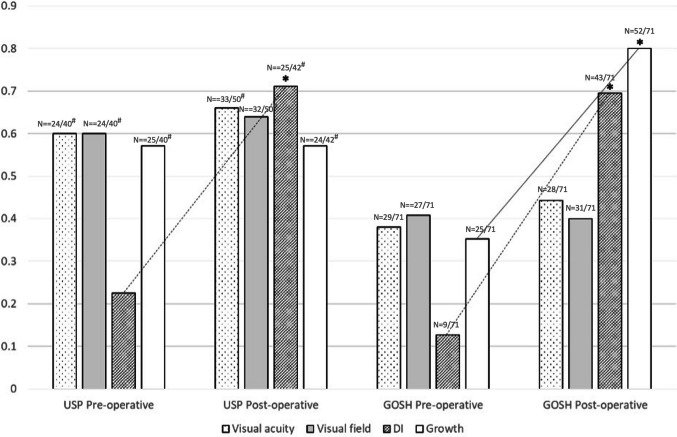 Figure 4
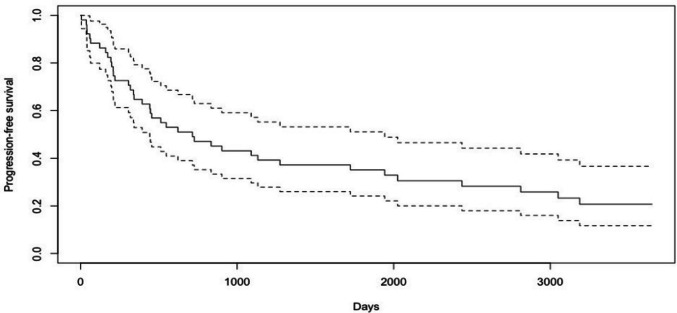 Figure 5
Peer Reviews
No public reviews on file for this paper yet. If you reviewed it on a platform where reviews are public (OpenReview, ICLR, NeurIPS, ICML), you can paste yours below so the community can read it here.
Videos
No videos yet. Explain this paper in a talk, walkthrough, or lecture? Add one.
Taxonomy
TopicsPituitary Gland Disorders and Treatments · Growth Hormone and Insulin-like Growth Factors · Adrenal and Paraganglionic Tumors