Whole-body dynamic FDG-PET/CT parametric imaging in alveolar echinococcosis
Lars Husmann, Bert-Ram Sah, Fotis Kotasidis, Alexander Maurer, Cordula Meyer zu Schwabedissen, Ansgar Deibel, Martin W. Huellner

TL;DR
This study explores how dynamic FDG-PET/CT imaging can better detect and quantify liver lesions in alveolar echinococcosis compared to standard PET/CT.
Contribution
The study introduces whole-body dynamic FDG-PET/CT as a novel imaging method for improved quantification and contrast in alveolar echinococcosis.
Findings
AE lesions showed significantly higher Patlak ratio compared to non-infected liver tissue.
SUVratio and Patlak ratio both correlated strongly with E. granulosus hydatid fluid antibodies.
Dynamic PET/CT provides higher lesion-to-background contrast than standard PET/CT.
Abstract
To determine the role of whole-body dynamic (WBD)/Patlak parametric 18F-fluorodeoxyglucose (FDG) positron emission tomography/computed tomography (PET/CT) in patients with alveolar echinococcosis (AE). This technique allows separating metabolized from unmetabolized FDG in the blood pool and tissue, potentially providing complementary qualitative information and superior quantification to standard static PET/CT images. We prospectively analyzed 20 PET/CT datasets performed for staging or therapy monitoring in patients with confirmed AE. Dynamic and standard static PET/CT datasets were acquired in all patients, and quantitative imaging parameters were measured in the lesion with the highest uptake (i.e., maximum standardized uptake value (SUVmax) and Patlak parameters) and compared to normal liver tissue (SUVratio and Patlak ratio). Mean SUVmax in AE manifestations was 5.7 ± 3.1…
Genes, proteins, chemicals, diseases, species, mutations and cell lines named across the full text — each resolved to its canonical identifier and authoritative record.
Click any figure to enlarge with its caption.
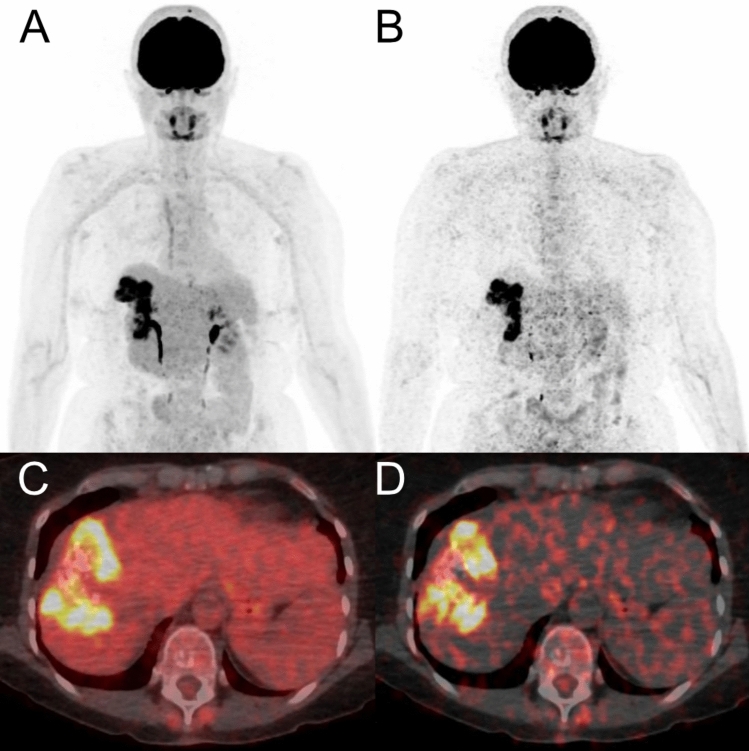 Figure 1
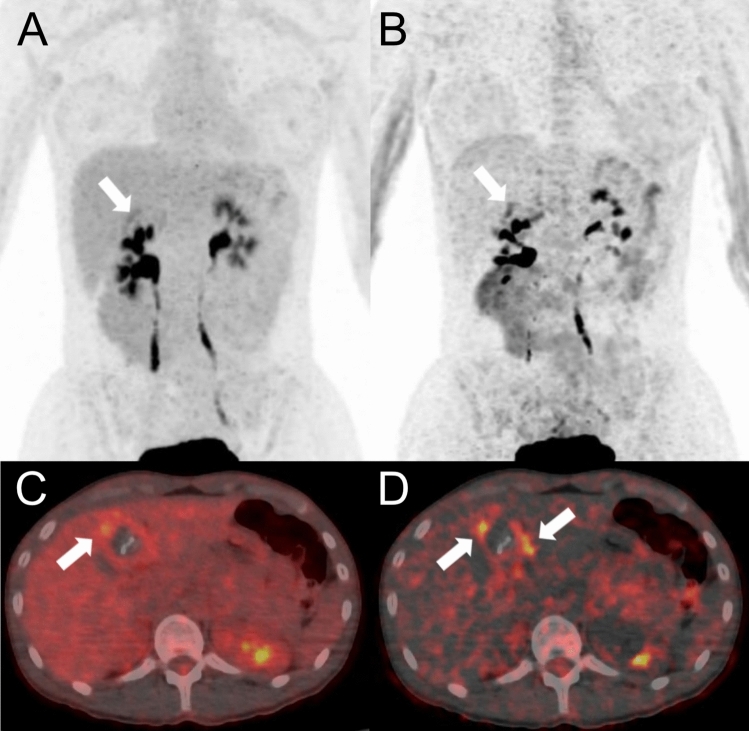 Figure 2
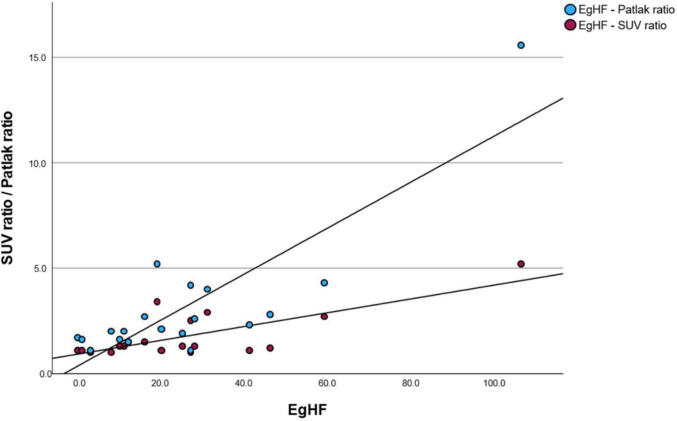 Figure 3
Peer Reviews
No public reviews on file for this paper yet. If you reviewed it on a platform where reviews are public (OpenReview, ICLR, NeurIPS, ICML), you can paste yours below so the community can read it here.
Videos
No videos yet. Explain this paper in a talk, walkthrough, or lecture? Add one.
Taxonomy
TopicsParasitic infections in humans and animals · Amoebic Infections and Treatments · Congenital Anomalies and Fetal Surgery