Draft Genomes of Geographically Distinct Strains and Progeny of the Ectomycorrhizal Basidiomycete Laccaria bicolor
Francis M. Martin, Emmanuelle Morin, Alan Kuo, Igor Miquel, Jessy Labbé, François Le Tacon, Laure Fauchery, Annegret Kohler, William Andreopoulos, Alex Copeland, Hui Sun, Asaf Salamov, Anna Lipzen, James Han, Kurt LaButti, Andrew Tritt, Kerry Barry, Igor V. Grigoriev

TL;DR
This paper presents draft genomes of 14 geographically distinct Laccaria bicolor strains, revealing significant genomic diversity and variation in gene content and SNPs.
Contribution
The study provides new genomic resources for L. bicolor, enabling comparative analysis of genetic diversity in an important forest symbiotic fungus.
Findings
Genome assemblies varied in size from 42 to 96 Mbp with gene counts ranging from 16,084 to 26,800.
SNP density varied widely (0.04-12.08 SNPs/kb) among strains.
The pangenome analysis highlights intraspecific genomic diversity linked to environmental adaptation.
Abstract
The ectomycorrhizal fungus Laccaria bicolor is a key symbiotic mutualist in forest ecosystems, where it enhances nutrient uptake and promotes the growth of host trees. Here, we present genome assemblies of 14 geographically distinct strains and progeny of L. bicolor, providing new insights into the intraspecific genomic diversity. Pangenome analysis revealed substantial variation in assembly size (42-96 Mbp), gene content (16,084-26,800 genes), and single nucleotide polymorphism (SNP) density (0.04-12.08 SNPs/kb). This variation likely reflects genuine biological differences among strains adapted to diverse environmental conditions, although differences in assembly quality and repeat content may also play a role. These genomic resources, comprising draft genome assemblies with comprehensive annotations, will facilitate comparative studies of the genetic diversity and functional traits…
Genes, proteins, chemicals, diseases, species, mutations and cell lines named across the full text — each resolved to its canonical identifier and authoritative record.
Click any figure to enlarge with its caption.
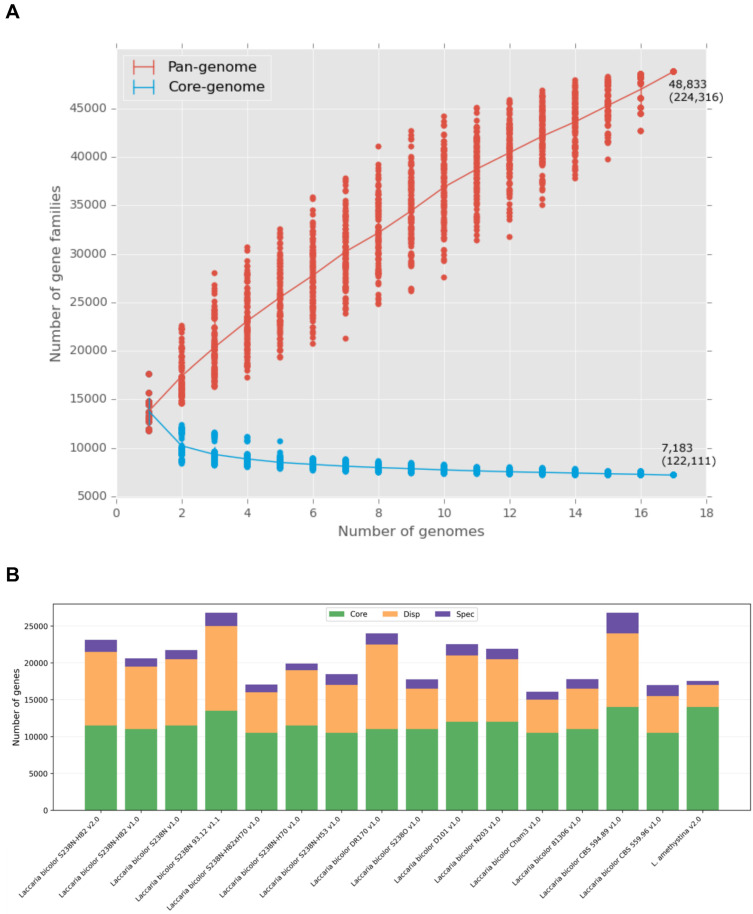 Figure 1
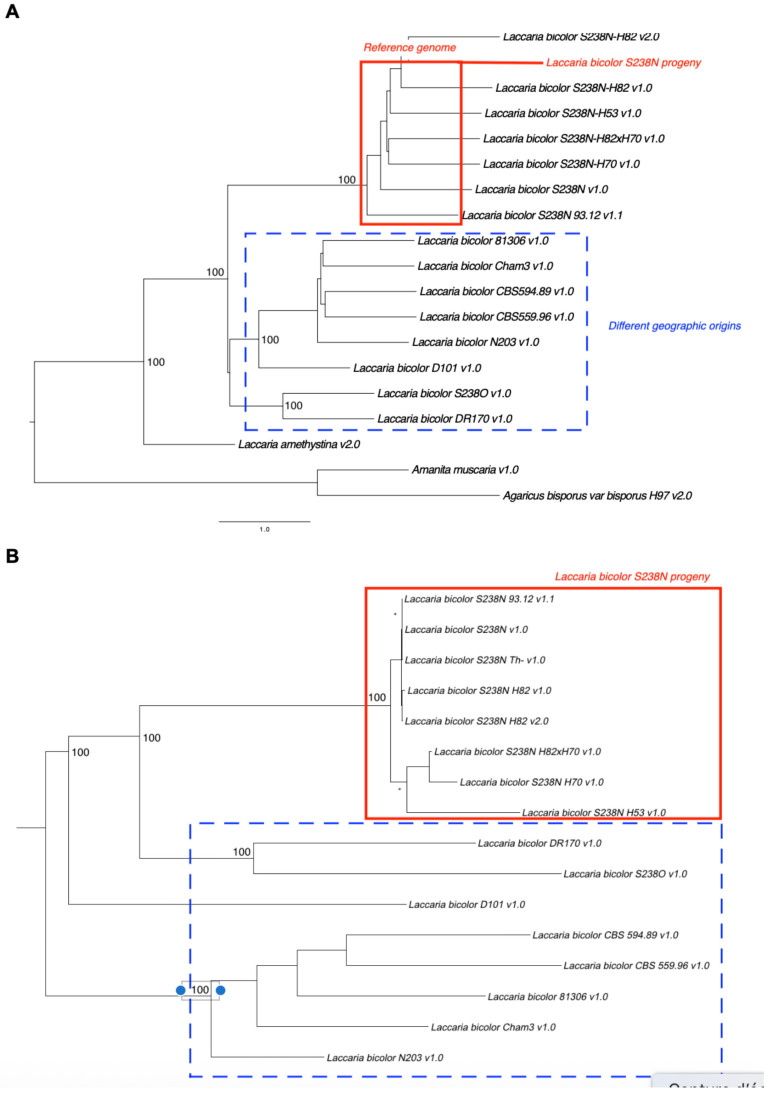 Figure 2
Peer Reviews
No public reviews on file for this paper yet. If you reviewed it on a platform where reviews are public (OpenReview, ICLR, NeurIPS, ICML), you can paste yours below so the community can read it here.
Videos
No videos yet. Explain this paper in a talk, walkthrough, or lecture? Add one.
Taxonomy
TopicsMycorrhizal Fungi and Plant Interactions · Forest Ecology and Biodiversity Studies · Fungal Biology and Applications