The first complete chloroplast genome sequence of an early spring flowering plant, Corydalis repens
Huanchu Liu, Xingyuan He, Wei Chen, Yanqing Huang, Yang Liu

TL;DR
This paper reports the first complete chloroplast genome of Corydalis repens, an early spring-blooming plant, offering insights into its genetic makeup and evolutionary relationships.
Contribution
The first complete chloroplast genome sequence of Corydalis repens is assembled and analyzed.
Findings
The chloroplast genome is 188,101 bp long with a typical quadripartite structure.
The genome encodes 141 genes, including 94 protein-coding genes and a single pseudogene.
Phylogenetic analysis places C. repens within section Corydalis, closely related to C. maculata.
Abstract
Corydalis repens Mandl & Muhldorf is an early spring-blooming species within the genus Corydalis. In this study, we present the complete chloroplast genome of C. repens for the first time. The assembled genome is 188,101 base pairs (bp) long and is organized into a typical quadripartite structure consisting of a large single-copy (LSC) region of 89,844 bp, a small single-copy (SSC) region of 757 bp, and two inverted repeat (IR) regions totaling 48,750 bp. The overall GC content is 40.2%. The plastome encodes 141 genes, including 94 protein-coding genes, 38 transfer RNA genes, and eight ribosomal RNA genes, along with a single pseudogene (clpP). Phylogenetic reconstruction indicates that C. repens is nested within section Corydalis and shows the closest affinity to C. maculata. These findings provide an important genetic resource for future studies on the evolutionary history and…
Genes, proteins, chemicals, diseases, species, mutations and cell lines named across the full text — each resolved to its canonical identifier and authoritative record.
Click any figure to enlarge with its caption.
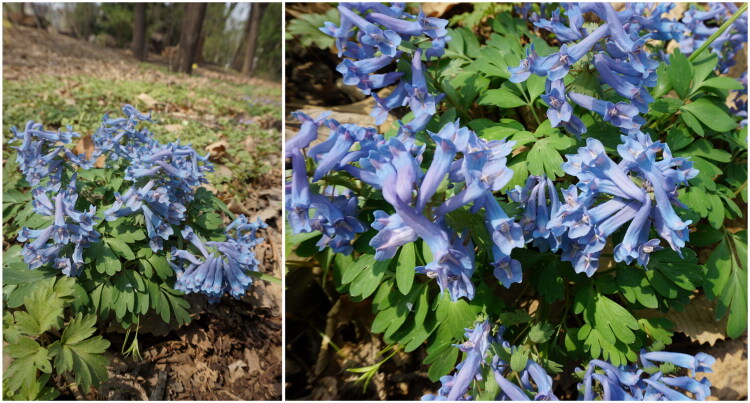 Figure 1
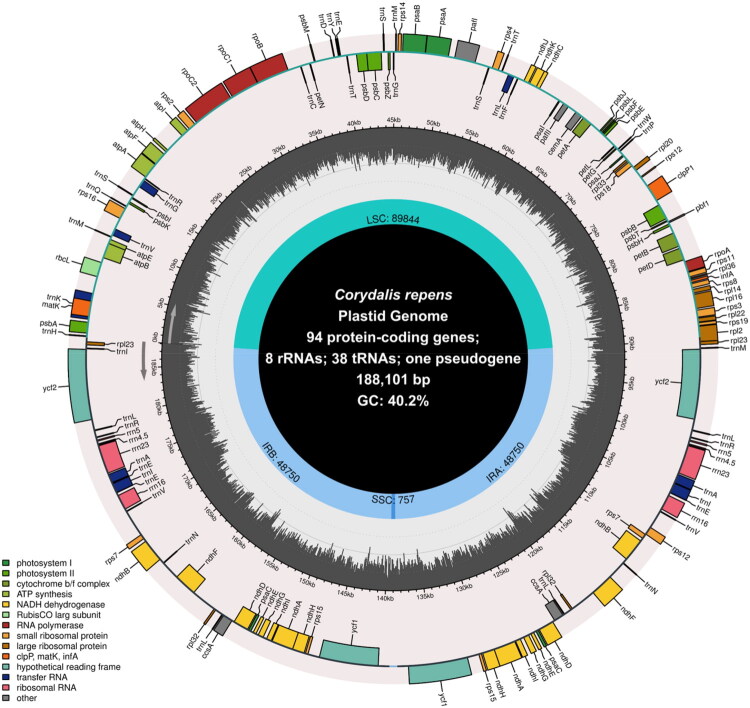 Figure 2
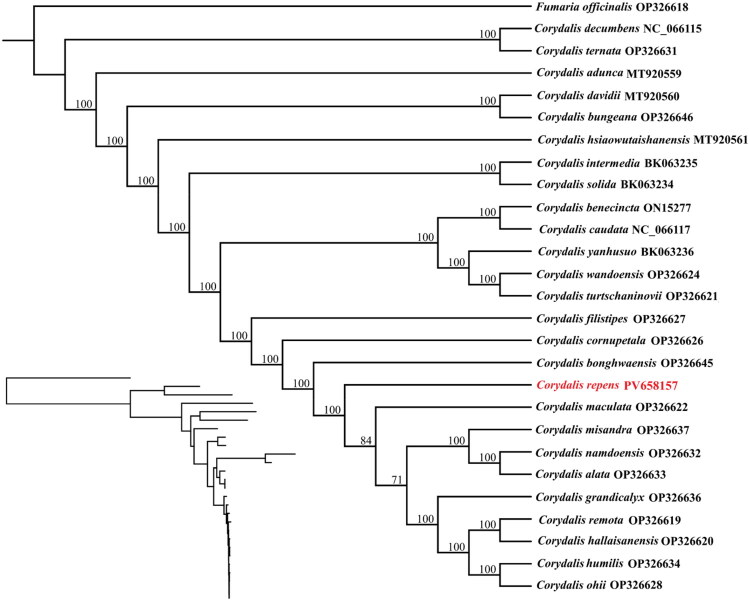 Figure 3
- —the Collection and Evaluation of New and High-Quality Wild Flower Germplasm Resources and Research on the Breeding of New Varieties
- —the Biological Resources Programme of the Chinese Academy of Sciences
- —the Natural Science Foundation Project of Liaoning Province
Peer Reviews
No public reviews on file for this paper yet. If you reviewed it on a platform where reviews are public (OpenReview, ICLR, NeurIPS, ICML), you can paste yours below so the community can read it here.
Videos
No videos yet. Explain this paper in a talk, walkthrough, or lecture? Add one.
Taxonomy
TopicsGenomics and Phylogenetic Studies · Genetic diversity and population structure · Berberine and alkaloids research
Introduction
Corydalis DC., one of the largest genera within the Papaveraceae, includes roughly 500 recognized species (Liu et al. 2024). Members of this genus are broadly distributed throughout the Northern Hemisphere, with their greatest richness concentrated in the Himalayan–Hengduan Mountains region (Wang 2006; Chen et al. 2023). Owing to its extensive morphological diversity across varied environments, Corydalis has long been regarded as one of the most taxonomically difficult groups to classify (Ren et al. 2019; Kim et al. 2023). Plastid (chloroplast) genome characterized by conserved structure, uniparental inheritance, and the absence of recombination—serve as powerful markers for phylogenetic inference in plants (Ravi et al. 2008) and are increasingly used for species identification and lineage delimitation (Yang et al. 2013). In Corydalis, where rapid radiation and recurrent morphological convergence often obscure taxonomic boundaries, plastome data offer a reliable molecular basis for reconstructing evolutionary patterns. Although plastid genomes from a growing number of Corydalis species have been sequenced, a substantial portion of this large genus still lacks genomic characterization.
Corydalis repens Mandl & Muhldorf, a representative species of section Corydalis, is characterized by its pale blue to bluish-purple or reddish-purple flowers. It can be readily distinguished from closely related taxa by its foliage, which frequently bears whitish streaks or spots and may exhibit either smooth margins or margins with coarse papillae (Wu et al. 1999). The tubers of C. repens are known to contain several pharmacologically active alkaloids, including protopine and corydaline, both of which have documented medicinal significance (Ren et al. 2020). In this work, we generated the complete chloroplast genome of C. repens to examine its structural organization and genomic features. The resulting plastome data provide valuable resources for species delimitation, evolutionary analyses, and conservation strategies within this taxonomically challenging genus.
Materials and methods
Sampling
2.1.
A young leaf of C. repens was collected in Shenyang, Liaoning Province, China (41.7769°N, 123.4627°E) by Huanchu Liu (Figure 1) and immediately dried in silica gel. The specimen was taxonomically verified by Yanqing Huang and deposited in the Herbarium of Northeast China, Institute of Applied Ecology, Chinese Academy of Sciences, under the voucher number IFP0260036. For further inquiries, the curator can be contacted at [email protected].
Corydalis repens. The photos were taken by Huanchu Liu in the Arboretum (Shenyang Arboretum, Chinese Academy of Sciences). The leaves exhibit pale whitish stripes. The flowers are bluish-purple, with broadly spreading outer petals and a slightly notched apex.
DNA extraction and sequencing
2.2.
Genomic DNA was isolated from silica gel-dried leaves following a modified CTAB extraction protocol (Doyle and Doyle 1987). A sequencing library with an average insert size of 150 bp was prepared using the NovaSeq Xplus DNA Library Preparation Kit (Illumina Inc., San Diego, CA, USA). Raw reads were subsequently quality-filtered using fastp v0.23.2 to remove low-quality sequences (Chen et al. 2023).
Assembly and annotation
2.3.
The filtered reads were assembled into the complete chloroplast genome using GetOrganelle (Jin et al. 2020), with the Corydalis remota chloroplast genome (accession number NC_072183) as a reference. Gene annotation was performed with the online tool GeSeq (Tillich et al. 2017) using default settings to identify protein-coding genes, transfer RNA (tRNA) genes, and ribosomal RNA (rRNA) genes. A circular map of the C. repens chloroplast genome was generated using Chloroplot (Zheng et al. 2020), while intron–exon structures and schematic representations of cis- and trans-splicing genes were visualized using CPGView (Liu et al. 2023). The complete chloroplast genome of C. repens was successfully assembled and has been deposited in GenBank under accession number PV658157.
Phylogenetic analysis
2.4.
Sequence alignments were performed using MAFFT (Katoh and Standley 2013). A total of 26 representative Corydalis species, with an emphasis on those from section Corydalis, were included in the analysis, while Fumaria officinalis (Papaveraceae) was designated as the outgroup. Maximum likelihood (ML) phylogenetic reconstruction was carried out in RAxML v8.2.12 using the GTR + Γ (GTRGAMMA) nucleotide substitution model, with 1,000 rapid bootstrap replicates to assess branch support. The resulting phylogenetic tree was visualized using the online tool Chiplot (Xie et al. 2023).
Results
To verify the accuracy of the genome assembly, coverage depth analysis was performed, yielding an average depth of 9,333.89, with a maximum of 370,562 and a minimum of 53 (Figure S1). The complete chloroplast genome of C. repens is 188,101 bp in length and displays a typical quadripartite structure, comprising a large single-copy (LSC) region of 89,844 bp, a small single-copy (SSC) region of 757 bp, and a pair of inverted repeat (IR) regions totaling 48,750 bp (Figure 2). The overall GC content is 40.2%. A total of 141 genes were annotated, including 94 protein-coding genes, 38 tRNA genes, and 8 rRNA genes, along with one pseudogene (clpP). Within the IR regions, four rRNA genes (rrn16, rrn23, rrn4.5, and rrn5), eight tRNA genes (trnA-UGC, trnA-UUC, trnL-CAA, trnL-UAG, trnM-CAU, trnN-GUU, trnR-ACG, and trnV-GAC), and 18 protein-coding genes are duplicated. Intron–exon structure analysis revealed that two protein-coding genes, rps12 and pafI, each contain two introns. Schematic representations of cis- and trans-splicing genes are provided in Supplemental Figures S2 and S3.
Circular map of the C. repens chloroplast genome. Genes with different functions are shown in different colors. Genes within circles are transcribed clockwise and genes outside circles are transcribed counterclockwise. The darker grey in the inner circle represent GC content. LSC, large single-copy region; SSC, small single-copy region; IR, inverted repeat.
Phylogenetic tree using maximum-likelihood (ML) based on chloroplast genomes of 26 Corydalis species with Fumaria officinalis as an outgroup. Numbers above nodes are support values with ML bootstrap (BS) values. The sequences used for constructing the phylogenetic tree are as follows: Fumaria officinalis (OP326618), C. bungeana (OP326646), C. intermedia (BK063235), C. solida (BK063234), C. filistipes (OP326627), C. cornupetala (OP326626), C. maculata (OP326622), C. namdoensis (OP326632), C. lata (OP326633), C. misandra (OP326637), C. grandicalyx (OP326636), C. remota (OP326619), C. hallaisanensis (OP326620), C. humilis (OP326634), C. ohii (OP326628), C. bonghwaensis (OP326645), C. wandoensis OP326624, C. turtschaninovii (OP326621), C. yanhusuo (BK063236), C. ternata (OP326631)(Kim et al. 2023); C. dunca (MT920559), C. davidii (MT920560), C. hsiaowutaishanensis (MT920561) (Xu et al. 2021); C. benecincta (ON152778), C. caudata (NC_066117), C. decumbens (NC_066115) (Xu et al. 2022). The chloroplast genomes of Corydalis repens in this study were highlighted in red color.
The phylogenetic tree reconstructed using 27 complete chloroplast genomes clarifies the placement of C. repens within the genus Corydalis (Figure 3). In this analysis, C. repens clusters closely with species from the subgenus Corydalis and section Corydalis, consistent with previous studies (Chen et al. 2023; Kim et al. 2023). Most branches are strongly supported, with bootstrap values of 100, indicating a high level of phylogenetic resolution. Our results indicate that C. repens forms a sister clade with the common ancestor of C. maculata, C. misandra, C. namdoensis, C. alata, C. grandicalyx, C. remota, C. hallaisanensis, C. humilis, and C. ohii. Quartet statistics for 26 Corydalis species also reveal substantial variation in the lengths of the SSC (71–14,845 bp) and IR (26,808–52,755 bp) regions (Table S1).
Discussion and conclusion
This study provides the first complete characterization of the chloroplast genome of C. repens, which contains 141 genes, including 94 protein-coding genes, 38 tRNA genes, and 8 rRNA genes. The plastome of C. repens exhibits structural features similar to those of closely related species such as C. maculata, C. misandra, and C. namdoensis, suggesting that chloroplast genomes within section Corydalis are relatively conserved during evolution. Phylogenetic analysis further clarified the position of C. repens within the genus, revealing a close relationship with C. maculata, in agreement with previous studies. Notably, the IR region in C. repens extends into ycf1, while the SSC region is markedly reduced, a pattern shared among species in section Corydalis (Kim et al. 2023).
The genomic data generated in this study provide valuable resources for investigating phylogenetic relationships and refining the taxonomic classification of Corydalis. However, it should be noted that the phylogenetic reconstruction was based solely on chloroplast genomes, and the sampling of species was limited. Considering the genus’s high diversity and complex intraspecific variation, future studies will require broader taxon sampling and the integration of advanced sequencing approaches to fully resolve the evolutionary history of Corydalis.
The reference list from the paper itself. Each links out to its DOI / PubMed record.
- 1Chen J-T et al. 2023. An updated classification for the hyper-diverse genus Corydalis (Papaveraceae: Fumarioideae) based on phylogenomic and morphological evidence. J Integr Plant Biol. 65(9):2138–2156. 10.1111/jipb.1349937119474 · doi ↗ · pubmed ↗
- 2Doyle J, Doyle J. 1987. A rapid DNA isolation procedure for small quantities of fresh leaf tissue. Phytochem Bull. 19:11–15.
- 3Jin J-J et al. 2020. Get Organelle: a fast and versatile toolkit for accurate de novo assembly of organelle genomes. Genome Biol. 21(1):241. 10.1186/s 13059-020-02154-532912315 PMC 7488116 · doi ↗ · pubmed ↗
- 4Katoh K, Standley DM. 2013. MAFFT multiple sequence alignment software version 7: improvements in performance and usability. Mol Biol Evol. 30(4):772–780. 10.1093/molbev/mst 01023329690 PMC 3603318 · doi ↗ · pubmed ↗
- 5Kim S-C et al. 2023. Comparative analysis of the complete chloroplast genome of Papaveraceae to identify rearrangements within the Corydalis chloroplast genome. P Lo S One. 18(9):e 0289625. 10.1371/journal.pone.028962537733832 PMC 10513226 · doi ↗ · pubmed ↗
- 6Liu S-Y et al. 2023. CPG View: a package for visualizing detailed chloroplast genome structures. Mol Ecol Resour. 23(3):694–704. 10.1111/1755-0998.1372936587992 · doi ↗ · pubmed ↗
- 7Liu Y-Y et al. 2024. Phylogenomic analyses sheds new light on the phylogeny and diversification of Corydalis DC. in Himalaya–Hengduan Mountains and adjacent regions. Mol Phylogenet Evol. 193:108023. 10.1016/j.ympev.2024.10802338342159 · doi ↗ · pubmed ↗
- 8Ravi V, Khurana J, Tyagi A, Khurana P. 2008. An update on chloroplast genomes. Plant Syst Evol. 271(1-2):101–122. 10.1007/s 00606-007-0608-0 · doi ↗