Tuning and clinical application of large language models in Traditional Chinese Medicine: scoping review
Changxiao Han, Guangyi Yang, Hongtao Li, Liguo Zhu, Minshan Feng

TL;DR
This review explores how large language models are being adapted for Traditional Chinese Medicine, focusing on their tuning methods, data use, and clinical applications.
Contribution
The study provides a systematic scoping review of LLMs in TCM, highlighting tuning techniques and evaluation methods specific to this domain.
Findings
LoRA fine-tuning is the most common technique for adapting LLMs in TCM.
Most models combine multiple tuning methods and use a mix of theoretical and clinical data.
Current models struggle with simulating complex TCM reasoning and individualized diagnosis.
Abstract
Large Language Models (LLMs) show significant potential in healthcare, but their application in Traditional Chinese Medicine (TCM) lacks systematic evaluation. This study aims to comprehensively review LLMs tuning techniques, data construction strategies, evaluation methods, and application scenarios in TCM clinical practice. A scoping review following PRISMA-ScR guidelines was conducted. Researchers systematically searched seven databases for relevant studies published between database inception to May 2025. The analysis focused on identifying model characteristics, tuning techniques, data sources, evaluation methods, application domains and performance limitations to assess the current state and future directions of TCM-oriented LLMs. We included 27 studies (21 in English, 6 in Chinese). Application domains comprised TCM knowledge consultation (10 studies) and diagnostic assistance…
Genes, proteins, chemicals, diseases, species, mutations and cell lines named across the full text — each resolved to its canonical identifier and authoritative record.
Click any figure to enlarge with its caption.
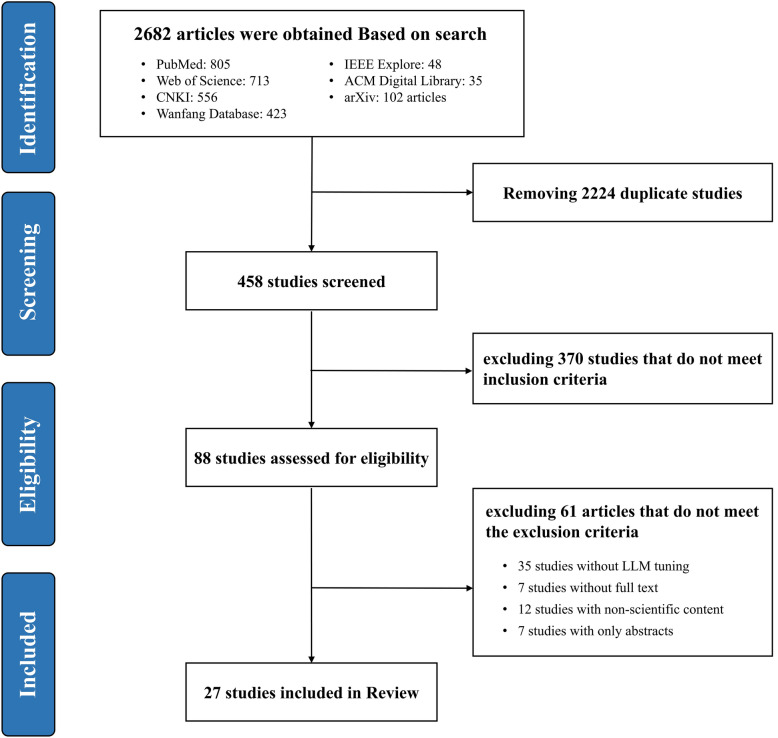 Figure 1
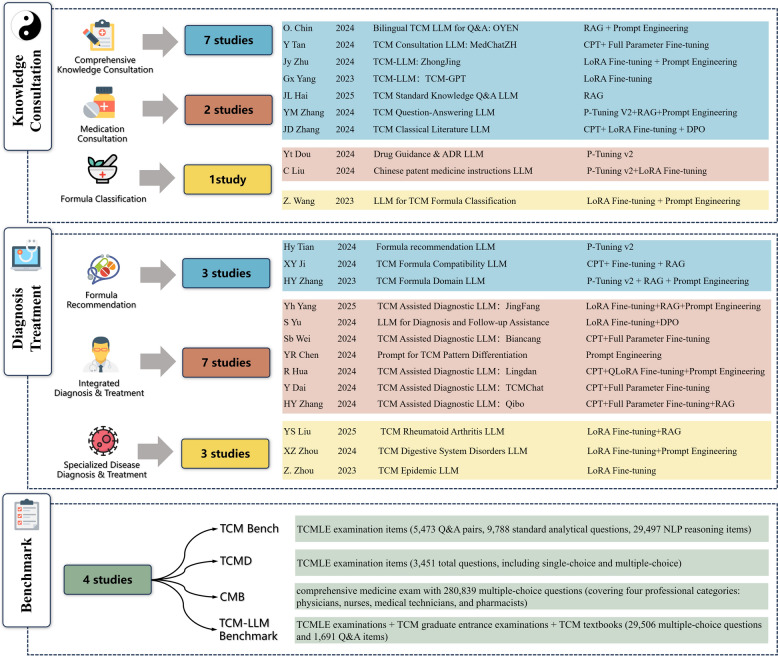 Figure 2
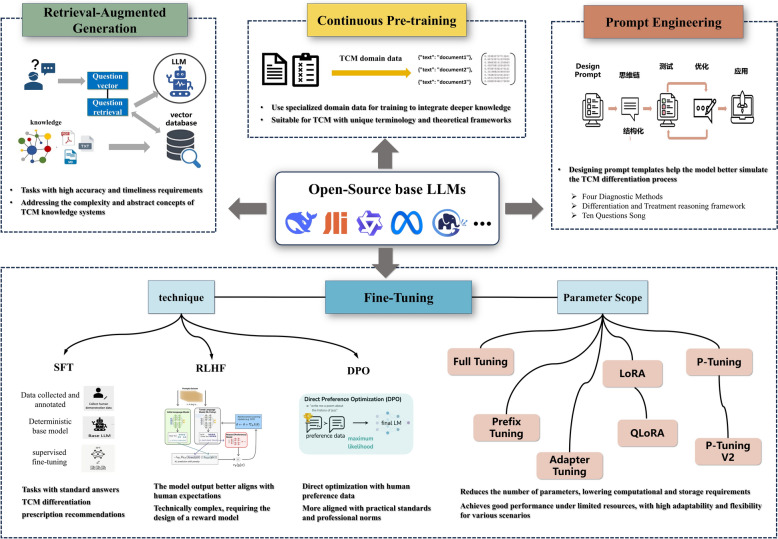 Figure 3
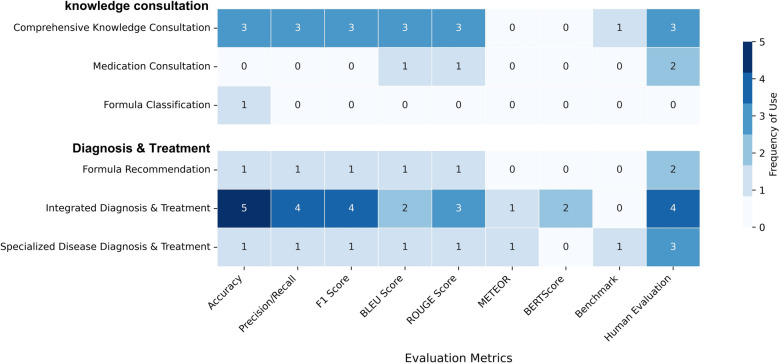 Figure 4
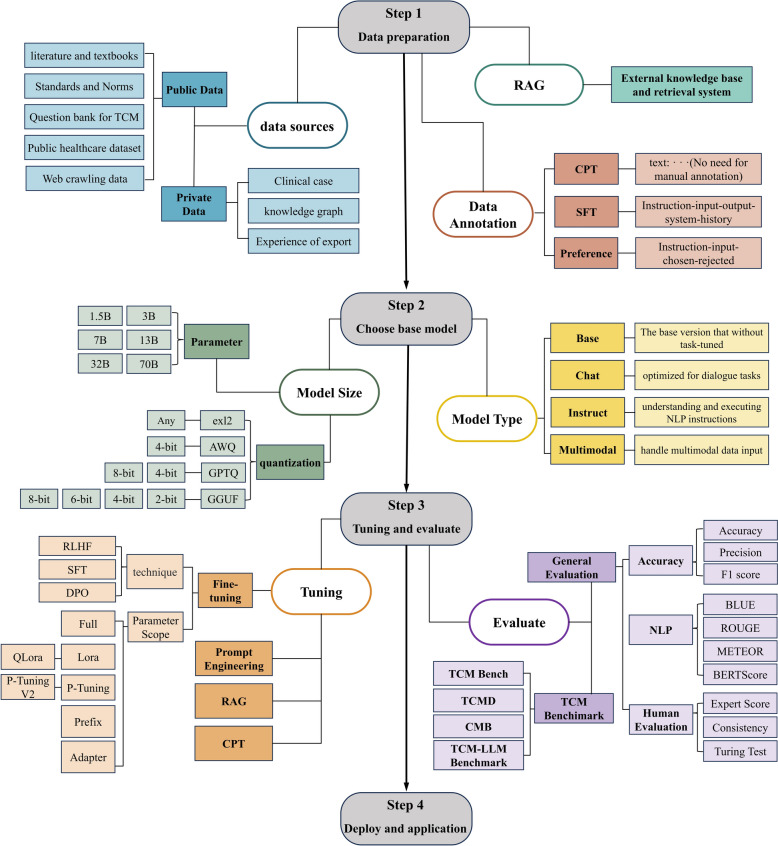 Figure 5
- —Beijing Municipal Science & Technology Commission AI + Health Collaborative Innovation Cultivation Project
Peer Reviews
No public reviews on file for this paper yet. If you reviewed it on a platform where reviews are public (OpenReview, ICLR, NeurIPS, ICML), you can paste yours below so the community can read it here.
Videos
No videos yet. Explain this paper in a talk, walkthrough, or lecture? Add one.
Taxonomy
TopicsTraditional Chinese Medicine Studies · Machine Learning in Healthcare · Complementary and Alternative Medicine Studies
Introduction
Large Language Models (LLMs) represent a significant breakthrough in artificial intelligence technology and are rapidly reshaping knowledge processing and application methods across various fields [1–3]. Since the emergence of models like ChatGPT [4–6], LLMs have shown tremendous potential in healthcare, attracting widespread attention from both academic and industrial sectors [7, 8]. Traditional Chinese Medicine (TCM), with its millennia-long history, offers a unique theoretical framework, diagnostic methods, and rich experiential knowledge. While TCM has made important contributions to human healthcare, it also faces challenges in knowledge inheritance, standardization, and modernization. How to leverage LLMs and other AI technologies to facilitate the digital preservation, intelligent dissemination, and innovative development of TCM knowledge has become a key scientific question in the modernization process of TCM [9–11].
With the rapid iteration of LLMs technology and deeper applications in vertical domains, research on LLMs in TCM has been increasing annually, with numerous professional LLMs emerging for TCM clinical practice [12–18]. These models demonstrate value in knowledge consultation, diagnostic assistance, and prescription recommendations by learning from multiple data sources including TCM classics, modern textbooks, clinical data, and professional knowledge graphs. However, current research remains fragmented and highly heterogeneous, lacking review and comprehensive analysis. Furthermore, there is no consensus on key aspects such as model tuning techniques, data construction strategies, evaluation method design, and application scenario positioning, which constrains the collaborative development and clinical transformation of TCM-oriented LLMs. Simultaneously, TCM, as a medical system that integrates holistic, dialectical, and experiential characteristics, with its holistic concepts and personalized "syndrome differentiation and treatment" approach, differs from the knowledge representation methods of modern LLMs based on statistical models. Directly applying LLMs research paradigms from Western medicine faces numerous adaptation challenges.
Although several recent reviews have examined LLMs applications in Traditional Chinese Medicine [9, 19–25], existing literature primarily focuses on describing application scenarios and assessing model performance in specific tasks. However, these reviews lack systematic evaluation of the technical foundation underlying TCM LLMs development—specifically, the selection rationale for model tuning techniques, data construction strategies, training processes, and evaluation framework design. Furthermore, there is insufficient analysis of how different technical choices affect model performance in TCM-specific tasks, nor comprehensive examination of the challenges inherent to adapting LLM architectures for TCM's unique epistemological framework.
Based on these considerations, this study adopts a scoping review methodology to systematically examine the current status of LLMs tuning and applications in TCM clinical practice. We analyze the applicability of different tuning techniques, data construction strategies, and evaluation methods in the TCM field. We also explore the value and limitations of TCM-oriented LLMs in knowledge consultation and diagnostic assistance, and summarize existing evaluation benchmarks for TCM-focused LLMs, while proposing future research directions and development recommendations.
Methods
This research employs a scoping review methodology, following the standard reporting checklist of PRISMA Extension for Scoping Reviews (PRISMA-ScR) [26]. We comprehensively evaluate the current applications, challenges, and future directions of LLMs in TCM clinical practice.
Search strategy
We conducted a systematic computer search for studies related to LLMs applications in TCM. Databases searched included PubMed, Web of Science, IEEE Xplore, ACM Digital Library, arXiv, CNKI, and Wanfang Database. The search strategy consisted of two groups of terms. Using English search as an example: LLMs-related terms ("large language model*", "LLM*", "Generative Pre-trained Transformer", "generative AI", "Fine-tuning", "Reinforcement Learning", "Direct Preference Optimization", "Supervised Learning", "Proximal Policy Optimization", "Low-Rank Adaptation", "Attention Mechanism", "Pre-training") and TCM-related terms ("Traditional Chinese Medicine", "TCM", "Chinese herbal medicine", "herbal formula*", "acupuncture", "moxibustion", "cupping", "Gua Sha", "scraping", "tuina", "massage", "external therapy", "manipulation"). The search period extended from database inception to May 2025. Complete search strategies for all database are provided in Supplementary Table S1.
Inclusion and exclusion criteria
Inclusion criteria: (1) Original research, systematic reviews, meta-analyses, and similar literature; (2) Studies that adapted LLMs through various tuning techniques (including fine-tuning, retrieval-augmented generation, prompt engineering, or continued pre-training) for application in TCM clinical practice or constructed TCM LLMs evaluation benchmarks; (3) Literature in Chinese or English. Exclusion criteria: (1) Non-academic articles (news reports, blogs, editorials, etc.); (2) Literature that merely mentioned or used LLMs without applying model optimization techniques; (3) Literature with inaccessible full text; (4) Conference abstracts (unless providing detailed methods and results); (5) Duplicate publications.
Literature screening process
EndNote X9 software was used to process initial search results and remove duplicates. Two independent researchers with backgrounds in TCM and artificial intelligence screened the literature according to the predetermined inclusion and exclusion criteria, primarily based on titles and abstracts. For literature potentially meeting the inclusion criteria, researchers conducted full-text readings to make final decisions. Disagreements during the screening process were resolved through discussion with a third senior researcher. We recorded in detail the number of papers identified, screened, eligible, and finally included.
Data extraction
Data extraction was independently performed by two researchers using a pre-designed standardized form to collect relevant information. Extracted data included basic paper information (title, first author, publication year, country/region, application scenario, research objectives, main results), model and data information (base model and parameters, LLMs techniques, data characteristics), model evaluation (evaluation methods and metrics, comparison models, evaluation data), and research limitations and future prospects. For TCM evaluation benchmark studies, additional information was extracted on benchmark construction methods, test dimensions, number of questions, and test results. The extracted data underwent cross-verification to ensure accuracy and consistency. Disagreements were resolved through discussion between the two researchers, with consultation of third-party experts or original authors when necessary to ensure research data accuracy and completeness.
Statistical methods
This study employed descriptive statistical analysis methods. We performed statistical analysis on the basic information and model data of included studies, presenting results through frequency statistics, composition ratios, and textual and visual presentations.
Results
Literature screening results
Through systematic searches across databases, we retrieved a total of 2682 research articles related to LLMs in TCM clinical practice. Using Endnote X9 for duplicate checking, combined with manual review, we removed 2224 duplicate articles, leaving 458 articles. Further initial screening of titles and abstracts eliminated 370 articles that did not meet the inclusion criteria. We then downloaded and reviewed the full text of the remaining 88 articles, excluding 35 that did not involve LLMs tuning, 7 with inaccessible full texts, 12 non-academic articles, and 7 conference abstracts. A final total of 27 articles were included, with the literature screening process shown in Fig. 1. Detailed information on model characteristics, tuning techniques, data sources, evaluation methods, and application domains for all included studies is presented in Supplementary Tables S2-S4.Fig. 1. Literature screening flow diagram based on the PRISMA statement
Basic characteristics of included studies
Among the 27 included articles, 21 were in English and 6 in Chinese. (i) Publication year: 4 articles (14.8%) were published in 2023, 20 articles (74.1%) in 2024, and 3 articles (11.1%) in 2025. (ii) Article type: All 27 articles were research papers, including 5 computer conference papers, 12 journal articles, and 10 preprints. (iii) Publication region: 26 studies were from China, and 1 study was from Malaysia.
LLM application domains
Based on the research topics and application domains of the included literature, we classified them into two major categories: TCM knowledge consultation and diagnosis & Treatment assistance. Knowledge consultation was further divided into: (i) comprehensive knowledge consultation (7 studies) [12, 13, 27–31], (ii) formula classification (1 study) [32], and (iii) medication consultation (2 studies) [15, 17]. Diagnosis & Treatment assistance was subdivided into: (i) formula recommendation (3 studies) [33–35], (ii) integrated diagnosis & treatment (7 studies) [14, 16, 36–40], and (iii) specialized disease diagnosis & treatment (3 studies) [41–43]. Additionally, considering the diversification, complexity, and lack of standardization in the evaluation and testing of LLMs in vertical domains, we also included 4 TCM LLM benchmark studies [44–47] (Fig. 2).Fig. 2TCM Large Language Model applications. Shows knowledge consultation, diagnostic assistance, and testing benchmarks with specific research in each subcategory; each study lists authors, publish years, core content, and fine-tuning techniques used. CMB: Comprehensive Medical Benchmark, CPT: Continued Pre-Training, DPO: Direct Preference Optimization, LLM: Large Language Model, LoRA: Low-Rank Adaptation, NLP: Natural Language Processing, QLoRA: Quantized Low-Rank Adaptation, RAG: Retrieval-Augmented Generation, TCM: Traditional Chinese Medicine, TCMD: Traditional Chinese Medicine QA Dataset. TCMLE: Traditional Chinese Medicine Licensing Exam
TCM large language model tuning techniques
The effectiveness of LLMs in the TCM field largely depends on the selection and implementation of model tuning technique [48, 49]. This section systematically analyzes the tuning techniques employed in 23 studies (excluding 4 TCM LLM benchmark testing studies) to explore the application and effects of different tuning methods.
Introduction to LLM tuning techniques
Based on technical characteristics and operational mechanisms, LLM tuning techniques commonly used in the TCM field primarily fall into four categories: continued pre-training [50–52], fine-tuning [53–57], retrieval-augmented generation [58], and prompt engineering [59]. Continued pre-training focuses on domain adaptation at the knowledge level, enabling models to acquire richer TCM professional knowledge. Fine-tuning techniques optimize capabilities for specific tasks, including supervised fine-tuning [48, 53], reinforcement learning [54–56], direct preference optimization [57], and parameter update scopes such as full-parameter fine-tuning, LoRA [60], and QLoRA [61]. Retrieval-augmented generation techniques address the limitations of model parameter knowledge by introducing external knowledge sources. Prompt engineering requires no parameter changes, guiding models to generate outputs conforming to TCM diagnostic standards through carefully designed instructions. In practical TCM applications, researchers often adopt multiple techniques in combination, such as continued pre-training followed by LoRA fine-tuning, or combining RAG with prompt engineering to enhance model performance for rare conditions. Table S5 and Fig. 3 summarize the core characteristics, advantages, and application value of each type of tuning technique in the TCM field.Fig. 3. Common tuning Techniques and Their Advantages in the TCM Field. DPO: Direct Preference Optimization, LLMs: Large Language Models, LoRA: Low-Rank Adaptation, QLoRA: Quantized Low-Rank Adaptation, RLHF: Reinforcement Learning from Human Feedback, SFT: Supervised Fine-Tuning, TCM: Traditional Chinese Medicine
Application of tuning techniques in TCM LLMs
(1) Single and Combined Techniques: Only 3 studies (13.0%) employed a single tuning technique, while the remaining 20 studies (87.0%) utilized combinations of two or more techniques. The most common combination patterns were "parameter-efficient tuning + prompt engineering" (30.4%) and "continued pre-training + parameter-efficient tuning" (26.1%). (2) Frequency of Different Techniques: LoRA fine-tuning was most widely applied, accounting for 65.2% (15/23); followed by prompt engineering (47.8%, 11/23), continued pre-training (43.5%, 10/23), RAG technology (39.1%, 9/23), full-parameter fine-tuning (30.4%, 7/23), P-Tuning v2 (26.1%, 6/23), and DPO (8.7%, 2/23). (3) Relationship Between Technique Selection and Model Scale: For models with 7B parameters and below, both parameter-efficient tuning (LoRA, P-Tuning v2) and full-parameter tuning were applied; for models with 13B parameters and above, parameter-efficient tuning predominated (93.3%), with only a few studies using full-parameter tuning (6.7%).
TCM large language model training data analysis
Training data types and sources
Training data in the included studies primarily came from seven major sources: clinical case data (73.9%, 17 studies), TCM classics and textbooks (65.2%, 15 studies), TCM standards and pharmacopoeias (43.5%, 10 studies), public healthcare datasets (39.1%, 9 studies), web-crawled data (30.4%, 7 studies), professional examination question banks (26.1%, 6 studies), and professional knowledge graphs (21.7%, 5 studies). The combination of these diverse data sources aimed to build comprehensive training corpora that fully reflect both TCM theoretical systems and clinical practices.
Data differences across application domains
Training data composition varied significantly across different TCM application domains. Knowledge consultation applications primarily relied on classical literature, textbooks, and professional Q&A datasets (e.g., ZhongJing model used 1.12 million Q&A pairs, Huang-Di model incorporated 500,000 ancient text dialogues). Formula classification and prescription recommendation applications focused on structured formula data, pharmacopoeias, and clinical medication records, emphasizing precise information on composition, indications, and dosages (e.g., Wang et al.'s formula classification study used 2617 formula entries, TCM-FTP built a dataset with 18,953 digestive disease cases). Diagnostic assistance applications extensively utilized clinical case data and treatment records, prioritizing authentic clinical experience (e.g., BianCang model used approximately 228 M tokens of tuning data, JingFang model incorporated 43,000 clinical cases). Medication guidance applications combined pharmaceutical data with clinical usage records, emphasizing medication safety and accuracy (e.g., ShennongMGS system integrated 22,327 clinical cases and 13,020 medical knowledge Q&A entries). This targeted data selection significantly influenced model performance in their respective application scenarios.
Large language model evaluation metrics
Introduction to common evaluation metrics
Evaluation metrics for TCM-oriented LLMs fell into three main categories. First, accuracy-related metrics were widely used, with accuracy [62] being the most common (17 studies, 63.0%), particularly suitable for classification tasks like TCM licensing examinations and syndrome differentiation. Precision and recall [63] (10 studies, 37.0%) were primarily employed for TCM entity recognition and formula compatibility tasks, while F1 score [64] (9 studies, 33.3%) provided a comprehensive performance assessment by averaging precision and recall.
Natural language generation metrics constituted the second category, including BLEU [65] (9 studies, 33.3%), which evaluates generation quality through n-gram overlap between model outputs and reference texts, particularly for knowledge question-answering and prescription generation tasks. ROUGE [66] (10 studies, 37.0%) assessed vocabulary and sequence overlap in generated texts, while less frequently used metrics included METEOR [67] (2 studies), which considers synonym matching, and BERTScore [68] (3 studies), which captures semantic similarity through contextual embeddings.
Due to the unique characteristics of domain-specific generative LLMs, human evaluation emerged as the most important assessment approach [69], employed in 21 studies (77.8%). Human evaluation typically involved expert scoring by TCM specialists across multiple dimensions (professionalism, accuracy, reasonableness, completeness); consistency assessment to verify evaluation reliability; Turing tests comparing model-generated content with human expert outputs; and multi-dimensional assessment evaluating aspects such as fluency, relevance, completeness, and medical expertise. The distribution of evaluation metrics across different TCM LLM application domains is shown in Fig. 4.Fig. 4. Heatmap of Evaluation Metrics Usage Across Different TCM LLM Application Domains. BERT: Bidirectional Encoder Representations from Transformers, BLEU: Bilingual Evaluation Understudy, ROUGE: Recall-Oriented Understudy for Gisting Evaluation, METEOR: Metric for Evaluation of Translation with Explicit Ordering
TCM domain-specific evaluation methods
As TCM-oriented LLM applications have developed, generic evaluation methods have struggled to fully reflect model performance in TCM-specific scenarios. Consequently, several studies have established specialized TCM domain evaluation methods and test sets. These methods better align with TCM knowledge characteristics and clinical practices, providing more precise evaluation tools for TCM-oriented LLMs. These include the four evaluation benchmarks mentioned earlier (TCMBench, TCMD, CMB, TCM LLM evaluation benchmark dataset), detailed in Table 2, as well as other evaluation methods specifically constructed in conjunction with model applications: TCM Eval and TCM Score.
Performance limitations and common challenges in TCM-oriented LLMs
Suboptimal performance on standardized benchmarks
The four benchmark evaluation studies revealed concerning performance gaps across all tested models. Yue et al.'s TCMBench evaluation found that all LLMs failed to meet satisfactory thresholds, with GPT-4 achieving only 59.86% accuracy [43]. Cao et al.'s evaluation using 31,197 exam questions demonstrated that all models achieved less than 60% accuracy, with general LLMs slightly outperforming Chinese medical LLMs [46]. Yu et al.'s TCMD benchmark showed general-purpose LLMs unexpectedly outperforming TCM-specific LLMs [44], challenging assumptions about domain specialization effectiveness and suggesting potential overfitting or inadequate training data quality. Wang et al.'s CMB showed significant accuracy variations between knowledge domains [45]. These findings indicate current models have not achieved the knowledge depth and reasoning capabilities required for reliable clinical deployment.
Complex reasoning and clinical decision-making deficits
Studies documented systematic difficulties in executing complex TCM reasoning. Multiple studies revealed struggles with syndrome differentiation, with Wei et al.'s BianCang achieving 78.90% accuracy [38], Yan et al.'s JingFang reaching F1-score of 0.8186 [35], and Zhang et al.'s Qibo achieving Rouge-L scores of 0.55–0.72 [36]—indicating 20–30% error rates in this cornerstone diagnostic process. Models struggle to master the complete chain from "four examinations integration" to "syndrome differentiation and treatment," requiring simultaneous balancing of syndrome identification accuracy, treatment rationality, prescription standardization, and individualized adjustments. Beyond syndrome differentiation, models demonstrated limited holistic thinking, with studies noting that models fragment TCM knowledge rather than capturing systemic connections [15, 17].
Information accuracy and hallucination concerns
Evidence of hallucination—generating plausible but factually incorrect information—emerged consistently as a critical barrier. The prevalence of retrieval-augmented generation (RAG) implementation in 9 of 23 studies (39.1%) reflects explicit recognition of this challenge. Zhang et al. specifically developed RAG-based systems to "reduce hallucinations" [30]. Hai et al. positioned RAG as essential for ensuring response accuracy [29]. Hallucination is a systematic challenge inherent to applying LLMs in TCM rather than an isolated issue. This challenge is compounded by TCM's vast pharmacopoeia, intricate formula compatibility rules, and syndrome-specific treatment principles.
Discussion
Main findings
Through systematic review of 27 studies on LLM tuning and applications in TCM, this research reveals key achievements, technical approaches, existing challenges, and future directions. And we systematically summarized the workflow for LLM tuning and application in the TCM field, as shown in Fig. 5. TCM LLM tuning primarily focuses on knowledge consultation and diagnostic assistance, with technical approaches showing a trend toward multi-method combinations, predominantly parameter-efficient fine-tuning (especially LoRA). Data construction balances theoretical knowledge (TCM classics) with practical experience (clinical cases), though multimodal data remains severely insufficient. Evaluation methods are comprehensive and multidimensional, with specialized TCM assessment benchmarks (such as TCMBench and TCMD) gradually being established. Current TCM-oriented LLMs demonstrate excellent performance in integrating heterogeneous knowledge sources, simulating basic syndrome differentiation reasoning, and cross-language knowledge conversion, opening new pathways for digital preservation and intelligent transmission of TCM knowledge systems. The widespread application of various LLM tuning techniques indicates that TCM LLM research is developing toward balancing resource efficiency with performance, progressively overcoming computational resource constraints. However, a critical gap emerges in domain-specific applications: only 3 of 27 studies (11.1%) targeted specific disease domains (rheumatoid arthritis, epidemic diseases, digestive system diseases), while the majority focus on general TCM knowledge processing. This lack of subspecialty differentiation reflects both TCM's holistic medical paradigm and the current nascent stage of the field, where high-quality domain-specific clinical data remain scarce. Nevertheless, research is progressively deepening from general knowledge services to specific clinical scenarios, reflecting increased technical maturity and a promising trajectory toward application specificity.Fig. 5. Flowchart of TCM Large Language Models Fine-tuning and Application Process. BERT: Bidirectional Encoder Representations from Transformers, BLEU: Bilingual Evaluation Understudy, CMB: Comprehensive Medical Benchmark, CPT: Continued Pre-Training, DPO: Direct Preference Optimization, LoRA: Low-Rank Adaptation, METEOR: Metric for Evaluation of Translation with Explicit Ordering, NLP: Natural Language Processing, QLoRA: Quantized Low-Rank Adaptation, RAG: Retrieval-Augmented Generation, RLHF: Reinforcement Learning from Human Feedback, ROUGE: Recall-Oriented Understudy for Gisting Evaluation, SFT: Supervised Fine-Tuning, TCM: Traditional Chinese Medicine, TCMD: Traditional Chinese Medicine QA Dataset
Key patterns and their implications in TCM LLMs
This systematic analysis of 27 studies reveals three critical patterns shaping TCM LLM development. First, LoRA dominates parameter-efficient methods (65.2%), with multi-technique combinations prevalent (87%), reflecting resource constraints rather than evidence-based selection [70]. Second, severe multimodal data scarcity exists—studies rely predominantly on text despite TCM's requirement for integrated diagnostic inputs including tongue images, pulse recordings, and facial features [71]. Third, evaluation methods emphasize accuracy metrics (63% of studies) and knowledge recall, failing to assess holistic reasoning and syndrome differentiation capabilities distinguishing expert practitioners. These patterns reflect systematic challenges in adapting general-purpose LLMs to TCM's unique knowledge structure and clinical paradigm.
General LLM limitations in TCM applications
Three fundamental limitations constrain TCM LLM development. First, computational constraints drive adoption of parameter-efficient methods without validating their suitability for TCM tasks. Comparative research evaluating full fine-tuning, LoRA, QLoRA, and DPO across TCM applications (knowledge Q&A, syndrome differentiation, prescription generation) remains absent [70–72]. Hyperparameter optimization studies are similarly lacking, leaving unclear whether LoRA dominance reflects genuine superiority or computational necessity.
Second, data ecosystem deficiencies create integration barriers. Severe standardization gaps—heterogeneous formats, annotation methods, and terminology systems—prevent collaborative development. Multimodal data scarcity is particularly critical: as described in the training data analysis, text-based sources dominance (clinical cases 73.9%, TCM classics 65.2%) despite TCM's "four diagnostic methods" requiring visual, auditory, olfactory, tactile, and linguistic inputs. This text-only focus fundamentally limits authentic TCM diagnostic simulation. Data accessibility barriers compound these issues—most studies do not report acquisition paths or open-source status, causing redundant investment.
Third, evaluation methodology limitations persist despite specialized TCM benchmarks (TCMBench, TCMD, TCM-3CEval, as discussed in the evaluation metrics section). Current frameworks prioritize laboratory performance over clinical complexity, failing to verify mastery of complete reasoning chains from "four examinations integration" to "syndrome differentiation and treatment." Human evaluation lacks standardization: variations in evaluator composition, professional backgrounds, scoring dimensions, and assessment protocols, combined with absent inter-rater reliability reporting and lack of blinded designs, reduce result credibility and cross-study comparability. These limitations—spanning computational resources, data quality, and evaluation rigor—intensify when intersecting with TCM's unique epistemological paradigm.
TCM-specific knowledge and reasoning challenges
TCM presents distinctive challenges beyond general LLM limitations. TCM's core concepts—"holistic view" and "syndrome differentiation and treatment"—fundamentally differ from statistical pattern-matching in modern LLM architectures. Models demonstrate proficiency in basic tasks but significant deficiencies in complex TCM reasoning chains, systemic multi-dimensional thinking, and individualized diagnosis [72]. Quantitative evidence demonstrates this gap: TCM-3CEval benchmarking shows 51.23% accuracy on memorization tasks (herb properties) versus 32.18% on syndrome-based clinical reasoning, revealing how TCM's emphasis on contextual symptom relationships—rather than isolated symptom-disease correlations—creates distinctive cognitive challenges. This non-linear, systemic knowledge system resists expression through current transformer architectures, causing models to fragment TCM knowledge rather than capture inherent theoretical connections [73].
TCM diagnosis requires pattern recognition across seemingly unrelated symptoms, guided by Yin-Yang balance, Five Elements correspondence, and Zang-Fu organ system [74]. Models lacking exposure to these frameworks struggle with syndrome differentiation requiring holistic pattern recognition over linear algorithms [75]. Syndrome differentiation complexity—"multiple syndromes coexisting," "same disease different treatments," "different diseases same treatment"—creates evaluation dilemmas where establishing single correct answers proves problematic. Current transformer attention mechanisms inadequately model long-sequence dependencies and nonlinear causal relationships in TCM diagnostic chains spanning hundreds of inferential steps [40]. Moreover, TCM's experiential nature, refined through centuries of clinical practice and master-apprentice transmission, resists formalization. The training data composition reported above (clinical cases 73.9%, classics 65.2%) captures explicit knowledge but struggles with implicit diagnostic intuitions, subtle pattern recognition, and context-dependent treatment adjustments characterizing expert practice. Existing tuning techniques inadequately represent TCM's holistic thinking, lacking frameworks reflecting diagnostic workflows integrating "four examinations" into coherent syndrome-pattern identification and individualized treatment formulation.
Recommendations for future research
- Establish systematic tuning methodology evaluation frameworks. Conduct rigorous comparative studies of full fine-tuning, LoRA, QLoRA, and DPO across diverse TCM tasks (knowledge Q&A, syndrome differentiation, prescription generation), with standardized hyperparameter optimization protocols and computational efficiency benchmarking to replace empirical selection with evidence-based methodology.
- Build comprehensive multimodal TCM data ecosystems. Systematically collect integrated diagnostic data (tongue images, pulse recordings, facial features, auditory cues) aligned with TCM's "four diagnostic methods," establish unified annotation standards and open-access platforms, and develop incentive mechanisms promoting data sharing to address current text-only limitations.
- Develop TCM-aligned evaluation frameworks. Design multi-dimensional assessment protocols testing holistic reasoning capabilities—including syndrome differentiation logic, formula-syndrome correspondence, and pattern recognition across seemingly unrelated symptoms—rather than isolated knowledge recall. Standardize human evaluation procedures with explicit inter-rater reliability reporting and blinded assessment designs.
- Explore TCM-specific architectural innovations. Investigate integration of TCM theoretical constructs (Yin-Yang balance, Five Elements correspondence, Zang-Fu systems) into model architectures through specialized attention mechanisms, knowledge graph-enhanced reasoning modules, and temporal frameworks modeling syndrome evolution and treatment adjustment processes.
- Strengthen expert knowledge integration and clinical translation. Transform implicit TCM diagnostic intuitions into structured training signals through expert knowledge distillation and clinical experience annotation. Conduct prospective clinical validation studies with clear ethical frameworks, establishing human-AI collaboration models that preserve TCM's individualized, holistic diagnostic paradigm while meeting modern regulatory requirements.
Study limitations
This scoping review has the following limitations: First, approximately 37% of included studies are preprints that have not undergone peer review, reflecting the nascent stage and rapid development of TCM LLMs research between 2023–2025. Second, included studies show high heterogeneity, with significant differences in evaluation metrics, data sources, and research designs, limiting quantitative comparative analysis. Additionally, our search was limited to English and Chinese literature, which may exclude relevant studies published in other languages. Finally, this review primarily focuses on application and technical analysis, with relatively limited discussion of ethical, legal, and social impacts of TCM LLMs.
Supplementary Information
Supplementary Material 1
The reference list from the paper itself. Each links out to its DOI / PubMed record.
- 1Wei S, Peng X, Wang Y-f, Si J, Zhang W, Lu W, et al. Bian Cang: A Traditional Chinese Medicine Large Language Model. ar Xiv preprint ar Xiv:241111027. 2024.10.1109/JBHI.2025.361241540991600 · doi ↗ · pubmed ↗
- 2Wei S, Peng X, Wang Y, Shen T, Si J, Zhang W, et al. Biancang: a traditional chinese medicine large language model. IEEE Journal of Biomedical and Health Informatics. 2025.10.1109/JBHI.2025.361241540991600 · doi ↗ · pubmed ↗