ARS2, a Cofactor of CBC, Promotes Meiotic Silencing by Unpaired DNA
Michael M. Vierling, Victor T. Sy, Logan M. Decker, Hua Xiao, Justine N. Hemaya, Patrick K. T. Shiu

TL;DR
ARS2, a protein that works with CBC, helps silence unpaired DNA during meiosis in Neurospora crassa and supports other cellular processes.
Contribution
ARS2 is identified as a new cofactor involved in meiotic silencing by unpaired DNA (MSUD) through interactions with CBC and NCBP3.
Findings
ARS2 interacts with CBC and NCBP3 to mediate meiotic silencing by unpaired DNA.
ARS2 is essential for vegetative growth and sexual sporulation in Neurospora crassa.
ARS2 may facilitate the assembly of the MSUD complex by bridging CBC and NCBP3.
Abstract
The presence of an extra DNA segment in a genome could indicate a transposon or another repetitive element on the move. In Neurospora crassa, a surveillance mechanism called meiotic silencing by unpaired DNA (MSUD) is maintained to monitor these selfish elements. MSUD utilizes common RNA interference (RNAi) factors, including the SMS-2 Argonaute, to target mRNAs from genes lacking a pairing partner during meiosis. In eukaryotes, an mRNA transcript is typically bound at the 5′ cap by the cap-binding complex (CBC), which assists in its nuclear export. Previously, we discovered that CBC and its interactor NCBP3 mediate MSUD, possibly by guiding the perinuclear SMS-2 to effectively recognize exported mRNAs. Here, we report that ARS2, a CBC cofactor, is involved in MSUD. ARS2 interacts with both CBC and NCBP3, and it may help bring them together. In addition to its role in silencing, ARS2…
Genes, proteins, chemicals, diseases, species, mutations and cell lines named across the full text — each resolved to its canonical identifier and authoritative record.
Click any figure to enlarge with its caption.
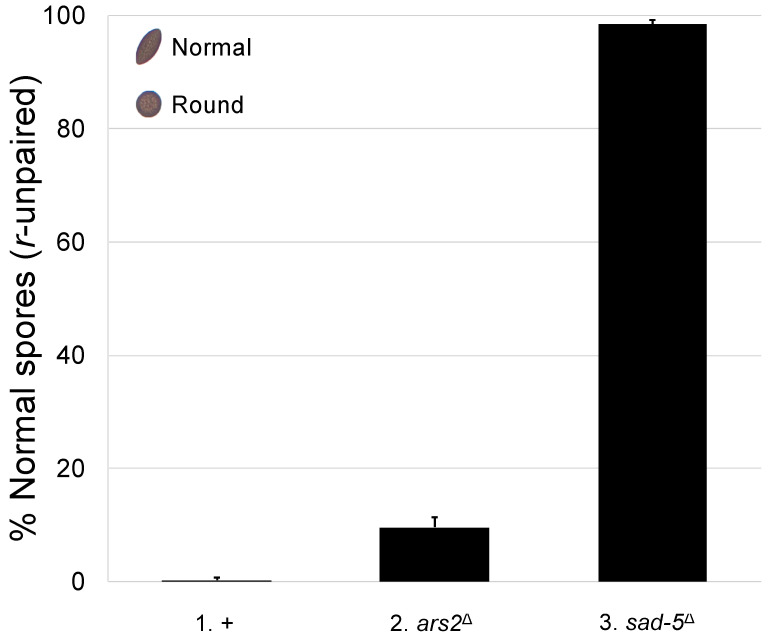 Figure 1
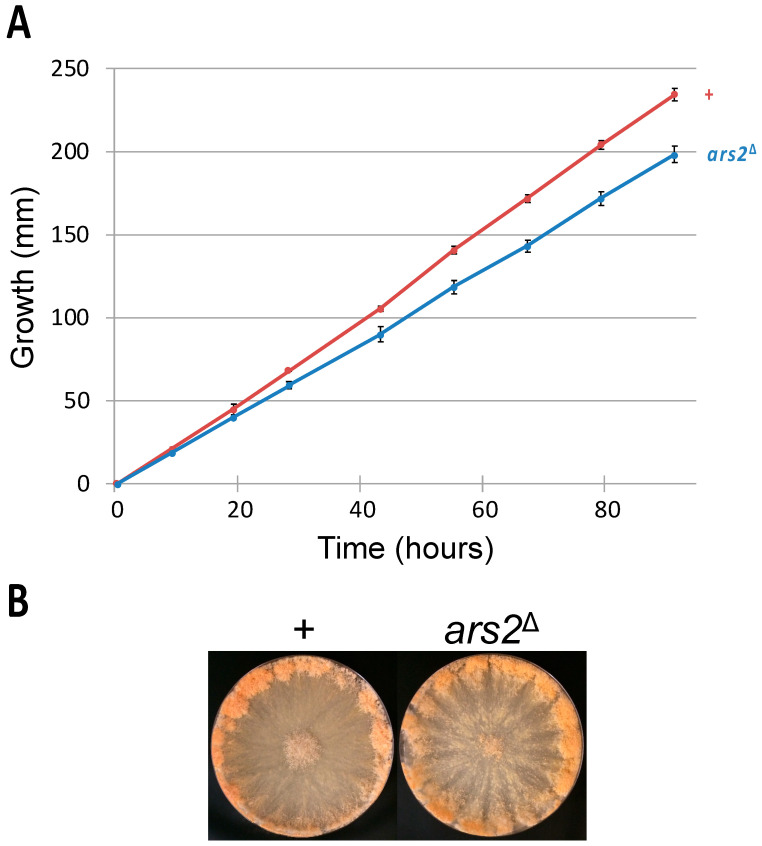 Figure 2
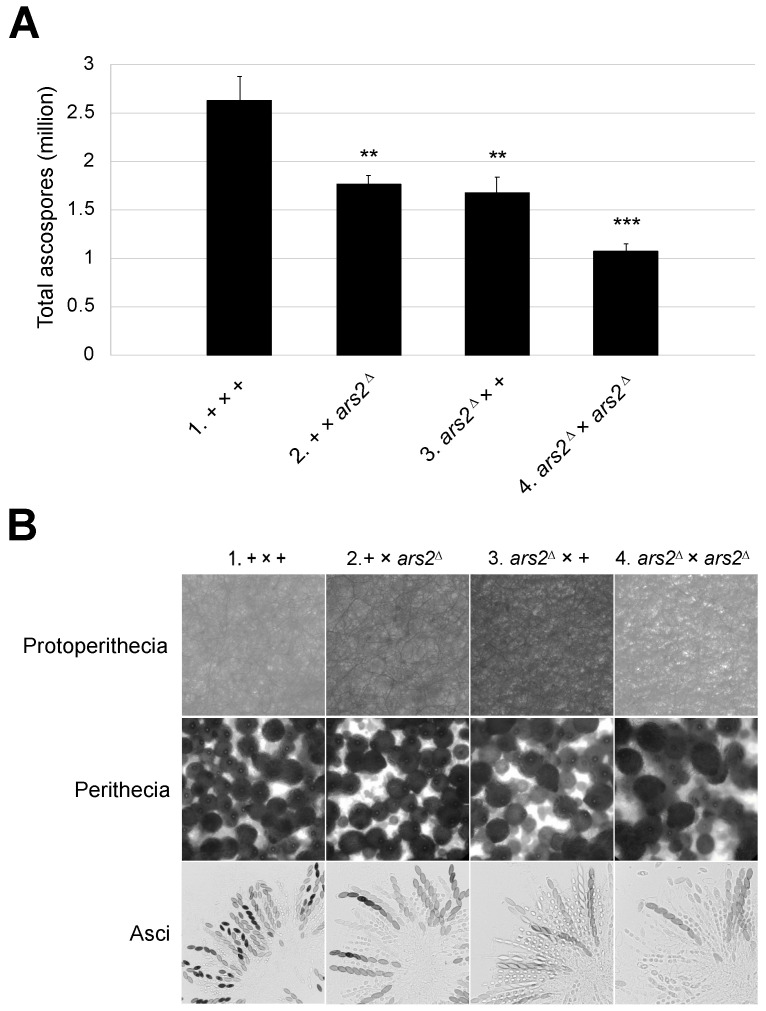 Figure 3
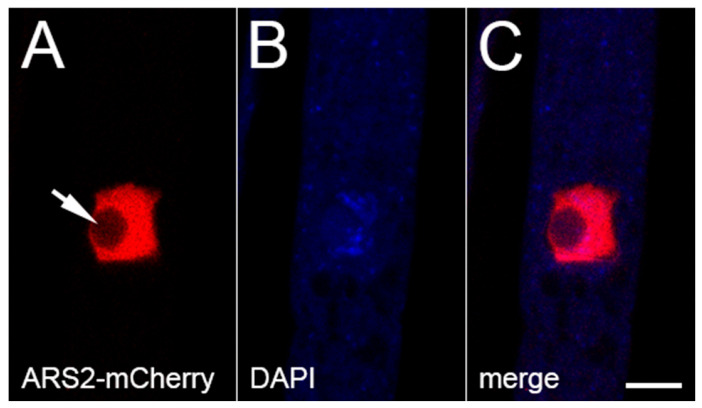 Figure 4
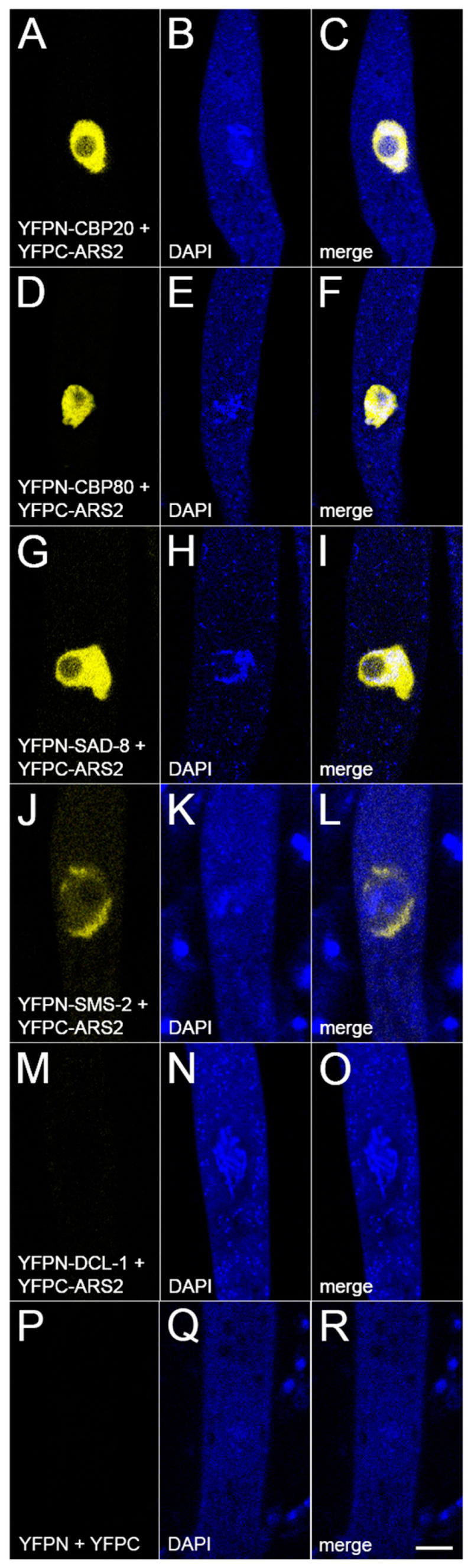 Figure 5
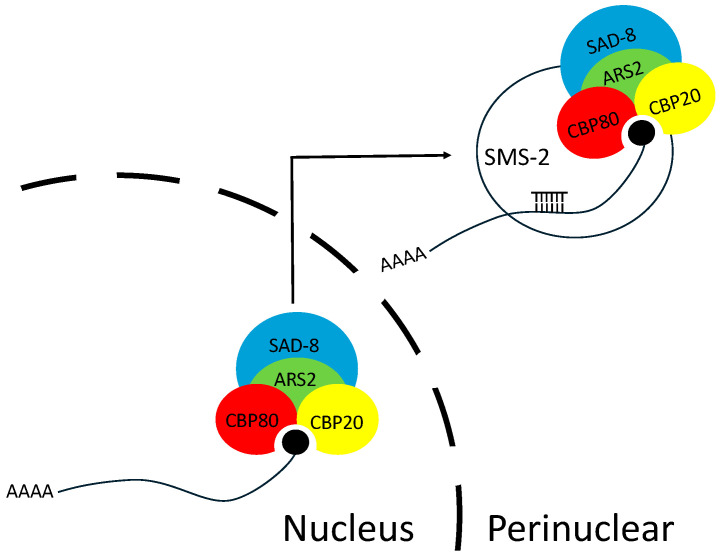 Figure 6
- —National Institute of General Medical Sciences (NIGMS)
- —National Science Foundation
- —MU Arts and Science Undergraduate Research and Creative Activity Mentorship Program
- —MU Research Board
- —MU Research Council
Peer Reviews
No public reviews on file for this paper yet. If you reviewed it on a platform where reviews are public (OpenReview, ICLR, NeurIPS, ICML), you can paste yours below so the community can read it here.
Videos
No videos yet. Explain this paper in a talk, walkthrough, or lecture? Add one.
Taxonomy
TopicsDNA Repair Mechanisms · Bacterial Genetics and Biotechnology · Fungal and yeast genetics research
1. Introduction
Neurospora crassa is a haploid fungus that grows as a network of filamentous cells (hyphae) and has a distinct sexual cycle [1]. To keep selfish genetic elements at bay, Neurospora maintains several genome surveillance mechanisms to suppress their gene expression [2]. One of these is known as meiotic silencing by unpaired DNA (MSUD) [3,4,5]. In this mechanism, a gene not having a pairing partner during meiosis is seen as a potential threat and is subject to silencing. For example, MSUD can recognize an unpaired transposon and target its sequence during the sexual cycle [6].
MSUD begins in the nucleus when the direct pairing of homologous double-stranded DNAs is inspected. This pairing process may rely on REC8 (meiotic kleisin) and SAD-6 (chromatin remodeler) [7,8]. Once an unpaired gene is detected, an aberrant RNA (aRNA) is transcribed and exported to the perinuclear region. SAD-1 (RNA-directed RNA polymerase), assisted by SAD-3 (helicase), changes the aRNA into a double-stranded RNA (dsRNA) [9,10]. The dsRNA is cut up by DCL-1 (Dicer) into small interfering RNAs (siRNAs), which are then made into single strands by QIP (exonuclease) [11,12,13]. The single-stranded siRNAs can subsequently guide SMS-2 (Argonaute) to seek out homologous mRNAs for destruction [14]. SAD-2, a scaffold protein, is in charge of bringing SAD-1 and others to the perinuclear region [15,16,17].
In addition to the aforementioned proteins, the nuclear cap-binding complex (CBC) also plays a role in meiotic silencing [18]. In eukaryotes, CBC binds to the 5′ cap of RNA polymerase II transcripts and facilitates a variety of processing events, including pre-mRNA processing, nuclear export, and others [19,20]. CBC is made up of nuclear cap-binding proteins NCBP1 and NCBP2 (also known as CBP80 and CBP20, respectively). According to our MSUD model, CBC binds to NCBP3 (SAD-8), and the resulting complex helps deliver an mRNA to the SMS-2 Argonaute in the perinuclear region [21]. Since ARS2 (arsenite resistance protein 2) is thought to recruit NCBP3 to CBC in mammals [22,23], we set out to explore if it also influences meiotic silencing in Neurospora.
2. Materials and Methods
2.1. Fungal Methods and Genotypes
Standard fungal procedures, according to the Neurospora protocol guide, were used in this study (https://www.fgsc.net/Neurospora/NeurosporaProtocolGuide.htm; accessed on 26 August 2025). Strain names and genotypes are listed in Table 1. Progenitor strains, including those from the knockout library [24], were acquired from the Fungal Genetics Stock Center (FGSC) [25]. The sequence of ars2 (ncu02800-t26_1) was obtained from FungiDB [26]. Fungal isolates were grown and maintained on Vogel’s medium [27]. Crosses were performed on SC (synthetic crossing) medium [28].
2.2. Assays for Growth, Sexual Development, and MSUD Suppression
Linear growth rates of fungal strains were recorded at room temperature with race tubes [29]. Quantification of ascospore (sexual spore) production was carried out as per Hammond et al. [10]. Analysis of MSUD suppression was essentially as described by Xiao et al. [30]. Briefly, perithecia were grown in a well of a microtiter plate, and the resulting ascospores were shot onto the plate lid and later collected for the microscopic examination of their phenotypes. For the aforementioned assays, the p-values were calculated using the two-tailed Student’s t-test.
2.3. Strain Construction and Confirmation
The mCherry tagging vector for ars2 was constructed using double-joint polymerase chain reaction (DJ-PCR) [7]. Neurospora transformation by electroporation of conidia (asexual spores) was as described by Margolin et al. [31]. For genotype confirmation, genomic DNA was purified from conidia [32] or hyphae (DNeasy Plant Mini Kit; QIAGEN, Germantown, MD, USA). For screening and validation of genotypes, PCR was performed using the GoTaq Green Master Mix (Promega, Madison, WI, USA) or the Expand Long Range dNTPack (Roche Diagnostics, Indianapolis, IN, USA). Sanger DNA sequencing was conducted by the University of Missouri (MU) Genomics Technology Core. Primers for this study are listed in Supplementary Table S1.
2.4. Bimolecular Fluorescence Complementation (BiFC)
BiFC is an in vivo protein–protein interaction assay that relies on the reconstitution of a fluorophore [33,34]. In this assay, the N-terminal half of the yellow fluorescent protein (YFPN) is tagged to a protein of interest, while the C-terminal half (YFPC) is tagged to another. A positive interaction between the two proteins of interest is indicated by the restored yellow fluorescence. YFPN and YFPC were tagged to various MSUD proteins using an established method [35].
2.5. Photography and Microscopy
Z-stack images of protoperithecia (female structures) were captured using an M205 FA stereomicroscope equipped with a DFC345 FX camera (Leica Microsystems, Deerfield, IL, USA). For perithecia (fruiting bodies), pictures were taken by an Apple iPhone 5 (fitted with a Magnifi photoadapter; Arcturus Labs, Lawrence, KS, USA) on a VanGuard 1231CM microscope (VEE GEE Scientific, Vernon Hills, IL, USA). Photographs of asci (spore sacs) were obtained from a BX45 microscope equipped with a DP74 camera (Olympus, Center Valley, PA, USA). For fluorescence microscopy, preparation and viewing of asci were as previously described [11,13], with the employment of a Leica TCS SP8 system at the MU Advanced Light Microscopy Core.
3. Results
3.1. ARS2 Plays a Role in MSUD
We have previously shown that CBC and NCBP3 mediate MSUD in Neurospora [18,21]. Since ARS2 interacts with these factors in other organisms [22,36], we asked whether it is also involved in meiotic silencing. In a typical Neurospora cross, American football-shaped ascospores are produced. On the other hand, if the round spore gene is unpaired (i.e., r^+^ × r^∆^), it will be meiotically silenced, and the progeny will be mostly round (i.e., 0.27% football; Figure 1, cross 1). This abnormal phenotype can be mitigated if the cross is lacking an MSUD protein. As seen in Figure 1 (cross 2), the deletion of ars2 in both parents leads to 9.6% of the progeny showing the unsilenced phenotype, suggesting that ARS2 plays a role in meiotic silencing.
3.2. ARS2 Is Involved in Vegetative Growth
A loss-of-function mutation in ARS2 (or its homolog) is lethal in Schizosaccharomyces pombe [38], Arabidopsis thaliana [39], Drosophila melanogaster [40], Danio rerio [41], and Mus musculus [42]. In Neurospora, while the ars2 gene is nonessential for the vegetative stage, its deletion is linked to a slower linear growth rate: an ars2^∆^ mutant covers only 85% of the distance attained by a wild-type strain at the end of a race-tube assay (Figure 2A).
In Arabidopsis, a nonlethal mutation in SERRATE (an ARS2 homolog) is associated with various vegetative defects, e.g., reduced rosette leaf production [43]. In Neurospora, production of conidia appears to be proficient in an ars2^∆^ mutant (Figure 2B).
3.3. Mutation in ars2 Affects Sexual Development
Many characterized MSUD proteins are essential for sexual sporulation [4,10,11,13,15,44]. As for ars2, when both parents are missing this gene, only 41% of the normal amount of ascospores are produced (Figure 3A, cross 4). Crosses heterozygous for ars2^∆^ fare somewhat better, achieving 63–67% of the normal ascospore production (Figure 3A, crosses 2 and 3). Upon examination of the mutant perithecia homozygous or heterozygous for ars2^∆^, we observed an increase in ascus abortions, suggesting that ARS2 is important for normal ascus development (Figure 3B).
3.4. ARS2 Is Associated with CBC
ARS2 is a key cofactor of the nuclear CBC, and they form the CBC-ARS2 (CBCA) complex in fungi, plants, and animals [36,45]. Like its homologs, Neurospora ARS2 is predominantly nuclear (Figure 4). Using BiFC, we have obtained evidence that ARS2 is closely associated with both components of CBC (i.e., CBP20 and CBP80) in Neurospora (Figure 5A–F), supporting the notion that they form the CBCA complex in this fungus.
3.5. ARS2 Interacts with NCBP3 and the SMS-2 Argonaute
An mRNA is typically bound by CBC, which facilitates its nuclear export [19]. Our MSUD model suggests that the SMS-2 Argonaute may efficiently recognize exiting mRNAs by interacting with a complex containing CBC and NCBP3 [18,21]. One possible action of ARS2 is that it could help bring CBC and NCBP3 together, and the resulting complex interacts with SMS-2. In support of this hypothesis, our BiFC analysis shows that ARS2 indeed interacts with CBC (as noted above), NCBP3 (Figure 5G–I), and SMS-2 (Figure 5J–L).
4. Discussion
In eukaryotes, CBC binds to ARS2, which acts as a platform to recruit various RNA classifier factors that eventually decide the fate of the associated RNA [36]. One of the factors that ARS2 recruits is NCBP3, which is thought to promote mRNA export and translation (and possibly other RNA processing events) [22]. In this work, we have shown that ARS2 interacts with CBC in Neurospora, substantiating the idea that the former acts as a cofactor of the latter in this fungus. We have also shown that ARS2, like CBC and NCBP3, plays a role in MSUD. ARS2, as predicted, interacts with NCBP3 in Neurospora.
While ARS2 is essential for many eukaryotes, its significance in fungi is not uniform. For example, this protein is absent from Saccharomyces cerevisiae [36], essential for S. pombe [38], and not absolutely required for Fusarium graminearum [45]. Here, our results indicate that while ars2 is not indispensable for Neurospora, its absence correlates with a slower linear growth and fewer sexual progeny.
In MSUD, NCBP1/2/3-bound mRNAs are exported from the nucleus to the perinuclear region, where the SMS-2 (Argonaute) proteins await. This ternary cap-binding complex is presumably important for mRNA recognition by SMS-2 [18,21]. One possibility is that ARS2 helps recruit NCBP3 to CBC, forming the optimal structure for SMS-2 to detect (Figure 6). In the absence of ARS2, NCBP3 may still be able to bind to CBC, albeit with a lower efficiency. An alternative explanation is that ARS2 may stimulate the silencing machinery. In Drosophila, it has been suggested that Ars2 may bind to Dicer-2 and promote its enzymatic activity [46]. However, based on our BiFC assay, we do not have evidence showing that ARS2 interacts with the DCL-1 Dicer in Neurospora (Figure 5M–O).
During nuclear export, a myriad of molecules exit the nucleus, and it is incumbent on the perinuclear SMS-2 proteins to inspect each exported mRNA and ensure that no meiotic silencing targets can reach the translational machinery in the bulk cytoplasm. Thus far, our results have alluded to the importance of cap-associated proteins (i.e., CBC, NCBP3, and ARS2) in this process. Future work in this area will hopefully give us more insights into the mechanism by which mRNAs are effectively inspected and sorted out during MSUD.
The reference list from the paper itself. Each links out to its DOI / PubMed record.
- 1Springer M.L. Genetic control of fungal differentiation: The three sporulation pathways of Neurospora crassa Bioessays 19931536537410.1002/bies.9501506028357339 · doi ↗ · pubmed ↗
- 2Gladyshev E. Repeat-induced point mutation and other genome defense mechanisms in fungi Microbiol. Spectr.20175 FUNK-0042-201710.1128/microbiolspec.FUNK-0042-201728721856 PMC 5607778 · doi ↗ · pubmed ↗
- 3Aramayo R. Metzenberg R.L. Meiotic transvection in fungi Cell 19968610311310.1016/S 0092-8674(00)80081-18689677 · doi ↗ · pubmed ↗
- 4Shiu P.K.T. Raju N.B. Zickler D. Metzenberg R.L. Meiotic silencing by unpaired DNA Cell 200110790591610.1016/S 0092-8674(01)00609-211779466 · doi ↗ · pubmed ↗
- 5Hammond T.M. Sixteen years of meiotic silencing by unpaired DNA Adv. Genet.2017971422883835510.1016/bs.adgen.2016.11.001 · doi ↗ · pubmed ↗
- 6Wang Y. Smith K.M. Taylor J.W. Freitag M. Stajich J.E. Endogenous small RNA mediates meiotic silencing of a novel DNA transposon G 3 (Bethesda)201551949196010.1534/g 3.115.01792126109355 PMC 4592977 · doi ↗ · pubmed ↗
- 7Samarajeewa D.A. Sauls P.A. Sharp K.J. Smith Z.J. Xiao H. Groskreutz K.M. Malone T.L. Boone E.C. Edwards K.A. Shiu P.K.T. Efficient detection of unpaired DNA requires a member of the Rad 54-like family of homologous recombination proteins Genetics 201419889590410.1534/genetics.114.16818725146971 PMC 4224178 · doi ↗ · pubmed ↗
- 8Rhoades N. Nguyen T.S. Witz G. Cecere G. Hammond T. Mazur A.K. Gladyshev E. Recombination-independent recognition of DNA homology for meiotic silencing in Neurospora crassa Proc. Natl. Acad. Sci. USA 2021118 e 210866411810.1073/pnas.210866411834385329 PMC 8379962 · doi ↗ · pubmed ↗