Genome Sequence of Corynebacterium glutamicum Phage MicyPS
Ombeline Rossier, Florence Constantinesco-Becker, Anne Lopes, Daniel Delaruelle, Ana A Arteni, Lydia Hassissene, Malika Ouldali, Laura Pieri, Avril Zappini, Katia Zaidi, Armand Tomasella, Perla Tannous, Michel Nouhra, Mickael Marques, Cindy Goodur, Louis Gachot, Erine Dumond

TL;DR
This paper reports the genome sequence of a new bacteriophage, MicyPS, which infects Corynebacterium glutamicum and was found in soil in France.
Contribution
The paper introduces a new phage cluster EQ based on gene-content similarity with another phage.
Findings
MicyPS has a 78,208-bp genome encoding 115 protein-encoding genes and 5 tRNAs.
MicyPS was classified into a new phage cluster EQ based on gene-content similarity with PSonyx.
Abstract
MicyPS is a bacteriophage with siphovirus morphology infecting Corynebacterium glutamicum strain MB001. It was isolated from soil near a henhouse in Villiers-sur-Marne, France. Its 78,208-bp genome encodes 115 predicted protein-encoding genes and 5 tRNAs. Based on gene-content similarity with actinobacteriophage PSonyx, MicyPS was assigned to the new cluster EQ.
Genes, proteins, chemicals, diseases, species, mutations and cell lines named across the full text — each resolved to its canonical identifier and authoritative record.
Click any figure to enlarge with its caption.
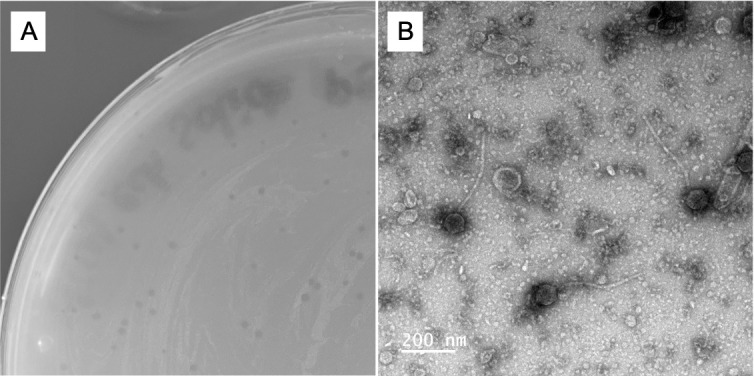 Figure 1
Peer Reviews
No public reviews on file for this paper yet. If you reviewed it on a platform where reviews are public (OpenReview, ICLR, NeurIPS, ICML), you can paste yours below so the community can read it here.
Videos
No videos yet. Explain this paper in a talk, walkthrough, or lecture? Add one.
Taxonomy
TopicsBacteriophages and microbial interactions · Genomics and Phylogenetic Studies · Escherichia coli research studies
Description
Despite the industrial significance of *Corynebacterium glutamicum * in the production of glutamate and lysine, only seven bacteriophages infecting this species have been fully characterized to date with respect to both genome sequence and virion morphology (Moreau et al. 1995; Bukovska et al. 2006; Chen et al. 2008; Lobanova et al. 2017; Yomantas et al. 2018; Hünnefeld et al. 2021; Rossier et al. 2024). This limited number underlines an important gap in our understanding of phage diversity, biology, and their potential impact on fermentation processes involving C. glutamicum .
Phage MicyPS was isolated from soil near a henhouse in Villiers-sur-Marne, France (GPS 48.829132 N, 2.537859 E). Soil was incubated for 1 hour with 25 mL LB broth (5 g/L NaCl; 5 g/L yeast extract; 10 g/L tryptone), whilst shaking at 30° C. Following centrifugation at 4000 xg for 15 minutes, the supernatant was passed through a 0.45-μm filter and supplemented with 1 mM CaCl 2 and inoculated with C . glutamicum strain MB001, a derivative of the reference strain ATCC 13032 in which the prophages CGP1, CGP2, and CGP3 were deleted (Hünnefeld et al. 2021). After shaking for 24 hours at 30° C, enrichment cultures were centrifuged and the supernatant was filtered through a 0.22-μm filter. Five mL of the supernatant were then spotted on double agar plate supplemented with 1 mM CaCl 2 and strain MB001. After 24 hours of incubation at 30° C, individual plaques were visible and further purified through three rounds of single plaque picking and plating. Plaques were clear and between 0.5 and 3-mm in diameter ( Figure 1A ). Negative-staining electron microscopy revealed a siphovirus morphology with capsids 75 (±4) nm in diameter and tails 320 (±26) nm long (n=20).
Viral DNA was extracted using the PCI/SDS protocol (see Methods). NEB Ultra II FS Kit was used to prepare the library that was sequenced using Illumina NextSeq 1000, yielding 1,078,713 single-end 100-base reads. Raw reads were trimmed with cutadapt 4.7 (using the option: –nextseq-trim 30) and filtered with Skewer 0.2.2 (using the options: -q 20 -Q 30 -n -l 50) prior to assembly (Martin 2011; Jiang et al. 2014). De novo assembly was performed with Newbler v2.9 as previously described (Russell 2018) and further checked with Consed v.29 and Unicycler (Gordon et al. 1998; Wick et al. 2017). The resulting genome was 78,208-bp in length, with a G+C content of 53.2% and circularly permutated ends. Based on gene content similarity of 76.2% with the previously singleton phage PSonyx (Rossier et al. 2024), phage MicyPS was assigned to the new cluster EQ in the Actinophage database PhagesDB (Russell and Hatfull 2017).
Genome annotation identified 120 putative genes including 5 tRNAs with the following tools: DNA master v5.23.6 (Pope and Jacobs-Sera 2018) which incorporates Glimmer v3.02 (Delcher et al. 2007) and GeneMark v2.5p (Besemer and Borodovsky 2005), Aragorn v1.2.40 (Laslett 2004), tRNAscan-SE v2.0 (Chan et al. 2021) and Phamerator (Cresawn et al. 2011). Start sites were selected based on gene length, minimal gaps or overlaps, RBS scores, and BLASTP alignment. Functional annotation was performed with BLASTP (Altschul et al. 1990) using PhagesDB and NCBI non-redundant databases (e values < 0.001) and with HHpred (Soding et al. 2005) using databases PDB_mmCIF70_30_Mar, Pfam-A_v37, Uniprot-Swissprot-viral70_3_Nov_2021, and NCBIConservedDomain(CD)_v3.19. Using DeepTMHMM v1.0.42 (Hallgren et al. 2022), nine proteins were predicted to localize to the membrane. Only 35% of putative genes had a predicted function. One region (representing 40% of the genome) is transcribed in the rightward direction and encodes proteins involved in virion assembly and host lysis. The next 40%, transcribed leftwards, contains tRNAs and genes likely involved in DNA replication. Located in this region, nine (of a total of 15) predicted genes have no significant similarity with any other predicted genes in the Actinophage database. These genes are termed orphams. The final 20%, transcribed rightwards, end with a large putative gene which is predicted to encode a 2,873-amino-acid protein of unknown function. Both phages in cluster EQ (MicyPS and PSonyx) have no identifiable immunity repressor or integrase functions suggesting the use of the lytic cycle for replication.
Nucleotide sequence accession numbers
MicyPS is available at GenBank with Accession No. PV876931 and Sequence Read Archive (SRA) No. SRX28943171.
Methods
Viral DNA was extracted using the PCI/SDS protocol ( https://phagesdb.org/media/workflow/protocols/pdfs/PCI_SDS_DNA_Extraction_2.2013.pdf ).
The reference list from the paper itself. Each links out to its DOI / PubMed record.
- 1Altschul Stephen F. Gish Warren Miller Webb Myers Eugene W. Lipman David J. 1990101 Basic local alignment search tool Journal of Molecular Biology 21530022-283640341010.1016/s 0022-2836(05)80360-22231712 · doi ↗ · pubmed ↗
- 2Besemer J. Borodovsky M. 200571 Gene Mark: web software for gene finding in prokaryotes, eukaryotes and viruses Nucleic Acids Research 33Web Server 0305-1048 W 451W 45410.1093/nar/gki 48715980510 PMC 1160247 · doi ↗ · pubmed ↗
- 3Bukovska Gabriela Klucar Lubos Vlcek Cestmir Adamovic Jan Turna Jan Timko Jozef 200641 Complete nucleotide sequence and genome analysis of bacteriophage BFK 20 — A lytic phage of the industrial producer Brevibacterium flavum Virology 34810042-6822577110.1016/j.virol.2005.12.01016457869 · doi ↗ · pubmed ↗
- 4Chan Patricia P Lin Brian Y Mak Allysia J Lowe Todd M 2021820 t RN Ascan-SE 2.0: improved detection and functional classification of transfer RNA genes Nucleic Acids Research 49160305-10489077909610.1093/nar/gkab 68834417604 PMC 8450103 · doi ↗ · pubmed ↗
- 5Chen Chang-Lin Pan Tzu-Ying Kan Shu-Chen Kuan Yi-Chia Hong Lian-Yu Chiu Kun-Ruei Sheu Ching-Sen Yang Jui-Sen Hsu Wen-Hwei Hu Hui-Yu 200891 Genome sequence of the lytic bacteriophage P 1201 from Corynebacterium glutamicum NCHU 87078: Evolutionary relationships to phages from Corynebacterineae Virology 37820042-682222623210.1016/j.virol.2008.05.02718599103 · doi ↗ · pubmed ↗
- 6Delcher Arthur L. Bratke Kirsten A. Powers Edwin C. Salzberg Steven L. 2007119 Identifying bacterial genes and endosymbiont DNA with Glimmer Bioinformatics 2361367-481167367910.1093/bioinformatics/btm 00917237039 PMC 2387122 · doi ↗ · pubmed ↗
- 7Gordon David Abajian Chris Green Phil 199831 Consed: A Graphical Tool for Sequence Finishing Genome Research 831088-905119520210.1101/gr.8.3.1959521923 · doi ↗ · pubmed ↗
- 8Hallgren Jeppe Tsirigos Konstantinos D. Pedersen Mads Damgaard Almagro Armenteros José Juan Marcatili Paolo Nielsen Henrik Krogh Anders Winther Ole 2022410 Deep TMHMM predicts alpha and beta transmembrane proteins using deep neural networks 10.1101/2022.04.08.487609 · doi ↗