Decoding the medicinal aromatic characteristic of Zhuyeqing and gaining new insight into sotolon
Lihua Wang, Yue Ma, Ying Han, Xing Zhang, Xiaojuan Gao, Wenshuo Li, Yanhong Bai, Fengxian Wang, Yan Xu, Qun Wu, Ke Tang

TL;DR
This study identifies key aroma compounds in Zhuyeqing, a medicinal liquor, and reveals how sotolon's enantiomers influence its medicinal scent.
Contribution
The enantioselective distribution of sotolon in Zhuyeqing and its correlation with medicinal aroma are newly elucidated.
Findings
25 sensorially active compounds were identified in the medicinal aroma fraction of Zhuyeqing.
Eugenol, sotolon, and trans-isoeugenol are key compounds affecting the medicinal aroma.
The enantioselective distribution of sotolon correlates with medicinal aroma attenuation.
Abstract
Zhuyeqing is made from Fenjiu base liquor infused with extracts from 12 Chinese herbs. Its medicinal aroma is a unique feature of Zhuyeqing. However, this particular characteristic has not yet been thoroughly studied. Utilizing a normal phase liquid chromatography-sensomics-integrated strategy, we sequentially identified 110 potential odorants in the fraction with characteristic medicinal aroma via GC × GC-TOF MS, then these compounds were narrowed down to 25 sensorially active compounds through GC-O validation. Quantitative analysis identified 10 odorants with odor activity values (OAVs) ≥ 1. Omission experiments indicated that eugenol, sotolon, trans-isoeugenol, guaiacol, anisaldehyde, and acetoin were the key aroma compounds affecting the medicinal characteristic. Innovatively, we revealed the enantioselective distribution patterns of sotolon in Zhuyeqing and elucidated its dynamic…
Genes, proteins, chemicals, diseases, species, mutations and cell lines named across the full text — each resolved to its canonical identifier and authoritative record.
Click any figure to enlarge with its caption.
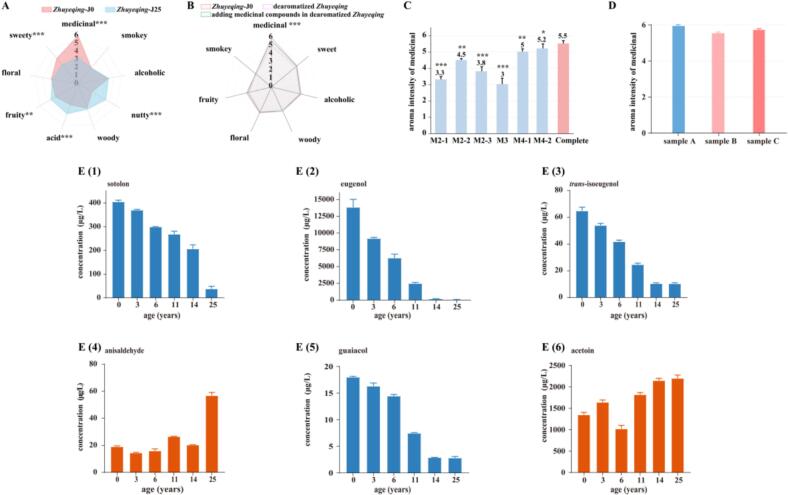 Figure 1
Peer Reviews
No public reviews on file for this paper yet. If you reviewed it on a platform where reviews are public (OpenReview, ICLR, NeurIPS, ICML), you can paste yours below so the community can read it here.
Videos
No videos yet. Explain this paper in a talk, walkthrough, or lecture? Add one.
Taxonomy
TopicsOlfactory and Sensory Function Studies · Fermentation and Sensory Analysis · Advanced Chemical Sensor Technologies
Introduction
1
Herbs play a crucial role in the production of flavored alcoholic beverages (Liang et al., 2021). Internationally, flavored alcoholic beverages made from herbs and distilled spirits comprise a significant portion of the various types of flavored alcoholic beverages, such as Zhizhonghe Wujiapi, Chinese JingJiu, and Zhuyeqing (Ma et al., 2020; Sun et al., 2021). The addition of herbal extracts manipulates or enhances the flavor, taste, and health benefits of these beverages, catering to consumer preferences (Ma et al., 2020; Sun et al., 2021).
Zhuyeqing, a renowned traditional Chinese flavored spirit, is made from Fenjiu base liquor infused with extracts from 12 Chinese herbs (Wang, Han, et al., 2025). The strategic blending of 12 herbs imparts Zhuyeqing with a complex and distinctive aroma profile that defines its sensory identity. Its aroma profile features complementary notes of sweet, bitter almond, woody, medicinal, smoky, floral, fruity, acid, alcoholic (Wang, Han, et al., 2025. Each herbal from the 12 Chinese herbs contributes its medicinal aroma, such as cool, sweet, floral, woody, smoky, leafy, and herbal notes. Crucially, the medicinal aroma of Zhuyeqing differs fundamentally from isolated herbs or medicinal reagents. The unique medicinal aroma of Zhuyeqing arises from the synergistic interaction of the 12-herbal ensemble. Thus, the unique medicinal aroma of Zhuyeqing sets it apart from other herb-based beverages, which use different types of herbs, such as Gins (Buck et al., 2020), Zhizhonghe Wujiapi (Ma et al., 2020), and Chinese JingJiu (Sun et al., 2021), etc. Nonetheless, industrial evidence indicates progressive attenuation of its medicinal aroma during aging, highlighting a critical but unstudied molecular composition. This unresolved instability undermines the sensory characteristics of the beverage.
The aromas of alcoholic beverages are critical in determining the quality of the product and consumer preference (Tempere et al., 2019). Dunkel et al. (2014) established that the authentic aroma of each food can be sufficiently formed by only 3 to 40 key aroma compounds at natural concentrations, chosen from approximately 230 key food odorants out of around 10,000 food volatiles. Therefore, identifying the key aroma compounds from numerous candidates is essential but challenging (Wu et al., 2024). Research on the aromatic characteristics of Zhuyeqing is still limited. Recently, our investigations identified 883 volatile compounds in various types of Zhuyeqing (Wang, Zhang, et al., 2025) and successfully recreated the overall aroma profile (excluding the medicinal aroma) in dearomatized Zhuyeqing (Wang, Han, et al., 2025). While our prior study successfully confirmed that ethyl octanoate, ethyl cinnamate, β-damascenone, ethyl acetate, and eugenol are key odorants. However, the molecular composition of the typical medicinal aroma is still a mystery and needs to be investigated.
It is essential to have an efficient extraction and separation method for the analysis of aroma compounds in complex samples. The normal phase liquid chromatography (NPLC) effectively pre-separates the sample extracts, reducing matrix complexity and enhancing the identification accuracy (Zhao et al., 2021). To create mobile phases of varying polarities, reagents with different polarities are mixed in specific ratios. The resulting complex extracts are then pre-separated by elution on a silica gel column (Peppard, 1992). This approach isolates volatiles from diverse flavor matrices (Chen, Xu, & Qian, 2013; Fan et al., 2012; Zhao et al., 2021) and helps characterize signature aromas, such as the blackberry notes in wine (Falcao et al., 2012) and the oily odor in Baijiu (Wu et al., 2024).
Comprehensive two-dimensional gas chromatography-time-of-flight mass spectrometry (GC × GC-TOF MS) provides higher resolution and sensitivity for flavor analysis (Zou et al., 2023). This technique effectively resolves co-elution issues from the first dimension (Villière et al., 2012) and detects lower-abundance compounds than conventional gas chromatography–mass spectrometry (GC–MS). When combined with gas chromatography olfactometry (GC-O), GC × GC-TOF MS helps separate co-eluted compounds and identify those responsible for specific odors (Rochat et al., 2007; Villière et al., 2012).
The complex composition of Zhuyeqing causes overlapping chromatographic peaks. Some odorants, especially at very low concentrations, remain undetected. These issues make it difficult to identify compounds responsible for its medicinal aroma. Accordingly, we aim to: (1) explain the molecular composition of the typical medicinal aroma of Zhuyeqing using NPLC-GC × GC-TOF MS; (2) identify unique medicinal character odorants in Zhuyeqing via GC-O analysis; (3) quantify the odor-active compounds and calculate OAVs; (4) validate key odorant contributions through recombination/omission experiment.
Materials and methods
2
The samples
2.1
Six vintage Zhuyeqing samples between 0 and 25 (0, 3, 6, 11, 14, and 25 years) storage provided by Xinghuacun Fenjiu Distillery Co., Ltd. (hereinafter “Xinghuacun”, Shanxi, China) were involved in this study and all of them were produced based on traditional progress (Wang, Han, et al., 2025). Table S1 details bottled vintage Zhuyeqing. A panel of 10 certified national Baijiu tasting experts selected the representative medicinal aroma sample (Zhuyeqing-J0). All samples were stored in the dark at 25 °C before analysis.
Reagents and chemicals
2.2
HPLC grade reagents, including dichloromethane, absolute ethanol, pentane, and methanol, were supplied by Dikma Technologies Inc. (Beijing, China). Sodium chloride (NaCl), diethyl ether, and anhydrous sodium sulfate (Na_2_SO_4_) were bought from Sinopharm Chemical Reagent Co., Ltd. (Shanghai, China). Before use, dichloromethane, pentane, and diethyl ether were redistilled. All standard compounds and internal standards (ISs) (Table S2) were purchased from various suppliers and had a minimum purity of 95%.
Sensory analysis
2.3
This investigation was evaluated and authorized through the Jiangnan University IRB (JNU20230601IRB24). All procedures were strictly adhered to the Declaration of Helsinki and relevant laws and regulations, and no personally identifiable information about the participants was disclosed. Each participant provided informed consent before participating in this study and was free to withdraw at any time during the research period without consequences. The Jiangnan University IRB supervised this study fully and safeguarded the legitimate rights and interests of all participants.
A panel of 10 certified national Baijiu tasting experts (three males and seven females, aged from 27 to 40) from Xinghuacun was employed to evaluate the aroma profiles of the samples. They are responsible for the quality control of Zhuyeqing, familiar with the aroma characteristics of the 12 herbs of Zhuyeqing, and are able to identify different aroma characteristics precisely. After evaluating and discussing all bottled vintage Zhuyeqing, nine aroma descriptors, namely medicinal, sweety, alcoholic, nutty, woody, floral, fruity, smoky and acid were chosen (corresponding references are given in Table S3.) According to the tested samples, reference materials' aroma intensity has three levels referred to our previous work (Wu et al., 2024). The panelists judged the perception intensity of each attribute in the tested samples from 0 (none) to 6 (very strong). Each sample (~20 mL) labelled with three-digit codes was placed into glass cups at 25 °C.
Qualitative analysis of the medicinal aromatic characteristic of Zhuyeqing
2.4
Aroma compound extraction methods
2.4.1
As previously reported method with minor changes (Wang, Han, et al., 2025), 100 mL (50 mL × 2) Zhuyeqing-J0 sample was diluted to 10% v/v ethanol using ultrapure water and was saturated using NaCl. The sample was then extracted with 50 mL mixture of organic solvents of pentane and diethyl ether (by volume ratio = 1:1) three times. All collected organic phases were combined and dried overnight using anhydrous Na_2_SO_4_. Then it was condensed to 2 mL using nitrogen under a slow-flowing stream, and kept at −20 °C before separation by NPLC.
Following Wu et al. (2024) described methods, NPLC was conducted to detect medicinal aroma compounds. The 2 mL concentrated sample was fractionated through a 30 cm glass column (1.5 cm i.d.) containing about 15 g of silica gel (63–200 μm, 70–230 mesh, Sigma-Aldrich, America Merck). The progress of the NPLC method was seen in Method S1. The eluent solvents, A (pentane), B (diethyl ether), and C (methanol), with the following volume ratios: F01: A (100), F02: A: B (95:5), F03: A: B (90:10), F04: A: B (80:20), F05: A: B (70:30), F06: A: B (50:50), F07: A: B (30:70), F08: A: B (20:80), F09: B (100), and F10: C (100). Ten fractions were collected and respectively concentrated to 1 mL before sensory and instrumental analysis by GC × GC-TOF MS and gas chromatography–mass spectrometry/olfactometry (GC–MS/O).
Analysis with GC × GC-TOF MS.
2.4.2
In splitless mode, 1 μL sample was injected at 250 °C and the solvent delay time was 8 min. GC × GC-TOF MS with LECO Pegasus 4D (LECO, USA) and equipped with a gas chromatograph (Agilent 7890B) were used, and the analysis conditions were performed as previously reported (Wang et al., 2023) with slight changes. The columns (polar/moderately polar arrangement) were used for the GC × GC separation process. DB-FFAP (60 m × 0.25 mm i.d., 0.25 μm, Agilent, USA) as the first column and Rxi-17 Sil MS Cap. column (1.5 m × 0.25 mm i.d., 0.25 μm, Restek, USA) as the second column, respectively. The analysis time was total 45.75 min and the program oven temperature of the first column was set as the DB-FFAP in Method S2. Besides, the second oven temperature was maintained set a higher 5 °C than that of the first oven. The modulator between two columns was installed as a quad-jet and a dual-stage thermal. Set the hot pulse time at 1.2 s and the modulation period at 6 s. Finally, the transmission line was at 250 °C, and the temperature of the ionization source was at 230 °C for the TOF MS system, respectively.
Analysis with GC–MS/O
2.4.3
A gas chromatograph (Agilent 7890 A) coupled with a detector of mass selective (Agilent 5977B) and an ODP 2 olfactometric system (Gerstel, Germany) (GC–MS/O) was used. Compound separation and GC-O analysis (GC-O passed the ethical review and the licensed number was JNU20230601IRB24) were performed with a 60 m column of DB-FFAP (0.25 mm i.d., 0.25 μm, Agilent, USA) and a 30 m column of DB-5 (0.25 mm i.d., 0.25 μm, Agilent, USA). At 250 °C, 1 μL sample was injected with a 5 min solvent delay and in splitless mode. As in our previous paper (Wang, Han, et al., 2025), the parameter setting for GC–MS/O was seen in Method S2. Osme technology was used to perform GC-O. Three trained assessors (two females and one male) sniffed the sample, and the odor could be regarded as existing after at least two recordings. The qualitative method involves comparing the retention index (RI), mass spectrometry, and aroma descriptions with established standards in DB-FFAP and DB-5 columns.
Quantitation of odorants
2.5
The standard curves were plotted using peak area ratios (test chemical/internal standard) on the vertical axis and concentration ratios on the horizontal axis (Table S4). To ensure accuracy, triplicate measurements were performed for all samples, with all curves demonstrating linearity (R^2^ ≥ 0.99). Based on the sensitivity of compounds, two quantification methods, as follows, were used.
Quantification with liquid-liquid extraction (LLE) and GC × GC-TOF MS
2.5.1
Seventeen aromas were quantified using the LLE-GC × GC-TOF MS method. The samples (50 mL) added with 50 μL of mixed ISs were pretreated and extracted with 50 mL CH_2_Cl_2_ (repeated 3 times) as described above. The mixed ISs contain ethyl octanoate-d15 (IS1, 500.00 mg/L), 1-butanol-d10 (IS2, 500.00 mg/L), l-menthol (IS3, 100.00 mg/L), 2-methoxyphenol-d3 (IS4, 100.00 mg/L), benzyl alcohol-d7 (IS5, 100.00 mg/L), and sotolon-^13^C2 (IS6, 100.00 mg/L) with final concentrations, respectively. One microliter (1 μL) sample was injected with splitless mode at 250 °C and the solvent delay time was 8 min. The GC × GC-TOF MS analysis was conducted as described in section 2.4.2. without change.
Quantification with liquid-liquid microextraction (LLME) and GC–MS
2.5.2
As our previously reported (Wang, Han, et al., 2025), six compounds were quantified with LLME-GC–MS. Samples (8 mL each) were diluted to 10% ethanol (v/v) with saturated NaCl solution, followed by the addition of 50 μL mixed ISs: 2-methoxyphenol-d3 (IS4, 100.00 mg/L) and benzyl alcohol-d7 (IS6, 100.00 mg/L). LLME was performed with CH_2_Cl_2_ (5 mL per cycle, triplicate) under vortex mixing (800 rpm, 5 min), after which the extract was concentrated to 1 mL. GC–MS analysis was conducted under the conditions outlined for the DB-FFAP column in Method S2.
Determination of the odor thresholds
2.6
The odor thresholds in 45% vol ethanol/water of sotolon, piperonyl acetone, 3-methyl-2-cyclohexen-1-one, β-isophorone, (R)*-sotolon, and (S)-*sotolon were determined to calculate OAVs using the ten-sample test (TST) method as our previously stated procedure (Wang, Han, et al., 2025).
Aroma recombination and omission tests
2.7
As our previously stated procedure (Wang, Han, et al., 2025), the dearomatized Zhuyeqing was prepared (seen Method S4). Two group reconstitution experiments in 45% vol dearomatized Zhuyeqing were evaluated against the typical original Zhuyeqing (*Zhuyeqing-*J0) by 10 trained panelists to validate the aroma contributions in medicinal character. Group 1 contains the 22 odorants (OAVs ≥1) found in the overall profile research (Table S5, as detailed in Table 3 in our earlier paper (Wang, Han, et al., 2025)). Group 2 contains 28 odorants (OAVs ≥1). Compared to group 1, another 6 newly identified medicinal compounds with OAV > 1 in F10 (Table 4) were added. All these compounds were added based on their actual concentrations in the typical original Zhuyeqing. Two group reconstitution models and one typical original Zhuyeqing sample were assessed by 10 panelists, who rated the intensity of seven aroma attributes on a scale from 0 (none) - 6 (strong).
Eleven tests of aroma omission (Table 5) were performed in dearomatized Zhuyeqing and compared against the complete recombination model in dearomatized Zhuyeqing to determine the importance of specific compounds by a published triangle test methodology (Wang, Han, et al., 2025). For evaluation, three samples (~20 mL), one omission and two complete models, were presented simultaneously in glasses. Ten assessors identified the sample exhibiting the most pronounced sensory difference. Testing was conducted in triplicate, with results subjected to statistical analysis.
Distribution of the sotolon enantiomers in Zhuyeqing
2.8
HPLC separation and GC–MS conditions for (R)- and (S)-sotolon
2.8.1
The (R)- and (S)-sotolon enantiomers were isolated and purified by Daicel Chiral Technologies Co., Ltd. (Shanghai, China) using their HPLC (Shimadzu LC-20AD) with Chiralpak IH column (IH00CE-CX015, 25 cm × 0.46 cm). The mobile phase was a mixture of ethanol/n-hexane 20:80 (v/v) with a flow rate of 1.0 mL/min at a constant temperature of 35 °C and detection was performed at 250 nm.
GC–MS (7890 A-5977B, Agilent, USA) was used to identify the retention times of (R)- and (S)-sotolon, and analyze them in Zhuyeqing extracts. The separation columns were DB-FFAP (2 m × 0.25 mm i.d., 0.25 μm, Agilent, USA) connected with HP-Chiral 20β (30 m × 0.25 mm i.d., 0.25 μm, Agilent, USA). Oven parameters refer to the published method with minor changes (Pons et al., 2008), starts at 50 °C and hold for 0.1 min, with 1 °C/min raised to 110, hold for 20 min, then with 3 °C/min raised to 210 °C and hold for 20 min. 1 μL sample was injected in splitless mode at 250 °C with a 5 min solvent delay.
Sotolon enantiomers extraction from Zhuyeqing samples
2.8.2
The LLME-GC–MS method was used to identify the distribution and explore the origins of sotolon enantiomers in Zhuyeqing. Each sample (20 mL) was pretreated and extracted with 20 mL CH_2_Cl_2_ (repeated in triplicate) and concentrated to 1 mL as described above, then 1 μL sample was injected.
Statistical analysis
2.9
The SPSS software for Windows (version 26.0, Chicago, IL, USA) was utilized for the statistical analyses. The data from aroma profiling and quantitative analysis were evaluated using analysis of variance (ANOVA) in SPSS.
Results and discussion
3
Sensory analysis of bottled vintage Zhuyeqing samples
3.1
Combined with our previous research on typical Zhuyeqing (Wang, Han, et al., 2025), the nine agreed-upon aroma descriptors of alcoholic, nutty, floral, woody, smoky, fruity, acid, sweety, and medicinal are the typical profiles of the Zhuyeqing (Fig. 1A). The sensory analysis results showed no significant differences among alcoholic, floral, woody, and smoky aromas. However, the intensities of the sweety and medicinal aromas in Zhuyeqing-J0 were significantly higher than those in Zhuyeqing-J25. Conversely, the intensities of fruity, acid, and nutty aromas in Zhuyeqing-J0 were significantly lower than those in Zhuyeqing-J25. Our earlier research indicated that the intensity of the reconstituted medicinal aroma significantly differed from that of the typical original Zhuyeqing (Wang, Han, et al., 2025). Sensory analysis of bottled vintage Zhuyeqing demonstrated that the intensities of medicinal aromas significantly diminish during aging. And our previous research directly using LLE and GC–MS/O did not identify a single substance responsible for the medicinal aroma. Therefore, this typical characteristic of Zhuyeqing was further investigated using the method of LLE-NPLC combined with GC × GC-TOF/MS and GC–MS/O.Fig. 1. Aroma profiles of *Zhuyeqing-*J0 and *Zhuyeqing-*J25 samples (A); Aroma profile analyses of *Zhuyeqing-*J0 and the complete aroma reconstitution model in dearomatized Zhuyeqing (B); Intensity score of medicinal aroma in omission groups (C); Intensity score of medicinal aroma in Zhuyeqing and the complete aroma reconstitution model in dearomatized Zhuyeqing sample: sample A (*Zhuyeqing-*J0), sample B (with real concentrations of the commercial racemic sotolon in *Zhuyeqing-*J0), sample C (with real concentrations of (R)-sotolon and (S)-sotolon in *Zhuyeqing-*J0) (D). The scores of selected descriptors were averages evaluated by 10 panelists. *, ** and *** indicate significance at p < 0.05, p < 0.01 and p < 0.001, respectively. (E) Concentrations of medicinal aroma compounds in bottled vintage Zhuyeqing samples.Fig. 1
Identification of medicinal aroma compounds in Zhuyeqing with NPLC
3.2
To determine the aroma components corresponding to the medicinal aroma attributes of Zhuyeqing, its LLE extraction was fractionated and separated by NPLC, and a total of 10 fractions were obtained. Sensory analysis revealed that the individual fractions exhibited different aroma characteristics (Table 1), among which F10 had the most typical medicinal aroma characteristics of Zhuyeqing. Thus, the aroma components with medicinal attributes could be locked in more quickly by sniffing F10.Table 1. Aroma description of fractions obtained by NPLC.Table 1. FractionAroma descriptions aAroma intensity score bF01sweety, floral3.3F02floral, fruity, cool, sweety, Danggui5.4F03rancid, leather, Muxiang, Tangxiang3.2F04animal, petrol, smoky, Zhuye1.5F05sweety, floral, likely Sharen1.8F06rancid, sweety, likely Juhua5.3F07vinegar, rancid, sweety, likely Zhizi5.5F08petrol, medicinal1.5F09nutty, cool, medicinal, little smoky4.5F10medicinal, sweety, little smoky5.8aThe aroma descriptions were discussed by 10 panelists.bThe aroma intensity from “0–2” scores indicated “none” to “low”, “2–4” scores indicated “medium”, and “4–6” scores indicated high, respectively. The aroma intensity of those fractions were averages evaluated by 10 panelists.
Applying GC × GC-TOF/MS, a total of 110 substances with aroma characteristics in F10 were identified through the search of three flavor libraries, Flavor DB (https://cosylab.iiitd.edu.in/flavordb/), Flavornet Home (http://www.flavornet.org), and OlfactionBase (https://olfab.iiita.ac.in/olfactionbase/) (Table 2).Table 2110 aroma compounds in F10 resolved by GC × GC-TOF/MS and their aroma characteristics.Table 2. No.CASNameSimilarityLRIcal ^a^LRIlit ^b^Identification ^c^Aroma descriptions ^d^1600–14–62,3-pentanedione77410651062RI, MSsweet, butter, creamy, caramel, nutty2110–43-02-heptanone93211921213RI, MS, STDsoap3106–70-7methyl hexanoate79711951221RI, MS, STDfruit, fresh, sweet43777-69-32-pentylfuran73012301241RI, MS, STDgreen bean, butter5505–57-7(E)-2-hexenal73312331216RI, MS, STDapple, green6123–66-0ethyl hexanoate75612391267RI, MS, STDsweet, fruity, pineapple, green, banana7106–68-33-octanone87412641252RI, MS, STDfresh, herbal, lavender, sweet, mushroom8100–42-5styrene95312701300RI, MS, STDsweet, balsam, floral, plastic9111–13-72-octanone93012931309RI, MS, STDherb, butter, resin10106–73-0methyl heptanoate77912961327RI, MS, STDsweet, fruity, and green11124–13-0octanal91312991319RI, MS, STDfat, soap, lemon, green12513–86-0acetoin77613201287RI, MS, STDsweet, buttery, creamy, dairy, milky132408-37-92,2,6-trimethylcyclohexanone93113291333RI, MSpungent, honey, cistus14585–25-12,3-octanedione74813321376RI, MS, STDherbal, fatty1518829–55-5(E)-2-heptenal85513371339RI, MS, STDsoap, fat, almond163188-00-92-methyltetrahydrofuran-3-one79813401242RI, MSsweet, solvent, bread, buttery, nutty17110–93-0methylheptenone81313461342RI, MSpepper, mushroom, rubber1897–64-3ethyl lactate87913481309RI, MS, STDfruit19111–11-5methyl octanoate93513931437RI, MS, STDgreen, sweet, aldehydic, vegetable, herbal20821–55-62-nonanone90213961367RI, MS, STDfresh, sweet, green, weedy, earthy, herbal21124–19-6nonanal91914011422RI, MS, STDfat, citrus, green22471–01-2β-isophorone70614201416RI, MS, STDwoody, camphor, musty, tobacco, leather23106–32–1ethyl octanoate79214341477RI, MS, STDfruity, sweet, apricot, banana, brandy, pear242548-87-0(E)-2-octenal91114381433RI, MS, STDgreen, nut, fat25498–60–23-furaldehyde92014401438RI, MS, STDsulphurous261195-32-01-methyl-4-isopropenylbenzene90214451428RI, MScitrus, pine27591–12-85-methyl-2(3H)-furanone82314491429RI, MS, STDsweet, creamy, coconut, vanilla2864–19-7acetic acid96314531465RI, MS, STDsharp, pungent, sour, vinegar29930–68-72-cyclohexen-1-one85714541462RI, MS, STDsavory, green, pesticide, roasted3098–01-1furfural95714781486RI, MS, STDsweet, woody, almond, fragrant, baked bread31104–76-72-ethylhexanol85014851484RI, MS, STDcitrus, fresh, floral, oily, sweet32271–89-6benzofuran91315191486RI, MS, STDstyrene, aromatic33109–97-7pyrrole88215241521RI, MSsweet, warm, nutty, ethereal34100–52-7benzaldehyde84915371568RI, MS, STDstrong, sharp, sweet, almond3524347–58-8(R, R)-2,3-butanediol96015381580RI, MS, STDfruity, creamy, buttery3679–09-4propanoic acid84315401486RI, MS, STDcheesy, vinegar3710348–47-7ethyl 2-hydroxy-4-methylpentanoate90315421547RI, MSfresh, blackberry3879–31-22-methylpropanoic acid92815661574RI, MS, STDacidic, sour, cheese, dairy, buttery, rancid3919132–06-0(S, S)-2,3-butanediol97215781580RI, MS, STDfruity, creamy, buttery40110–42-9methyl decanoate88215981613RI, MS, STDwine41106–65-0dimethyl butanedioate84216031526RI, MS, STDwiney, sweet, green, fruity, floral42112–12-92-undecanone88916041592RI, MS, STDorange, fresh, green4378–59-1isophorone89916101621RI, MS, STDwoody, camphor, musty, tobacco, leather441193-18-63-methyl-2-cyclohexen-1-one93516181579RI, MS, STDcaramel, phenolic, almond, sweet, medicinal45108–29-2γ-valerolactone90516361589RI, MS, STDherbal, sweet, tobacco, cocoa46107–92-6butanoic acid83416371628RI, MS, STDsharp acetic, cheese, butter, fruit4793–58-3methyl benzoate89416421637RI, MS, STDprune, lettuce, herb, sweet4896–48-04-hydroxybutanoic acid lactone87316581643RI, MS, STDcreamy, oily, fatty, caramel493913-81-3(E)-2-decenal81516581641RI, MS, STDtallow, waxy, fatty, earthy, coriander, mushroom50122–78-1phenylacetaldehyde79716641650RI, MS, STDhawthorne, honey, sweet5198–86-2acetophenone70616721655RI, MS, STDmedicinal, must, sweet, almond, pungent52109–52–4pentanoic acid86016781733RI, MS, STDsweat, acidic, dairy-like with milky, cheese5393–89-0ethyl benzoate96216831706RI, MS, STDfruity, dry, musty, sweet, wintergreen54123–25-1diethyl butanedioate91316871694RI, MS, STDmild, fruity, cooked, apple, ylang55112–17-4decyl acetate84416871680RI, MS, STDsoapy, pineapple, orange, clean, citrus561731-86-8methyl undecanoate90217051703RI, MS, STDwaxy, rose, fruity, fatty571125-21-9ketoisophorone93317071677RI, MS, STDcitrus, floral, musty, tea like with green5822104–80-92-decen-1-ol78617191794RI, MS, STDwaxy, citrus59112–54-9dodecanal92317191709RI, MS, STDsoapy, citrus, green, floral60695–06-7γ-hexalactone87117251703RI, MS, STDsweet, creamy, vanilla, lactonic, powdery614748-78-14-ethyl benzaldehyde87017281730RI, MS, STDsweet6293–55-0propiophenone84317431734RI, MS, STDhawthorn, clove6389–81-6piperitone74717461730RI, MS, STDherbal, minty, camphor, pepper6499–75-2methyl 4-methylbenzoate91917661725RI, MS, STDwoody, camphor6515764–16-62,4-dimethylbenzaldehyde83917691710RI, MS, STDcherry, almond, vanilla66497–23-42(5H)-furanone86517831787RI, MS, STDbuttery672407-43-45-ethyl-2(5H)-furanone85217841734RI, MS, STDspices68111–82-0methyl dodecanoate90618091814RI, MS, STDfat, waxy, soapy, creamy, coconut, mushroom69105–21-5γ-heptalactone82818271796RI, MS, STDnut, fat, fruit70118–61-6ethyl 2-hydroxybenzoate86318311791RI, MS, STDbalsamic, cool, herbal, minty, spices, sweet71542–28-9δ-valerolactone77918351780RI, MS, STDfatty, fruity, lactonic72104–46-1anethole82618461834RI, MS, STDsweet, anise, licorice, medicinal7358461–27-1(+/−)-lavandulol7191868ndMSdelicate, farnesol-like, floral, herbal, mimosa7490–05-1guaiacol90018791842RI, MS, STDphenolic, smoke, spice, vanilla, woody7557194–69-1(Z)-3-phenylacrylaldehyde81818901888RI, MS, STDspices, cinnamyl76104–55-2cinnamaldehyde76018901978RI, MS, STDsweet, spicy, aldehydic, cinnamyl77937–30-44′-ethylacetophenone91018901867RI, MSfloral, hawthorn78100–51-6benzyl alcohol77718941895RI, MS, STDsweet, floral, cherry, almond7960–12-8phenylethanol89719291931RI, MS, STDhoney, spice, rose, clove80104–50-7γ-octalactone91019431924RI, MS, STDsweet, coconut, creamy81111–14-8heptanoic acid73419611960RI, MS, STDwaxy, cheesy, fruity, dirty and fatty8293–51-6creosol89919791956RI, MS, STDspicy, clove, vanilla, medicinal, leathery, smoky8395–16-9benzothiazole86719881958RI, MS, STDsulfury, cooked, nutty, coffee8495–48-72-methylphenol72220191996RI, MS, STDphenol85108–95-2phenol79520242030RI, MS, STDphenolic, plastic, rubber8693–15-2methyl eugenol95020302042RI, MS, STDvanilla, spicy, clove, sweet, fresh, cinnamon87123–11-5anisaldehyde94820632045RI, MS, STDmint, sweet88124–07-2octanoic acid73420692070RI, MS, STDfatty, waxy, rancid, oily, vegetable, cheesy89106–44-5p-cresol91021022089RI, MS, STDmedicine, phenol, smoke90104–45-01-methoxy-4-propylbenzene70821021606RI, MS, STDanisic, fennel, herbal, licorice91108–39-43-methylphenol88321142077RI, MS, STDfecal, plastic9241114–00-5ethyl pentadecanoate91421622140RI, MS, STDsweet, honey93112–05-0nonanoic acid85621732169RI, MS, STDgreen, fat9497–53-0eugenol96821962144RI, MS, STDsweet, spicy, clove, woody95620–17-73-ethylphenol84822022171RI, MS, STDearthy/ musty, musty, musty/moldy967786-61-04-vinylguaiacol79122262175RI, MS, STDclove, curry, smoky, bacon97112–39-0methyl hexadecanoate92822272233RI, MS, STDoily, waxy, fatty, orris9828664–35-9sotolon78822312216RI, MS, STDherb and smoky99334–48-5decanoic acid80622792279RI, MS, STDrancid, fat100120–57-0piperonal81022852244RI, MSvanilla, herbal, heliotrope, floral, cinnamyl10191–10-12,6-dimethoxyphenol90022942273RI, MS, odorbacon, woody, sweet (medicinal), smoky10236653–82–41-hexadecanol85623812400RI, MS, STDwax, floral1035932-68-3trans-isoeugenol82823862332RI, MS, STDsweet, spicy, clove, woody, allspice, carnation10465–85-0benzoic acid90724652446RI, MS, STDbalsamic, urine, faint105120–72-9indole70524932450RI, MS, STDanimal, fecal with earthy, perfumey, phenolic10667–47-05-hydroxymethylfurfural76025392528RI, MS, STDherbal, hay, tobacco10755418–52-5piperonyl acetone7622577ndMS, STDcotton candy, heliotrope, powdery, sweet108121–33-5vanillin87726182571RI, MS, STDvanilla, sweet, creamy, spicy, phenolic, milky109498–02–2acetovanillone81226852640RI, MSalmond, burnt, coffee, earthy/musty, vanilla11057–10-3n-hexadecanoic acid83629142913RI, MS, STDwaxy, creamy fattyLRIcal ^a^: calculated linear retention indices. LRIlit ^b^: literature linear retention indices obtained from the NIST library (https://webbook.nist.gov/chemistry/), “nd” = not determined. Identification ^c^: identification based on retention indices (RI), mass spectra (MS), and retention times of authentic standards (STD). odor ^d^: searching from two flavor libraries, Flavor DB (https://cosylab.iiitd.edu.in/flavordb/) and Flavornet Home (http://www.flavornet.org).
F10 was used to search medicinal contribution aromas by GC–MS/O, and 25 odorants were confirmed (Table 3). Combining the results of GC × GC-TOF/MS with GC–MS/O, a total of 23 aromas were finally identified, but two odorants still could not be identified. Specifically, the following odorants were not found in the overall profile research using the GC-O with LLE concentration of Zhuyeqing (Wang, Han, et al., 2025), such as sotolon, isophorone, β-isophorone, 3-methyl-2-cyclohexen-1-one, benzoic acid methyl ester, acetophenone, piperitone, anethole, anisaldehyde, 2,6-dimethoxyphenol, and piperonyl acetone. Sotolon contributes to diverse aroma profiles in different samples. In alcoholic beverages, it could contribute a caramel-like character (Chen, Wang, & Xu, 2013; Wang et al., 2023), curry, walnut, or rancid notes (Pons et al., 2008), woody nuances (Janáčová et al., 2008). However, in plant-based samples, sotolon displays lovage-like and seasoning-like qualities (Marcinkowska et al., 2021). Acetophenone was found in Jiangxiangxing (Wang et al., 2020) and Fengxiangxing (Jia et al., 2022) Baijiu with medicinal, almond, and pungent aroma. Most recently, piperitone, a monoterpene ketone with pepper and minty aroma, was first identified and quantified in Baijiu by Wang, Gao, et al. (2024). Anethole and anisaldehyde with anise odor were found to greatly impact the overall aroma of Wujiapi medicinal liquor (Ma et al., 2020; Ma et al., 2022). 2,6-dimethoxyphenol with the woody and medicinal smell was found in JingJiu (Sun et al., 2021).Table 325 aroma compounds in F10 with the medicinal character of Zhuyeqing by GC–MS/O.Table 3. No.CASCompoundsRI ^a^RT (s)Aroma description ^b^Identification ^c^Intensity values inFFAPFFAPDB-51513–86-0acetoin1292731972, 1.50sweet, creamy, milkyRI, MS, STD, odor4.7278–59-1isophorone141511161506, 2.01woody, leatherRI, MS, STD, odor3.83471–01-2β-isophorone142010391200, 2.15floral and hayRI, MS, STD, odor4.2424,347–58-8(R, R)-2,3-butanediol1539nd1404, 1.37fruityRI, MS, STD, odor3.55100–52-7benzaldehyde15409611404, 1.75sweet, almondRI, MS, STD, odor4.0619,132–06-0(S, S)-2,3-butanediol1578nd1464, 1.35fruity, onionRI, MS, STD, odor3.071193-18-63-methyl-2-cyclohexen-1-one1613nd1518, 1.89phenolic, almond, medicinalRI, MS, STD, odor3.2893–58-3methyl benzoate163411031548, 1.92herb, sweetRI, MS, STD, odor4.8998–86-2acetophenone166510511596, 1.91medicinal, sweet, almondRI, MS, STD, odor5.01089–81-6piperitone1746nd1716, 2.09herbal, minty, pepperRI, MS, STD, odor4.811104–46-1anethole184218321848, 1.74sweet, anise, medicinalRI, MS, STD, odor5.41290–05-1guaiacol187910861884, 1.45phenolic, smoke, spice, woodyRI, MS, STD, odor5.013100–51-6benzyl alcohol188610341902, 1.39sweet, floral, cherryRI, MS, STD, odor5.41460–12-8phenylethanol192011101938, 1.43honey, spice, roseRI, MS, STD, odor5.215108–95-2phenol20249862028, 1.31phenolic, plasticRI, MS, STD, odor4.016123–11-5anisaldehyde205612482058, 1.50woodruff-like, anise-likeRI, MS, STD, odor5.017ndunknown 12138ndndmedicinal, smokeodor4.81897–53-0eugenol218513532154 1.49sweet, spicy, clove, woodyRI, MS, STD, odor5.6197786-61-04-vinylguaiacol221913082178,1.48clove, smoky, baconRI, MS, STD, odor5.52028,664–35-9sotolon223110902184, 1.34herb and smokyRI, MS, STD, odor5.82191–10-12,6-dimethoxyphenol2294nd2232, 1.54woody, medicinal, smokyRI, MS, STD, odor3.6225932-68-3trans-isoeugenol238614452298, 1.63sweet, spicy, clove, woodyRI, MS, STD, odor5.023ndunknown 22397ndndsmoke, cloveodor4.22455,418–52-5piperonyl acetone257115882466, 2.01cotton candy, heliotrope, sweetRI, MS, STD, odor4.025121–33-5vanillin261813912514, 1.69vanilla, sweet, spicyRI, MS, STD, odor3.2RI ^a^ = retention index on different stationary phases; nd = not determined. Odor description^b^: search from three flavor libraries: Flavor DB (https://cosylab.iiitd.edu.in/flavordb/), Flavornet Home (http://www.flavornet.org), and OlfactionBase (https://olfab.iiita.ac.in/olfactionbase/). Identification ^c^: based on retention indices (RI), mass spectra (MS), and authentic standards (STD), or odor description.
Quantification and OAV analysis of aromatic compounds
3.3
Twenty-three compounds were quantified with LLME-GC/MS and LLE-GC × GC-TOF MS quantification methods (Table 4) on the medicinal aroma research of Zhuyeqing. Among them, sotolon, eugenol, anisaldehyde, acetoin, (R, R)-2,3-butanediol, (S, S)-2,3-butanediol, guaiacol, isophorone, phenol, and trans-isoeugenol had OAVs ≥1.00, the other compounds with OAVs <1.00.Table 4. Concentrations, odor thresholds, and OAVs in F10 with the medicinal character of Zhuyeqing).Table 4. CompoundsOdor threshold(μg/L)Concentrations(μg/L)OAVsotolon10.70 a602.40 ± 15.6456eugenol470.00 (Fan et al., 2015)13,617.04 ± 388.1329anisaldehyde21.00 (Ma et al., 2020)234.00 ± 0.6711acetoin259.00 (Fan et al., 2015)1650.42 ± 0.326(R,R)-2,3-butanediol95.10 (Gemert, 2011)537.50 ± 0.256(S,S)-2,3-butanediol668.00 (Gemert, 2011)2152.50 ± 0.323guaiacol9.50 (Guo et al., 2022)23.70 ± 0.393isophorone11.00 (Guo et al., 2022)22.07 ± 0.062phenol30.00 (Guo et al., 2022)59.43 ± 4.052trans-isoeugenol22.54 (Fan & Xu, 2011)35.53 ± 1.6223-methyl-2-cyclohexen-1-one1000 a814.80 ± 1.910.81vanillin438.52 (Fan & Xu, 2011)106.70 ± 0.030.244-vinylguaiacol209.30 (Fan & Xu, 2011)47.27 ± 0.190.23piperonyl acetone50 a9.80 ± 0.150.2benzaldehyde515.00 (Zhang et al., 2020)56.25 ± 7.010.112-phenylethanol40,000.00 (L. Wang et al., 2024)2368.18 ± 40.490.062,6-dimethoxyphenol1384.25 (Sun et al., 2021)69.17 ± 0.010.05β-isophorone30 a1.50 ± 0.150.02acetophenone65 (Gemert, 2011)0.95 ± 0.220.01anethole36.00 (Ma et al., 2020)0.40 ± 0.000.01benzyl alcohol40,900.00 (Fan et al., 2015)61.06 ± 6.62<0.01piperitone2927.00 (L. Wang et al., 2024)0.40 ± 0.00<0.01methyl benzoate100 (Zhang et al., 2020)0.21 ± 0.02<0.01aOdor thresholds were calculated in 45% ethanol/water detected in this study.
In this study, sotolon was confirmed to contribute to herb and smoky aromas with OAV = 56. It not only has unique aroma characteristics but also is an important aroma component in alcoholic beverages. For example: in Baijiu, sotolon was confirmed to contribute to the aging aroma (FD = 512, OAV = 5) with caramel and herbal aroma (Wang et al., 2023) and the empty cup aroma (FD = 101, OAV = 5) with seasoning-like and herbal aroma (Qin et al., 2024). In Huangjiu, sotolon was confirmed as a key odorant of caramel-like aroma (FD = 16–1024, OAV = 1–59) (Chen, Wang, & Xu, 2013; Wang et al., 2022). Thus, more attention needs to be paid to sotolon to explore its role in flavored distilled spirits*.* Anisaldehyde (anise odor, OAV = 89), and acetoin (3-hydroxy-2-butanone, creamy and buttery note, OAV = 51) were found as the important aroma of Wujiapi medicinal liquor (Ma et al., 2020; Ma et al., 2022). Isophorone was detected in Caoyuanwang Baijiu (woody note, FD = 3) (Wang et al., 2021) and Feng-flavor Chinese Baijiu as an aged marker (Jia et al., 2022).
Recombination tests
3.4
To validate the aroma contributions in medicinal character, we conducted two group reconstitution experiments in the dearomatized Zhuyeqing and compared them against the typical original Zhuyeqing (*Zhuyeqing-*J0) by trained panelists. The group 1 (dearomatized Zhuyeqing) contains 22 components with OAV > 1, which were drawn from our previous research with the same sample (Wang, Han, et al., 2025). Those data were used herein as the comparative data for this experiment (Table S5); the group 2 (adding medicinal compounds in dearomatized Zhuyeqing) contains 28 compounds with OAV > 1 (compared the group 1, 6 new identified medicinal compounds with OAV > 1 in F10 (Table 4) were added). Fig. 1B showed that the addition of these substances greatly improved the intensity of the medicinal aroma attributes and the flavor profiles were similar in trend. This means that certain odorants in F10 played a critical role in the medicinal aroma character. Thus, we successfully simulated the typical flavor of Zhuyeqing, even though there were still minor differences from the real Zhuyeqing samples.
Omission tests
3.5
To investigate the potential contributions of these odorants, 11 omitted models were created (Table 5). The differences between each of the omitted models and the full model were compared by a triangle test. The results revealed that M2 (all phenols) and M3 (sotolon) were important groups for Zhuyeqing. All of the assessors simply pointed out the omission when missing them, revealing their very highly significant impact on the general aroma. The omission of M4 (all aldehydes and ketones) was evaluated with a highly significant difference.Table 5. Omission tests from the complete aroma reconstitution in the dearomatized Zhuyeqing model.Table 5. No.Omitted compoundsn/10SignificanceaM1isophorone6/10nsM2all phenols10/10M2–1eugenol10/10M2–2guaiacol8/10M2–3trans-isoeugenol10/10M2–4phenol5/10nsM3sotolon10/10M4all aldehydes and ketones8/10M4–1anisaldehyde7/10M4–2acetoin7/10M5all alcohols3/10nsa“”, “”, and “***” indicate significance at p < 0.05, 0.01, and 0.001, respectively.
M2–1 (eugenol) and M2–3(trans-isoeugenol), with clove, sweet, and spices characters, were the most important phenols that had a very highly significant impact on the general aroma and medicinal note. M2–2 (guaiacol) and M4–1 (anisaldehyde) with medicinal notes had a highly significant impact on the medicinal aroma. M4–2 (acetoin) was determined with a significant difference. However, when M1 (isophorone), M2–4 (phenol), and M5 (all alcohols) were omitted, there were no significant distinctions. Indicated that these compounds did not significantly contribute to the aroma or influence the general profile through interactions with other odors.
To clarify the contribution of certain odorants on the medicinal aroma characteristic, 10 panelists were asked to score the intensity of this attribute. M2–1 (eugenol), M2–2 (guaiacol), M2–3 (trans-isoeugenol), M3 (sotolon), M4–1 (anisaldehyde), and M4–2 (acetoin) omission models were prepared by omitting one of them from the full reconstitution. These compounds were chosen because they were detected in the medicinal aroma fraction, and omission tests had demonstrated their importance. Compared with the complete reconstitution, the sample without eugenol, trans-isoeugenol, and sotolon was evaluated with a very highly significant difference in the intensity of medical aroma (seen in Fig. 1C). Besides, the medical aroma intensity of the sample without guaiacol, anisaldehyde, and acetoin has a significant difference from the complete reconstitution. This indicates that eugenol, trans-isoeugenol, sotolon, guaiacol, anisaldehyde, and acetoin compounds were important to the medical aroma of Zhuyeqing. Thus, we suggested that the foundation of the medicinal aroma profile may be formed by the phenolic compounds (eugenol, isoeugenol, guaiacol) and aldehyde compounds (anisaldehyde, acetoin). Whilst adding the sotolon introduces a crucial nuance of “herbal-smoky” that defines its distinctive character. Moreover, other types of substances are not entirely insignificant either, but rather influence the overall aroma profile of Zhuyeqing through the interactions of odorants.
Quantification analysis of medicinal aromatic compounds in bottled vintage Zhuyeqing
3.6
The concentrations of these 6 medicinal aromas (eugenol, guaiacol, trans-isoeugenol, sotolon, anisaldehyde, and acetoin) were quantified in bottled vintage Zhuyeqing and simulated Zhuyeqing. Results (seen in Fig. 1E (1–6)) showed that the contents of sotolon, eugenol, trans-isoeugenol, and guaiacol tended to decrease with aging time. However, the concentrations of anisaldehyde and acetoin were increased with aging time.
In previous studies, the concentration of sotolon was increased during aging and has been identified as an age marker in various alcoholic beverages, including Baijiu (L. Wang, Wang, et al., 2024; Wang et al., 2023) Huangjiu (Chen, Wang, & Xu, 2013; Zhang et al., 2024), wine (Lavigne et al., 2008), and sake (Takahashi et al., 1976). However, our research revealed the opposite phenomenon, which may be explained by pH-dependent racemization and distinct degradation pathways of sotolon under different matrix conditions. Pons et al. (2008) noted that the racemization of sotolon occurs through keto-enol tautomerism and was catalyzed by acid in a mildly acidic medium (pH 3–3.5), which might result in either enantiomeric form of sotolon being formed. Dagan et al. (2006) found that the furanone ring of sotolon could be opened in an acid-mediated reaction, resulting in the 1,4-addition of a water molecule onto the corresponding α,β-unsaturated system and cyclization at pH 1. This mechanism, which occurred in such harsher conditions, may not be suitable for the decomposition of sotolon in natural liquor, but cannot be completely ruled out. Notably, keto-enol tautomerization of furaneol (a related furanone) is pH-dependent (Koga et al., 1998), and furaneol shows optimal stability at pH 3.5 (Roscher et al., 1997). Our measurements of the Zhuyeqing sample indicated a pH of 4.1–4.5 (raw data not shown), which differs from the pH 3.0–3.5 reported for wine (Pons et al., 2008), which may partly explain the opposite phenomenon in our study. Currently, research on sotolon degradation mechanisms remains limited and represents a potential direction for future research.
Among the three very important medicinal aromas (sotolon, eugenol, and trans-isoeugenol), only sotolon is a chiral isomer. Wang, Wang, et al. (2024) reported that the aroma characteristics of sotolon isomers were distinct, and humans can detect and distinguish these sensory differences. They pointed out that this is due to the biological mechanism of OR8D1, which activates human olfaction. Pons et al. (2008) reported that the distribution of (R) and (S) forms of sotolon determines its aromatic effect on dry white wines. Caillé et al. (2017) found that adding sotolon imparts new aroma notes to the overall sensation of Chardonnay wine. Furthermore, various concentration ranges could produce different aroma notes. The variations in aroma of sotolon across different alcoholic beverages may stem from the differing concentrations and presence of sotolon isomers. However, up to now, we still have not confirmed the existing form of sotolon because its isomers cannot be separated only using the FFAP column on GC–MS and GC × GC-TOF/MS. Therefore, we referred to the literature separating and preparing the sotolon enantiomers and analyzed their distribution in Zhuyeqing using a chiral column (Pons et al., 2008).
Distribution of the sotolon enantiomers in Zhuyeqing
3.7
HPLC separation and GC–MS conditions for (R)-sotolon and (S)-sotolon
3.7.1
The (R)*-sotolon (peak 1, enantiomeric excess = 99.344%, Fig. S1B) and (S)-sotolon (peak 2, enantiomeric excess = 99.894%, Fig. S1C) isomers were successfully separated and collected through HPLC analysis (Fig. S1A), as described in the previous method (Wang, Wang, et al., 2024). Each isomer was injected individually to determine its retention times (RTs) on GC–MS via chiral analysis using a β-cyclodextrin phase with a polar pre-column. The RTs for the commercial racemic sotolon (Fig. S2C) were as follows: (R)-sotolon (RT_peak 1_ = 73.5 min, Fig. S2A) and (S)-*sotolon (RT_peak 2_ = 76.5 min, Fig. S2B). The sotolon enantiomers in the *Zhuyeqing-*J0 sample were seen in Fig. S2D.
Perception thresholds and descriptors of the sotolon enantiomers
3.7.2
Enantiomers of chiral odorants can differ in either odor quality, meaning they can elicit different odor sensations, or in odor intensity (Brenna et al., 2003). The aroma characteristics and perception thresholds of the sotolon enantiomers are shown in Table 6. Descriptors are provided for an odor activity value (OAV) of 5. In our research, (R)*-sotolon primarily exhibited sugar, sweet, and plain yogurt aromas, while (S)-sotolon was mainly associated with smoky, herb, and acid. Both (R) and (S) forms enantiomers have typical herbal characteristics but evoke different sensations. For instance, (R)-sotolon resembles the “cool” herb note of the Mentha haplocalycis herb, whereas (S)-sotolon is reminiscent “smoky” herb note of the Lysimachia foenum-graecum Hance (Linglingxiang) herb. The Mentha haplocalycis herb and Linglingxiang herb are traditional Chinese herbs that could be used as ingredients for flavored alcoholic beverages. The perception threshold of (S)-sotolon (0.6 μg/L) in a dilute alcohol solution (45% vol) was over 50 times lower than that of (R)-sotolon (31.7 μg/L) (see Table 6). These findings confirmed that the stereochemistry of the odorant strongly influences the perception thresholds (Pons et al., 2008).Table 6. Perception thresholds and olfactory descriptors of the sotolon enantiomers in model solution (45% vol of ethanol level).Table 6perception threshold (μg/L)descriptorsdescriptors in referenceracemic10.7smoky, herbcurry, walnut (Pons et al., 2008)(R)-sotolon31.7sugar, sweet, plain yogurt, cablin potchouli herbwalnut, rancid (Pons et al., 2008)(S)-*sotolon0.6smoky, herb, and acid, Linglingxiang herbcurry, walnut (Pons et al., 2008)
Distribution of the sotolon enantiomers in Zhuyeqing samples
3.7.3
Based on our findings, the concentration distribution of sotolon in bottled vintage tends to decrease. However, the distribution of (R) and (S) forms sotolon, along with the potential for some interconversion and racemization of chiral compounds, remains uncertain. The enantiomeric distributions of sotolon in Zhuyeqing are presented in Table 7. There was a clear distribution pattern with an excess of (S) form sotolon, where the ratios (%) of the (R) and (S) forms sotolon were below 15% and over 85%, respectively. Besides, similar to findings by Pons et al. regarding dry white wine, the vintage did not significantly impact the ratio between the (R) and (S) forms of sotolon (Pons et al., 2008). The concentrations of (R)-sotolon were just a little higher than its odor threshold (31.7 μg/L) in *Zhuyeqing-*J0 to *Zhuyeqing-*J6 (38.63–46.23 μg/L) and lower in *Zhuyeqing-*J11 to Zhuyeqing-J25 (4.76–29.42 μg/L). The concentrations of (S)-sotolon were much higher than its odor threshold (0.6 μg/L) in Zhuyeqing-J0 to Zhuyeqing-J14 (184.72–358.95 μg/L) and lower in Zhuyeqing-J25 (27.89 μg/L). These results demonstrated that (S)-sotolon was more important than (R)-sotolon in the medicinal aromatic characteristic of Zhuyeqing. Besides, both the (R) and (S) forms sotolon concentrations tended to decrease in the bottled vintage.Table 7. Enantiomer distributions of sotolon in Zhuyeqing samples.Table 7(R)-sotolon (%)(S)-sotolon (%)(R)-sotolon (μg/L)(S)-sotolon (μg/L)Zhuyeqing-J011.41 ± 0.8188.59 ± 0.8146.23 ± 0.56358.95 ± 0.60Zhuyeqing-J313.37 ± 1.3686.64 ± 1.3649.48 ± 1.56320.65 ± 1.23Zhuyeqing-J612.91 ± 1.4187.09 ± 1.4138.63 ± 1.25260.58 ± 1.15Zhuyeqing-J1110.96 ± 1.5489.04 ± 1.5429.42 ± 1.02238.99 ± 1.35Zhuyeqing-J1410.51 ± 0.7089.49 ± 0.7721.69 ± 0.35184.72 ± 0.54Zhuyeqing-J2514.57 ± 1.2485.43 ± 1.244.756 ± 0.2327.89 ± 0.15
To verify the importance of sotolon, we added real concentrations of the commercial racemic sotolon (sample B), (R) and (S) forms of sotolon (sample C), to the reconstitution model in the dearomatized Zhuyeqing and compared their intensity of medicinal aroma with that of *Zhuyeqing-*J0 (sample A). The result (Fig. 1D) showed that the medicinal aroma intensity of sample C was closer to that of sample A than that of sample B. Therefore, we confirmed that the medicinal aroma of sotolon in Zhuyeqing is not caused by a single structure, but is composed of a certain proportion. That may explain why sotolon has different aroma descriptions in various samples. Combining the results of the recombination and omission tests, the high concentration of sotolon (with a high proportion of smoky (S)-sotolon) alongside eugenol and trans-isoeugenol (sweet, clove), guaiacol (smoky), anisaldehyde (anise), and acetoin compounds creates the unique synergistic medicinal character that defines Zhuyeqing.
Above all, considering differences in threshold levels and aroma descriptions, controlling the ratios of the (R) and (S) forms of sotolon could be an effective method for modulating product flavor.
Conclusion
4
Investigating the medicinal characteristics of Zhuyeqing makes it easier to directly regulate and develop the product with medicinal aroma, whether enhanced or attenuated. The unique medicinal aroma molecules of Zhuyeqing were analyzed using the NPLC-GC × GC-TOF MS method and sensomics approach. In the typical medicinal aroma fraction, 25 odorants were identified, of which 10 odorants (sotolon, eugenol, anisaldehyde, acetoin, (R, R)-2,3-butanediol, (S, S)-2,3-butanediol, guaiacol, isophorone, phenol, and trans-isoeugenol) were found to have OAVs ≥1. Notably, eugenol, sotolon, trans-isoeugenol, guaiacol, anisaldehyde, and acetoin were confirmed as the key medicinal aroma compounds positively correlated with the intensity of the medicinal aroma. Furthermore, using a chiral column, we confirmed that the chiral distribution of sotolon in Zhuyeqing is predominantly (S)-sotolon, which constitutes more than 85% of the composition, while (R)-sotolon constitutes less than 15%.
This research highlights the need for further investigation into two key areas in the future: firstly, the degradation mechanism of sotolon, and secondly, the influence of matrix effects on aroma compounds in Zhuyeqing. Furthermore, its practical application in the context of production should not be overlooked. The findings of this study serve as a guide for product development and quality, specifically in optimizing the balanced formulation of odor-active compounds and guiding formulation adjustments. By establishing analytical thresholds for process control and integrating these with sensory benchmarks into the product development process, it facilitates the translation of specific research findings into actionable process control parameters. Thus, building a bridge between academic research and practical manufacturing showcases the real-world value of these insights.
CRediT authorship contribution statement
Lihua Wang: Writing – review & editing, Writing – original draft, Visualization, Validation, Methodology, Formal analysis, Data curation, Conceptualization. Yue Ma: Writing – review & editing, Writing – original draft, Validation, Supervision, Methodology, Conceptualization. Ying Han: Project administration. Xing Zhang: Project administration. Xiaojuan Gao: Resources. Wenshuo Li: Data curation. Yanhong Bai: Resources. Fengxian Wang: Resources. Yan Xu: Supervision, Resources, Project administration, Funding acquisition. Qun Wu: Supervision, Resources, Project administration, Investigation. Ke Tang: Supervision, Resources, Project administration, Investigation.
Declaration of competing interest
The authors declare that they have no known competing financial interests or personal relationships that could have appeared to influence the work reported in this paper.
The reference list from the paper itself. Each links out to its DOI / PubMed record.
- 1Brenna E.Fuganti C.Serra S.Enantioselective perception of chiral odorants Tetrahedron: Asymmetry 141200314210.1016/S 0957-4166(02)00713-9 · doi ↗
- 2Buck N.Goblirsch T.Beauchamp J.Ortner E.Key aroma compounds in two Bavarian gins Applied Sciences 10202020726910.3390/app 10207269 · doi ↗
- 3CailléS.Salmon J.-M.Bouvier N.Roland A.Samson A.Modification of the olfactory sensory characteristics of chardonnay wine through the increase in sotolon concentration Food Quality and Preference 56201722523010.1016/j.foodqual.2016.08.001 · doi ↗
- 4Chen S.Wang D.Xu Y.Characterization of odor-active compounds in sweet-type Chinese rice wine by aroma extract dilution analysis with special emphasis on sotolon Journal of Agricultural and Food Chemistry 614020139712971810.1021/jf 402867 m 24028662 · doi ↗ · pubmed ↗
- 5Chen S.Xu Y.Qian M.C.Aroma characterization of Chinese rice wine by gas chromatography-olfactometry, chemical quantitative analysis, and aroma reconstitution Journal of Agricultural and Food Chemistry 61472013112951130210.1021/jf 403053624099139 · doi ↗ · pubmed ↗
- 6Dagan L.Schneider R.Lepoutre J.P.Baumes R.Stability of sotolon in acidic and basic aqueous solutions: Application to the synthesis of a deuterated analogue for its quantitative determination in wine Analytica Chimica Acta 5631200636537410.1016/j.aca.2005.11.077 · doi ↗
- 7Dunkel A.Steinhaus M.Kotthoff M.Nowak B.Krautwurst D.Schieberle P.Hofmann T.Nature's chemical signatures in human olfaction: A foodborne perspective for future biotechnology Angewandte Chemie International Edition 532820147124714310.1002/anie.20130950824939725 · doi ↗ · pubmed ↗
- 8Falcao L.D.Lytra G.Darriet P.Barbe J.C.Identification of ethyl 2-hydroxy-4-methylpentanoate in red wines, a compound involved in blackberry aroma Food Chemistry 1321201223023610.1016/j.foodchem.2011.10.06126434285 · doi ↗ · pubmed ↗