Dental patients’ views on oral health and hygiene: a questionnaire-based assessment in Bangladesh
Majedul Hoque, Md Aktaruzzaman, Md Nahid Hasan

TL;DR
This study in Bangladesh assesses dental patients' oral health habits and awareness, finding reasonable but insufficient practices and knowledge.
Contribution
The study provides insights into oral health behaviors and knowledge gaps among patients in Kishoreganj, Bangladesh.
Findings
67% of participants brush their teeth twice daily, but only 72% replace their toothbrush every 2 months.
44% of patients learn about dental health from their parents, and 84% recognize oral health's impact on overall well-being.
Just under 50% of participants clean their mouths and gargle after eating, indicating moderate but suboptimal hygiene practices.
Abstract
A major influence on quality of life is caused by the general public's inability to recognize poor oral health and untreated oral disorders, as well as the widespread acceptance of poor oral status as the standard. Because they are so common and often ignored, oral diseases pose an existential risk to public health. People's attitudes regarding oral health and illness, therefore, have a significant impact on dental health. This study aims to assess the patients' behavior, attitudes, and level of knowledge while visiting or seeking dental treatment at various dental care clinics in Kishoreganj, Bangladesh. A structured self-chosen questionnaire, that takes 5-10 minutes to complete, was posed to general patients visiting dental care. The individuals' responses were computed as percentages. Among the 214 participants, 67% brush their teeth two times daily. About 72% patients change their…
Genes, proteins, chemicals, diseases, species, mutations and cell lines named across the full text — each resolved to its canonical identifier and authoritative record.
Click any figure to enlarge with its caption.
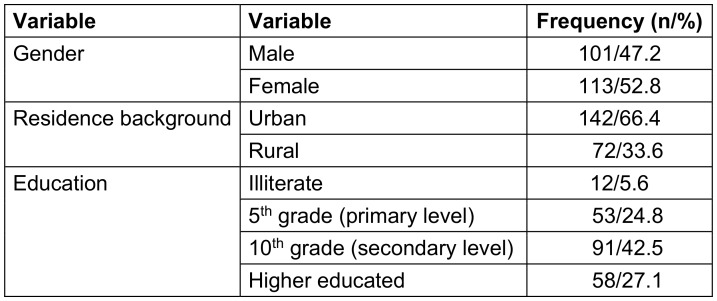 Figure 1
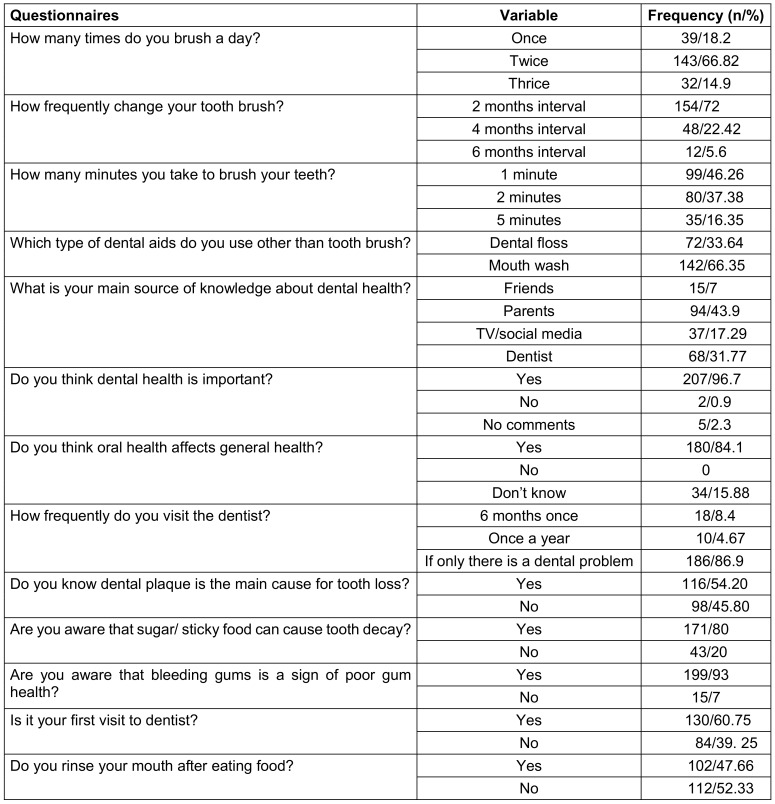 Figure 2
Peer Reviews
No public reviews on file for this paper yet. If you reviewed it on a platform where reviews are public (OpenReview, ICLR, NeurIPS, ICML), you can paste yours below so the community can read it here.
Videos
No videos yet. Explain this paper in a talk, walkthrough, or lecture? Add one.
Taxonomy
TopicsDental Health and Care Utilization · Oral microbiology and periodontitis research · Dental Anxiety and Anesthesia Techniques
Introduction
A person's ability to eat, speaking, and interact with others without illness or discomfort is known as oral health, and it also contributes to overall health [1]. A significant and vital part of overall health is oral health. The relationship between oral disorders and systemic conditions such as diabetes, heart disease, stroke, metabolic syndrome, unfavorable pregnancy outcomes, digestive problems, obesity, etc., is well established [2]. The great frequency of oral disorders and their impact on an individual's quality of life make them a significant public health problem [3]. Additionally, there are oral pathologic situations where the repair and regeneration of oral tissues depend on proper oral hygiene. These ailments include periodontitis, gingivitis, and dental trauma such subluxation, oral cysts, and the aftermath of wisdom tooth extraction [4], [5], [6]. These oral disorders could be caused by a combination of developmental issues, non-compliance, poor oral hygiene, and genetic predispositions [7].
Several variables influence oral hygiene practices and the decision to seek dental care. Patients who get positive reinforcement and education are more likely to adhere to oral health care regimens. One of the causes of noncompliance with oral hygiene procedures is a lack of knowledge. Additionally, attitudes and beliefs about oral health have a big impact on oral health behavior [8]. Both the patient and the dentist must work together to maintain a healthy oral profile. People's attitudes about their teeth are among the most significant determinants of a population's dental health [9].
Oral health affects a person's social, physiological, and physical health. Chronic diseases that negatively affect oral and general health, such as diabetes, obesity, and dental caries, are on the rise in developing countries [10], [11]. Most people have a tendency to ignore oral problems that could worsen and affect their overall health. Due to people's ignorance of this reality, millions of individuals endure unbearable toothaches and a low quality of life [12]. Although there appears to be only a weak correlation between knowledge and behavior in cross-sectional studies, research has indicated that knowledge is associated with improved oral health, thus explaining why oral health knowledge is regarded as a necessary precondition for health-related behavior [13], [14]. So, it is necessary to assess the patients' behavior, attitudes, compliance to oral standard and level of knowledge.
Methods and material
Study area
This study was conducted in Kishoreganj district in April 2025 among random patients visiting or seeking medical advice at various dental care clinics in Kishoreganj, Bangladesh.
Ethical clearance
After receiving formal informed consent from all the patients, all participants were asked orally to answer the questionnaires after receiving explanations on the purpose of the study.
Exclusion criteria
This comprised of participants who were not willing to partake in the survey. Further, Dentists, dental students, dental assistants, and dental nurses were excluded.
Questionnaire
Participants were asked questions in their native tongue and translated into English. The first section of the questionnaire collected demographic data from respondents, including age, sex, gender, and occupation. After that, questionnaire used for collecting information about oral health from the study participants are
- How many times do you brush a day?
- How frequently change your tooth brush?
- How many minutes you take to brush your teeth?
- Which type of dental aids do you use other than toothbrush?
- What is your main source of knowledge of dental health?
- Do you think dental health is important?
- Do you think oral health affects general health?
- How frequently do you visit the dentist?
- Do you know dental plaque is the main cause for tooth loss?
- Are you aware that sugar/sticky food can cause tooth decay?
- Are you aware that bleeding gums is a sign of poor gum health?
- Is it your first visit to dentist?
- Do you rinse your mouth after food consumption?
Data analysis
The information was transferred to Microsoft Excel to summarize and for the analysis of data, SPSS software version 24 was used to statistically evaluate the results in terms of percentage.
Results
Among the 214 participants 47.2% are men and 52.8% are women. 33.6% of households are rural, while 66.4% are urban. Of these, 5.6% are illiterate, 42.5% have completed the tenth grade, 24.8% have completed the fifth, and 27.1% hold a higher degree (Table 1 (Tab. 1)). Their age range is 20 to 65 years.
After conducting the study, it was found that majority of the patients 66.82% brush their teeth two times daily, while 18.2% brushes teeth one time and nearly 15% patients do it three times a day. According to the commentary, about 72% patients change their toothbrush following 2 months of usage and 5.6% patients change it within 6 months. A sufficient number of patients 46.3% told that they brush their teeth for only 1 minute during every brushing. However, 37.4% stated 2 minutes is the ideal time of brushing and only 16.4% claimed it more than two times. On the other hand, 66.4% patients said they use mouthwash as a supplementary dental aid other than toothbrush but it was dental floss according to 33.6% patients. Among the participants 43.9% stated primary information source about dental health is their parents, 31.8% told it was dentist and dental clinic, nearly 17% told about Television and social media and only 7% ascribed their friends as a source of information (Table 2 (Tab. 2)).
Most of the patients 96.7% believe that dental health is essential to lead a quality life and hardly 1% patients were against this belief, with 2.3% didn’t have any comment about it. Majority patients 84.1% know that oral health have influence over general well-being of our life, when, 15.9% participants were not aware of this issue and nobody opposed this issue. By considering frequency of dentist visiting, almost 87% patients said they only visit dentist if there is a dental problem occurs, and rest of the participants said they visit dental expert one or two time per year. While 54.2% patients know dental plaque is the principle cause of tooth loss, 45.8% respondents didn’t know so. It was a remarkable awareness among patients that 80% of them know about bad impact of sweet and sugary food on health that can accelerate dental decay unfortunately, 20% respondents were unaware of it. 93% participants know bleeding gum as a sign of poor gum health and rest few numbers are not. The practice of cleaning mouth and making gurgle after eating food is prevalent among participants by just below 50% but more than fifty percent participants didn’t possess this necessary healthy habit (Table 2 (Tab. 2)).
Discussion
The present study demonstrates that the general perspective on oral health is still ignored, and it finds a correlation between dental awareness and key demographic factors such as education, gender, and socioeconomic background. The awareness of rural and less educated population of Bangladesh is quite average. This inference is corroborated by observations made by Chandu et al. [15]. In the current study, it was found that 66.8% of participants brush twice a day which is closer to the findings by Oberai et al. [16], but significantly larger than 17% reported by Goryawala et al. [17]. Knowledge assessment is crucial for developing such oral health education. When someone is knowledgeable, they have all the information they need to comprehend oral disease, how it develops, and the precautions that should be taken. This information might cause the person to shift their perspective, which might then cause them to alter their day-to-day activities [18], [19].
The changing frequency of toothbrush by participants in the current study represents normal trends of two months which is close to study conducted by Oberai et al. and Casanova-Rosado et al. [16], [20]. Approximately 33% study patients used dental floss to clean their teeth that is lower compared to another study [21]. Even though over 87% of the patients in this sample understood the value of routine dental checkups when tooth issues arise, only 8.4% said they had seen a dentist in the previous six months. According to a research conducted in India, 35.1% of respondents had seen a dentist in the previous 12 months, and 67.8% of respondents understood the value of routine dental checkups. This conclusion is somewhat consistent with those findings [22].
In this survey, only 37.4% of the respondents said they brushed for two minutes. Conversely, 46.3% of them stated that they brush for just one minute. This demonstrates the necessity of raising knowledge of dental health and oral hygiene practices [23]. However, this study gives us information regarding the study participants’ educational background, which is tangentially related to their knowledge and health-related behaviors. The majority of people thought that dental health and general health were associated, according to the current study. Which indicates that, nowadays people at least have more knowledge about their health status compared to past.
Understanding dental hygiene is crucial because it keeps our mouths healthy. The majority of participants in this survey learn from a variety of sources, including the media, friends, and family. While more than half of respondents cited other sources, 43.9% of patients in our study stated that their parents are their main source of information on oral health, suggesting that not all parents actively work to teach their children about oral health. These findings were in line with previous research, which further supports the idea that many parents are not teaching their children about dental health [24], [25]. Just 7% of the patients thought that bleeding gums was a normal aging-related event; they were unaware that it was actually caused by poor gum health. Although 93% of them acknowledged the connection between bleeding gums and poor gum health, the patients did not think it was necessary to see a dentist. This finding is quite different from another study conducted by Ganss et al. [10].
After eating, it’s customary in Bangladeshi culture to rinse your mouth with water. In addition to removing any leftover food particles, it also removes some bacteria and the acids they create from the oral cavity. According to Winner et al. [26], 67% of parents have observed that they force their children to spit and swish with water after each meal [26]. This study showed, just 47.7% of patients practiced mouth washing after meal, which percentage is comparatively low.
A comprehensive strategy that incorporates personal accountability, medical treatment, and public health campaigns is needed to maintain proper dental hygiene and wellness. The cornerstones of personal preventative practices continue to be daily interdental cleaning, using fluoride toothpaste on a regular basis, and using antimicrobial mouth rinses when necessary. The risk of dental caries and periodontal disease can be considerably decreased by eating a balanced diet low in refined sugars and drinking enough water. In order to facilitate the early detection and treatment of oral disorders, it is recommended that regular dental examinations and professional cleanings be promoted. Promoting population-level oral health equity requires public health initiatives like accessible preventative care, school-based oral health education, and community engagement.
Limitations of study
First, a questionnaire was used to gather the data, and it's possible that participants overstated good habits and understated bad ones. Second, one should take into account recollection bias, which most likely arises in connection with previous dental appointments and dietary habits.
Conclusion
The awareness and attitude of the study participants toward their dental health are quite fair but below the required level. Therefore, it is necessary to provide education and motivation on oral health and related difficulties. It is necessary to extend this approach outside the clinics by implementing different outreach initiatives in places that are more difficult for oral health facilities to reach. Furthermore, the media has the power to inform the public and promote routine dental checkups. To sum up, it is our responsibility to inform and motivate this population of individuals who do not have a formal education in order to move closer to creating a healthy environment.
Notes
Authors’ ORCIDs
- Hoque M: https://orcid.org/0009-0001-9044-411X
- Aktaruzzaman M: https://orcid.org/0009-0009-8784-7880
- Nahid Hasan MN: https://orcid.org/0000-0002-6409-3272
Ethical approval
Selected outdoor and ambulatory patients provided informed consent orally, no other permission needed as it is not conducted in a particular institutions and organizations.
Funding
None
Competing interests
The authors declare that they have no competing interests.
The reference list from the paper itself. Each links out to its DOI / PubMed record.
- 1Singh A Gambhir RS Singh S Kapoor V Singh J Oral health: How much do you know? - A study on knowledge, attitude and practices of patients visiting a North Indian dental school Eur J Dent Jan 201481636710.4103/1305-7456.12624424966748 PMC 4054034 · doi ↗ · pubmed ↗
- 2Tavares M Lindefjeld Calabi KA San Martin L Systemic diseases and oral health Dent Clin North Am Oct 201458479781410.1016/j.cden.2014.07.00525201543 · doi ↗ · pubmed ↗
- 3Butt AM Ahmed B Parveen N Yazdanie N Oral health related quality of life in complete dentures Pak Oral Dent J 200929397–402
- 4Zadik Y Algorithm of first-aid management of dental trauma for medics and corpsmen Dent Traumatol Dec 200824669870110.1111/j.1600-9657.2008.00649.x 19021668 · doi ↗ · pubmed ↗
- 5Flores MT Andersson L Andreasen JO Bakland LK Malmgren B Barnett F Bourguignon C Di Angelis A Hicks L Sigurdsson A Trope M Tsukiboshi Mvon Arx T International Association of Dental Traumatology Guidelines for the management of traumatic dental injuries. I. Fractures and luxations of permanent teeth Dent Traumatol Apr 2007232667110.1111/j.1600-9657.2007.00592.x 17367451 · doi ↗ · pubmed ↗
- 6Bautista CRG Milhan NVM Ankha MDVE Ado Prado RF Cavalcante ASR Lopes SLPC Anbinder AL Bilateral mandibular buccal bifurcation cyst: a case report emphasizing the role of imaging examination in the diagnosis Autops Case Rep 11Jun 201992 e 201807310.4322/acr.2018.07331321217 PMC 6561351 · doi ↗ · pubmed ↗
- 7Tash RHO'Shea RM Cohen LK Testing a preventive-symptomatic theory of dental health behavior Am J Public Health Nations Health Mar 196959351452110.2105/ajph.59.3.5145813170 PMC 1226433 · doi ↗ · pubmed ↗
- 8Chander Shekar BR Reddy C Manjunath BC Suma S Dental health awareness, attitude, oral health-related habits, and behaviors in relation to socio-economic factors among the municipal employees of Mysore city Ann Trop Med Public Health 2011499–10610.4103/1755-6783.85761 · doi ↗