Continuous Ammonia Electrosynthesis from Nitrogen and Water in a Monolithic Pd Membrane-Based Flow Cell
Boxi Ye, Craig Burdis, Vladislav Mints, Yuxiang Zhou, Artem Khobnya, Guanglei Chen, Romain Tort, Johannes Rietbrock, Andreas Kafizas, Mary P. Ryan, Maria Magdalena Titirici, Ifan E. L. Stephens

TL;DR
A new method for continuously producing ammonia using electricity, nitrogen, and water with a palladium membrane achieves improved efficiency.
Contribution
A novel flow-cell design using a Pd membrane for proton transport enhances ammonia electrosynthesis efficiency.
Findings
A Faradaic efficiency of 36 ± 4% was achieved at −6 mA cm–2 over 6 hours.
Online mass spectrometry confirmed protons from water oxidation were used in ammonia production.
The Pd membrane enabled continuous operation in a nonaqueous system.
Abstract
Continuous electrochemical lithium-mediated ammonia production has shown promising performance. For this reaction, water oxidation could provide a direct route for proton supply, eliminating the need to generate molecular hydrogen. However, recent studies have reported low Faradaic efficiency for ammonia when water is used directly as the proton source. In this work, we integrate an electrically isolated Pd membrane to transfer protons generated from water oxidation into a nonaqueous lithium-mediated nitrogen reduction system. By employing Pd as a proton- and electron-conducting membrane rather than solely as a cathode, we enabled continuous operation in a flow-cell configuration, achieving a Faradaic efficiency of 36 ± 4% at a current density of −6 mA cm–2 over 6 h. Online mass spectrometry confirmed that the produced ammonia contained protons generated by water oxidation. This…
Genes, proteins, chemicals, diseases, species, mutations and cell lines named across the full text — each resolved to its canonical identifier and authoritative record.
Click any figure to enlarge with its caption.
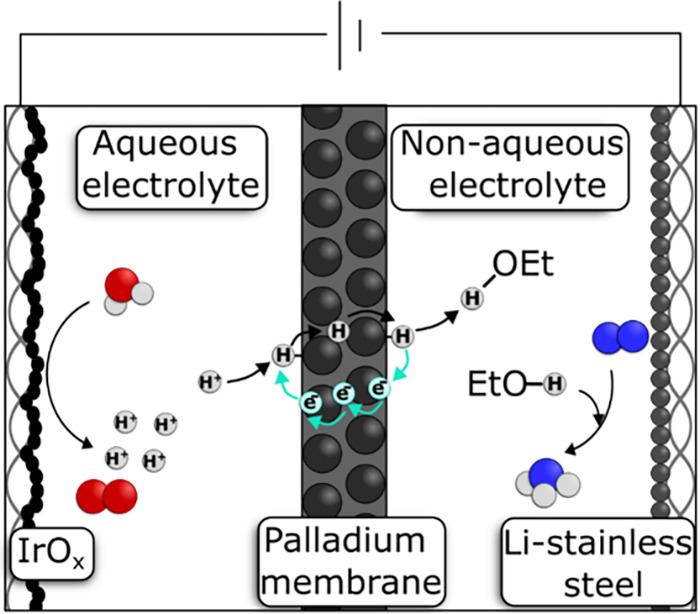 Figure 1
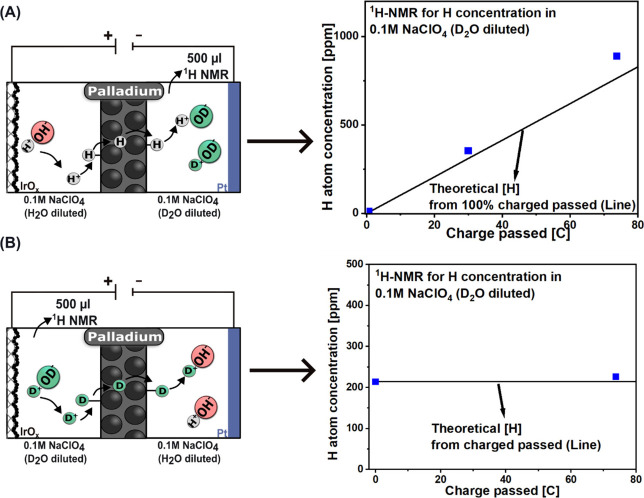 Figure 2
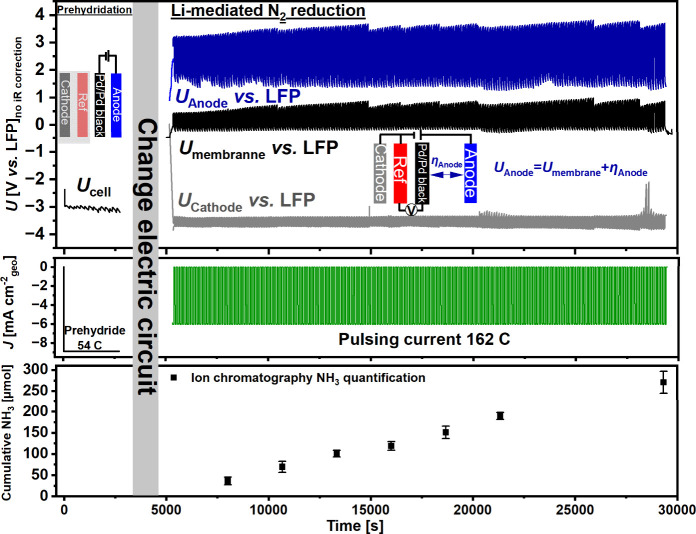 Figure 3
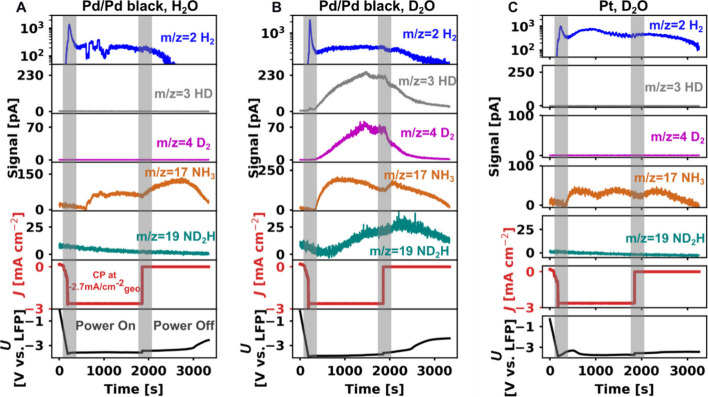 Figure 4
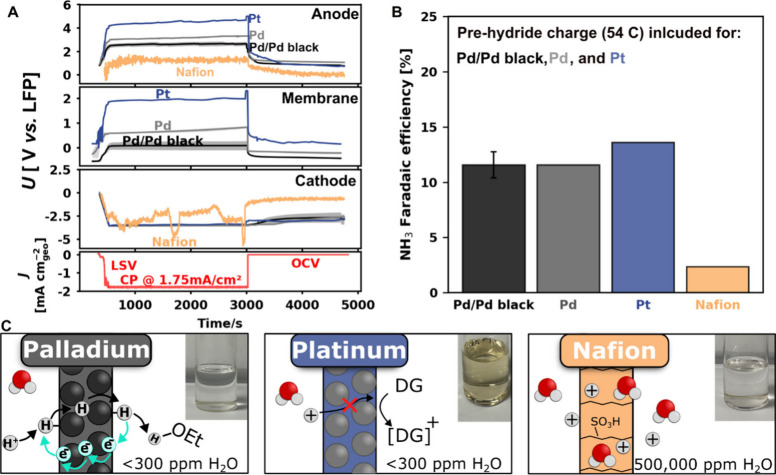 Figure 5
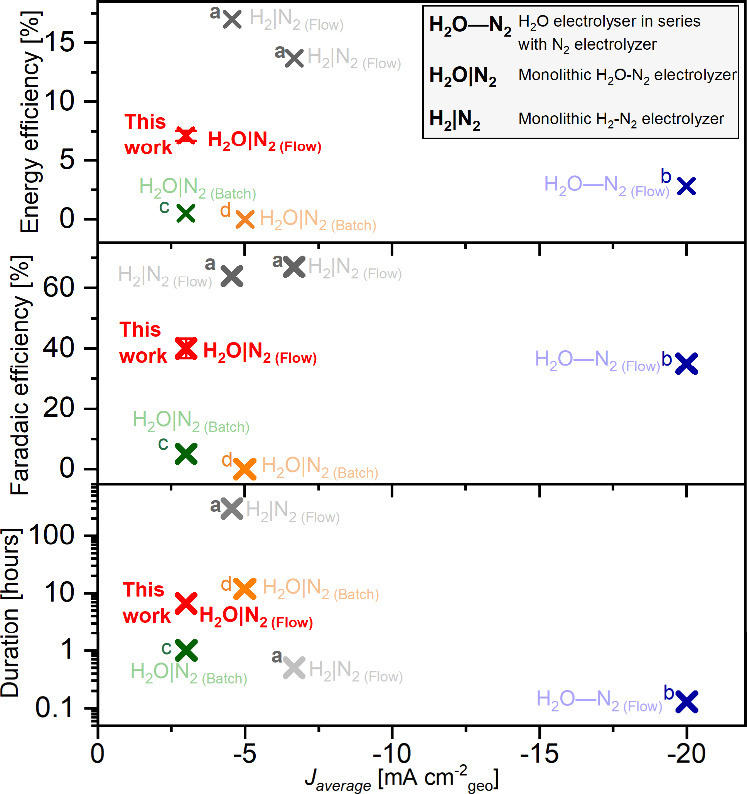 Figure 6
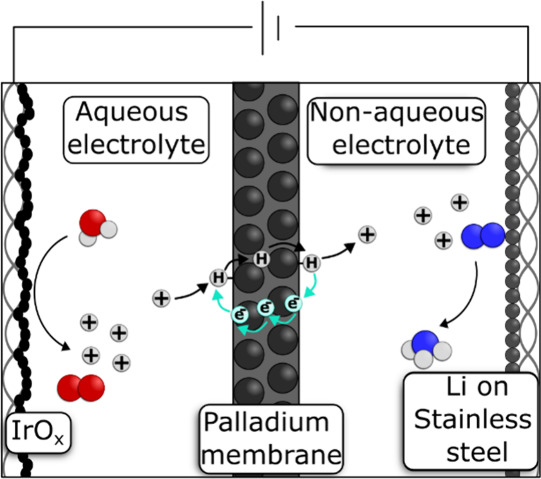 Figure 7
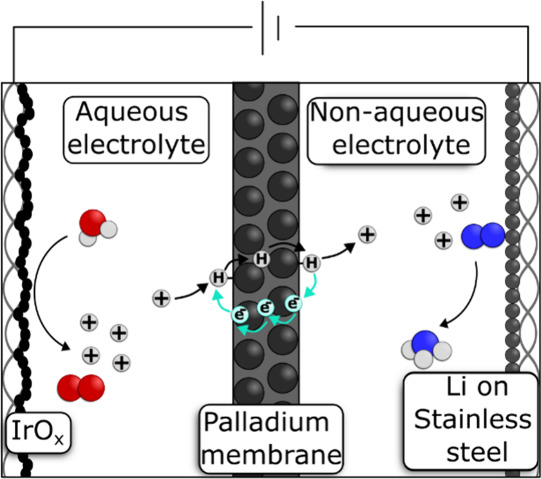 Figure 8
 Figure 9
- —H2020 European Research Council10.13039/100010663
- —Engineering and Physical Sciences Research Council10.13039/501100000266
- —Engineering and Physical Sciences Research Council10.13039/501100000266
- —Engineering and Physical Sciences Research Council10.13039/501100000266
- —Royal Academy of Engineering10.13039/501100000287
- —Imperial College London10.13039/501100000761
- —Schweizerischer Nationalfonds zur F?rderung der Wissenschaftlichen Forschung10.13039/501100001711
- —International Centre for Advanced Materials10.13039/501100024887
Peer Reviews
No public reviews on file for this paper yet. If you reviewed it on a platform where reviews are public (OpenReview, ICLR, NeurIPS, ICML), you can paste yours below so the community can read it here.
Videos
No videos yet. Explain this paper in a talk, walkthrough, or lecture? Add one.
Taxonomy
TopicsAmmonia Synthesis and Nitrogen Reduction · CO2 Reduction Techniques and Catalysts · Membrane-based Ion Separation Techniques
Ammonia (NH_3_), a crucial feedstock for fertilizer production and a potential renewable carbon-free energy carrier, is primarily produced using fossil fuels. ?−? ? Today, 96% of NH_3_ is synthesized via the Haber–Bosch process, which operates at high temperatures and pressures.? Molecular hydrogen (H_2_) is required and is typically derived from natural gas via steam methane reforming, an energy-intensive process.? As a result, the Haber–Bosch process accounts for around 1.3% of global CO_2_ emissions. ?,? The high temperatures and pressures required by Haber-Bosch plants necessitate large-scale, capital-intensive facilities concentrated in specific geographical regions.? More than two-thirds of the countries without local Haber-Bosch plants are vulnerable to NH_3_ supply chain shocks. ?,? Alternative electrochemical routes to ammonia have consequently been explored as more sustainable and decentralized solutions. ?−? ? ?
Lithium and, more recently, Ca-mediated nitrogen reduction (Li-mediated N_2_ reduction) are the only paradigms irrefutably proven to reduce N_2_ to NH_3_ at a solid electrode. ?,?−? ? ? ? Various cell designs have been employed, such as batch, ?,? membrane electrode assembly,? and flow cells. ?,? In continuous-flow cells, Faradaic efficiencies of up to 76% and operations for hundreds of hours have been demonstrated when anodic H_2_ oxidation supplies protons to the Li-mediated cathode. ?−? ? This outstanding performance has attracted industrial interest in on-site fertilizer production. ?,? However, such stability requires a dried and purified H_2_ source. ?,?,? Green H_2_ supplied from a water electrolyzer would be ideal for industrial deployment.?
Attempts to substitute bottled H_2_ with a water electrolyzer have so far achieved 30% Faradaic efficiency in short-duration tests (8 min) from Lazouski et al.’s work, where residual water contamination at the H_2_ outlet was found to be problematic for NH_3_ production.? Excess water contamination can be a serious issue in Li-mediated N_2_ reduction, inhibiting NH_3_ production. ?,?
The primary problem is that the excessive formation of Lithium hydroxide (LiOH), as described in eq.? In our previous paper, we demonstrated that even modest water levels (∼650 ppm) result in the accumulation of insoluble LiOH in tetrahydrofuran (THF), which blocks Li^+^ transport and ultimately suppresses N_2_ reduction over time.? These studies highlight the importance of maintaining a dry, nonaqueous environment. While additional drying of the H_2_ outlet might mitigate this issue, in principle, the entire water electrolyzer could be eliminated if protons generated by water oxidation were delivered directly to the Li-mediated cathode, thereby further simplifying the system and reducing capital costs. ?−? ?
Coupling aqueous water oxidation and nonaqueous Li-mediated N_2_ reduction in a single cell (monolithic) is essential for eliminating the need for an external water electrolyzer. Ripepi et al. previously developed a Ni-based electrocatalytic membrane reactor that transported electrochemically generated atomic hydrogen through the metal lattice to hydrogenate adsorbed nitrogen under ambient conditions, achieving a Faradaic efficiency of 0.003% due to limited surface gas phase nitrogen coverage and H_2_ recombination.?
Fink et al. demonstrated that a high-surface-area electrodeposited Pd black on a Pd membrane (Pd/Pd black) reactor can couple aqueous water oxidation with catalytic hydrogenation reactions in a nonaqueous environment that enabled electrochemical hydrogenation of anthraquinones to anthrahydroquinones for indirect H_2_O_2_ synthesis at current densities of up to 100 mA cm^–2^, highlighting the potential of Pd membranes to bridge aqueous and nonaqueous chemistries.? Building on this concept, Bemana et al. recently demonstrated the coupling of water oxidation and nonaqueous N_2_ reduction through a hydrogen-permeable Pd membrane via a dual-compartment batch cell. They employed a Pd membrane sandwiched between an aqueous 1 M H_2_SO_4_ electrolyte with an O_2_-evolving Pt counter electrode, and a nonaqueous compartment with 1 M LiBF_4_ in tetrahydrofuran with a 0.5 vol % ethanol electrolyte with a Pt counter electrode, presumably where the organic electrolyte gets oxidized sacrificially.? The Pd served as the cathode on both sides; protons from the aqueous side permeated through the metal lattice to the nonaqueous compartment, where it participated in Li-mediated N_2_ reduction on the Pd surface under ambient conditions, achieving a Faradaic efficiency of 5%. ?,? Together, these studies demonstrate the protonation ability of hydrogen-permeable metal membranes when used as cathodes. ?,?,? Furthermore, Han et al. showed that Pd can abstract formed during formaldehyde oxidation: the resulting hydride diffuses through the Pd membrane to the opposite side, where it conducts chemical hydrogenation reactions.? However, none of these prior works report a single Pd being used both as anode and cathode simultaneously.
In this work, we demonstrate that by taking advantage of the electronic conductivity of Pd, we can use it as both an anode and a cathode simultaneously, despite being electrically isolated, in a monolithic flow cell for electrochemical N_2_ reduction, enabling continuous conversion of N_2_ and H_2_O to NH_3_ without producing molecular H_2_ as an intermediate (Figure). Importantly, we use operando mass spectrometry and isotopic labeling to confirm that the protons in the NH_3_ produced originate from the oxidation of water.
Li-mediated N_2_ reduction coupled with water oxidation was studied in a custom two-compartment continuous-flow cell (Figure S1). The nonaqueous compartment design was adapted from Fu et al.’s work; the compartment hosted the nonaqueous electrolyte and the gas-diffusion cathode for N_2_ reduction,? while the other compartment contained the aqueous electrolyte to sustain water oxidation. The two compartments were separated by a Pd membrane that selectively transports protons generated during water oxidation while preventing crossover of water, oxygen, and solvated ions. This prevents contamination of the nonaqueous environment, preserving the dry conditions required for Li-mediated N_2_ reduction. ?,? A Pd/Pd black membrane, following Fink et al.’s recent work, was used in most of our experiments, as we found it exhibited lower potential losses than bare Pd (see SI for details).?
Prehydridation – to preload the membrane with hydrogen atoms – was found to improve Li-mediated N_2_ reduction with Pd membranes (see Figure S2 for the electric circuit connection). Without this step, black precipitates were formed in the nonaqueous electrolyte during the N_2_ reduction reaction, and the cell losses were far more substantial (Figures S3A and S4). The requirement for “pre-hydridation” likely stems from the absence of hydrogen in the Pd lattice at the start and the slow hydrogen permeation kinetics,? leading to increased cell voltage and excessive solvent oxidation (Figure S4). This behavior may reflect findings by Atlan et al., who showed that electrochemically driven hydrogen absorption expands the Pd lattice and alters its phase structure, potentially benefiting membrane performance.? Consequently, unless otherwise stated, all the Pd membranes used in this study were “pre-hydrided”. To maintain a fair comparison with other reported Li-mediated N_2_ reduction systems, we included the charge during the “pre-hydridation” when calculating the Faradaic efficiency toward NH_3_ and energy efficiency for the entire reaction.
To directly verify that the Pd membrane without pretreatment conducts protons, we first performed a controlled proton-transfer experiment in the two-compartment symmetric cell with electrodes geometric surface areas of 2.25 cm^2^ (Figure S2). A two-electrode configuration was used, with IrOx/Ti mesh as the anode and Pt foil as the cathode, separated by a Pd membrane. In the first experiment (FigureA), the anolyte contained H_2_O-diluted 0.1 M NaClO_4_, while the catholyte contained D_2_O-diluted 0.1 M NaClO_4_. As charge was passed, the ^1^H NMR signal in the D_2_O chamber increased proportionally with the total charge (30 and 73.2 C), closely matching the theoretical maximum assuming 100% proton transfer (See SI for data processing). This linear relationship confirms that protons generated from water oxidation at the anode successfully permeated through Pd and protonated the D_2_O catholyte. The slightly higher measured H concentration compared to the theoretical maximum is attributed to minor artifacts such as residual protonated species from air exposure, which increase the apparent H content. In the second experiment (FigureB), the water distributions were reversed (anolyte = H_2_O; catholyte = D_2_O), and only D^+^ permeates through the membrane. Under these conditions, the ^1^H NMR signal in the D_2_O chamber remained almost constant after 73.2 C of charge was passed, demonstrating negligible H_2_O crossover through Pd. Together, these results provide direct spectroscopic evidence that the Pd membrane selectively transports protons, while effectively suppressing bulk water transfer.
Monolithic N_2_ reduction coupled with water oxidation was carried out first using prehydrided Pd/Pd black as the membrane under the same pulsing current density strategy of −6 mA cm^–2^ geo reported by Fu et al. (see Figure and Figure S5A for iR corrected cell voltage). ?,? For the prehydridation, the Pd/Pd black membrane was connected as the cathode first with only the flow of aqueous electrolyte. Then, 54 C of charge was passed during prehydridation (Figure). In our 162 C Li-mediated N_2_ reduction experiment, we produced 270 ± 26 μmol of NH_3_ (Faradaic efficiency = 36 ± 4% (prehydridation charge included) and Faradaic efficiency = 48 ± 5% (without prehydridation charge)) under ambient conditions. The consequence of including the prehydridation charge is that the Faradaic efficiency appears artificially lower at early stages because the fixed 54 C contributes disproportionately to the total charge (See further details in the SI and Figure S6). A conservative upper-bound calculation shows that, even if all EtOH added to the catholyte were fully converted into NH_3_, it could supply at most 210 μmol. What’s more, the ^1^H NMR experiment in Figure proved that the Pd membrane conducts protons. Taken together, these results indicate that ethanol is not the dominant proton donor and that a substantial fraction of the protons incorporated into NH_3_ originates from other proton sources, presumably through the Pd-transported protons.
During N_2_ reduction, stainless steel (cathode), LFP (reference), and IrO_ x _ (anode) were connected to the potentiostat (Figure). Besides, only a voltmeter was connected between the reference and the Pd/Pd black. Therefore, no current was flowing into the Pd/Pd black membrane from the external circuit. During Li-mediated N_2_ reduction, the cell voltage (∼7 V) is attributed to the sum of U cathode for Li plating (−3.8 V), U membrane for proton transfer (+0.5 V), η_anode_, the overpotential for anodic water oxidation (+1.8 V), ?,? and iR drop of 1 V. Notably, for the N_2_ reduction electric circuit configuration, the U anode measured by the potentiostat would be the sum of the potential drop between the reference and the membrane and the potential difference between the membrane and the anode: U anode = U membrane + η_anode_. Therefore, from Figure, the anode potential (U anode, +0.4 V from 5000 to 29000 s) rose gradually, which could be attributed to the increase in the membrane potential (U membrane, +0.4 V from 5000 to 29000 s). The rise in U membrane may reflect the gradual deactivation of Pd/Pd black surface sites, potentially due to (i) a limited proton supply from the unoptimized aqueous 0.1 M NaClO_4_ compartment, or depletion of adsorbed H atom into H_2_ gas;? (ii) adsorption of organic species in the nonaqueous compartment, blocking sites for H adsorption;? or (iii) Pd surface dissolution.? Our benchtop XRD did not verify the peak shift of the membrane after the experiment (see Figure S7). Therefore, these degradation mechanisms will be investigated further in future work by using other characterization techniques. ?−? ?
The U membrane reached a maximum of +0.9 V vs lithium iron phosphate (LFP), below the potential at which Mygind et al. reported the onset of diglyme oxidation, +1 V vs LFP.? However, the nonaqueous electrolyte became cloudy after 29000 s (Figure S3B). We hypothesize that the cloudiness arose from the formation of a thick solid–electrolyte interphase (SEI) (Figure S3C), flushed into the flowing electrolyte by our unoptimized pulsing strategy. We conjecture that imposing longer duration rest potentials should prevent the buildup of excessive Li and SEI layers. ?,?
Solvent oxidation may also occur under reaction conditions. However, we did not observe any distinct peaks in ^1^H NMR. Nonetheless, we acknowledge that most oxidation products could overlap with the chemical shift of diglyme (see Figure S8).? Therefore, complementary studies using mass spectrometry and various membranes were conducted to elucidate the mechanism further and confirm the proton source. Furthermore, we predict that the membrane potential would continue to ramp up with longer-duration measurements (more than 162 C), leading to eventual solvent or membrane degradation. Therefore, to protect the Pd membrane, each experiment was limited to the duration required for the membrane potential to reach +1 V vs LFP. Before every Li-mediated N_2_-reduction experiment, the Pd membrane was first hydrided to ensure a well-defined initial state, and after each experiment, it was cleaned with 1 M HNO_3_ to remove surface impurities.?
To investigate the proton source for the Li-mediated N_2_ reduction reaction, we connected the flow cell to a commercial, chip-based online mass spectrometer (see the SI for detailed settings and Figure S9).? We examined the gas products of the Li-mediated N_2_ reduction, which primarily consist of NH_3_ and H_2_ (see all other measured signals in Figure S10).? In this set of experiments, the Pd/Pd black membrane was compared with a Pt membrane (both prehydrided). All the MS signals were exported as raw data without any calibration. Therefore, we have only performed a qualitative analysis of the trends. A moderate current density of (−2.7 mA cm^–2^) was used for mass spectrometry experiments to allow a significant signal to rise while avoiding extreme solvent degradation with a Pt membrane. Krempl et al. had found that solvent degradation could lead to electrolyte acidification and trap more gas-phase ammonia as ammonium, which may affect signal intensity in our mass spectrometer.?
For Pd/Pd black, when H_2_O was being used as a solvent in the anode chamber (FigureA), an increase for the m/z = 2 and m/z = 17 signals confirmed the detection of H_2_ and NH_3_, respectively. For H_2_ (m/z = 2), the signal first spiked during the initial LSV, likely owing to the reduction of ethanol, which is reported to happen 1.5 V positive of lithium plating.? The m/z = 2 signal fluctuation was due to manual adjustments to the N_2_ gas flow rate, which was sometimes caused by flooding of the gas diffusion electrode, affecting the detected gas concentration. The signal for NH_3_ (m/z = 17) was slightly delayed due to the formation of the solid electrolyte interphase and the tendency of NH_3_ to adsorb onto the MS inlet tubing.? While all the measured signals began to drop when the current was switched off after 1800 s, the signal for NH_3_ (m/z = 17) continued to increase without any external current supply until 2700 s. This observation aligns well with the findings reported by Krempl et al., who observed a similar trend and proposed that the continued formation of NH_3_ could result from either N_2_ reduction mediated by electronically isolated ’dead lithium’ or from the chemical decomposition of accumulated LiN_ x H y _ intermediate species on the electrode surface.?
To probe the source of the protons in the produced NH_3_ for the Pd/Pd black membrane, H_2_O was replaced with D_2_O. Signals for deuterated NH_3_ and H_2_ indicate that protons from anodic water oxidation were transported and utilized in the cathode compartment, as shown in FigureB. Initially, H_2_ (m/z = 2) and NH_3_ (m/z = 17) were detected. As more charge passed, the signals for m/z = 3 and m/z = 4 increased, indicating the evolution of HD and D_2_. Initially, NH_3_ was produced with protons, rather than deuterons, because the nonaqueous catholyte (1 M LiBF_4_ in diglyme with 0.3 vol % ethanol) contained a proton source from the ethanol. As the reaction proceeded, deuterium was transported through the Pd membrane, enabling the formation of HD, D_2_, and ND_2_H. The delayed appearance of the deuterated species could be attributed to the time required for the depletion of the electrolyte’s initial H content and replenishment with D.? The same trend of increased ND_2_H (m/z = 19) after current termination further suggests that the species was likely to be deuterated NH_3_. We could also expect to detect other deuterated NH_3_ species, such as NDH_2_ and ND_3_ (m/z = 18 and 20). However, our system could not distinguish them. NDH_2_ (m/z = 18) overlaps with the H_2_O signal, which also has a m/z = 18. Since our MS was not in an inert atmosphere, it inevitably collected background moisture. We expect that extending the electrolysis duration could lead to the emergence of an ND_3_ signal (m/z = 20), as the current system likely retains a significant number of residual protons, which limits the formation of fully deuterated NH_3_.
For comparison, the Pt membrane was also tested using D_2_O as a deuteron source, as shown in FigureC. It was confirmed that only H_2_ (m/z = 2) and NH_3_ (m/z = 17) were produced, indicating that negligible deuterons were transported through the Pt membrane. The signals further confirm that all the NH_3_ produced originates from the proton source in the nonaqueous compartment, rather than from water.
Different membranes exhibit distinct behaviors. We tested bare Pd and Pd/Pd black to investigate how hydrogen availability on the membrane surface in the nonaqueous compartment influences the membrane potential. For further comparison, prehydrided Pt and bare Nafion were included due to Pt’s negligible atomic hydrogen permeability and Nafion’s water permeability, enabling us to study distinct reaction mechanisms for each membrane. ?,? For consistent comparison, all the membranes were tested under identical electrochemical conditions, as shown in the bottom panel of FigureA. The anode, membrane, and cathode potentials vs LFP were continuously monitored throughout both the LSV and the subsequent constant current step, during which 10 C of charge was passed for NH_3_ production. The current density (−1.75 mA cm^–2^ geo) was selected to minimize the side effect of solvent oxidation.? Notably, differences in anode potential among the membranes mirror the differences in membrane potentials, indicating stable IrO_ x _ anode performance (see Figure S5B for different membranes’ cell voltages).
The Nafion membrane potential could not be measured as it is not electrically conducting. For the cathode potential, the other membranes exhibited a stable potential consistent with lithium plating (at approximately −3.4 V vs LFP),? whereas the Nafion case showed a highly noisy profile and failed to maintain this potential, FigureA. This behavior is likely caused by the extremely high water content in the electrolyte (∼400000 ppm after the experiment), which promotes side reactions and prevents lithium plating (FigureC). As expected, negligible NH_3_ was detected when using Nafion, with a Faradaic efficiency of 1.2% (FigureB). ?,?
At a constant current, Pt operates at a significantly higher membrane potential and remains stable at approximately +2 V vs LFP (considerably higher than the 1 V vs LFP attributed to diglyme oxidation reported by Mygind et al.)? throughout the electrolysis, FigureA. This suggests that the Pt membrane is oxidizing the electrolyte throughout the whole experiment, even though the Faradaic efficiency toward NH_3_ was 15% (Shown in FigureB). ?,?,? The yellow color of the electrolyte observed after passing 10 C of charge (FigureC) provides visual evidence of solvent degradation. Although the color of degraded diglyme is not well reported,? a similar phenomenon was observed by Fu et al., who reported substantial solvent degradation during their flow cell experiments in the absence of hydrogen, attributing it to THF decomposition at an anode potential of +1.7 V vs Pt.? Likewise, Du et al. showed that under high-pressure N_2_ (15 bar), anodic oxidation of THF produces reactive intermediates that irreversibly react with alcohol proton carriers.?
The Pd/Pd black exhibited a lower membrane potential (0 V vs LFP) than the bare Pd membrane (+0.6 V vs LFP), due to its increased surface area, which provides more active sites for hydrogen adsorption.? Furthermore, the visually unchanged electrolyte further suggested that the reaction on both Pd membranes involved proton release rather than electrolyte oxidation. However, because approximately 65% of the charge for these experiments was directed toward the initial “pre-hydridation” process, all the membranes exhibited a low Faradaic efficiency of less than 20% (see SI for the effect of prehydridation charge on Faradaic efficiency over time and SI, Table 2 for summarized Faradaic efficiency without prehydridation charge).
Comparison among reported studies. Figure compares all Li-mediated and membrane-mediated N_2_ reduction systems discussed previously in terms of energy efficiency (%), Faradaic efficiency (%), duration (hours), and average current density (J average, mA cm^–2^ geo) (accounting for different pulsing strategies applied). ?,?,? So far, Li-mediated N_2_ reduction systems supplied with pure H_2_ have demonstrated the best overall performance, achieving high Faradaic efficiency, energy efficiency, and stability.? In contrast, membrane-based ammonia synthesis, in which the proton source is water directly, has only recently emerged as a new direction and remains at an early stage of development.? Nevertheless, by eliminating water crossover, our system achieves greater stability than a water electrolyzer connected in series with the Li-mediated N_2_ reduction cell.? Employing Pd as a cathode in the batch cell enabled a monolithic device for combined water oxidation and N_2_ reduction.? We found that Pd can also function as an anode, enabling continuous operation in our monolithic flow cell and achieving a Faradaic efficiency of 36 ± 4%. With further optimization of the membrane and electrolyte, we foresee that this system could match or even surpass the performance of the conventional pure H_2_-fed Li-mediated setup.?
This work establishes an electrically isolated hydrogen-permeable membrane (Pd) in facilitating NH_3_ production in a flow-cell device under ambient conditions. The observed requirement for membrane prehydridation and the gradual increase in membrane potential during pulsed operation indicate that hydrogen-transfer kinetics and membrane stability are key factors limiting performance. In our system, the neutral aqueous electrolyte is optimized for D_2_O isotopic labeling rather than to minimize potential losses; however, a more acidic medium, such as 1 M H_2_SO_4_, which has shown nearly complete proton permeation across Pd membranes in related systems,? will yield more energy-efficient operation. Further improvements could involve employing alternative hydrogen-permeable metals and alloys, which may enhance permeability and durability and reduce costs. ?−? ? In addition, advanced characterization techniques, such as synchrotron X-ray diffraction (synchrotron XRD),? scanning electron microscopy (SEM),? and atom probe tomography (APT),? could be used to elucidate structural evolution, hydrogen distribution, and membrane degradation pathways in greater detail. The membrane configuration we report here will likely have applications beyond NH_3_ synthesis, in other electrochemical transformations that require anhydrous environments yet rely on controlled proton delivery, such as CO_2_ reduction and nonaqueous redox-flow batteries. ?,?
Supplementary Material
The reference list from the paper itself. Each links out to its DOI / PubMed record.
- 1Mingolla S.Rosa L.Low-carbon ammonia production is essential for resilient and sustainable agriculture Nat. Food 2025661062110.1038/s 43016-025-01125-y 39962210 PMC 12185339 · doi ↗ · pubmed ↗
- 2Valera-Medina A.Amer-Hatem F.Azad A. K.Dedoussi I. C.de Joannon M.Fernandes R. X.Glarborg P.Hashemi H.He X.Mashruk S.Review on Ammonia as a Potential Fuel: From Synthesis to Economics Energy Fuels 20213596964702910.1021/acs.energyfuels.0c 03685 · doi ↗
- 3Wen Z.Huang B.Wang Y.Wang K.Tu X.Xie P.Fu X.Ammonia as a renewable energy carrier from synthesis to utilization Nat. Rev. Clean Technol.2025175577010.1038/s 44359-025-00102-9 · doi ↗
- 4Smith C.Hill A. K.Torrente-Murciano L.Current and future role of Haber–Bosch ammonia in a carbon-free energy landscape Energy Environ. Sci.202013233134410.1039/C 9EE 02873 K · doi ↗
- 5Survey, U. G. Mineral commodity summaries 2020; U.S. Geological Survey, 2020; p 200.
- 6Suryanto B. H. R.Kang C. S. M.Wang D.Xiao C.Zhou F.Azofra L. M.Cavallo L.Zhang X.Mac Farlane D. R.Rational Electrode–Electrolyte Design for Efficient Ammonia Electrosynthesis under Ambient Conditions ACS Energy Letters 2018361219122410.1021/acsenergylett.8b 00487 · doi ↗
- 7Mac Farlane D. R.Cherepanov P. V.Choi J.Suryanto B. H. R.Hodgetts R. Y.Bakker J. M.Ferrero Vallana F. M.Simonov A. N.A Roadmap to the Ammonia Economy Joule 2020461186120510.1016/j.joule.2020.04.004 · doi ↗
- 8Hattori M.Okuyama N.Kurosawa H.Hara M.Low-Temperature Ammonia Synthesis on Iron Catalyst with an Electron Donor J. Am. Chem. Soc.2023145147888789710.1021/jacs.2c 1301536996317 PMC 10103163 · doi ↗ · pubmed ↗