Homoeriodictyol, targeting the bitter taste receptor TAS2R14, lowers the secretion of pro-inflammatory chemokines upon treatment with SARS-CoV-2 peptide pools in human peripheral blood mononuclear cells
Barbara Danzer, Gaby Andersen, Kristin Kahlenberg, Veronika Somoza

TL;DR
This study shows that homoeriodictyol reduces pro-inflammatory chemokine secretion in immune cells by targeting the TAS2R14 receptor, suggesting a new approach to managing severe COVID-19.
Contribution
The novel finding is that TAS2R14 modulates chemokine responses to SARS-CoV-2 peptides, offering a new anti-inflammatory target.
Findings
Homoeriodictyol reduced CXCL9, CCL7, and CCL2 secretion by 80%, 96%, and 95% when combined with SARS-CoV-2 peptides.
TAS2R14 knock-down increased chemokine release by 29-34% after peptide treatment.
TAS2Rs on PBMCs are functionally active in the immune response to SARS-CoV-2 peptides.
Abstract
Excessive cytokine production is a major complication in severe COVID-19. Treatment with antiviral drugs often elicits a bitter taste through activation of bitter taste receptors (TAS2Rs). Since ectopically expressed TAS2Rs can alter cytokine secretion, we hypothesized that homoeriodictyol (HED), a broad TAS2R ligand, modulates the cytokine response to SARS-CoV-2 peptide pools (PP) in human peripheral blood mononuclear cells (PBMCs). Treatment of PBMCs isolated from healthy donors with PP for 24 h induced the mRNA expression of CXCL9, CCL7, and CCL2, the most of 116 cytokines tested. Protein release of these chemokines was quantified by ELISA after PP treatment for 3, 6, 12, 24, and 48 h. The results identified 24 h as the optimal incubation time to distinguish PP-induced chemokine release among PBMCs, T–cells, and T–cell–depleted PBMCs. PBMCs demonstrated the highest mean fold changes…
Genes, proteins, chemicals, diseases, species, mutations and cell lines named across the full text — each resolved to its canonical identifier and authoritative record.
Click any figure to enlarge with its caption.
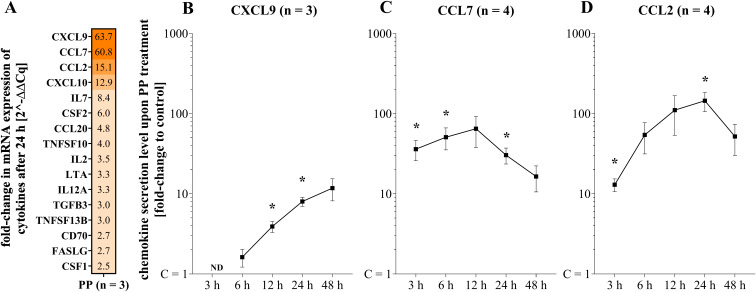 Figure 1
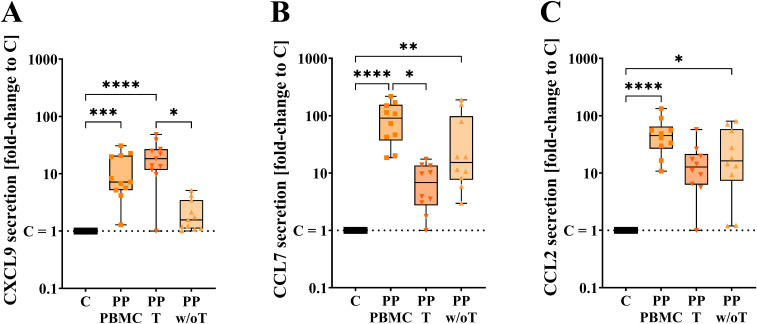 Figure 2
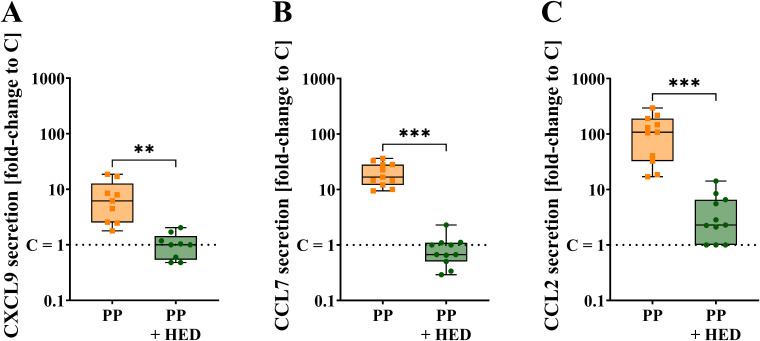 Figure 3
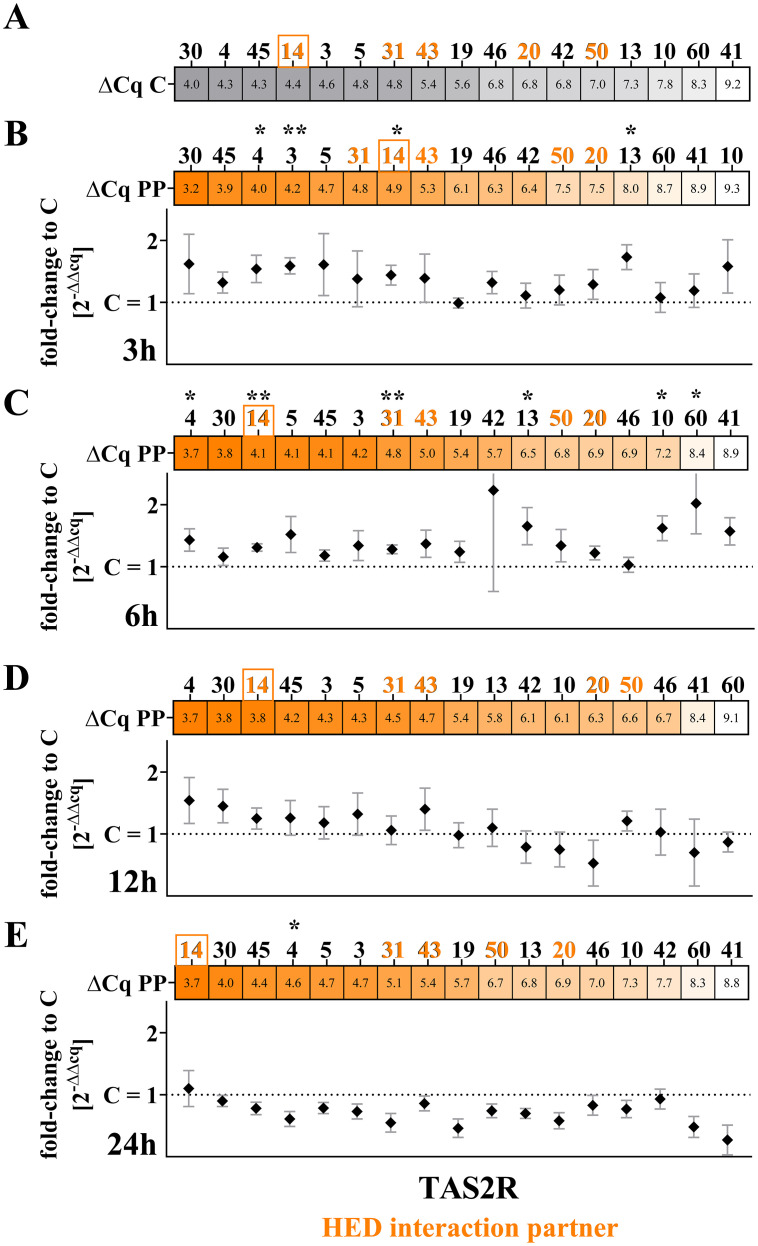 Figure 4
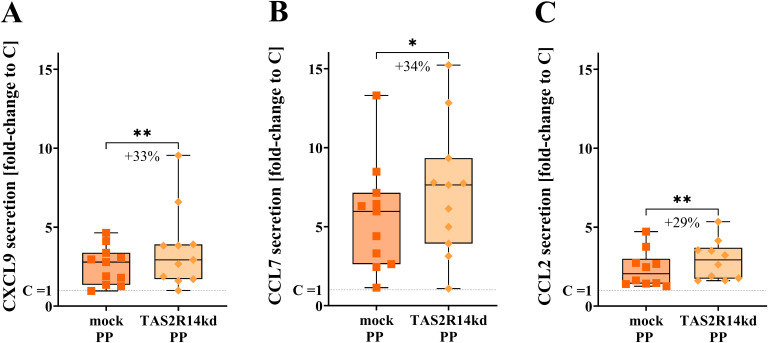 Figure 5
Peer Reviews
No public reviews on file for this paper yet. If you reviewed it on a platform where reviews are public (OpenReview, ICLR, NeurIPS, ICML), you can paste yours below so the community can read it here.
Videos
No videos yet. Explain this paper in a talk, walkthrough, or lecture? Add one.
Taxonomy
TopicsBiochemical Analysis and Sensing Techniques · Advanced Chemical Sensor Technologies · Olfactory and Sensory Function Studies