Integrative bulk and single-cell transcriptomics link EZH2 to immunosuppressive programs and tumor–Treg crosstalk in castration-resistant prostate cancer
Xing Xiong, Jianhu Xie, Ping Dai, Chao Cheng, Jiani Liu, Guixiao Huang

TL;DR
This study shows that high EZH2 levels in prostate cancer are linked to poor outcomes and immune suppression, especially involving Tregs, and that inhibiting EZH2 can alter immune-related genes.
Contribution
The study integrates bulk and single-cell transcriptomics to reveal EZH2's role in immunosuppressive programs and tumor–Treg communication in CRPC.
Findings
Higher EZH2 expression correlates with worse clinical outcomes and increased immunosuppressive signatures in CRPC.
EZH2^high malignant cells show a proliferative state with reduced immune-related gene expression.
Tazemetostat, an EZH2 inhibitor, upregulates immune-related genes like TIMP3, PLCG2, and SOCS3 in CRPC cells.
Abstract
Enhancer of zeste homolog 2 (EZH2) is frequently upregulated in prostate cancer (PCa) and further increased in castration-resistant prostate cancer (CRPC), a lethal state characterized by profound immune dysfunction. However, EZH2-associated immune programs in bulk cohorts and their corresponding cell-type–specific features in single-cell RNA sequencing (scRNA-seq) data have not been systematically delineated in advanced PCa. We integrated bulk RNA-seq and scRNA-seq to map EZH2-associated transcriptional and immune features in PCa. In bulk cohorts (TCGA-PRAD and an independent metastatic CRPC cohort), we quantified EZH2 expression, clinical outcomes, and immune-signature enrichment. Immune-modulated differentially expressed genes (IMDEGs) were defined by intersecting EZH2-associated differential expression with correlations to Treg/TAM-related signature scores, and were used for…
Genes, proteins, chemicals, diseases, species, mutations and cell lines named across the full text — each resolved to its canonical identifier and authoritative record.
Click any figure to enlarge with its caption.
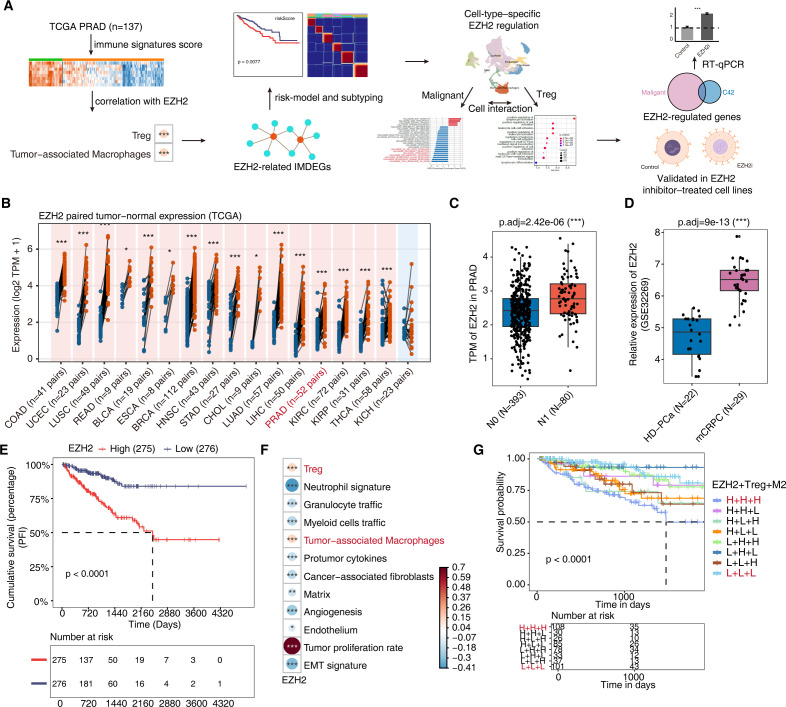 Figure 1
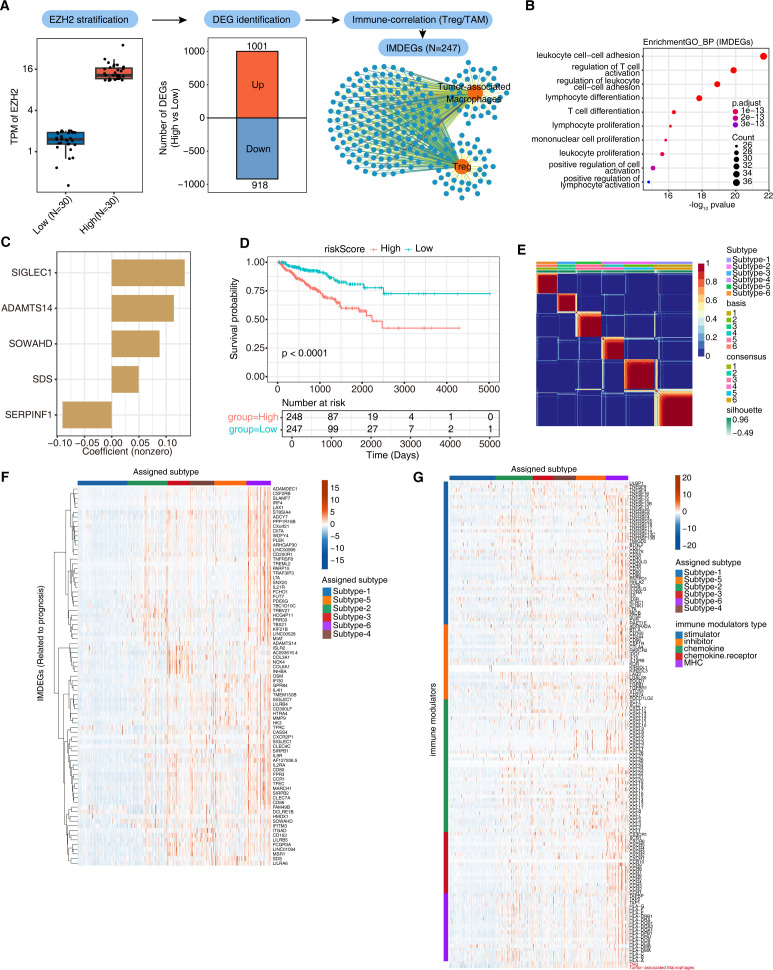 Figure 2
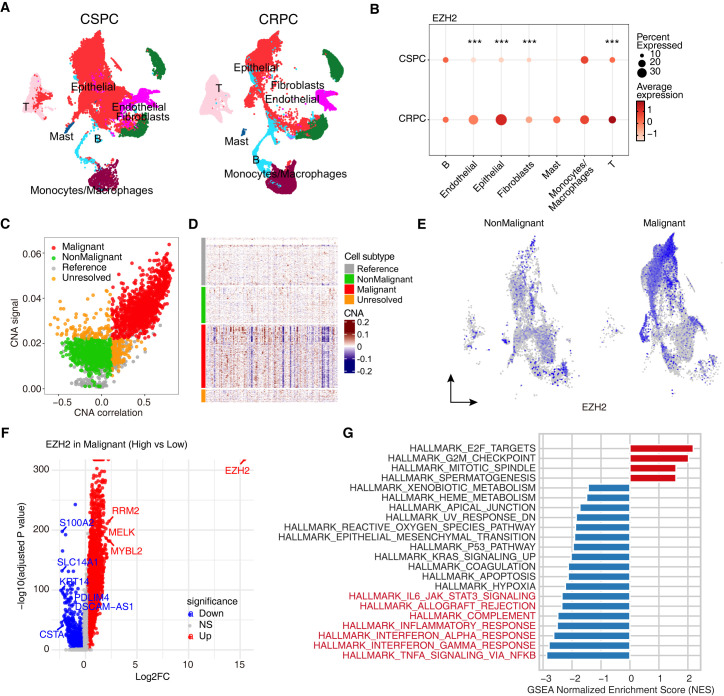 Figure 3
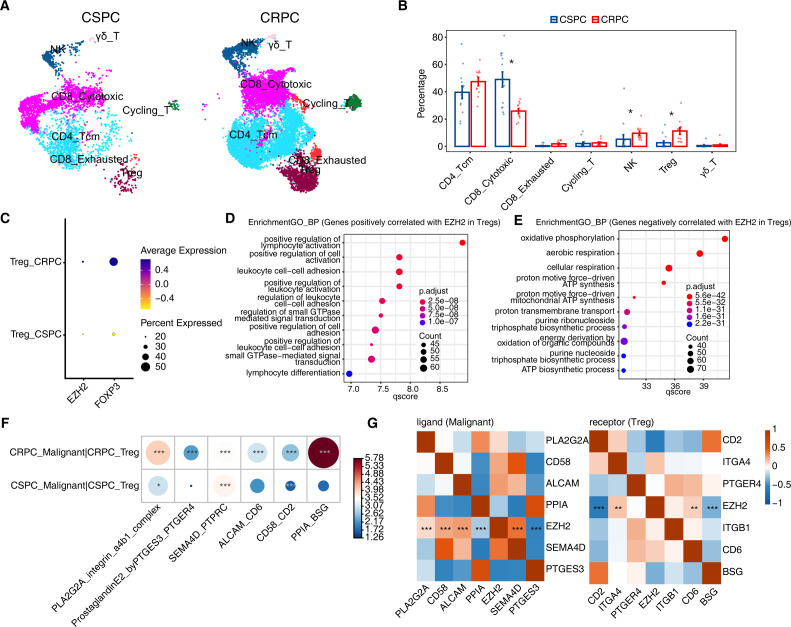 Figure 4
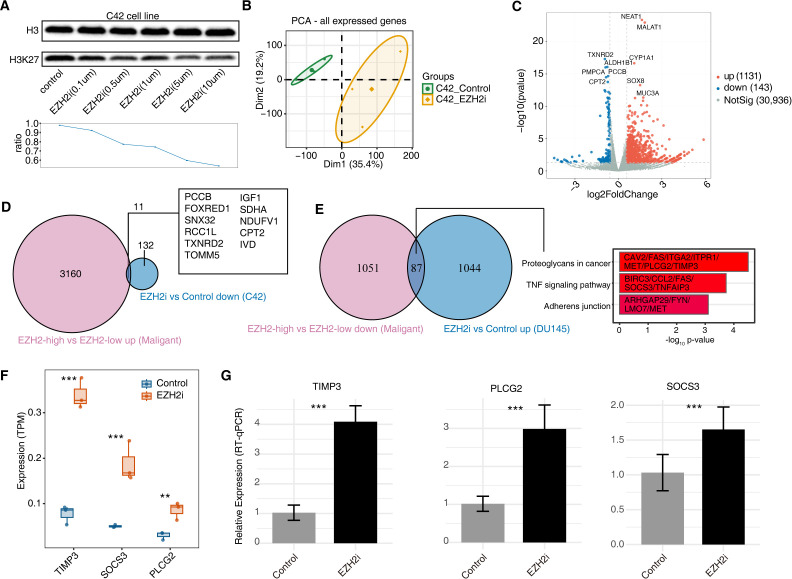 Figure 5
Peer Reviews
No public reviews on file for this paper yet. If you reviewed it on a platform where reviews are public (OpenReview, ICLR, NeurIPS, ICML), you can paste yours below so the community can read it here.
Videos
No videos yet. Explain this paper in a talk, walkthrough, or lecture? Add one.
Taxonomy
TopicsSingle-cell and spatial transcriptomics · Epigenetics and DNA Methylation · Prostate Cancer Treatment and Research