Functional characterization of HbRAR1 in Hevea brasiliensis reveals its role in the HSP90–SGT1–RAR1 complex during hypersensitive response
Qifeng Liu, Jiali Wang, Fei Yu, Yiying Lu, Yu Zhang, Meng Wang, Xiaoyu Liang

TL;DR
This study identifies the role of the HSP90–SGT1–RAR1 complex in the rubber tree's immune response to powdery mildew.
Contribution
The study provides the first evidence of the HSP90–SGT1–RAR1 complex's structural and functional conservation in rubber tree immunity.
Findings
HbRAR1 proteins interact with HbHSP90.1 and HbSGT1b to form a canonical ternary complex.
The HSP90–SGT1–RAR1 complex enhances the hypersensitive response when co-expressed with HbCNL4.
This complex is conserved and plays a central role in NLR-triggered immune signaling in rubber trees.
Abstract
Powdery mildew is one of the most destructive foliar diseases of rubber tree (Hevea brasiliensis). To clarify the role of the conserved HSP90–SGT1–RAR1 molecular complex in rubber tree immunity, we identified and characterized two RAR1 homologs, HbRAR1–1 and HbRAR1-2. Both genes were significantly induced upon powdery mildew (Erysiphe quercicola) infection and were localized to the cytoplasm and nucleus. Yeast two-hybrid and bimolecular fluorescence complementation assays demonstrated that the HbRAR1 proteins interact with HbHSP90.1 and HbSGT1b via their two CHORD domains. Specifically, HbRAR1 binds the HATPase domain of HbHSP90.1 and the CS domain of HbSGT1b, forming a canonical HSP90–SGT1–RAR1 ternary complex. Additionally, Y2H, and BiFC assays confirmed that the core components of this complex, HbHSP90.1 and HbSGT1b, associate with the NLR immune receptor HbCNL4. Transient…
Genes, proteins, chemicals, diseases, species, mutations and cell lines named across the full text — each resolved to its canonical identifier and authoritative record.
Click any figure to enlarge with its caption.
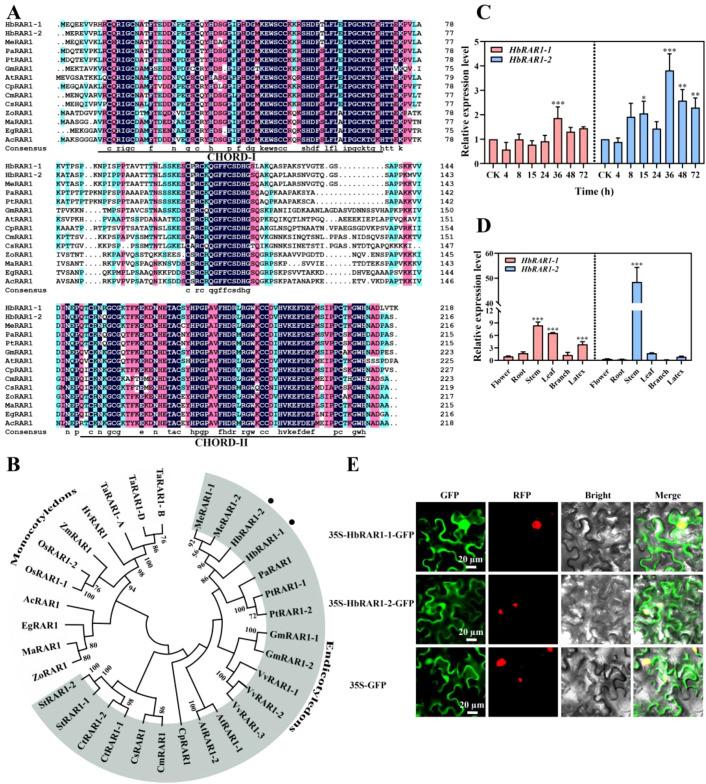 Figure 1
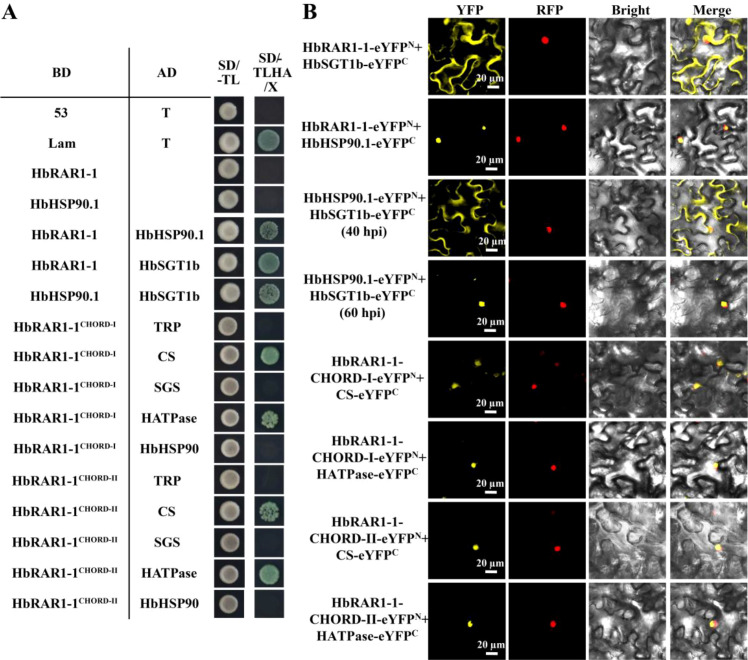 Figure 2
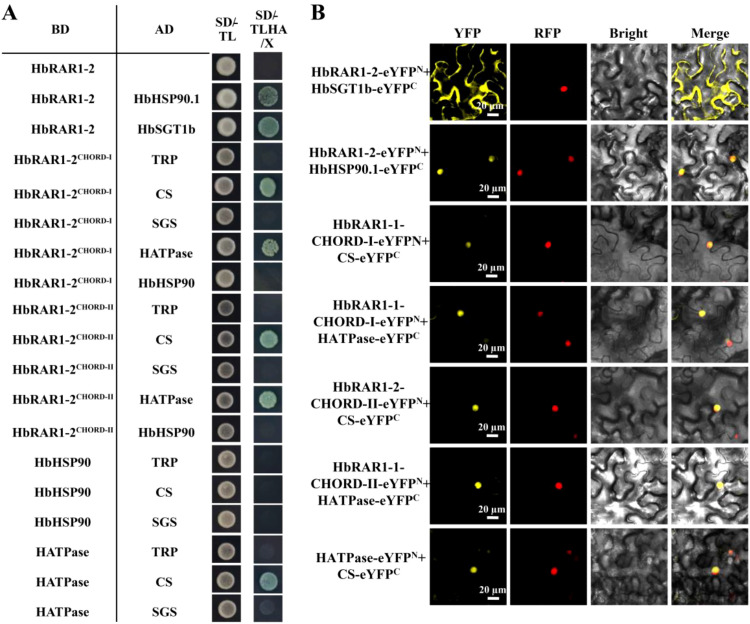 Figure 3
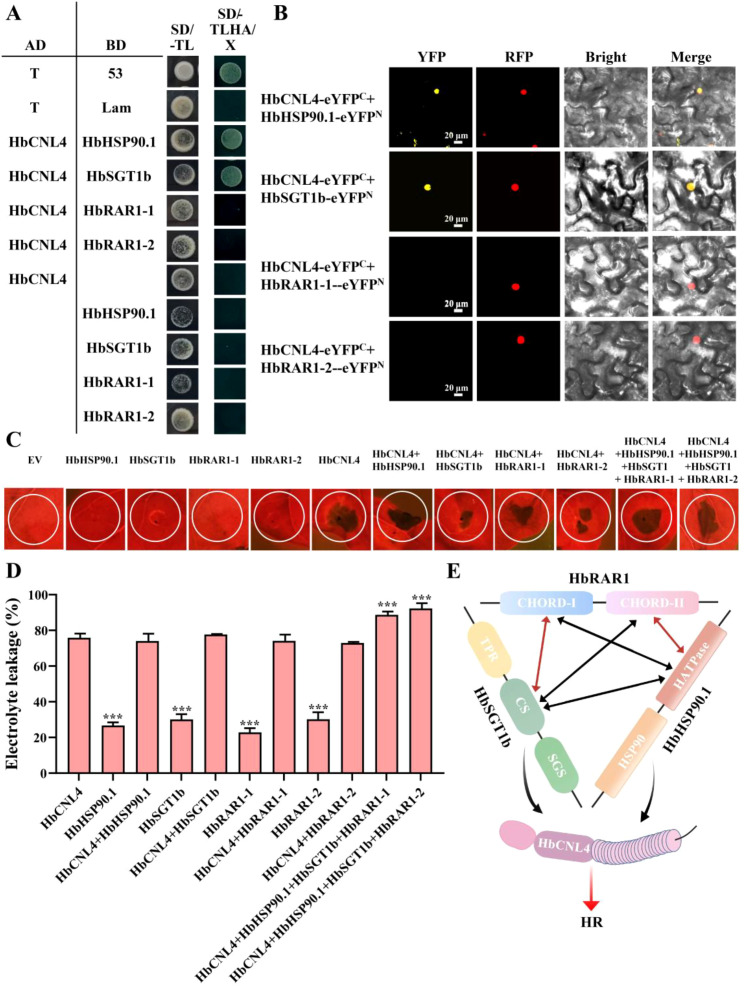 Figure 4
Peer Reviews
No public reviews on file for this paper yet. If you reviewed it on a platform where reviews are public (OpenReview, ICLR, NeurIPS, ICML), you can paste yours below so the community can read it here.
Videos
No videos yet. Explain this paper in a talk, walkthrough, or lecture? Add one.
Taxonomy
TopicsIon Channels and Receptors · Plant biochemistry and biosynthesis · Heat shock proteins research