Spinal glial cell derived extra-pituitary prolactin contributes to postoperative pain in females
Mayur J. Patil, Sergei Belugin, Michael Henry, Anahit H. Hovhannisyan, Priscilla A. Barba-Escobedo, Jennifer M. Mecklenburg, Vincent Goffin, Gregory Dussor, Theodore J. Price, Armen N. Akopian

TL;DR
Spinal glial cells produce a hormone called prolactin that increases pain in females after surgery.
Contribution
The study identifies spinal glial-derived extra-pituitary prolactin as a key contributor to female-specific postoperative pain.
Findings
Extra-pituitary prolactin (PRLext) is primarily responsible for activating pain-related signaling in dorsal root ganglion neurons.
Spinal GLAST+ astrocytes are a major source of PRLext that promotes pain hypersensitivity in females.
Blocking PRLext with a receptor antagonist reduces postoperative pain in female rodents.
Abstract
Peripheral and spinal prolactin (PRL) receptor (PRLR) signaling contributes to the female-selective regulation of pain. This study investigated the relative roles of pituitary-derived PRL (PRLpit) and extra-pituitary PRL (PRLext) in these effects. Using STAT5 phosphorylation (pSTAT5) as a surrogate marker of PRL-responsive cells, we found that hindpaw incision-induced pSTAT5 in dorsal root ganglion (DRG) neurons depends primarily on PRLext. Immunohistochemistry (IHC) revealed incision-triggered induction of PRLext in rodent female myelinated peripheral nerves, the epidermis, medium-to-large DRG neurons, and a subset of spinal astrocytes, some of which co-expressed the glial glutamate transporter GLAST. PRLpit plays critical role in activation of PRLR during stress-induced pain conditions. However, blockade of PRLpit by hypophysectomy or bromocriptine did not substantially alter…
Genes, proteins, chemicals, diseases, species, mutations and cell lines named across the full text — each resolved to its canonical identifier and authoritative record.
Click any figure to enlarge with its caption.
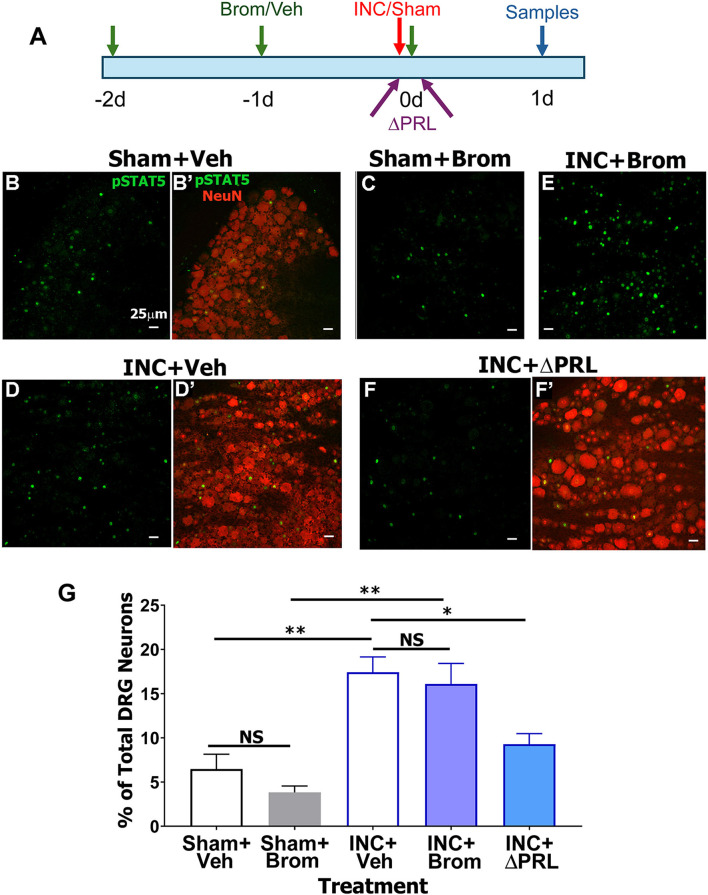 Figure 1
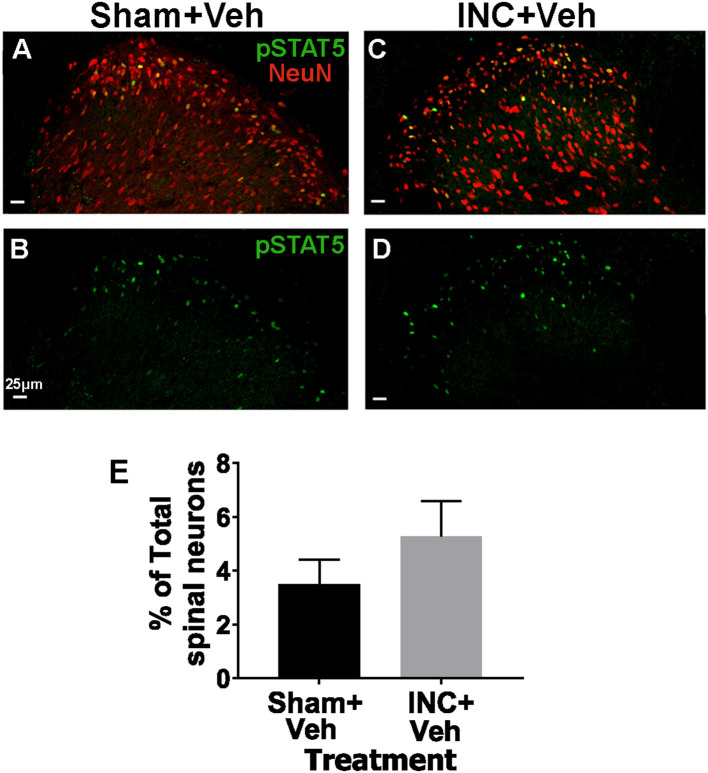 Figure 2
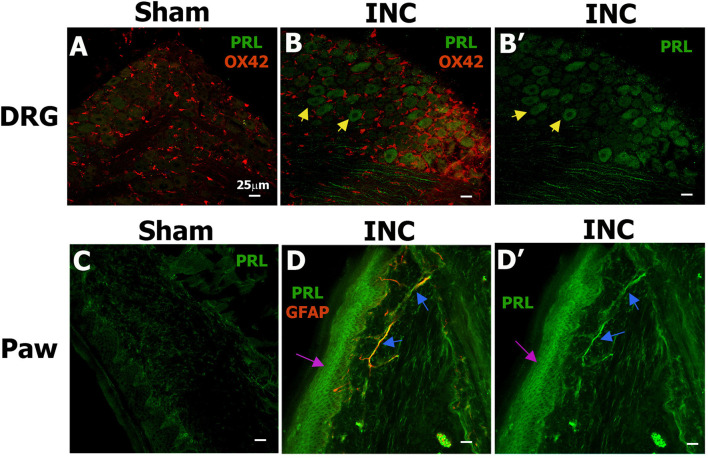 Figure 3
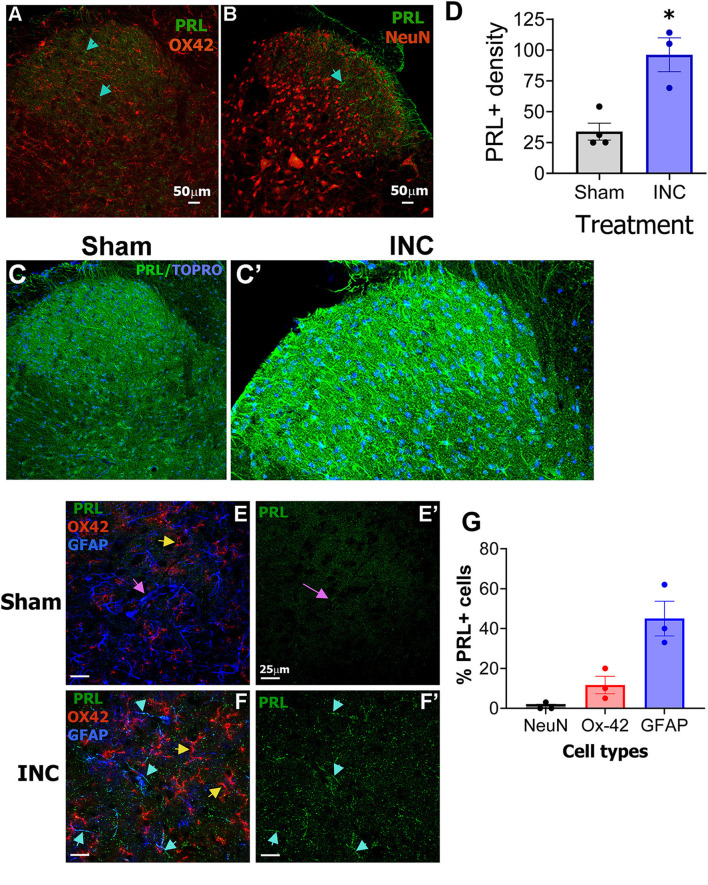 Figure 4
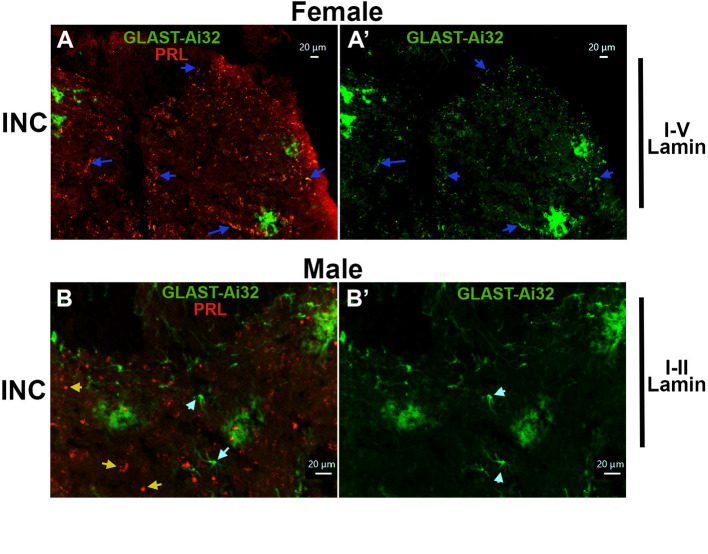 Figure 5
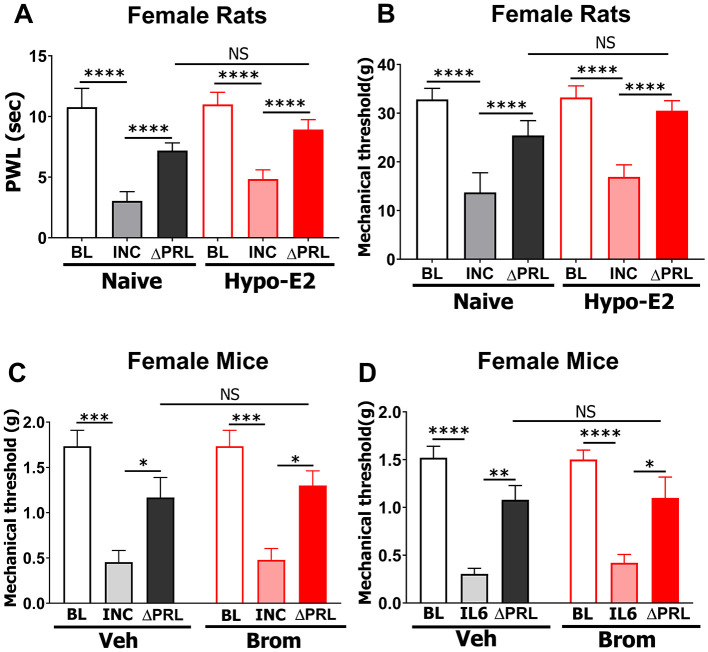 Figure 6
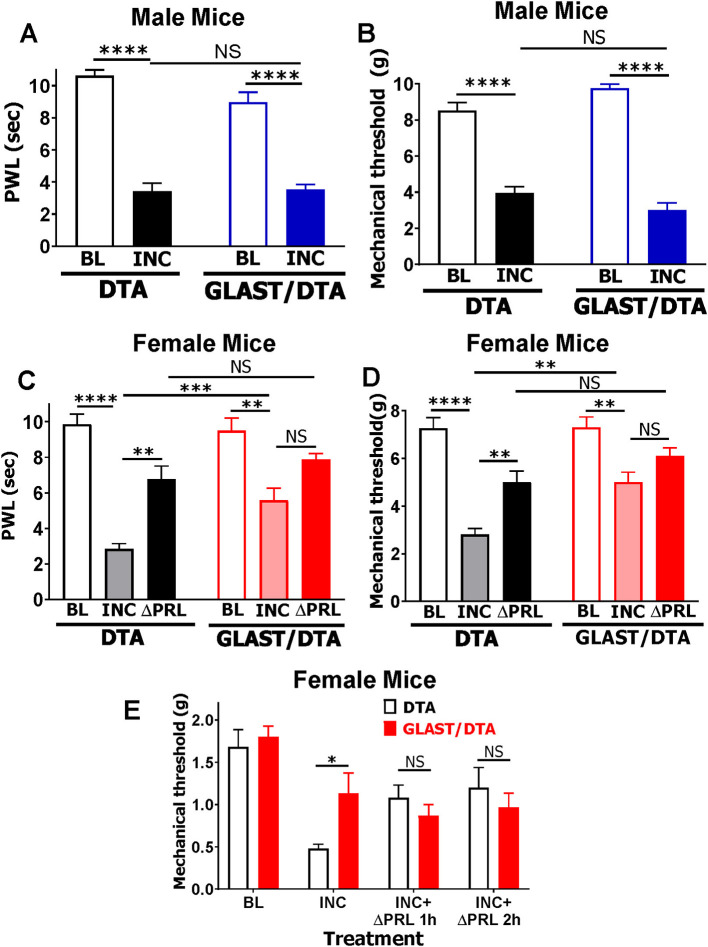 Figure 7
Peer Reviews
No public reviews on file for this paper yet. If you reviewed it on a platform where reviews are public (OpenReview, ICLR, NeurIPS, ICML), you can paste yours below so the community can read it here.
Videos
No videos yet. Explain this paper in a talk, walkthrough, or lecture? Add one.
Taxonomy
TopicsPain Mechanisms and Treatments · Growth Hormone and Insulin-like Growth Factors · Neuropeptides and Animal Physiology