Use and efficacy of antifibrinolytic agents in patients undergoing growth-friendly surgery for neuromuscular scoliosis
Wei Wu, Jagjot Dosanjh, John Smith, Peter Strum, Paul Sponseller, Ishaan Swarup

TL;DR
This study examines the use of antifibrinolytic agents in children with neuromuscular scoliosis undergoing spine surgery, finding no significant impact on blood loss or transfusion rates.
Contribution
The study provides new insights into the use and outcomes of antifibrinolytic agents in a medically fragile pediatric population undergoing growth-friendly spine surgery.
Findings
Antifibrinolytic agents were used in 36% of surgeries, with tranexamic acid being the most common.
There was no significant difference in blood loss, cell saver volume, or transfusion rates between patients who received antifibrinolytic agents and those who did not.
Postoperative transfusion rates were high but not significantly different between groups.
Abstract
There is a paucity of data on the use, efficacy, and safety of antifibrinolytic agents (AF) in patients with neuromuscular scoliosis undergoing growth-friendly instrumentation. Previous studies have shown mixed results of AF agents in young patients with neuromuscular conditions, and other authors have expressed concerns regarding adverse effects in this medically fragile population. The purpose of this study was to investigate the rate of use of AF agents for growth-friendly surgery in patients with neuromuscular scoliosis, and assess its impact on blood loss and transfusion requirements. This is a retrospective cohort study of patients from a multicenter spine study group with neuromuscular scoliosis that underwent an index growth-friendly procedure. Patients with a history of venous thromboembolism and those undergoing revision surgery or lengthening surgery were excluded.…
Genes, proteins, chemicals, diseases, species, mutations and cell lines named across the full text — each resolved to its canonical identifier and authoritative record.
Click any figure to enlarge with its caption.
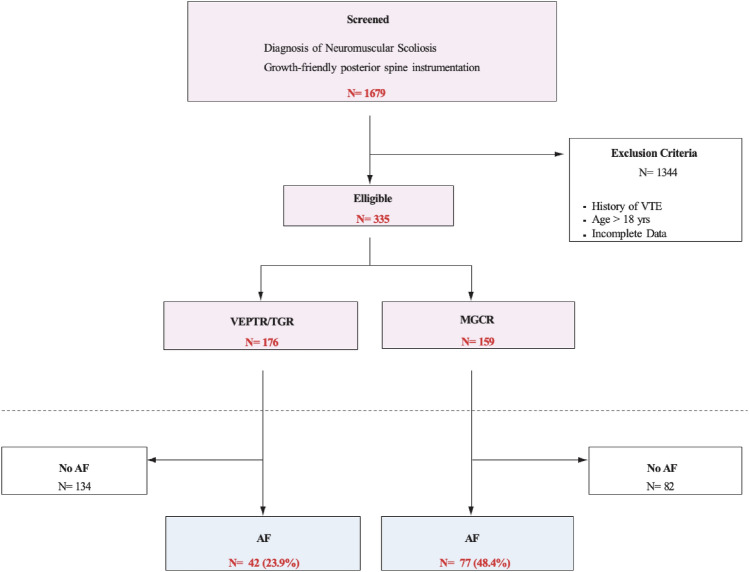 Figure 1
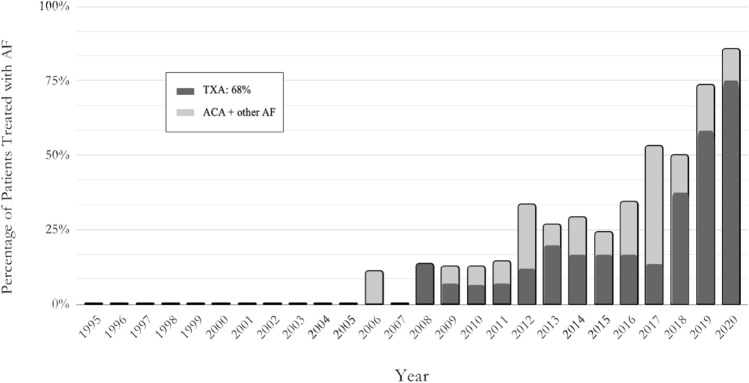 Figure 2
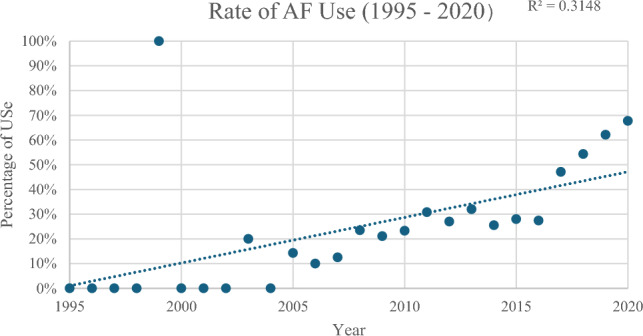 Figure 3
Peer Reviews
No public reviews on file for this paper yet. If you reviewed it on a platform where reviews are public (OpenReview, ICLR, NeurIPS, ICML), you can paste yours below so the community can read it here.
Videos
No videos yet. Explain this paper in a talk, walkthrough, or lecture? Add one.
Taxonomy
TopicsCardiac, Anesthesia and Surgical Outcomes · Peripheral Artery Disease Management · Pelvic and Acetabular Injuries