Comparison of the phenolic and antioxidant potential of five European herbal remedies by effect-directed analysis using offline two-dimensional liquid chromatography-high resolution mass spectrometry
M. Häßler, K. Wetzel, T. Tishakova, N. Dimitrova, T. Niedenthal, L. Montero, J. F. Ayala-Cabrera, O. J. Schmitz

TL;DR
This study compares the antioxidant properties and phenolic compounds in five European herbal plants to identify which species and plant parts have the strongest antioxidant activity.
Contribution
The study introduces an effect-directed analysis workflow combining offline two-dimensional liquid chromatography and high-resolution mass spectrometry to link antioxidant activity with specific compounds in herbal remedies.
Findings
Flavan-3-ol oligomers like procyanidin C1 were identified as major antioxidants in Agrimonia eupatoria.
Sambucus nigra showed high antioxidant activity linked to rutin and other phenolics.
Angelica archangelica had a coumarin-rich profile with lower antioxidant activity compared to flavonoid-rich species.
Abstract
Herbal remedies contain various phenolic compounds. However, it remains difficult to identify the most important bioactive components and compare their effectiveness in different plant species. In this study, effect-directed analysis has been applied to five European medicinal plants. Angelica archangelica, Angelica sylvestris, Agrimonia eupatoria, Sambucus ebulus, and Sambucus nigra have been analyzed to unravel and compare their phenolic profiles and antioxidant potential. Plant extracts obtained by a sustainable microwave-assisted extraction method were fractionated using semi-preparative liquid chromatography to yield continuous fractions, and a miniaturized ABTS radical scavenging assay of the fractions was used to screen for antioxidant activity. Highly active fractions were selected for a second HPLC fractionation and analyzed with a quadrupole time-of-flight mass spectrometer…
Genes, proteins, chemicals, diseases, species, mutations and cell lines named across the full text — each resolved to its canonical identifier and authoritative record.
Click any figure to enlarge with its caption.
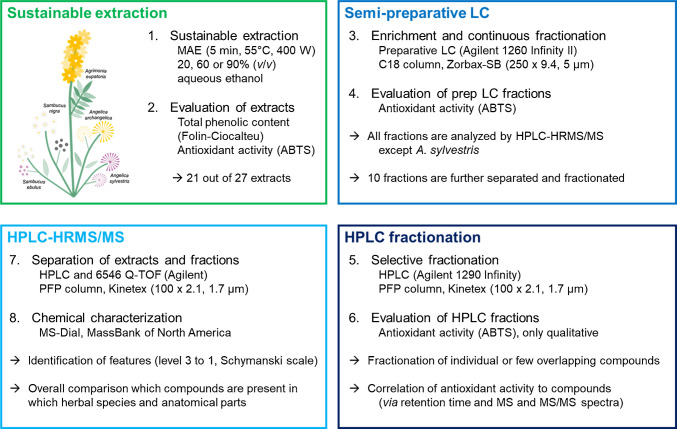 Figure 1
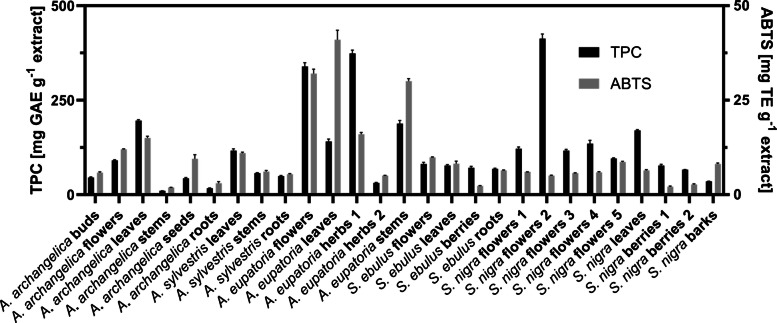 Figure 2
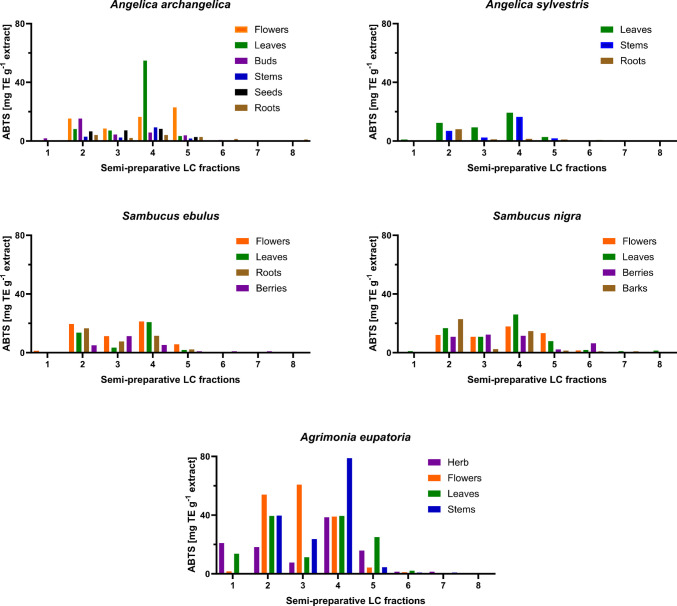 Figure 3
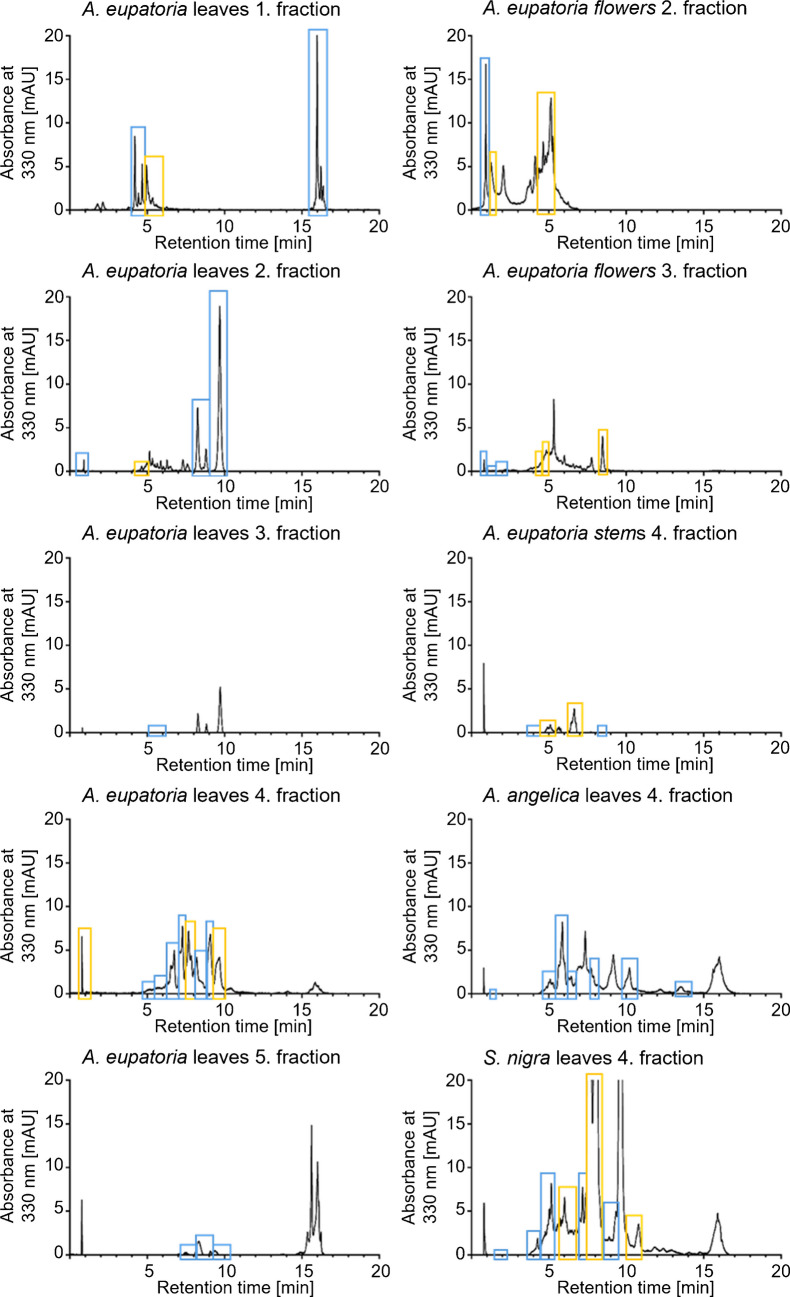 Figure 4
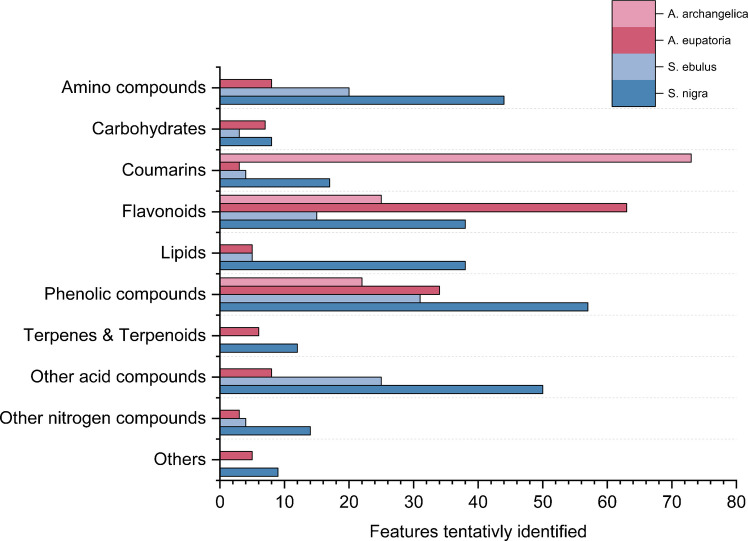 Figure 5
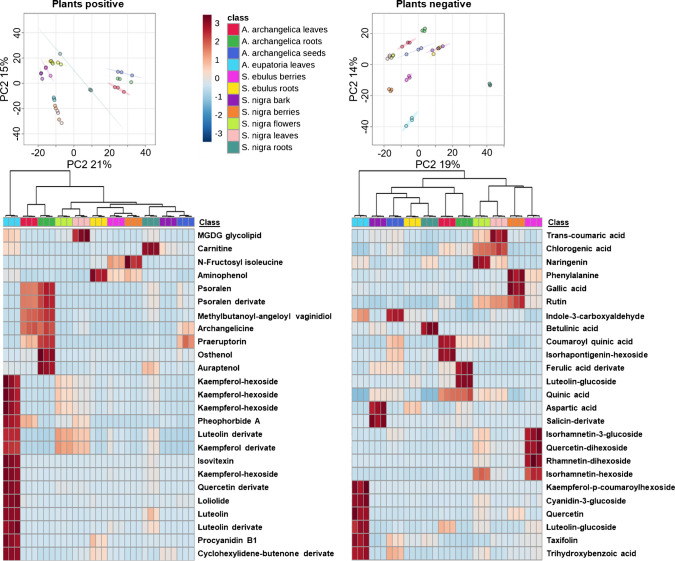 Figure 6
 Figure 7
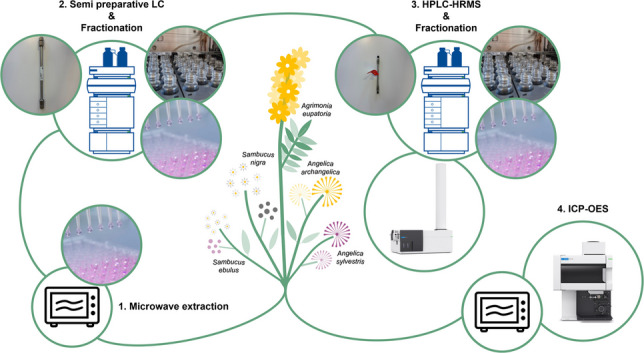 Figure 8
Peer Reviews
No public reviews on file for this paper yet. If you reviewed it on a platform where reviews are public (OpenReview, ICLR, NeurIPS, ICML), you can paste yours below so the community can read it here.
Videos
No videos yet. Explain this paper in a talk, walkthrough, or lecture? Add one.
Taxonomy
TopicsPhytochemicals and Antioxidant Activities · Plant chemical constituents analysis · Traditional Chinese Medicine Analysis