The psychological impact of adult-onset craniopharyngioma: A follow-up survey
Katie Daughters

TL;DR
This study explores the psychological effects of adult-onset craniopharyngioma, revealing significant impacts on mood and social functioning.
Contribution
The study introduces a new patient-informed survey to assess the psychosocial consequences of adult-onset craniopharyngioma.
Findings
88% of participants reported low mood due to adult-onset craniopharyngioma.
68% felt they no longer recognized themselves after diagnosis.
Growth hormone replacement therapy was linked to reduced physical impact.
Abstract
Adult-onset craniopharyngioma (AoC) is a rare benign tumour of the sellar/parasellar region associated with significant physical morbidity and a poorer quality of life. Limited medical studies have documented the psychological impact of AoC, but psychological studies may be better placed to investigate these effects. This study used an exploratory sequential mixed-methods design to develop and administer a new patient-informed survey to quantitatively assess the psychosocial consequences of AoC. A 30-item questionnaire was developed based on previous qualitative interviews with AoC patients and clinicians. Items covered psychological and physical impacts, including mood, social functioning, and emotion regulation. Participants (N = 25) were recruited online via a UK-based charity and completed the survey through Qualtrics. Percentage endorsements were calculated for each item, and…
Genes, proteins, chemicals, diseases, species, mutations and cell lines named across the full text — each resolved to its canonical identifier and authoritative record.
Click any figure to enlarge with its caption.
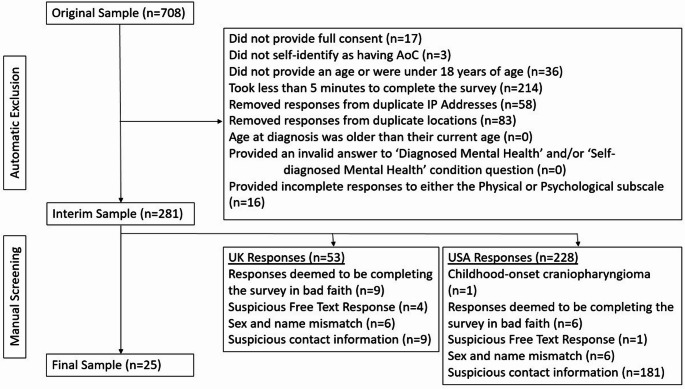 Figure 1
Peer Reviews
No public reviews on file for this paper yet. If you reviewed it on a platform where reviews are public (OpenReview, ICLR, NeurIPS, ICML), you can paste yours below so the community can read it here.
Videos
No videos yet. Explain this paper in a talk, walkthrough, or lecture? Add one.
Taxonomy
TopicsPituitary Gland Disorders and Treatments · Myasthenia Gravis and Thymoma · Adrenal and Paraganglionic Tumors