Artificial intelligence in early onset scoliosis: a scoping review
Chuck Lam, Jennifer Tasong, Halil Bulut, Amy Udall, Tenghis Sukhbaatar, Gary Hoang, Aran Koye, JeeHwan Ahn, Fayez Ghazi, Duncan Loader, Conor T. Boylan, Jwalant S. Mehta, George McKay, Morgan Jones

TL;DR
This paper reviews how artificial intelligence is being used to diagnose and manage early onset scoliosis in children under 10, highlighting promising results and areas needing improvement.
Contribution
The study provides a comprehensive scoping review of AI applications in early onset scoliosis, identifying current methods and limitations.
Findings
Most studies used convolutional neural networks for image analysis in early onset scoliosis.
AI models achieved mean accuracy of 91.2% in predicting outcomes and analyzing spinal deformities.
Common limitations included small sample sizes and lack of external validation.
Abstract
Early onset scoliosis comprises spinal deformities in children younger than 10, creating challenges in diagnosis, risk assessment, and management. Timely intervention is vital, because untreated deformity can lead to cardiopulmonary compromise. Artificial intelligence and machine learning are reshaping orthopaedic care by improving detection, forecasting progression, and guiding treatment. This scoping review maps current use in this patient population. Following PRISMA ScR standards, we systematically searched PubMed, Embase, Web of Science, Cochrane, and Scopus for studies that developed, applied, or validated AI models to diagnose, manage, or predict outcomes in EOS. After removing duplicates, 352 records were screened, 22 full texts were reviewed, and 11 studies met inclusion criteria. Most investigations (63.6%) employed convolutional neural networks (CNNs) such as Mask R CNN,…
Genes, proteins, chemicals, diseases, species, mutations and cell lines named across the full text — each resolved to its canonical identifier and authoritative record.
Click any figure to enlarge with its caption.
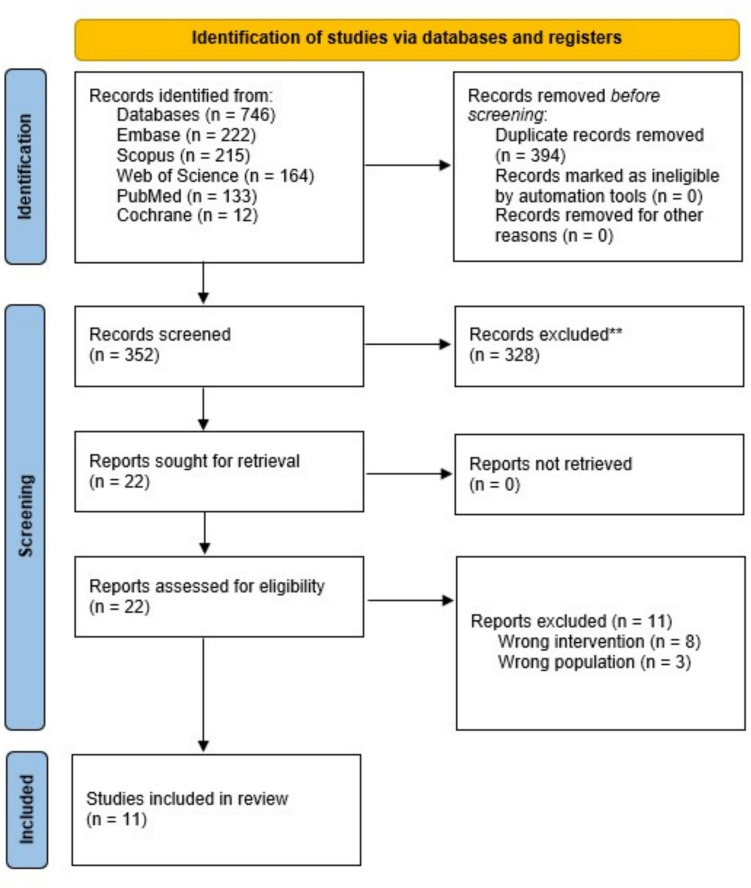 Figure 1
 Figure 2
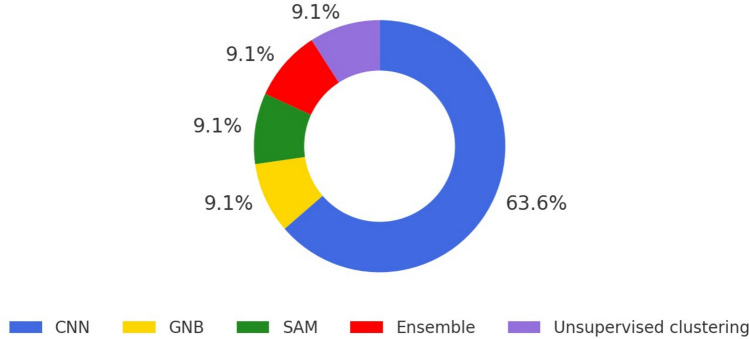 Figure 3
 Figure 4
Peer Reviews
No public reviews on file for this paper yet. If you reviewed it on a platform where reviews are public (OpenReview, ICLR, NeurIPS, ICML), you can paste yours below so the community can read it here.
Videos
No videos yet. Explain this paper in a talk, walkthrough, or lecture? Add one.
Taxonomy
TopicsScoliosis diagnosis and treatment · Medical Imaging and Analysis · Spinal Fractures and Fixation Techniques